
Blog
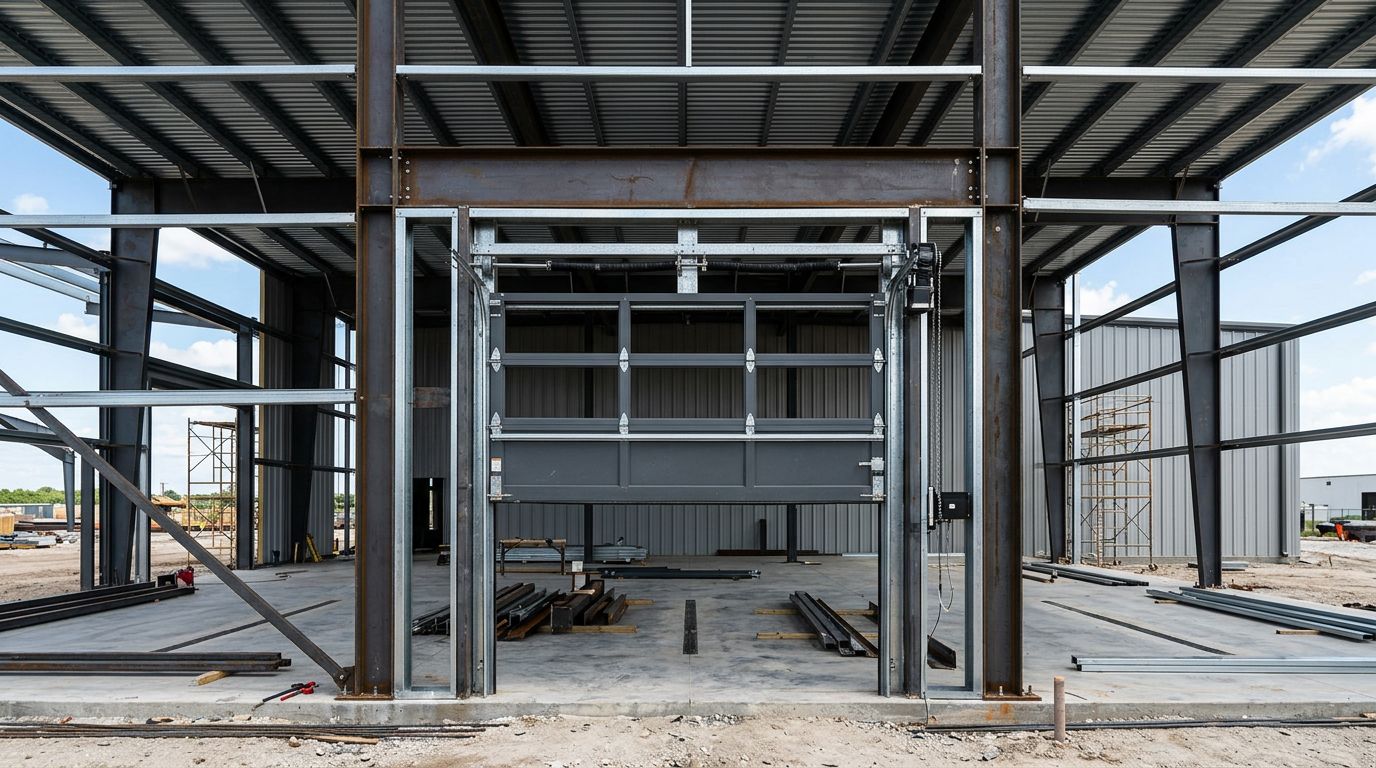
An overhead door can fit the wall opening and still lack room for its tracks, springs, or operator. Good steel building door framing coordinates the structure and the door's operating space before fabrication. For Florida shops, garages, and agricultural buildings, that coordi...
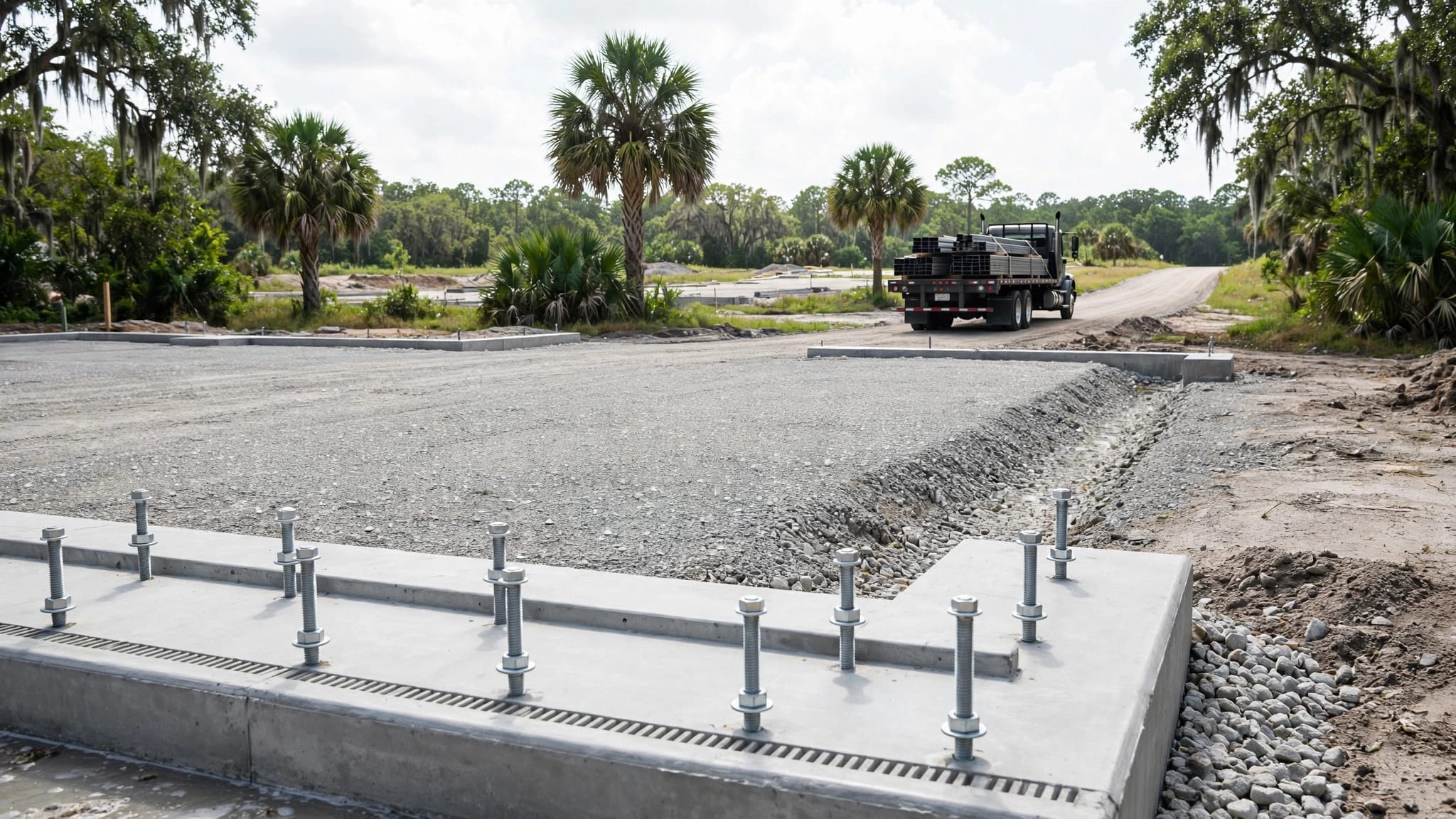
A steel building delivery can stall at your gate even when the foundation looks finished. Preparing a site for a steel building in Florida means getting the entire jobsite ready, including truck access, unloading space, drainage, and safe equipment operation. Your supplier and...
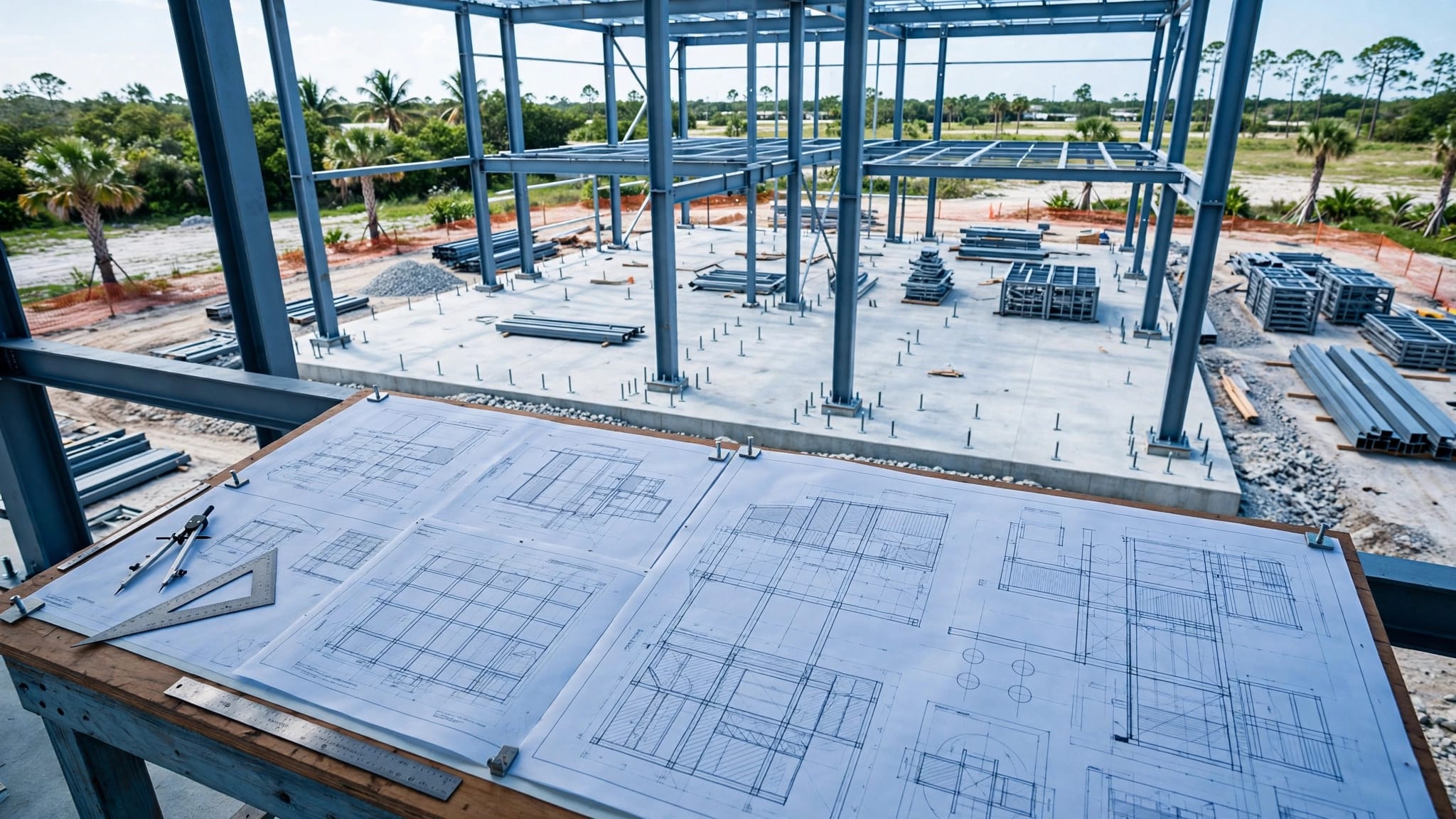
A misplaced anchor bolt can interrupt your steel building project before the first frame goes up. Reading steel building erection drawings starts with the approved set and checking how locations, dimensions, and details connect. For a Florida garage, workshop, or agricultural...
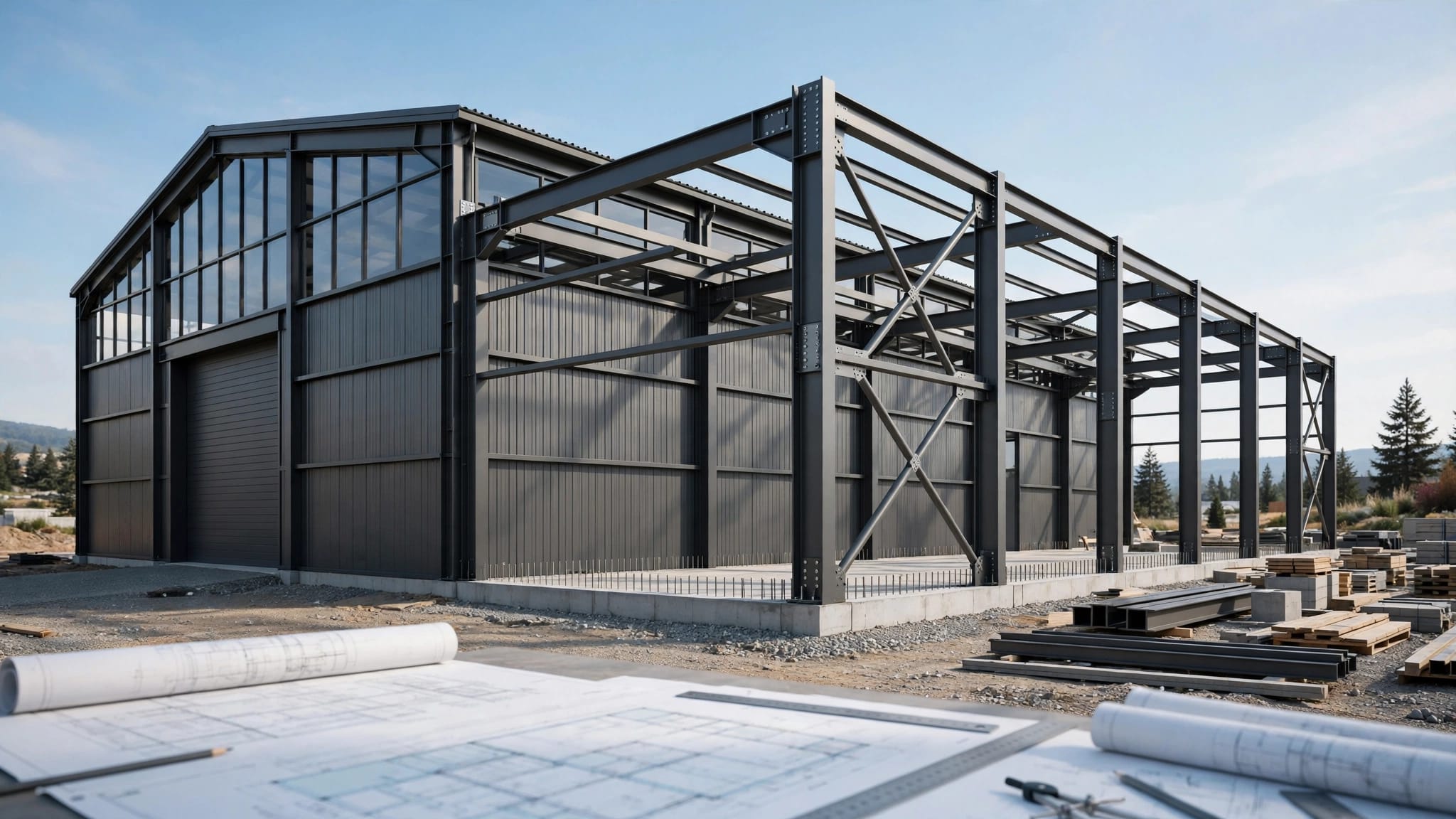
A metal building can run out of room long before its roof wears out. Planning for metal building expansion before you order gives your engineer a chance to address connections, foundations, and access while changes are still on paper. Your options depend on the building system...
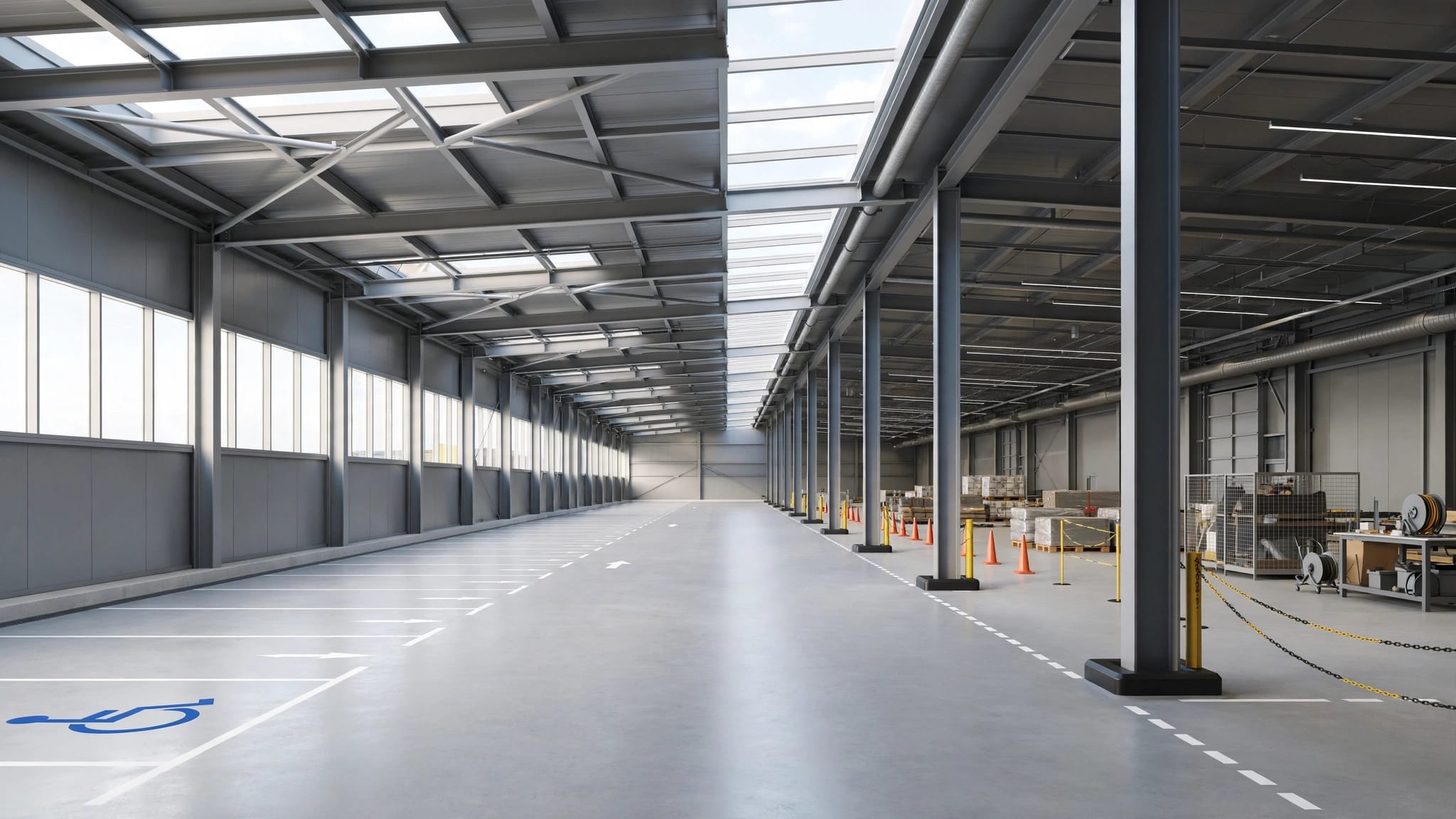
A column in the wrong spot can turn a spacious building into an awkward place to park or work. Your steel building layout should protect the space you need while meeting the project's structural and budget requirements. Clear-span framing offers an unobstructed interior, while...
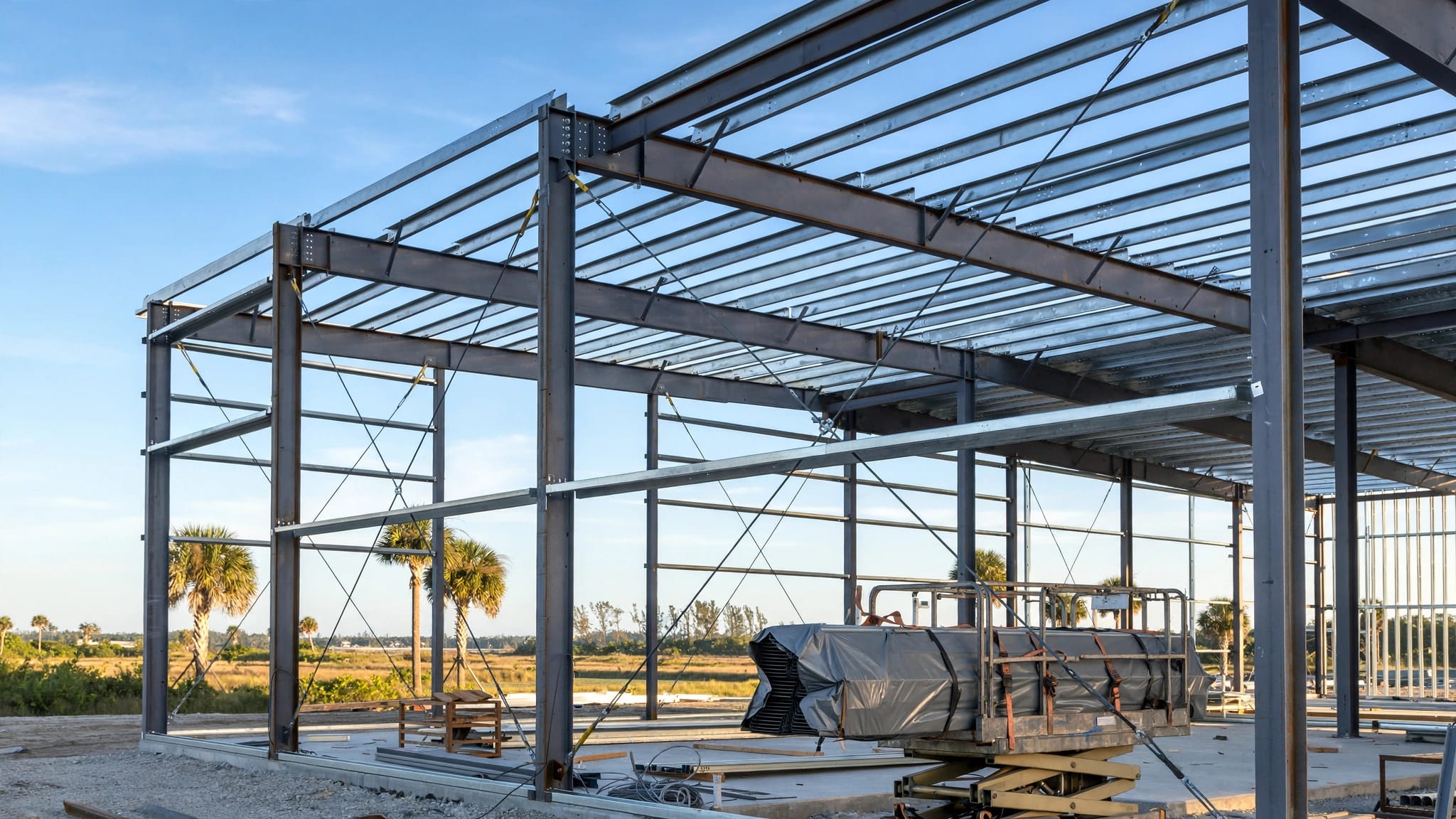
A straight-looking steel frame can still be unstable when the first roof bundle arrives. Before you lift panels, temporary bracing checks must confirm that the erected structure matches its approved erection stage . For Florida shops, barns, and commercial buildings, roof load...
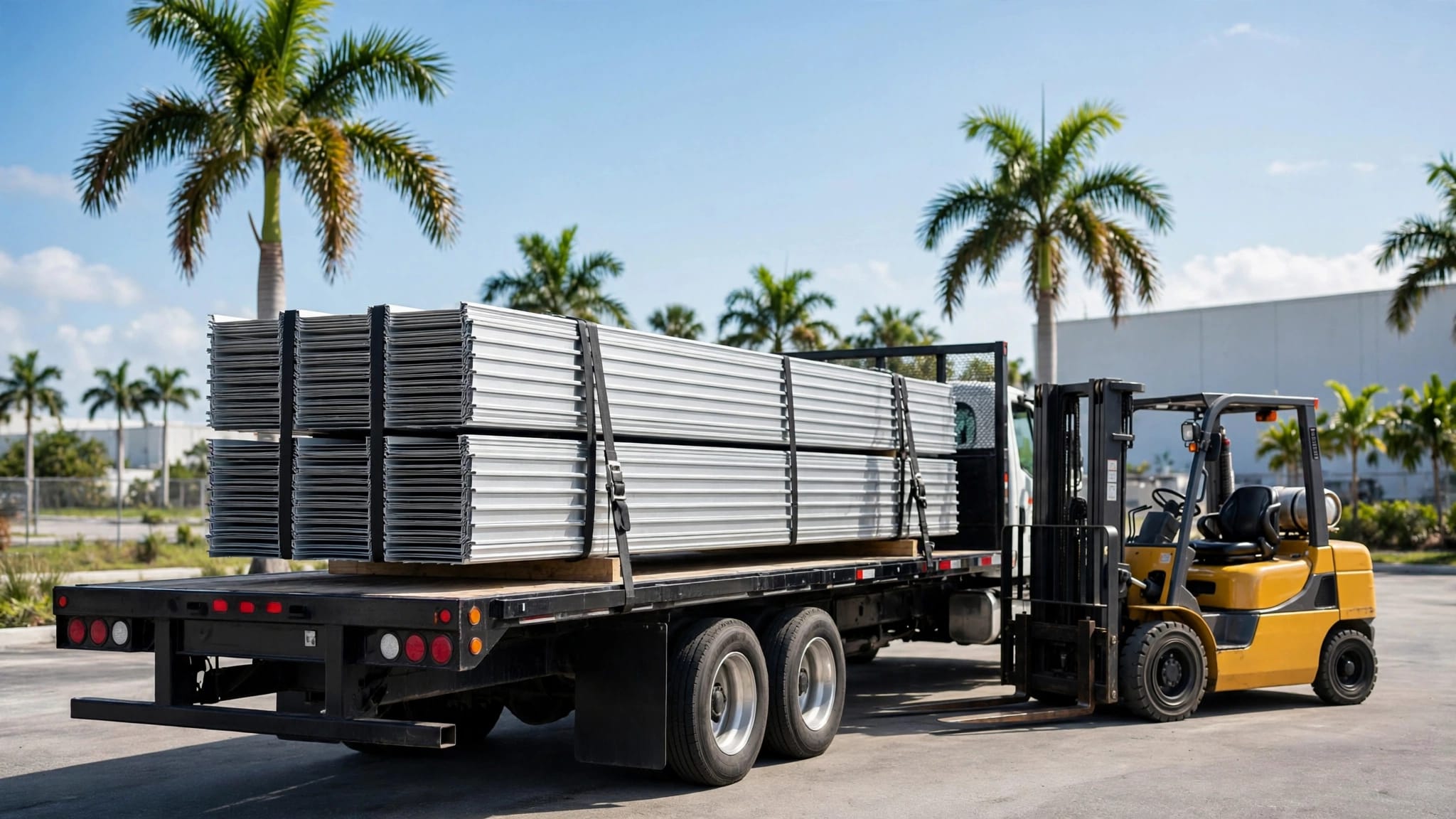
The delivery truck is on its way, but can your crew safely lift the panels off it? The number you need is the verified metal panel bundle weight for each package, not a general weight chart. Bundles vary with the panel material, gauge, profile, length, and quantity. An early e...
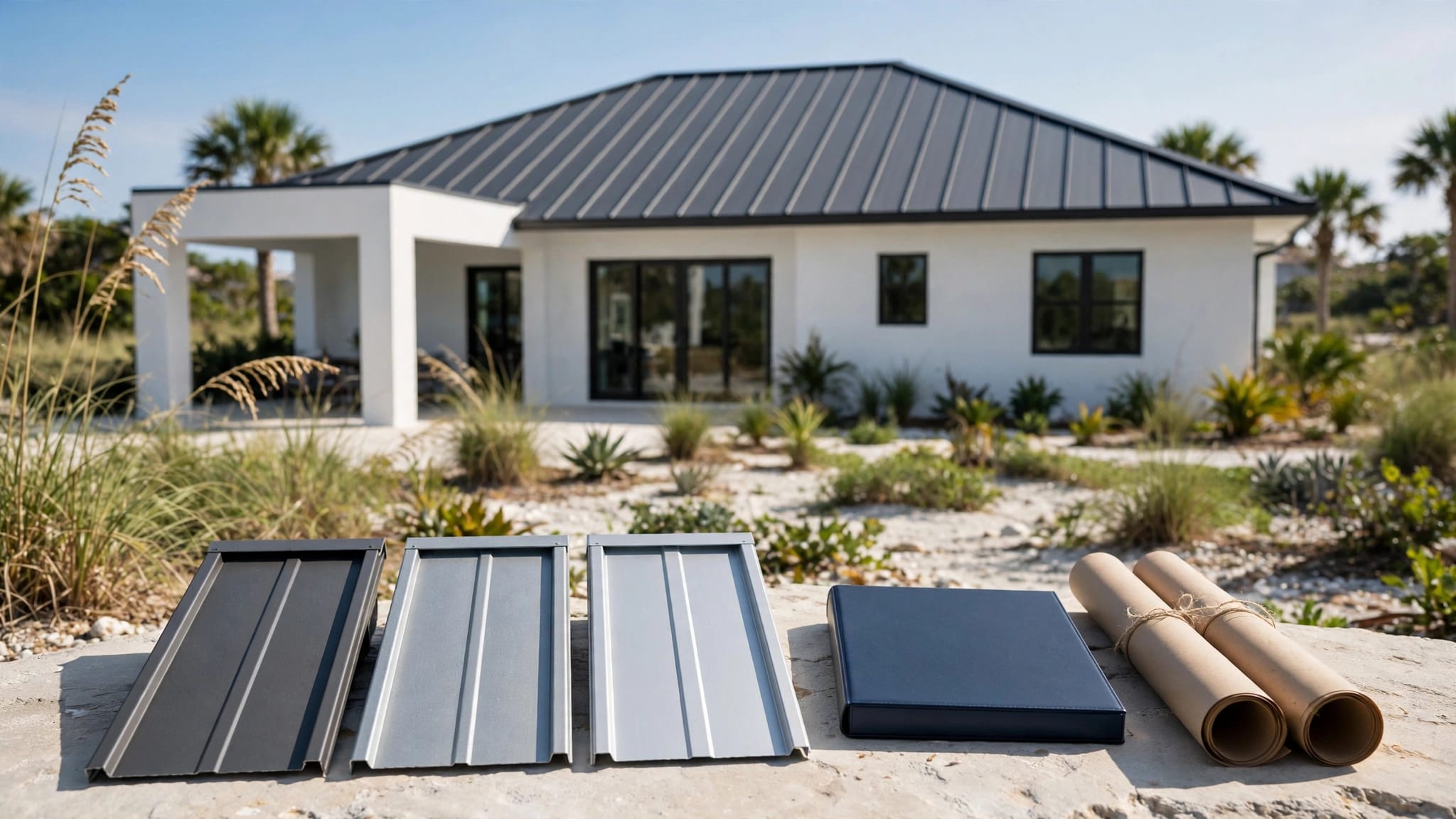
Two metal panels can look identical on a roof and have different approval limits. If you're comparing bids, the most useful question isn't whether a panel is "Florida approved." It's whether the documented roof assembly matches the one your contractor will install. Florida met...
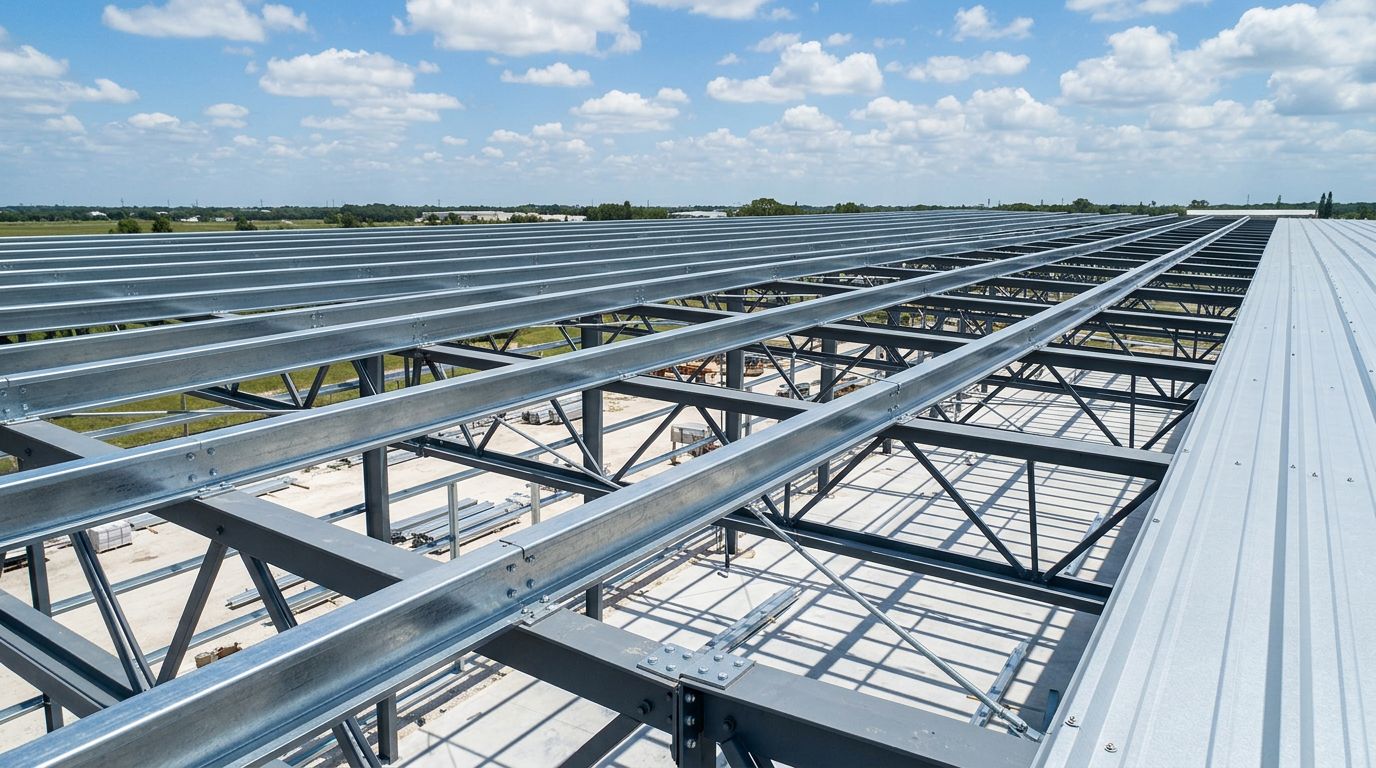
A metal roof can look straight while the purlins beneath it lack the restraint shown on the building plans. In Florida, that gap deserves attention because wind uplift can put roof framing under demands that aren't obvious during installation. Purlin bridging helps control mov...
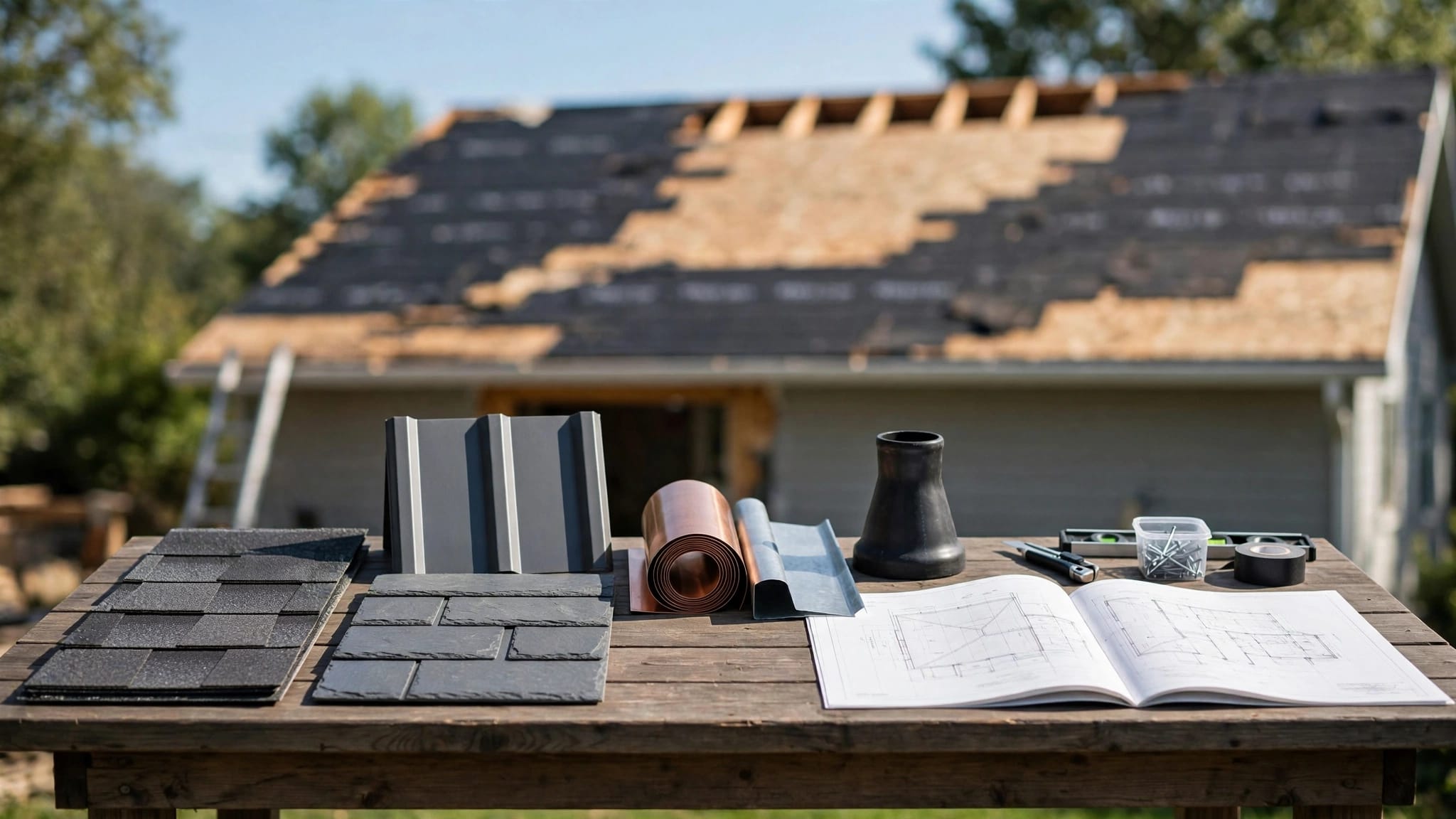
A roof crew shouldn't discover an unapproved panel or a missing pipe boot after the old roof comes off. A roofing pre-installation meeting gives the homeowner, contractor, and supplier a chance to compare the plans with the materials arriving on site. The goal is a written pla...
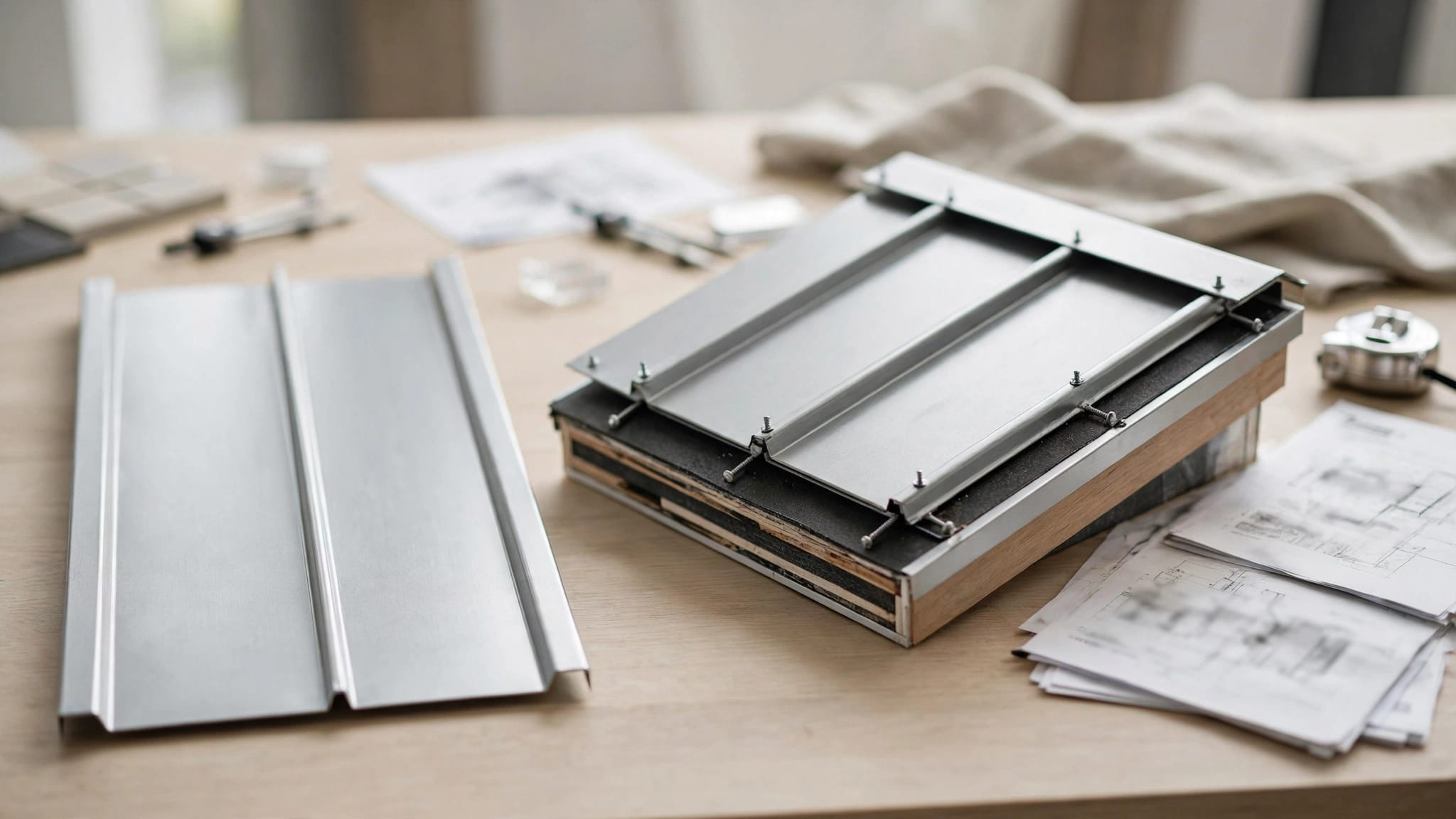
A contractor offers a different metal panel after your roof is designed, and the new quote looks promising. Before you accept it, check whether the replacement works with the permitted roof assembly . For metal roofing code compliance in Florida, a similar-looking panel or mat...
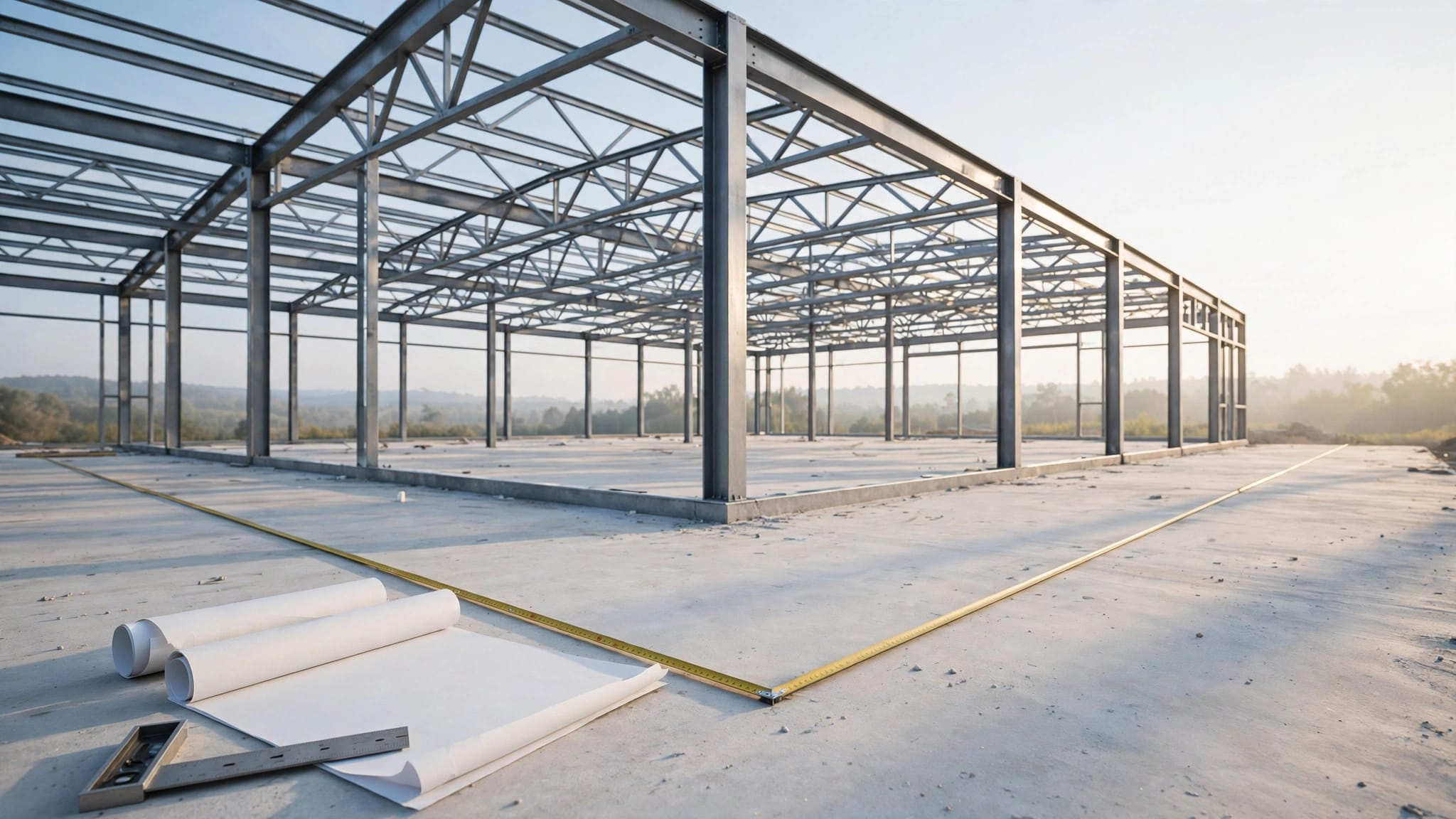
A small twist in a steel frame can become a visible problem when straight metal panels reach the eave. To get a steel building square before roofing, measure both corner-to-corner diagonals, compare them, and check the result against the building plans. Matching diagonals are...
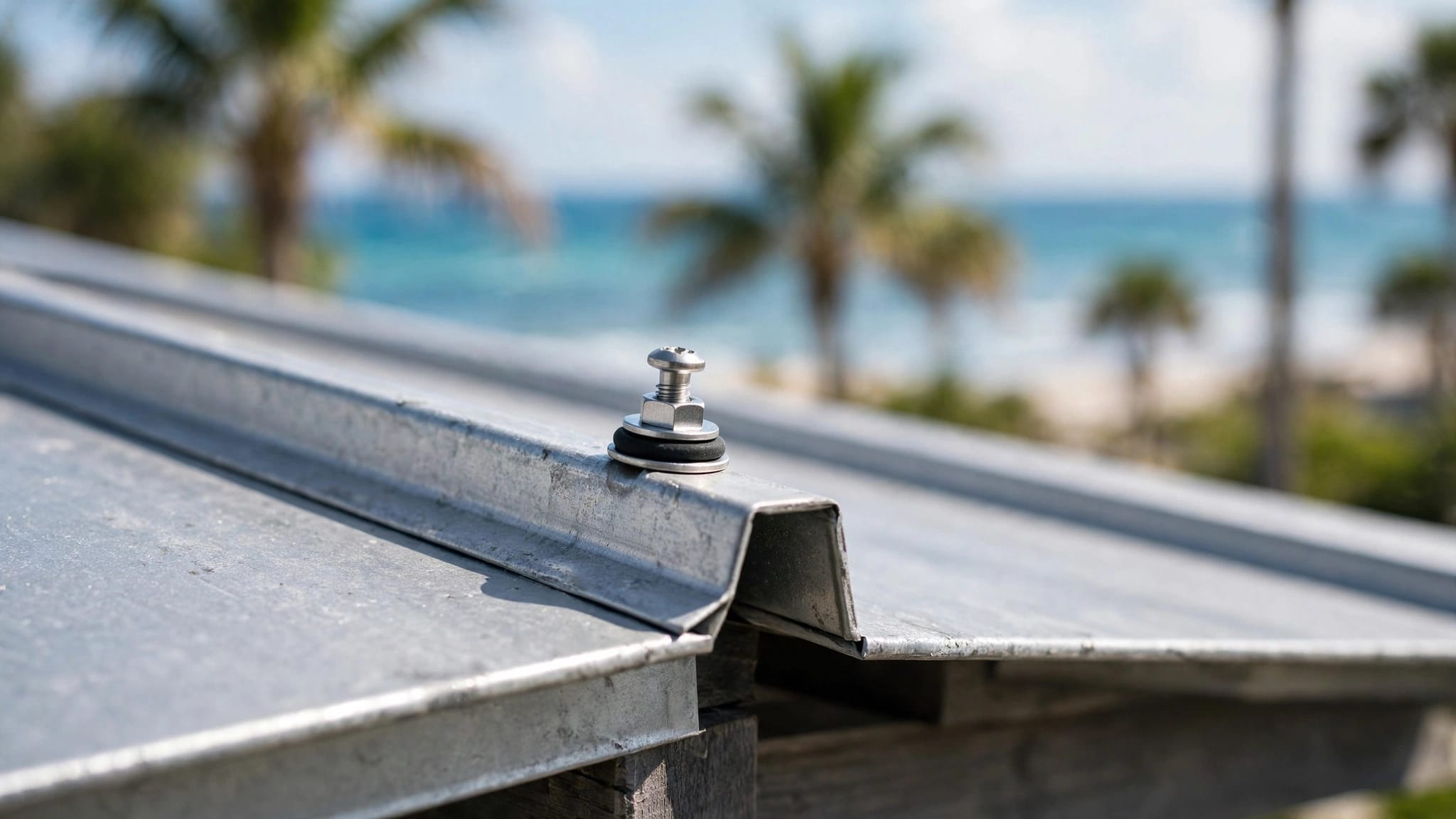
A screw that looks right on delivery day can become a rust spot or a leak after years of salt air and wind-driven rain. In coastal Florida, choosing metal roof fasteners means checking more than length and head color. The fastener must suit the panel, the material beneath it,...
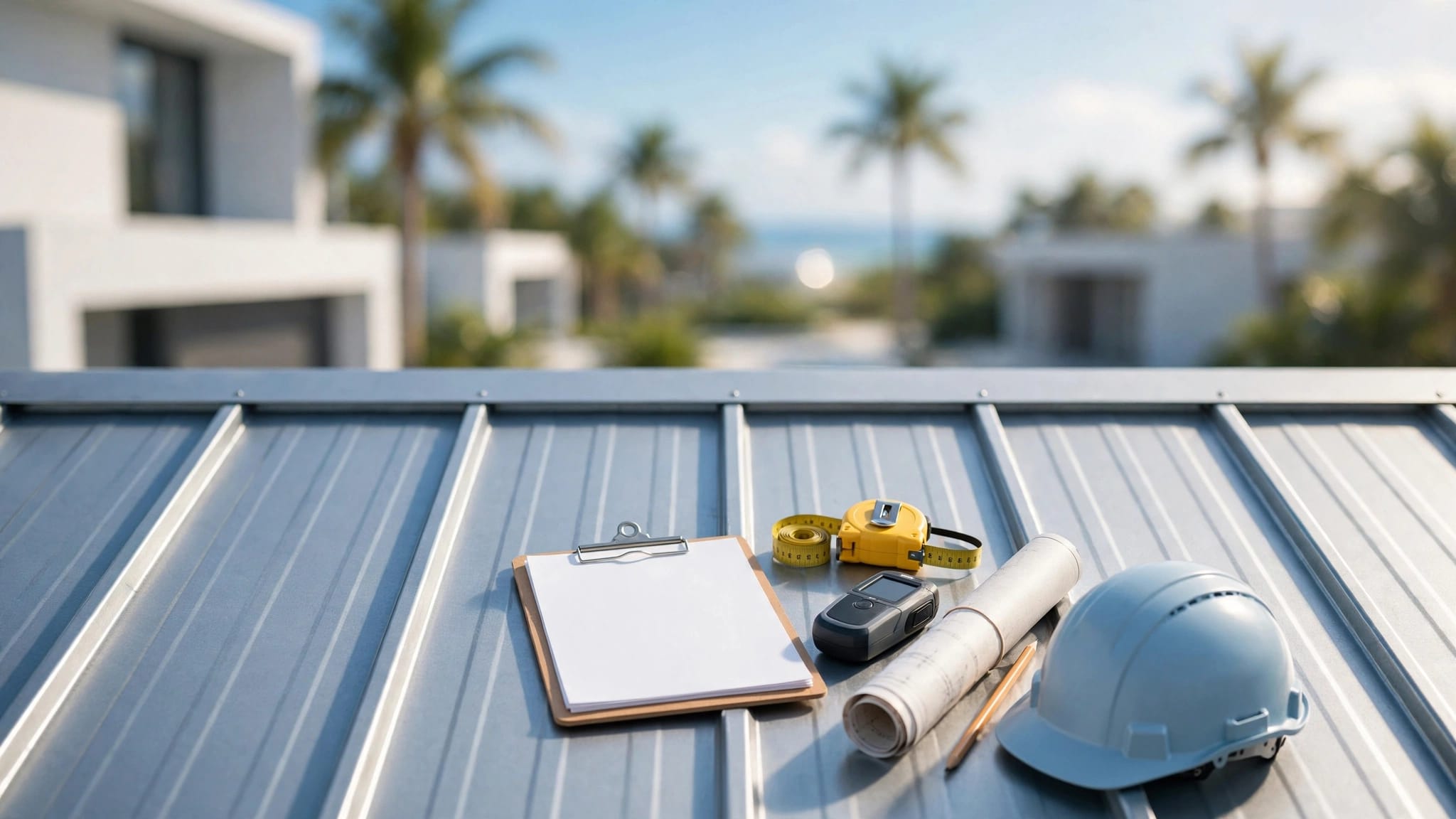
A reliable field report turns a roof visit into an order that fits the building. This Florida metal roofing template helps estimators and field technicians record dimensions, roof conditions, code information, material quantities, and customer approvals before fabrication or i...
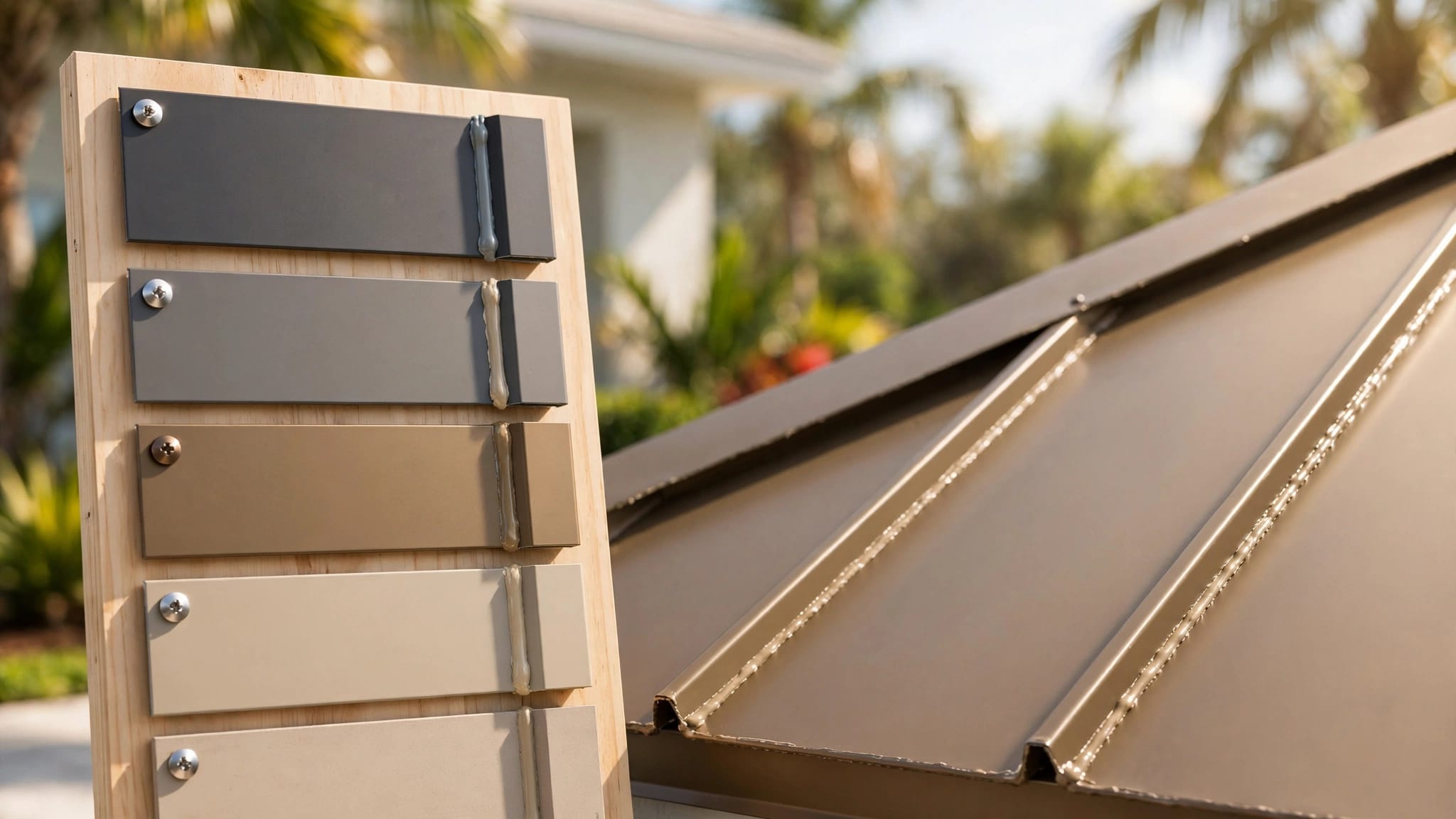
A color chosen from a screen can look different on a full metal panel, especially under Florida sunlight. Metal panel color verification gives the homeowner, contractor, and supplier a shared reference before material is cut, formed, and delivered. The approval should cover mo...
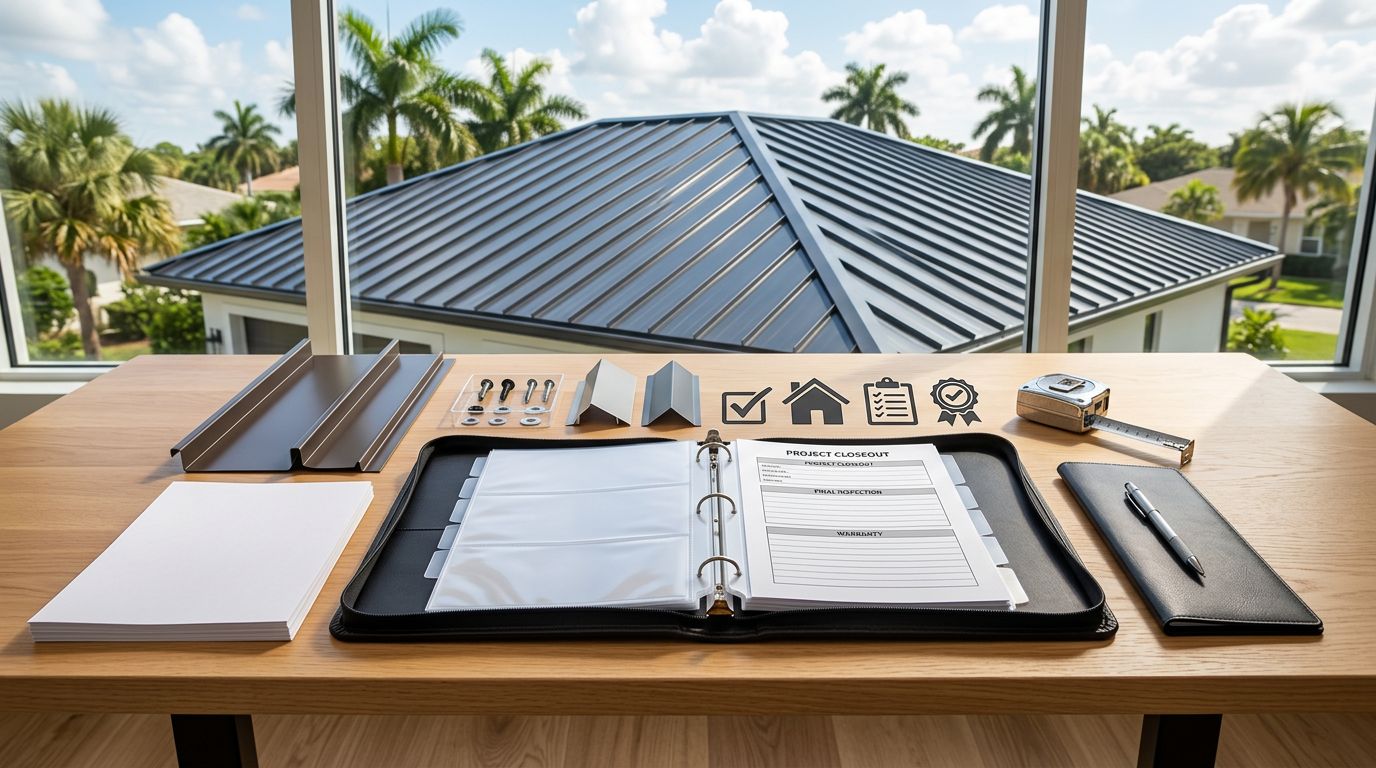
A Florida roofing closeout binder gives the owner, contractor, inspector, and future repair team one reliable record of what was installed. It connects the approved plans to the finished metal roof, including panels, fasteners, trim, underlayment, inspections, warranties, and...
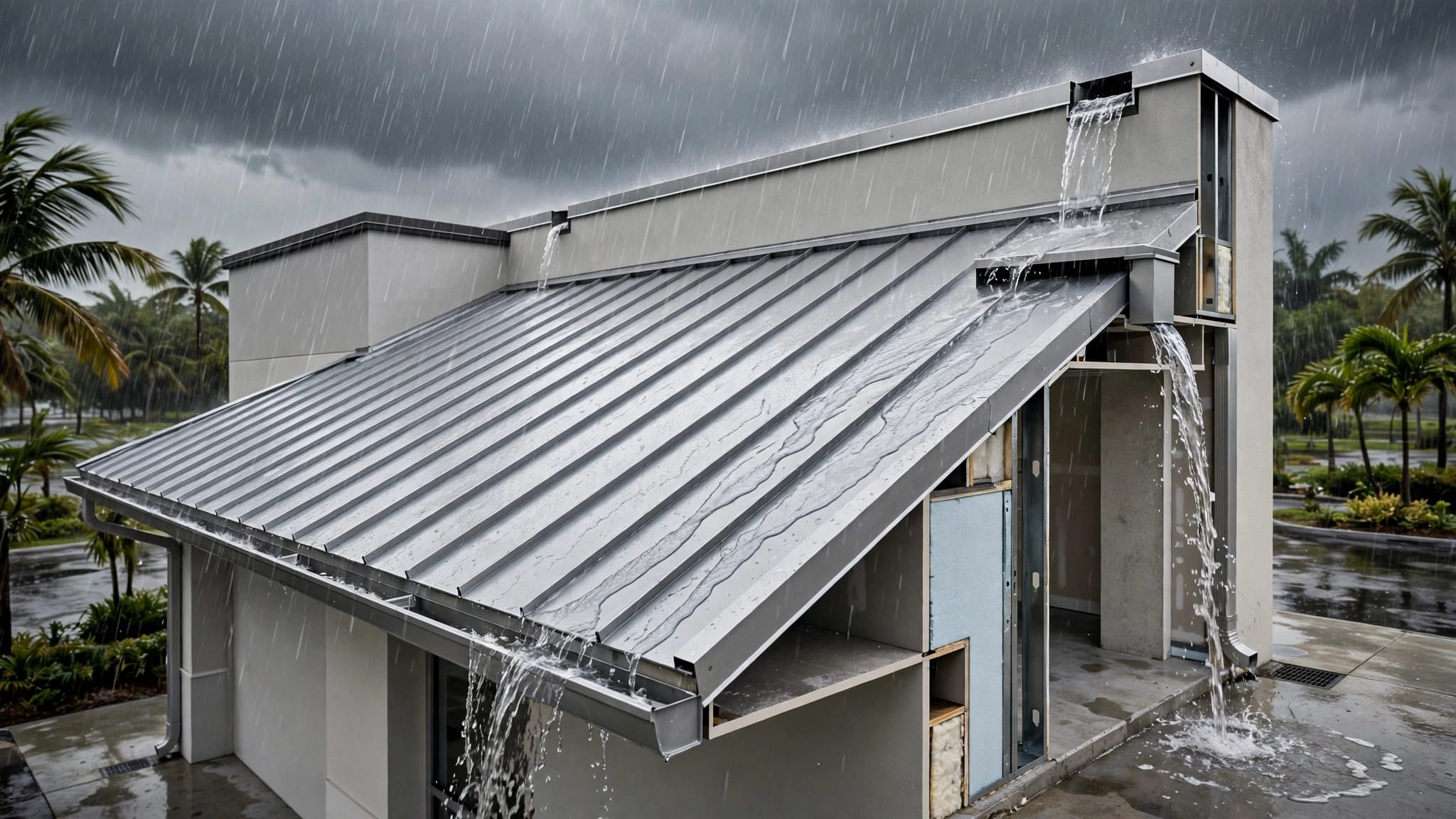
Good Florida metal roof drainage keeps heavy rain moving before it can test seams, fasteners, flashings, and the roof structure. A system that works during a light shower may still pond during a short, intense Florida storm. The right design connects roof slope, primary draina...
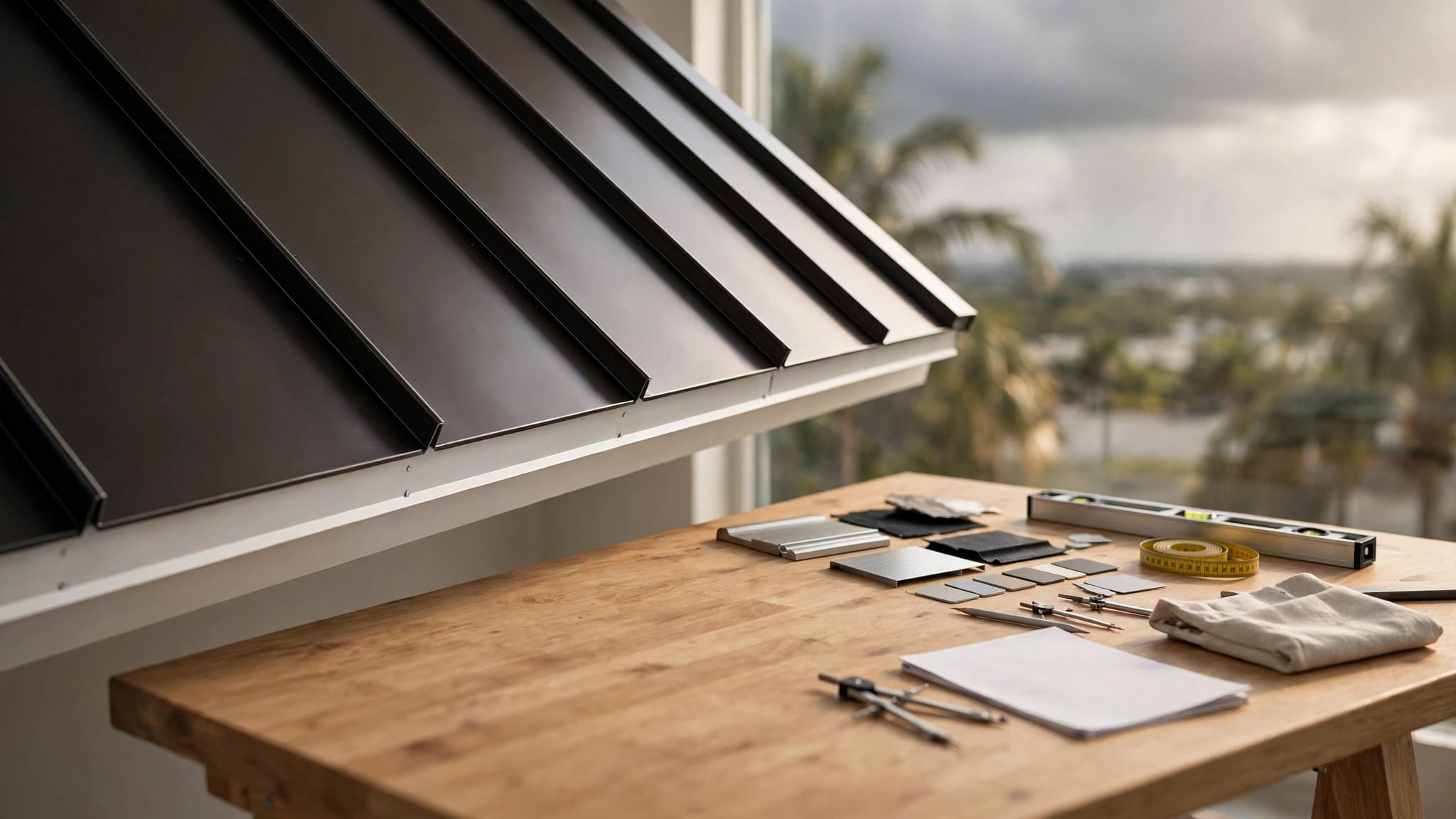
A metal roofing change order can affect the roof's cost, schedule, appearance, and approval status. A short note that says "add trim" or "change panels" leaves too many details open to interpretation. Clear metal roofing change orders identify the exact panel system, dimension...
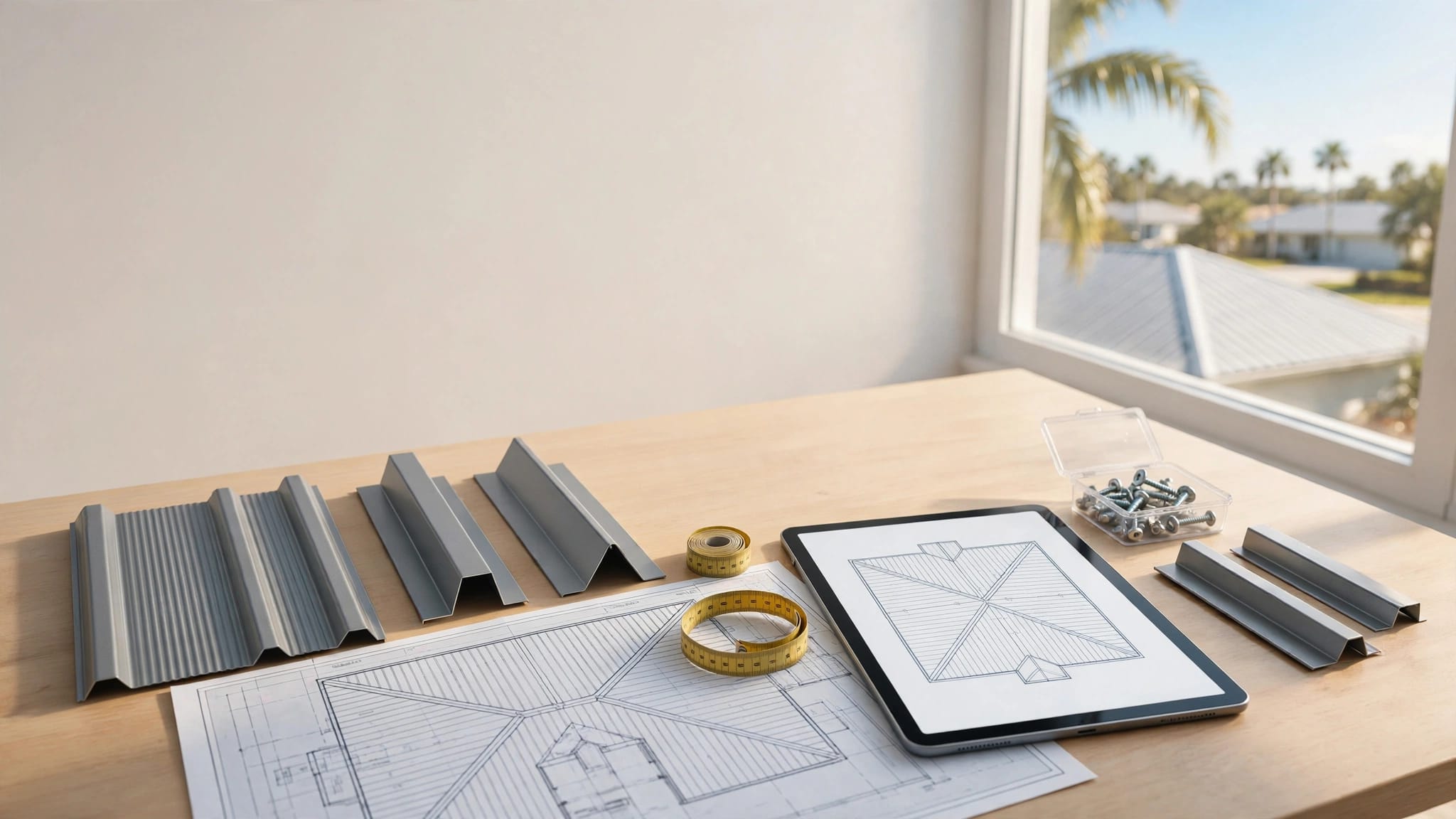
A precise metal roofing RFQ gives your supplier enough information to price the actual roof, not a rough guess. Panel profile, gauge, roof dimensions, wind-zone requirements, trim, accessories, and delivery details all affect the final quote. Missing information often leads to...
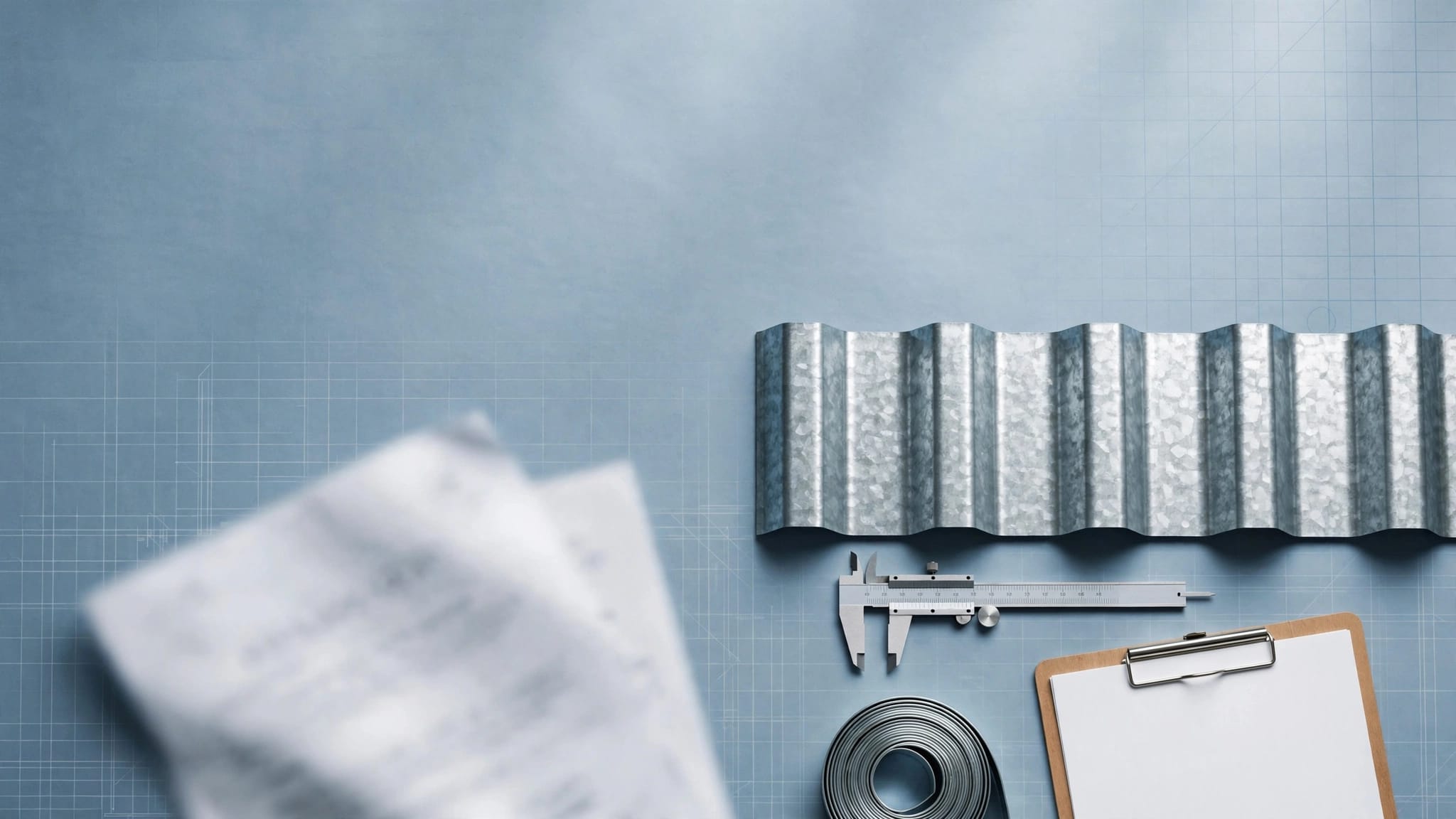
A metal roofing mill certification identifies the steel used to make a panel and records measured properties such as thickness, grade, strength, and coating. It helps contractors, inspectors, and building owners confirm that delivered material matches the project requirements....
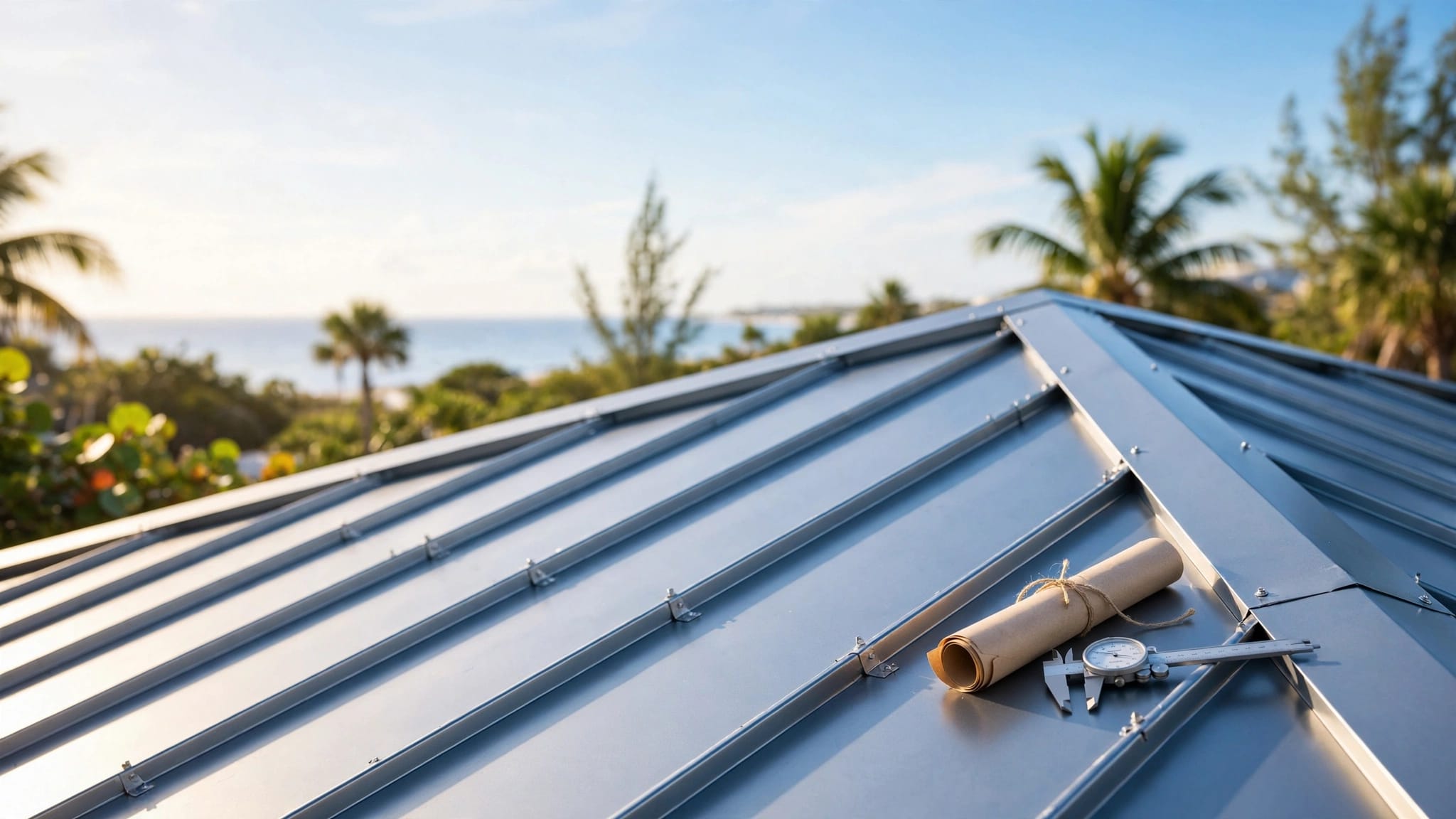
A roof's standing seam height affects panel shape, seaming, and trim details, but it doesn't decide Florida code compliance by itself. A taller rib may look stronger, yet wind resistance and drainage depend on the complete roof assembly. Florida projects also face different ap...
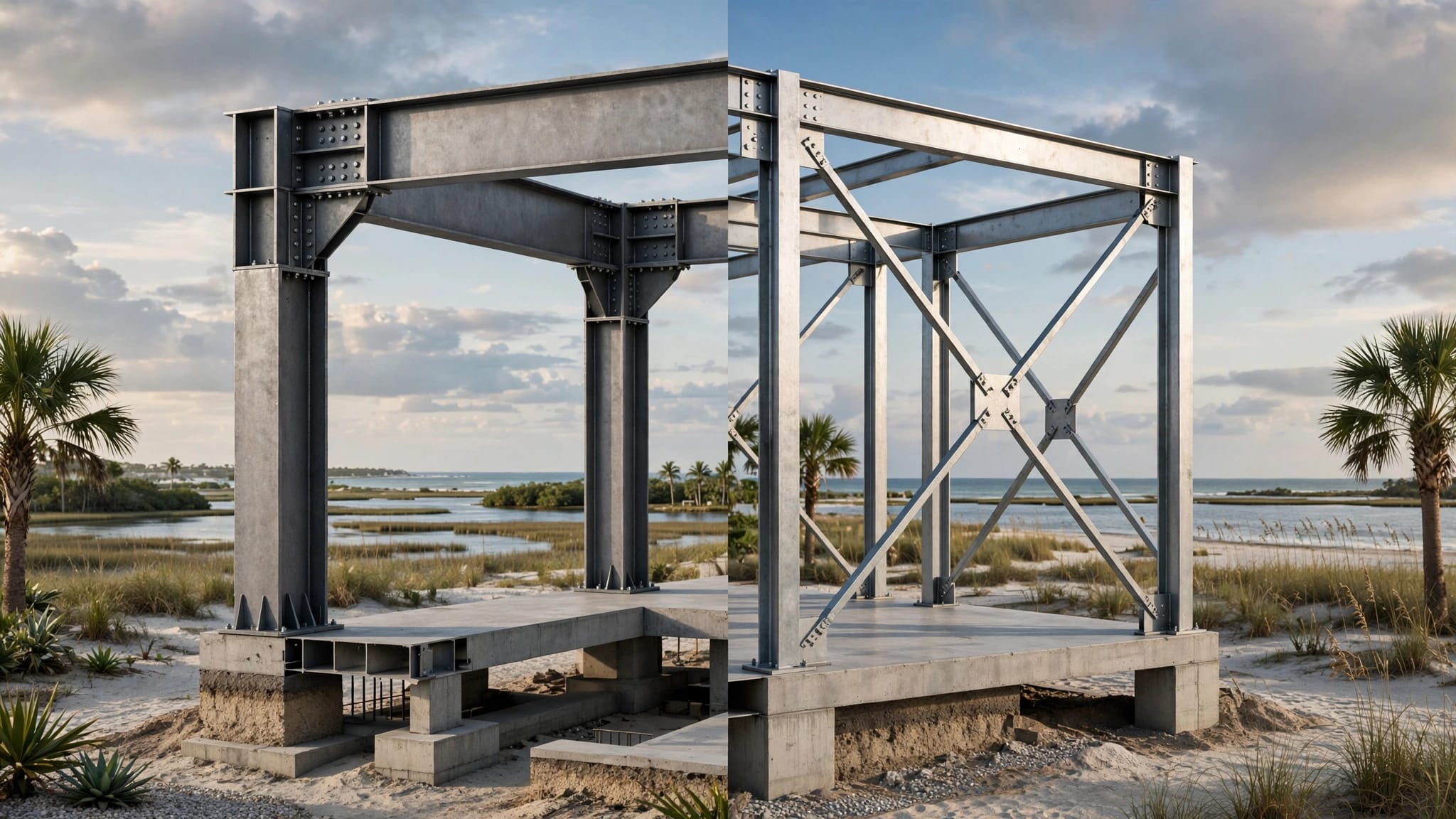
A steel building's frame determines how it handles wind, but the roof panels determine how the roof assembly transfers those forces. Understanding rigid vs braced frames helps Florida property owners and contractors ask better questions before ordering materials or submitting...
A commercial roof replacement can involve a property owner, general contractor, roofing contractor, metal panel supplier, lender, inspector, and several subcontractors. The Florida Notice of Commencement helps connect those parties to the payment and lien rights attached to a...
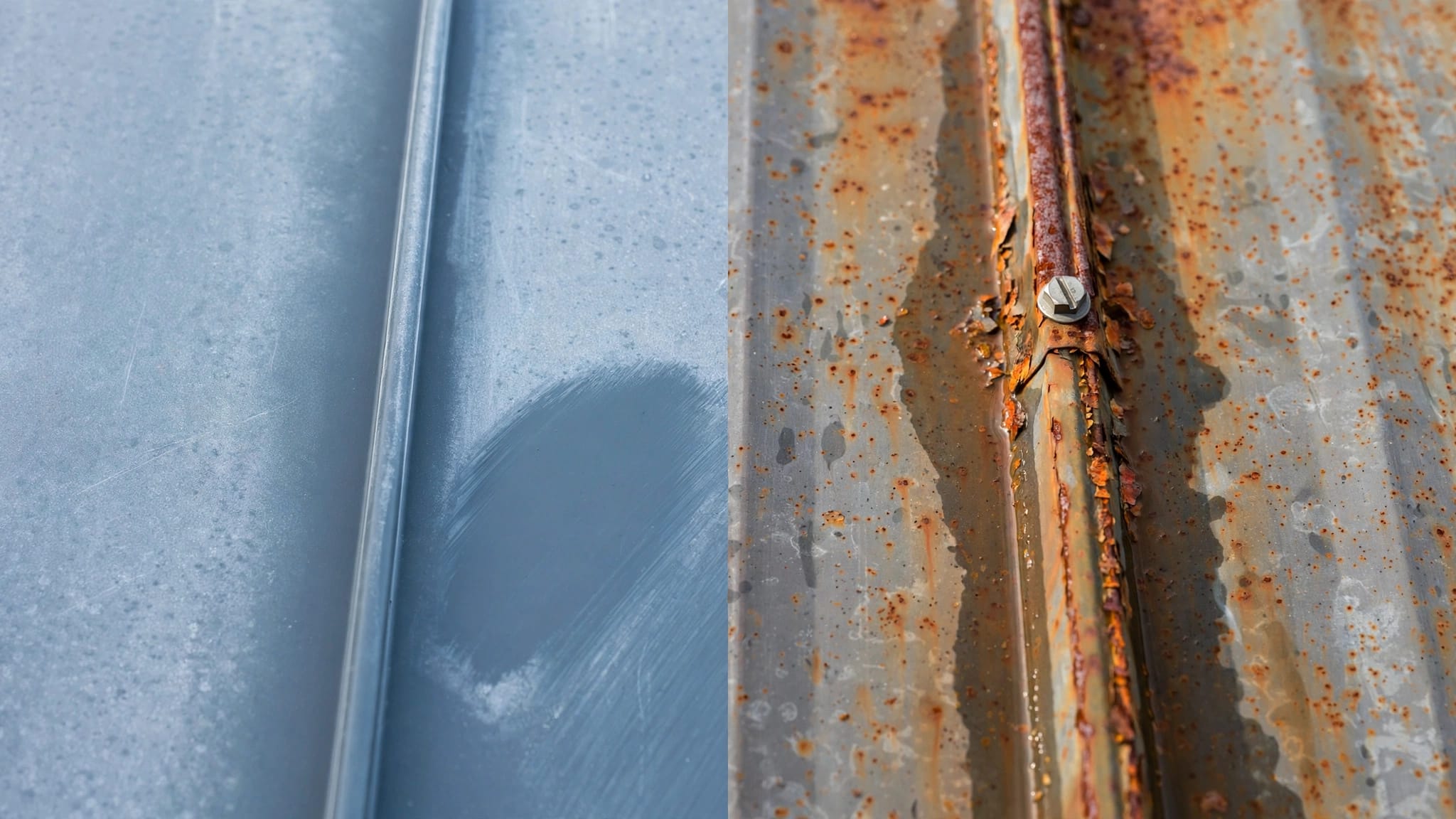
A light powder on a metal roof can look alarming, while a small orange line may seem harmless. Knowing the difference between chalking vs corrosion helps you choose the right response before cleaning, coating, or patching makes the problem worse. Chalking is usually a coating-...

A metal roof can look finished from the driveway while a lifted closure, loose screw, or open flashing detail is still waiting for the next downpour. A thorough Florida metal roof inspection checks the full roof assembly, not only the panel color and straight lines. For homeow...
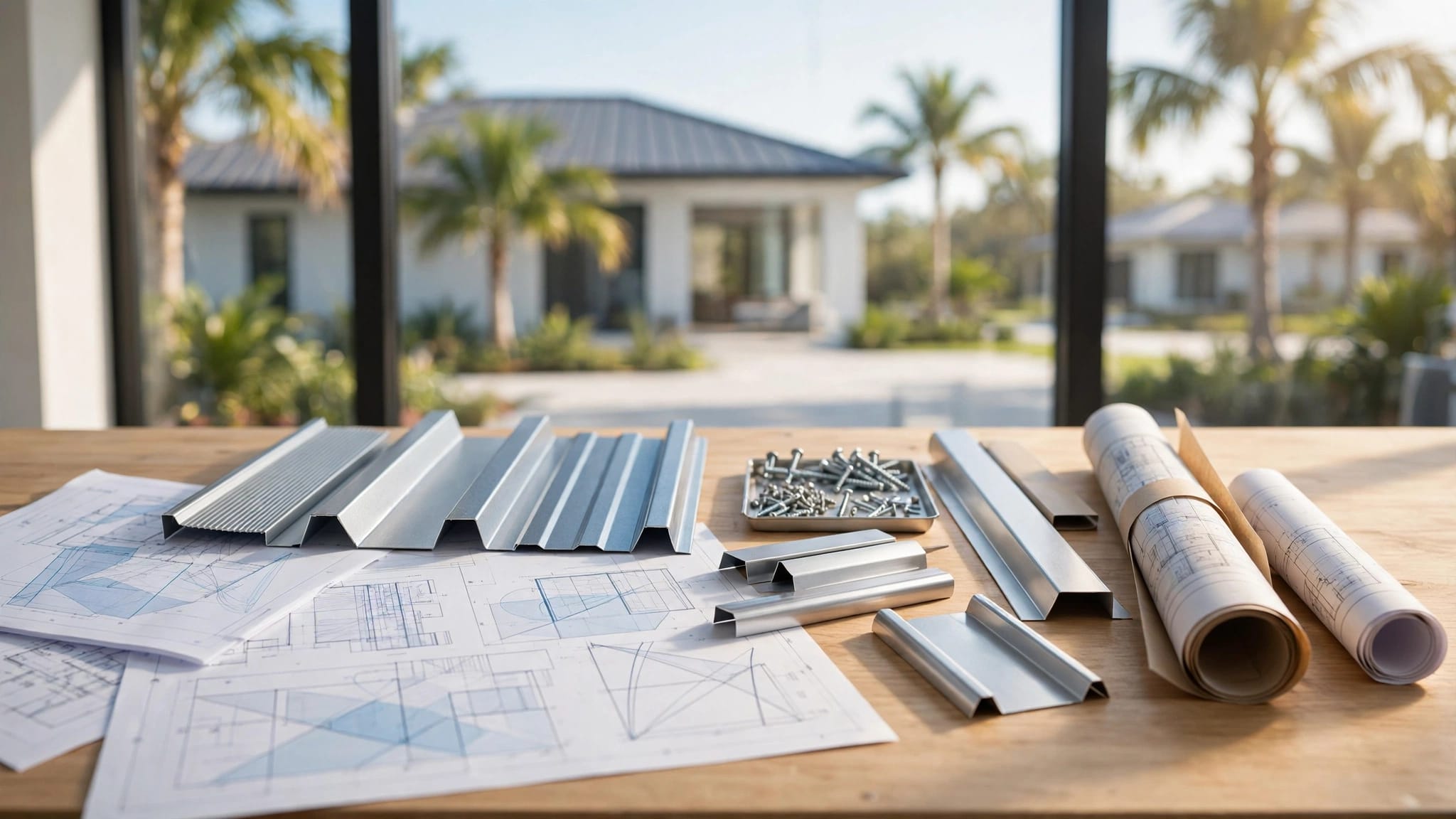
A late panel order can stop a roofing crew as quickly as a thunderstorm. Strong metal roofing procurement starts before fabrication, with complete drawings, confirmed details, and a delivery plan that matches the jobsite. For Florida homeowners and contractors, the schedule mu...

A metal roof screw can look tight and still create a leak path. The right screw gun settings seat the washer evenly without crushing it, stripping the substrate, or dimpling the panel. There is no universal RPM, torque number, clutch setting, or depth-stop position for metal r...
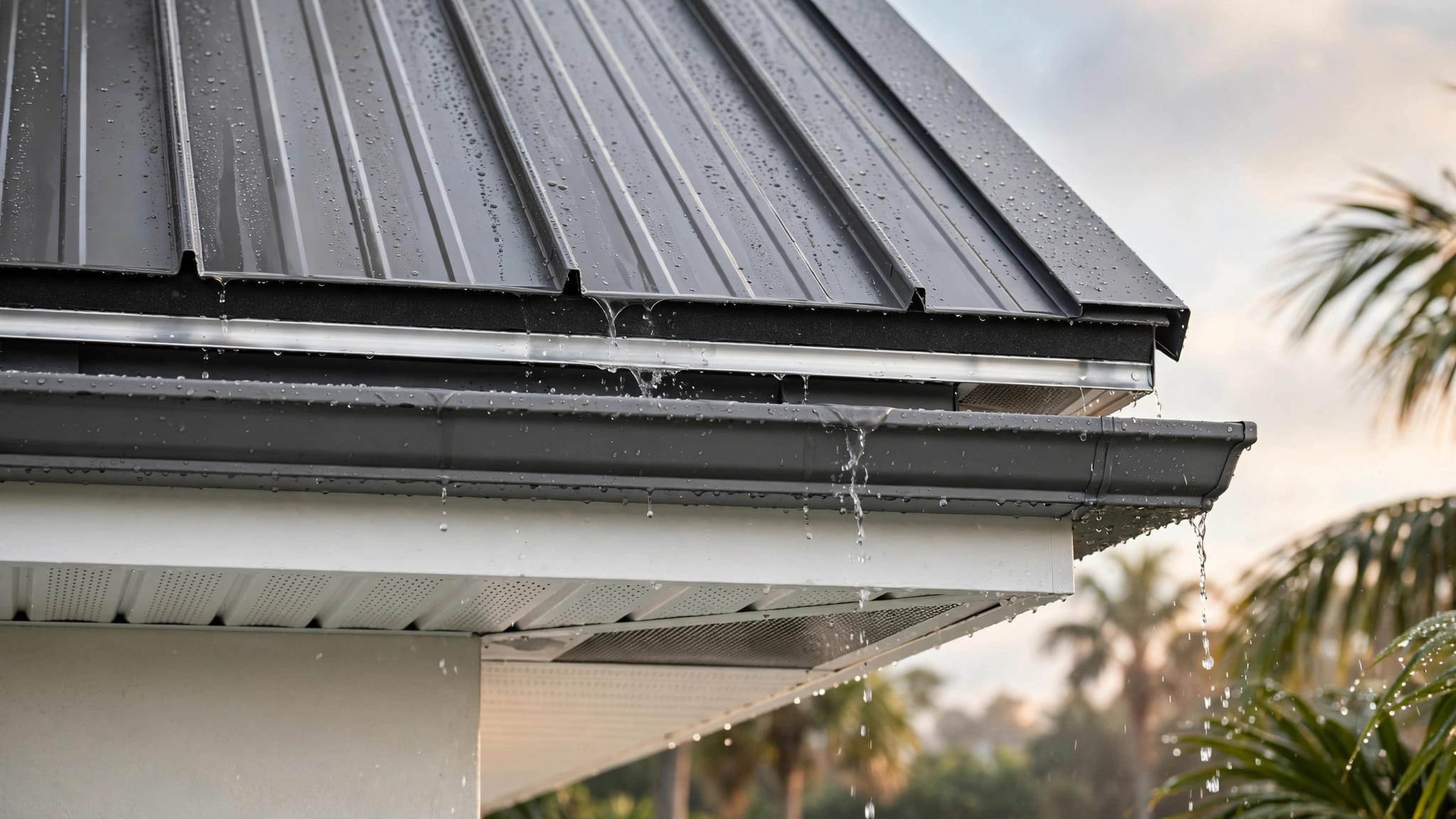
Most edge leaks begin where the roof appears simplest, at the eave. A properly detailed metal roof fascia soffit transition moves rain off the panels, past the fascia, and away from the wall without blocking attic intake. Florida's heavy rain, salt air, high humidity, and wind...
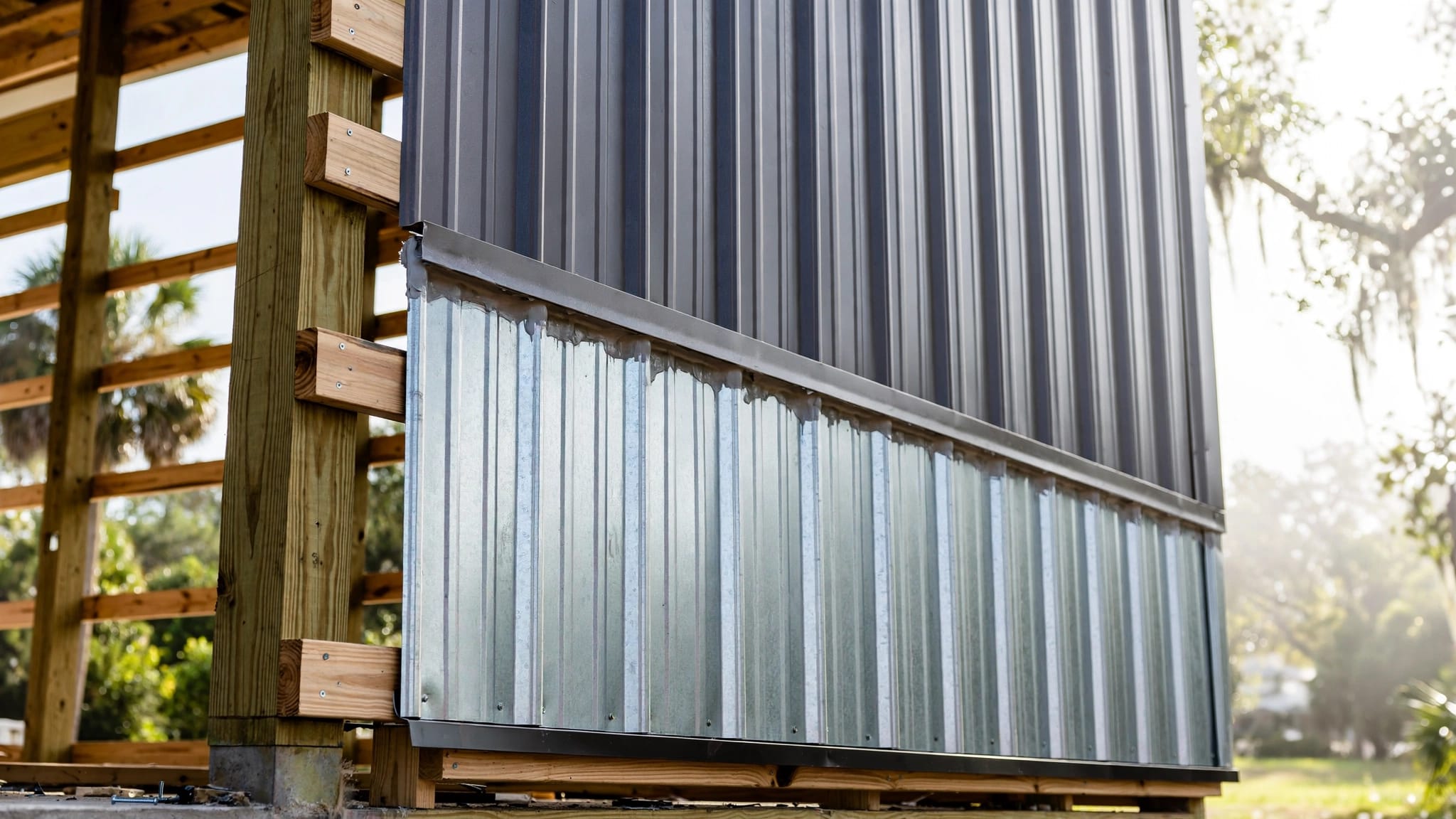
A long pole barn wall can turn one small alignment error into a crooked row of panels. The metal siding end lap is where that error often becomes visible, or worse, becomes a route for wind-driven rain. Long panels are the cleanest option when they can be safely produced, deli...
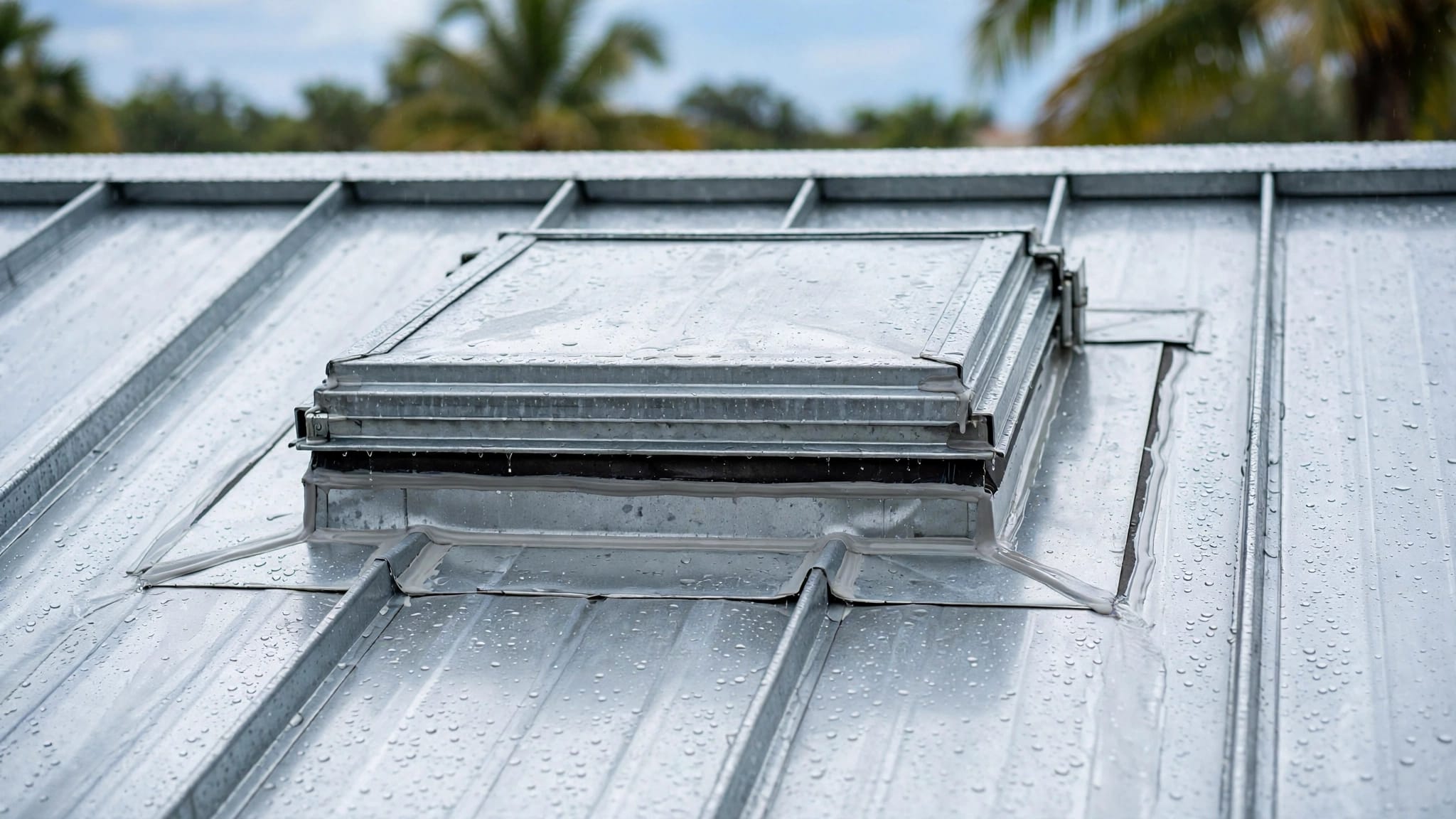
A roof access hatch cuts across the normal flow of panels, underlayment, flashing, and runoff. If that transition is poorly planned, wind-driven rain can enter at the curb long before a ceiling stain gives it away. Reliable metal roof access hatch flashing starts with a curb d...
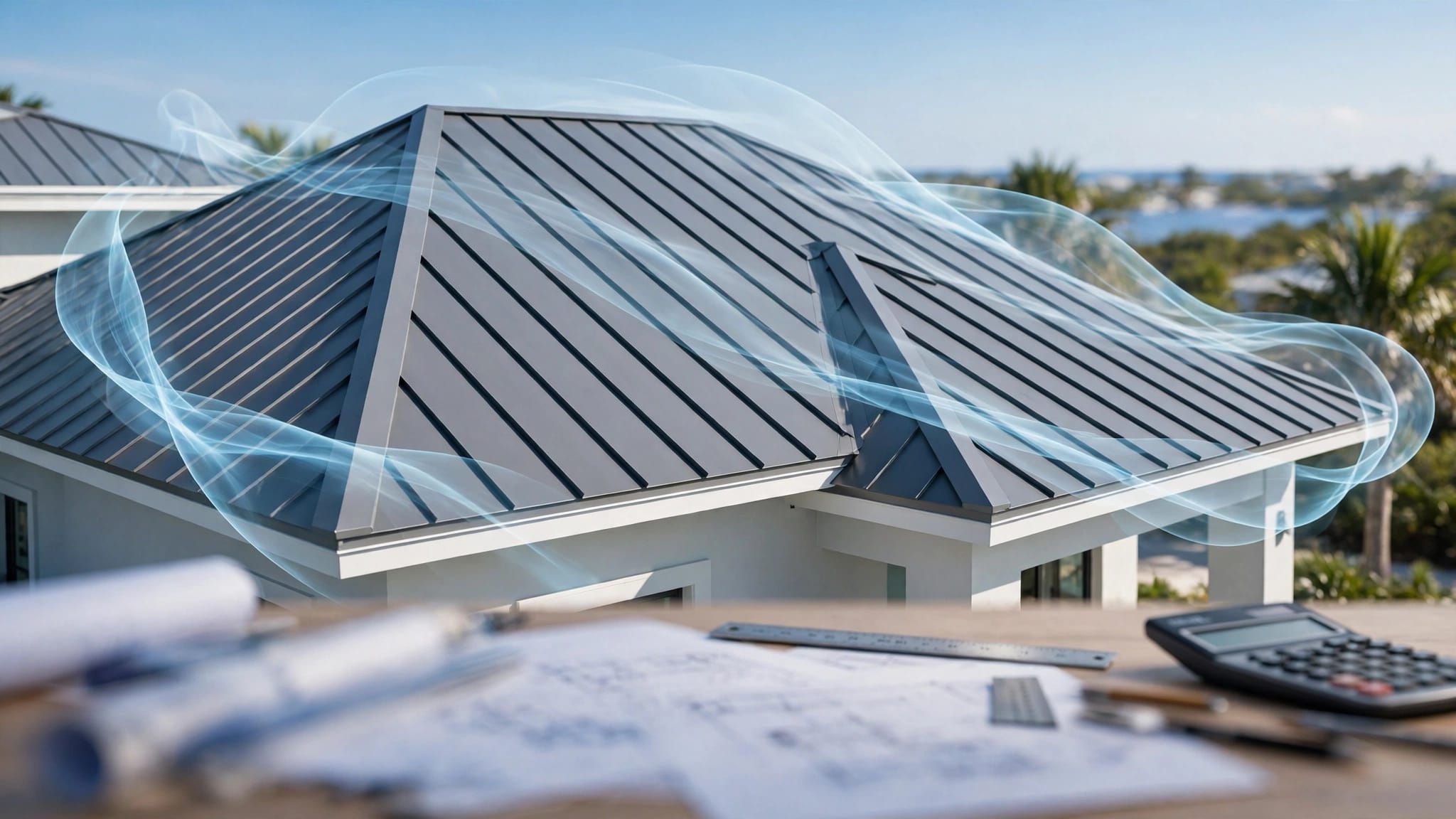
A metal roof can look straightforward on a quote sheet, then become complicated when wind pressures enter the permit review. Florida wind load tables turn site conditions and roof geometry into numbers that determine whether a tested roof assembly can stay attached. For contra...
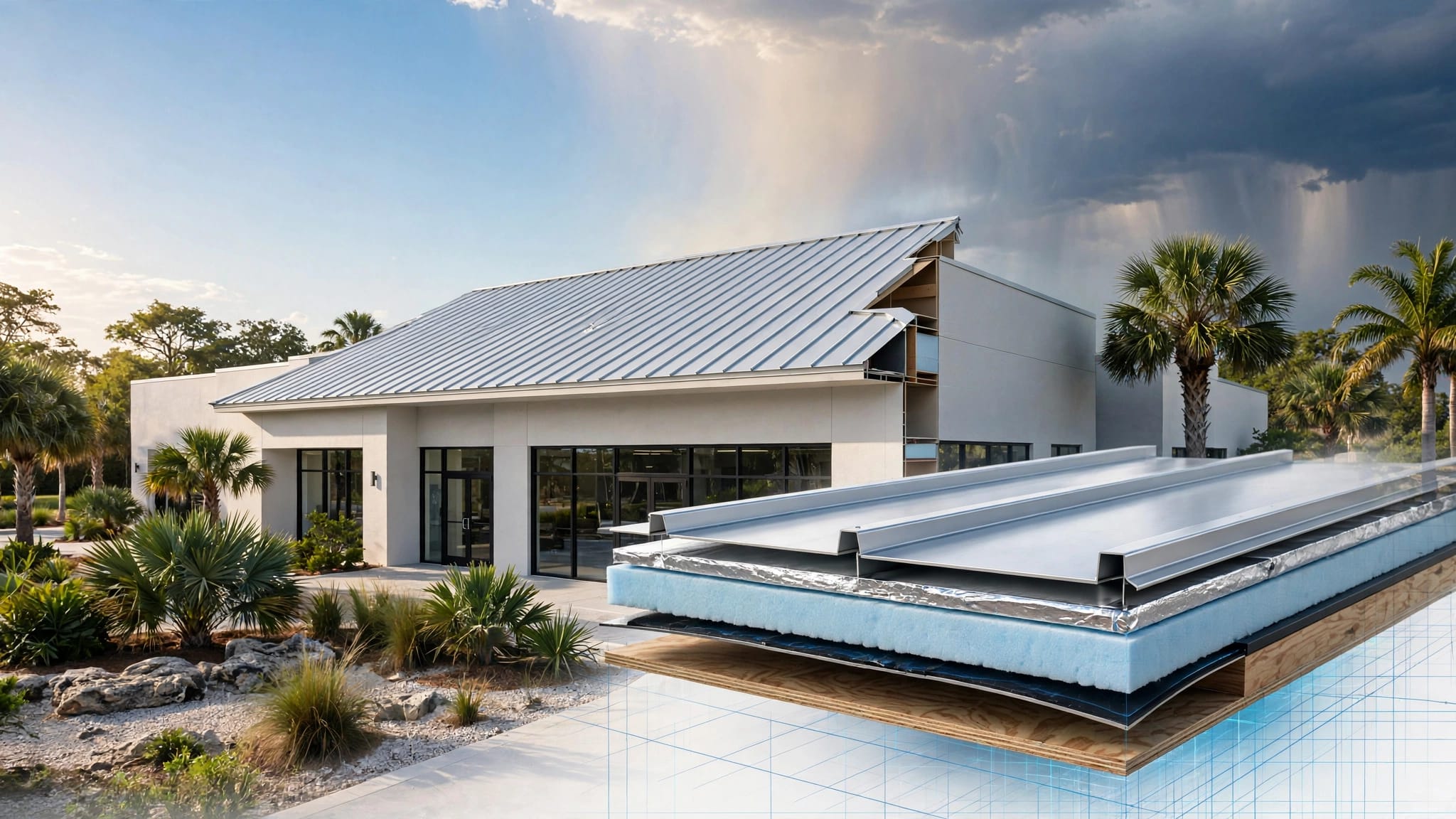
A metal roof can shed heat, handle rain, and meet a chosen color palette, yet none of those qualities alone proves code compliance. For Florida metal roofing on a conditioned building, the roof finish, insulation, air-sealing details, and permitted assembly each matter. Proper...
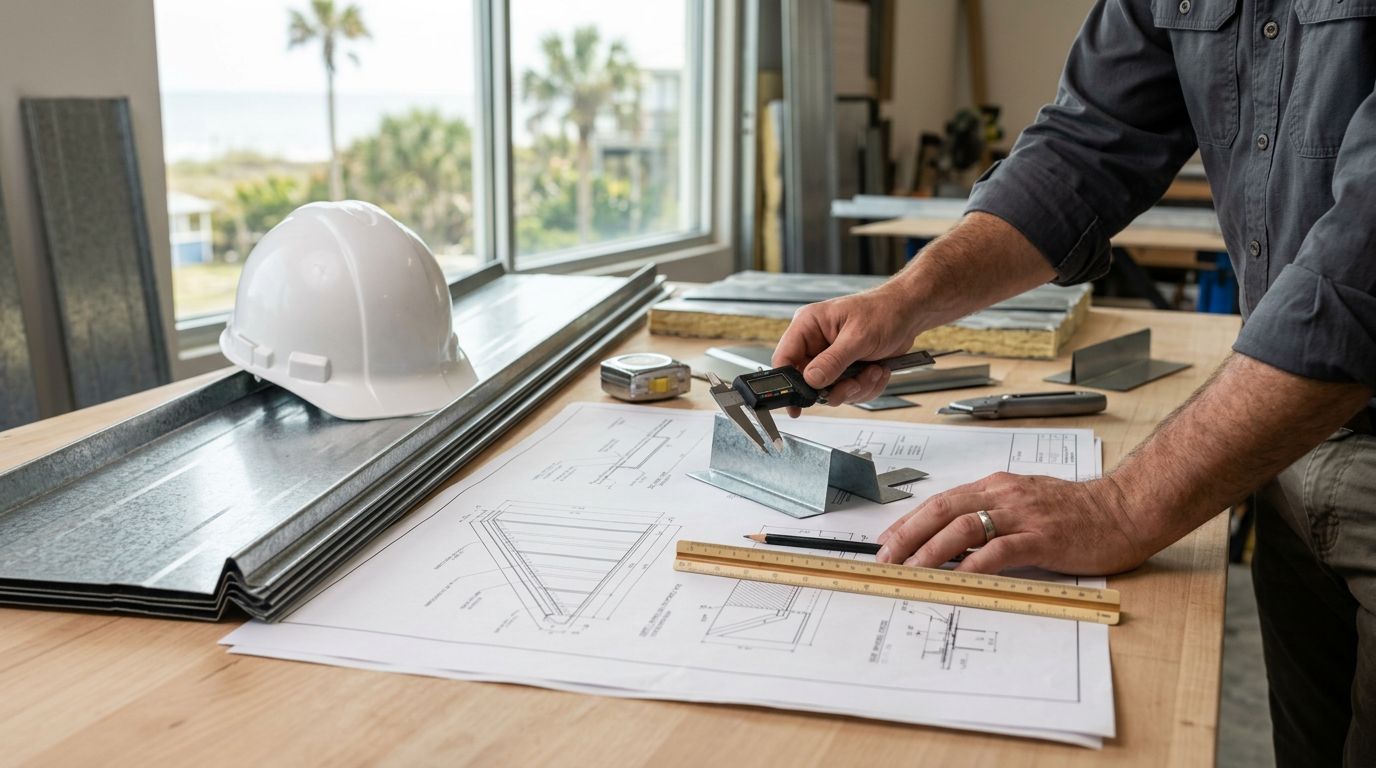
A metal roof can look simple from the ground, yet a missed detail on paper can cause wasted panels, leaks, or a failed inspection. Metal roofing shop drawings turn plans and specifications into fabrication instructions, so they need a hard review before coils are cut and trim...
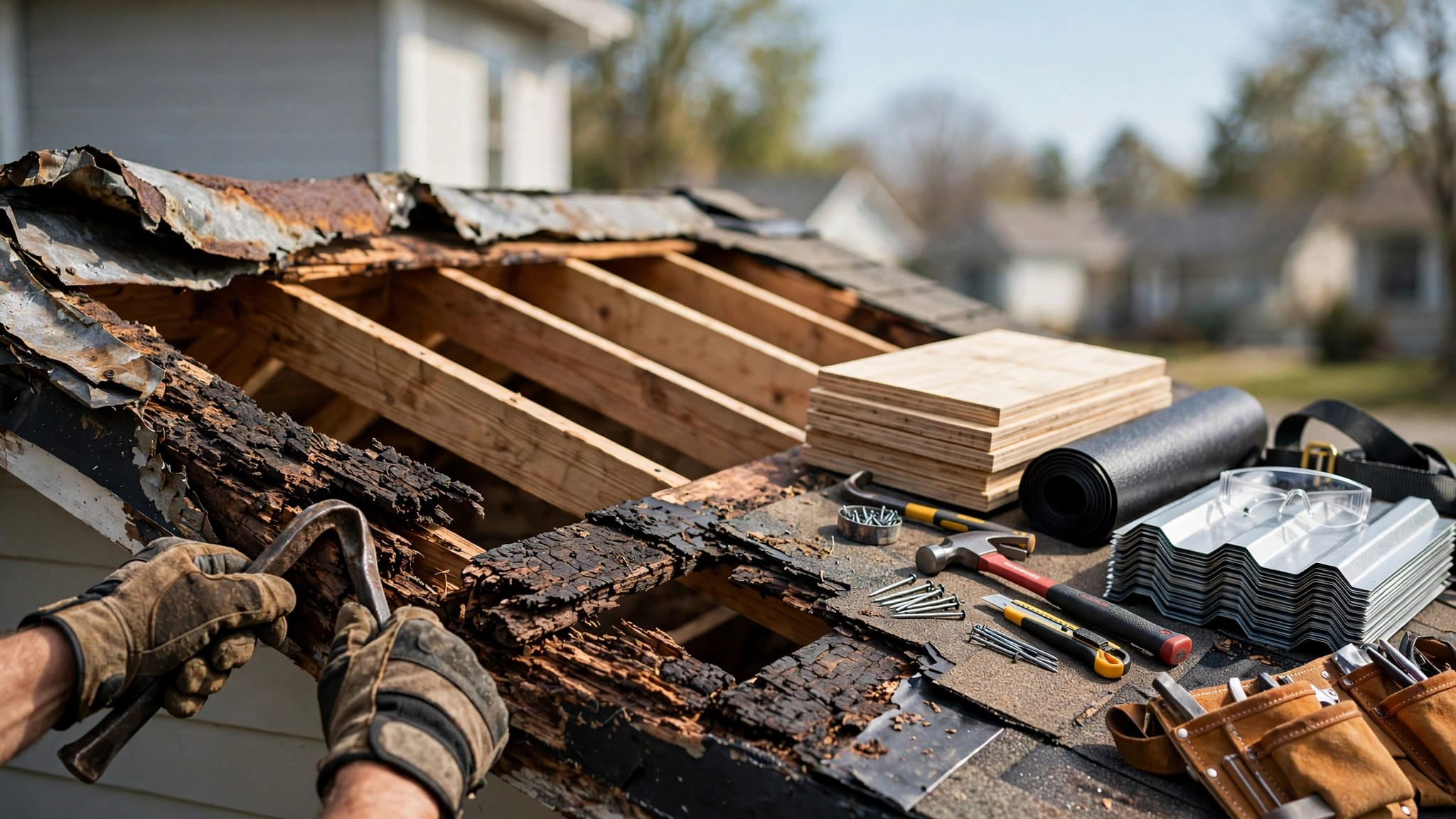
A metal roof can last for decades, but it can't make weak roof decking strong. Before panels, underlayment, or flashing go on, you need to replace rotten roof deck material that can't hold fasteners or stay flat. Rot usually starts around leaks, valleys, chimneys, plumbing ven...
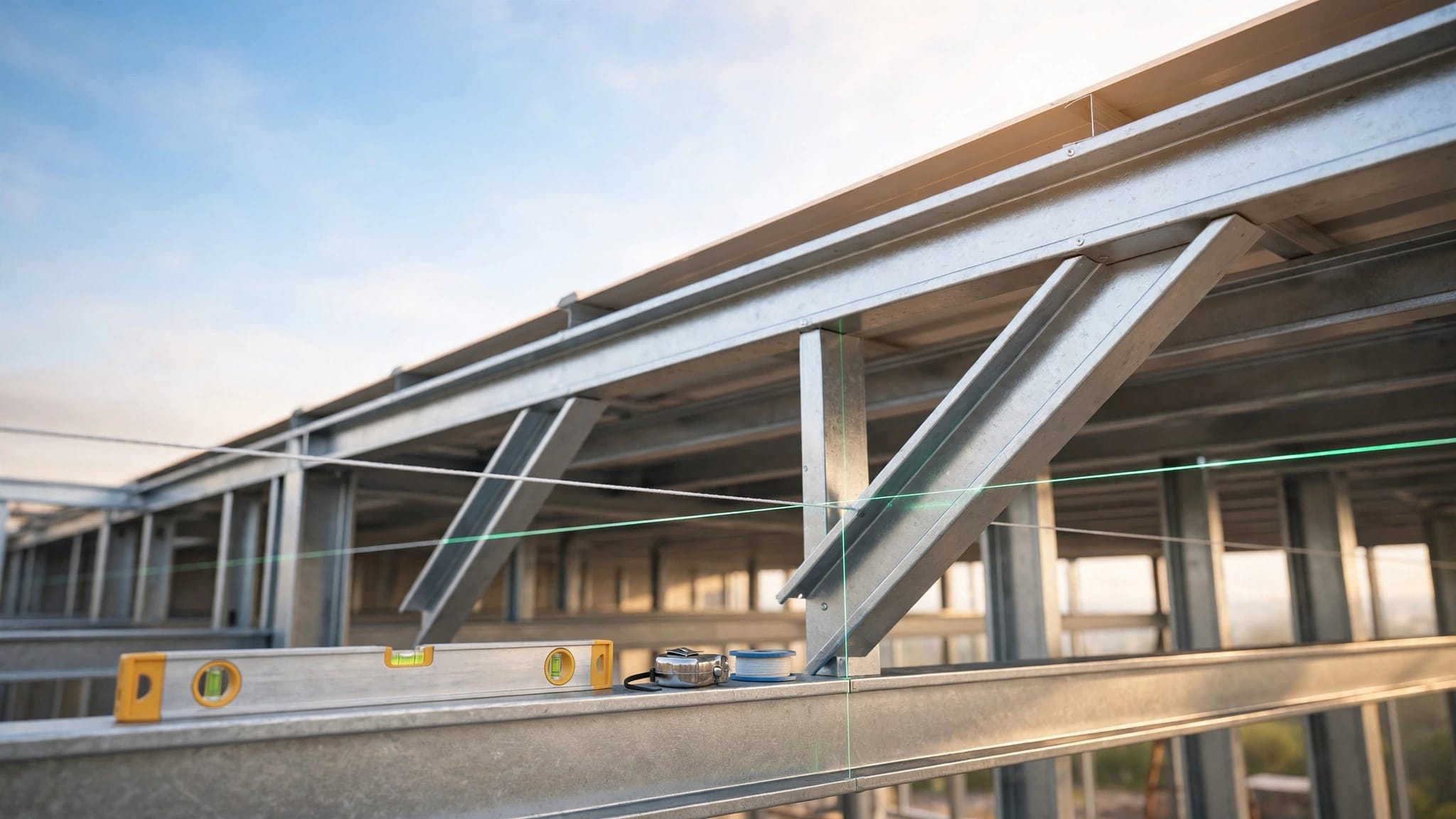
A roof panel can only sit as straight as the framing beneath it. If the eave strut wanders, dips, or sits out of plane, the finished roof may show crooked panel ends, uneven trim, gaps at closures, and fasteners that miss solid steel. Checking metal building eave strut alignme...
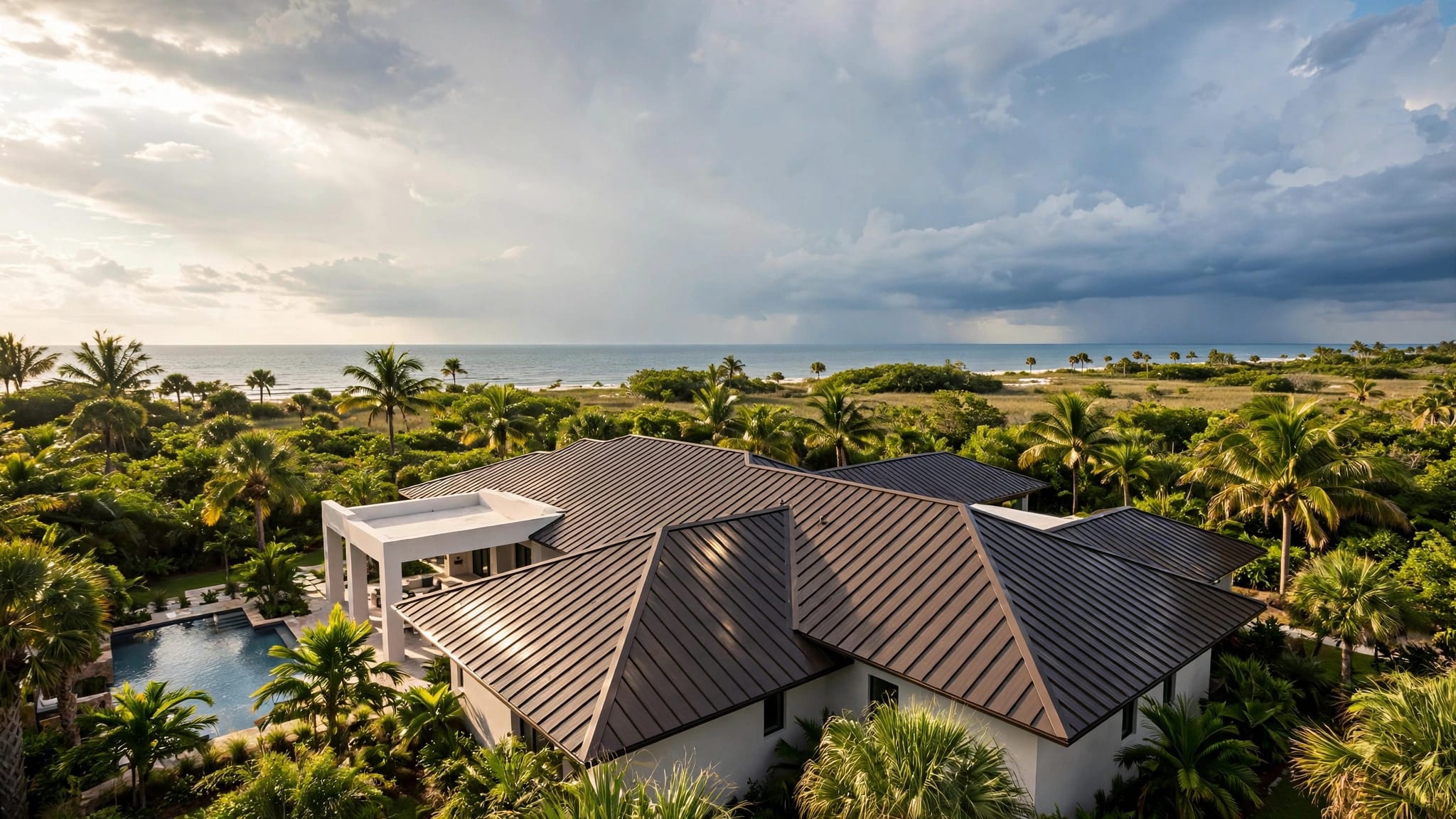
A metal roof can outlast several rounds of shingles, but Florida gives every roofing system a hard test. Sun, salt air, humidity, and hurricane-force winds all affect how long panels, fasteners, coatings, and flashing hold up. For most homes, the metal roof lifespan Florida ho...
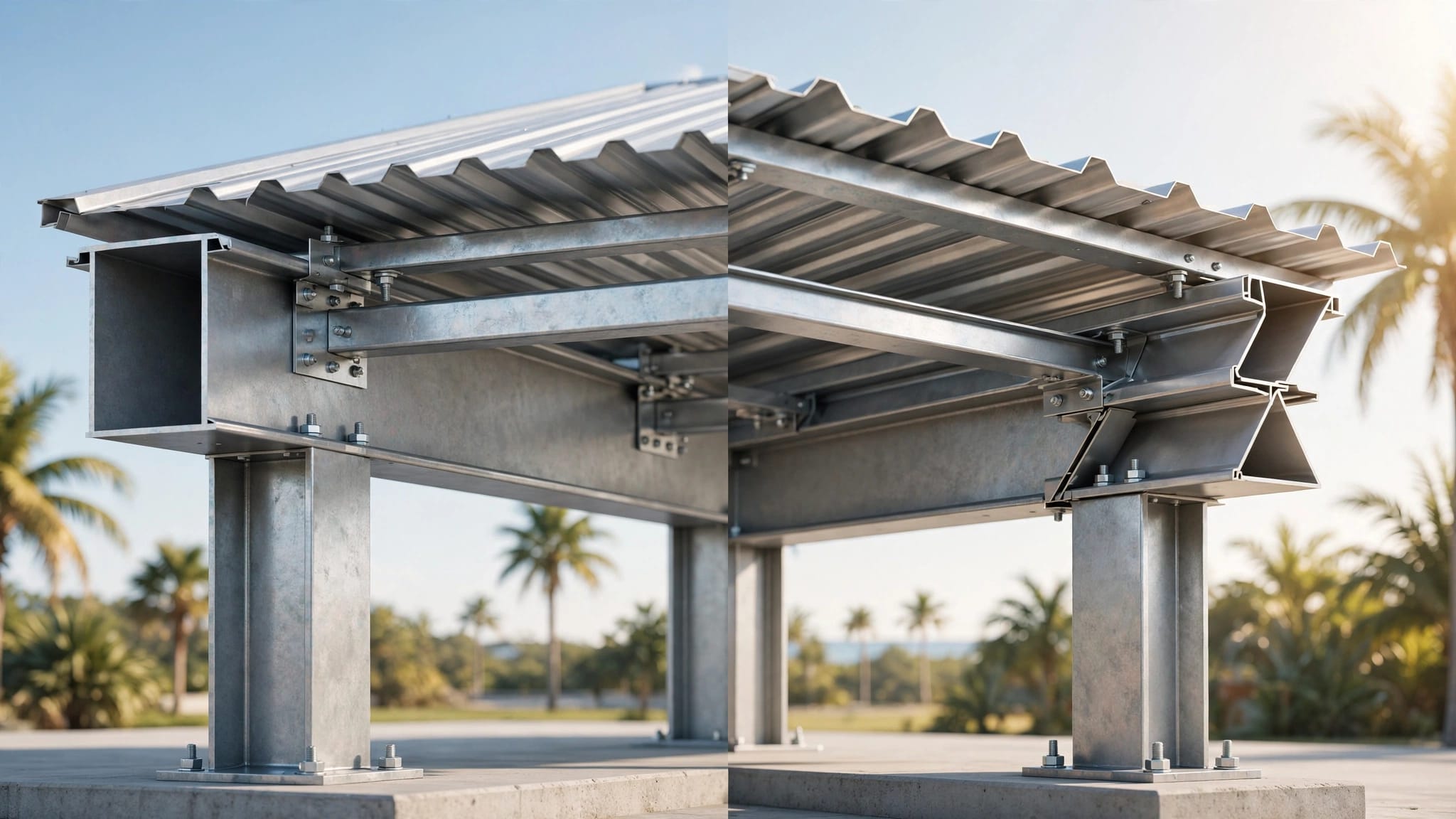
A metal roof panel gets attention, but the framing beneath it carries much of the work. If purlins don't match the building's spans, loads, connections, and wind design, a good-looking roof system can become a costly problem. The C vs Z purlins choice comes up early for Florid...
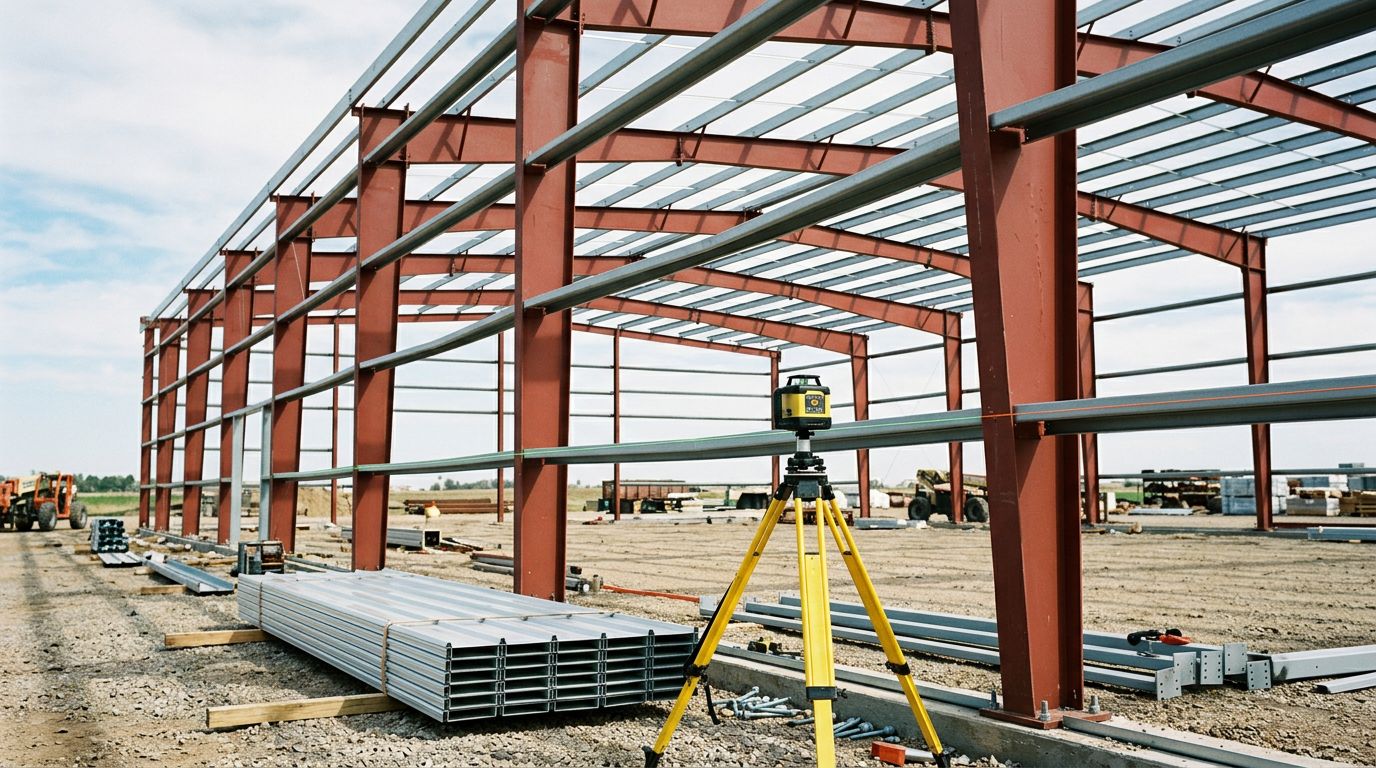
Metal siding can hide a problem for a few days, then put it on display for years. When girts bow, columns shift, or framing lines wander, the panels often follow every flaw. Metal building wall deflection deserves attention before the first wall panel goes up. Contractors and...
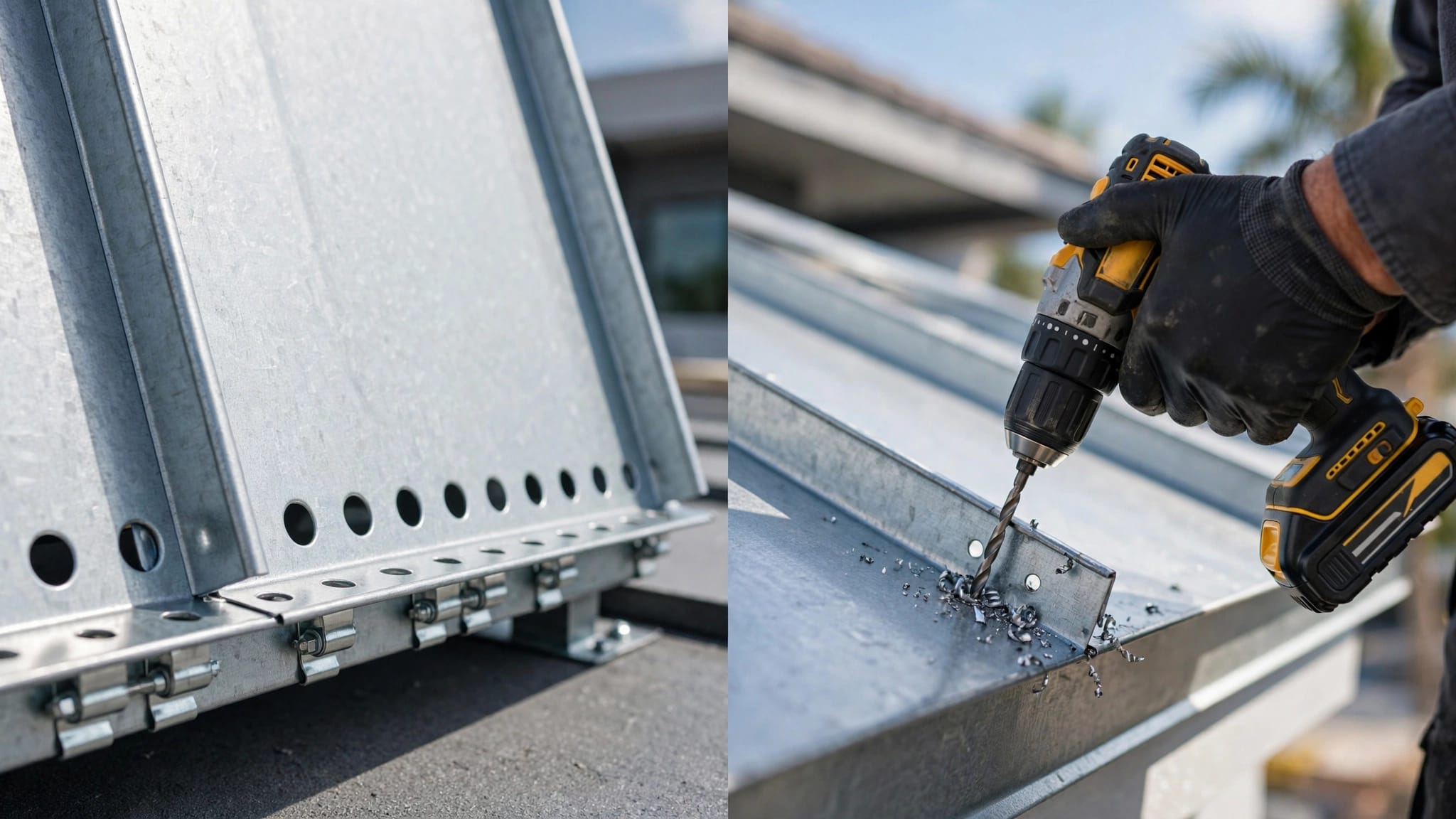
A small hole in a metal roof panel can affect wind resistance, water control, and panel movement for decades. That is why the choice between factory-punched and field-drilled standing seam panels deserves attention before materials arrive on site. For Florida homeowners, contr...
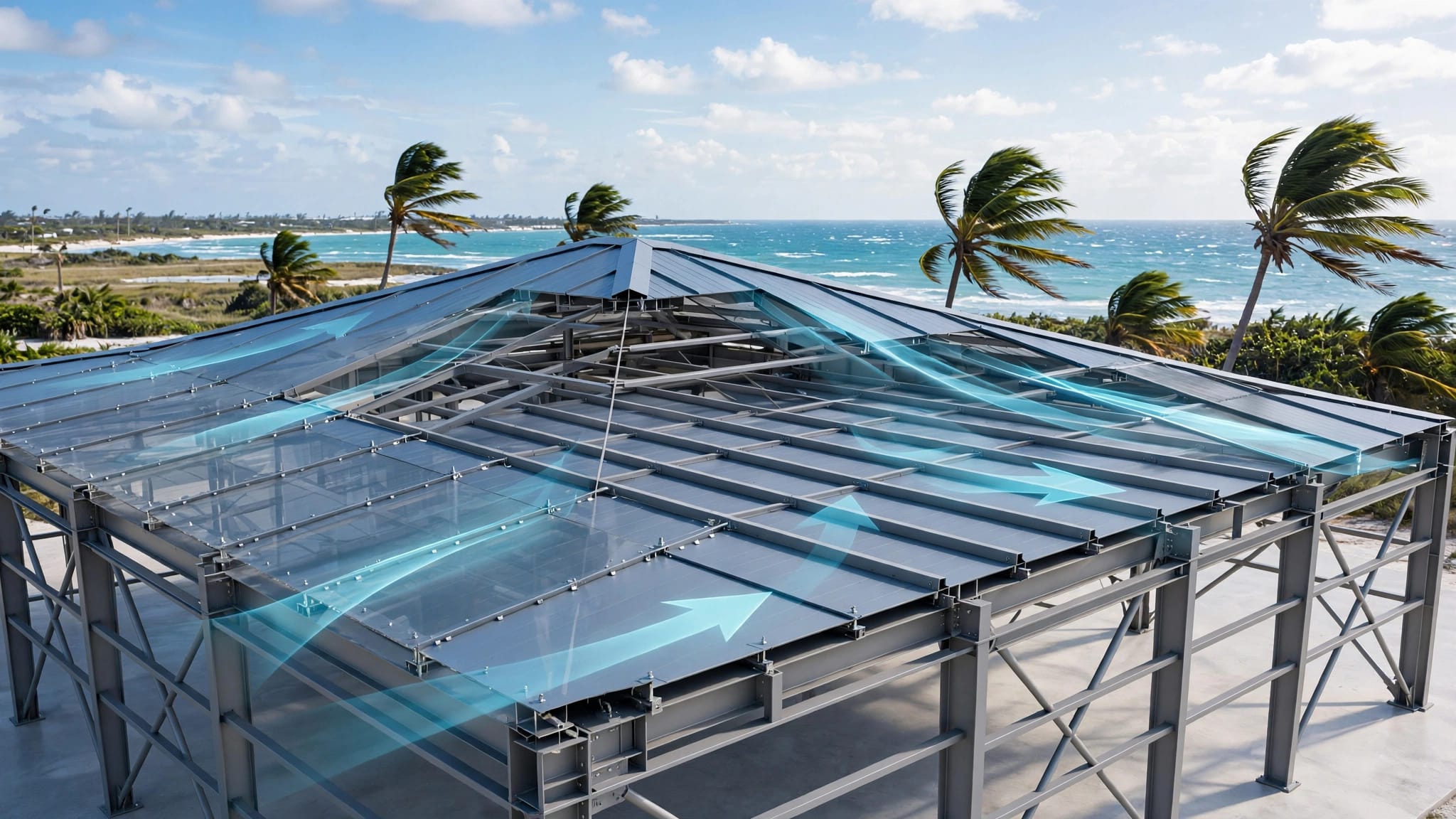
A metal roof does more than keep rain out. In the right assembly, it can transfer horizontal wind forces across a steel building and into its braced frames, shear walls, or other lateral-force-resisting elements. That role is called a metal roof diaphragm . For Florida buildin...
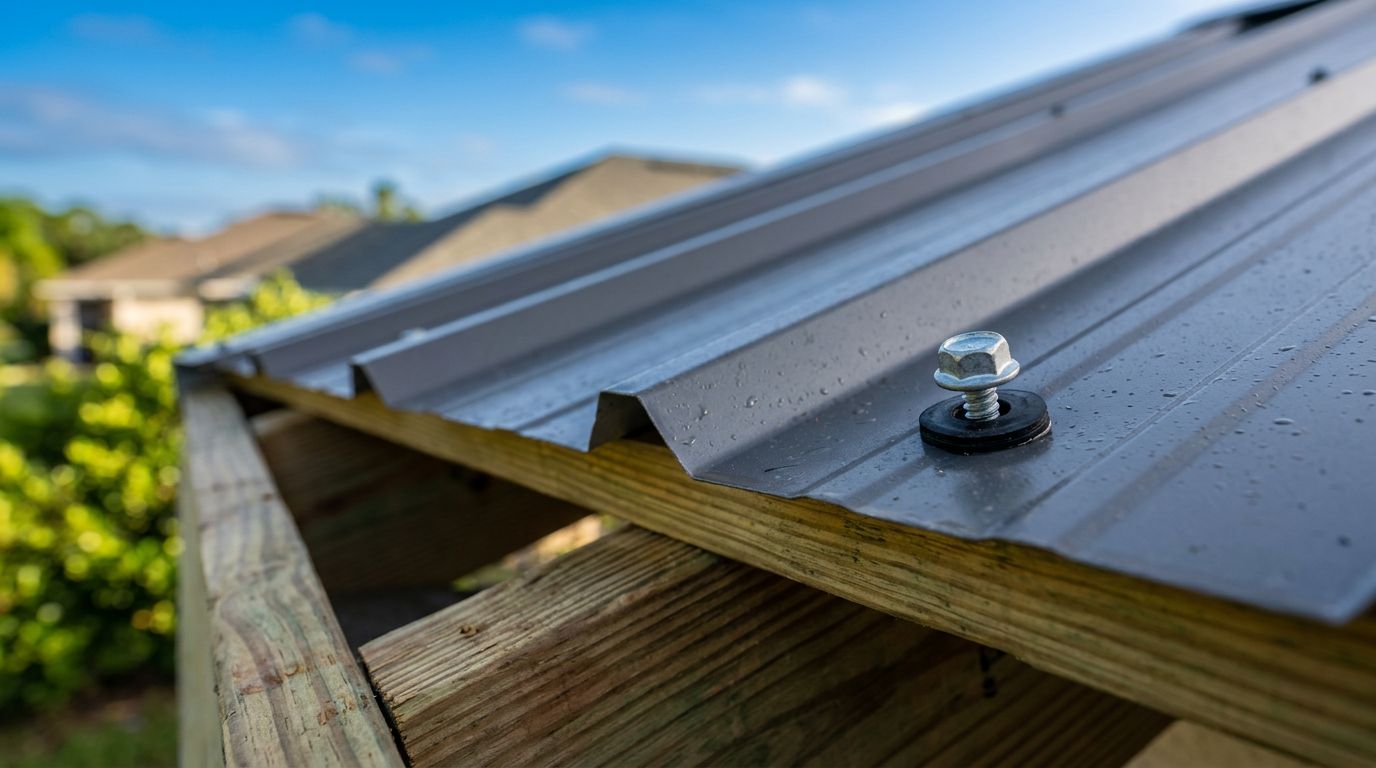
Pressure-treated framing protects roof structures from moisture and insects, but it can shorten the life of the wrong screw. Metal roof fasteners must resist both the treated wood chemistry and Florida's heat, rain, and wind. A roof can look finished on installation day and st...
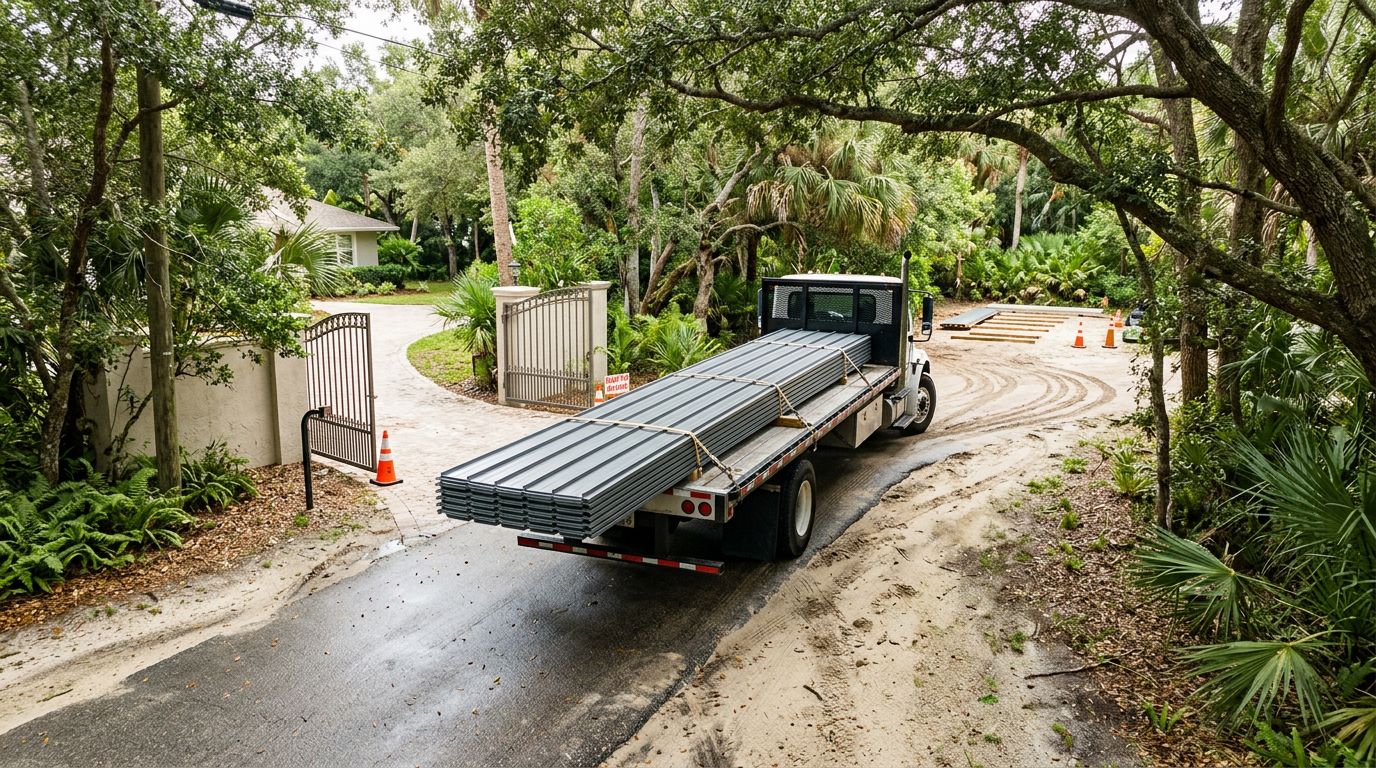
A long metal panel can turn an ordinary driveway into a delivery constraint. Metal roofing delivery goes smoothly when the truck route, unloading area, and panel storage location are planned before the order leaves the supplier. For Florida contractors and property owners, acc...
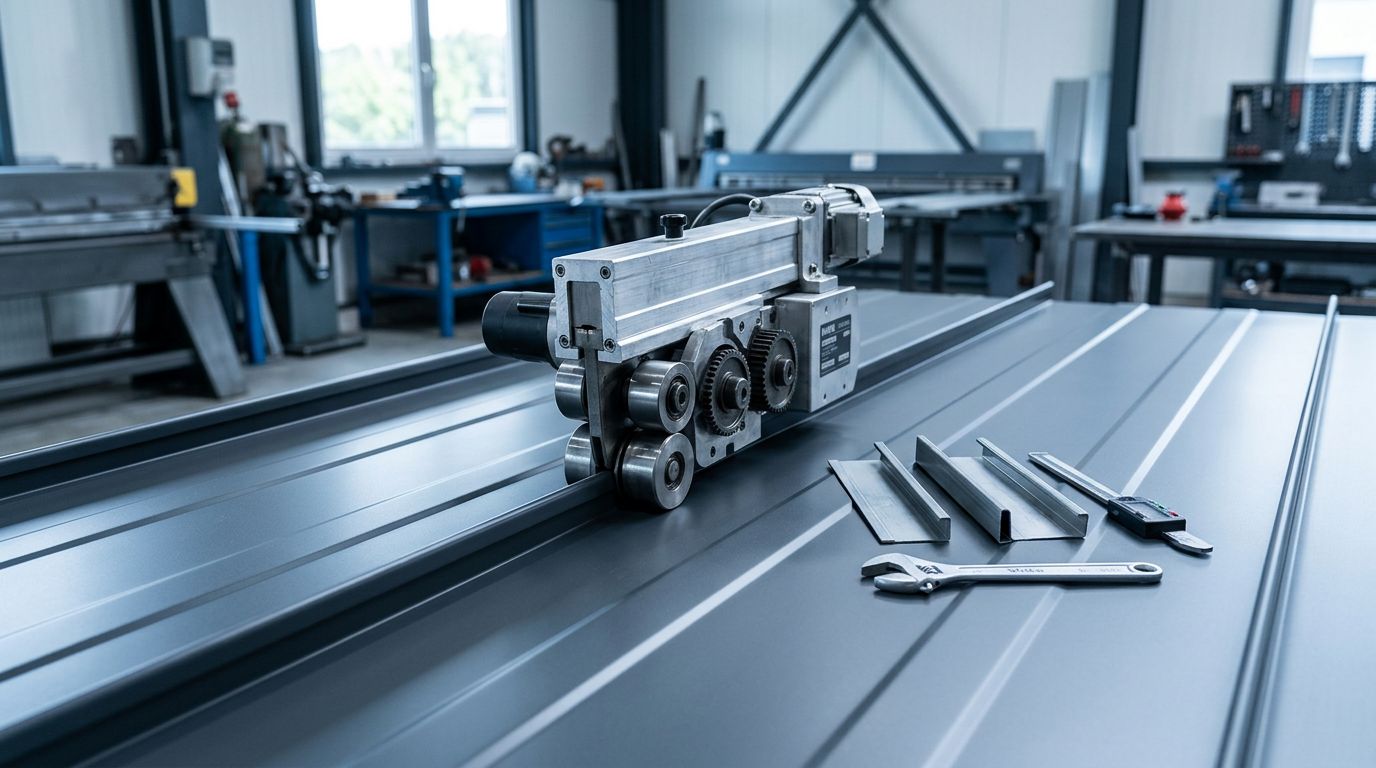
A portable seamer can close hundreds of feet of roof panels correctly, or crease a finished panel in one short pass. The difference often comes down to profile compatibility, machine adjustment, and the test seam completed before production begins. The right standing seam seam...
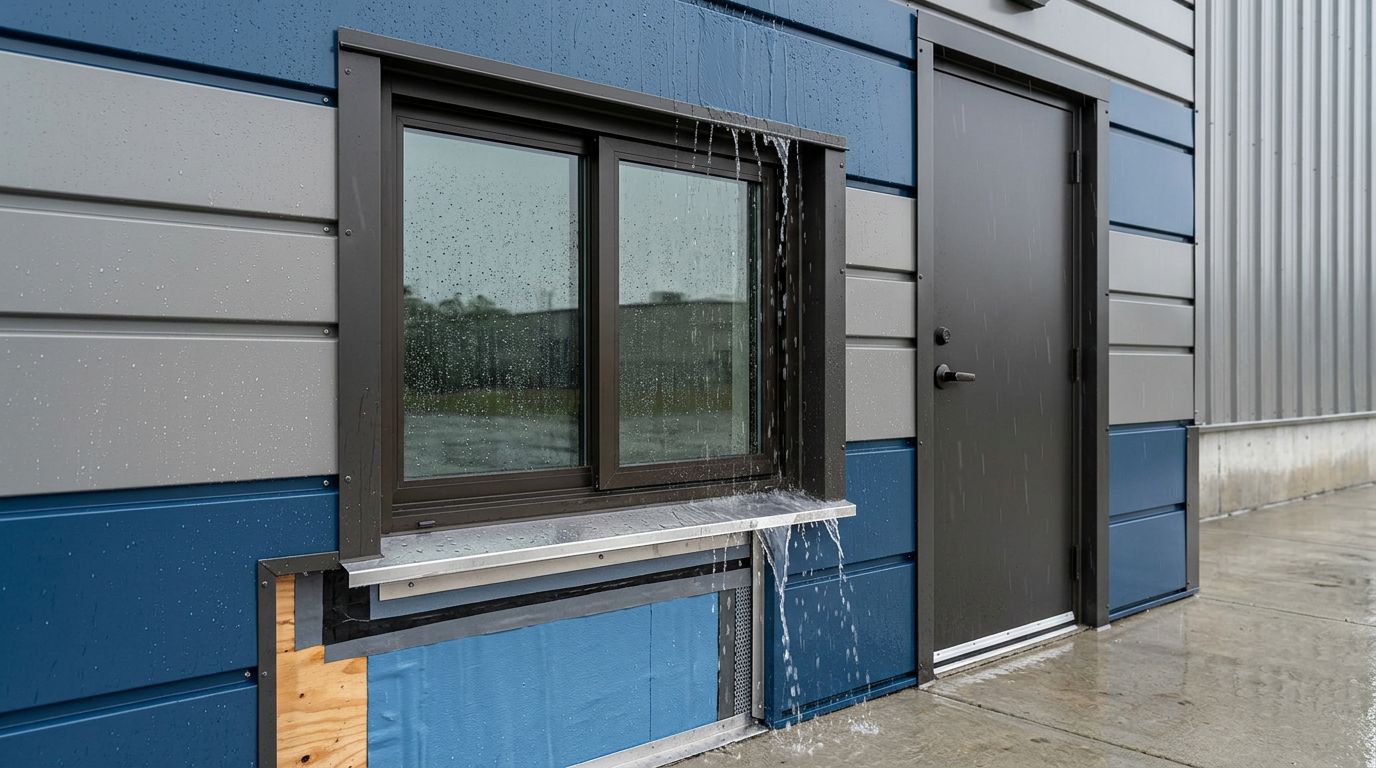
A metal wall can look watertight and still send rain behind a window trim. Long-lasting metal siding around windows depends on the water path behind the panels, not only on straight cuts and matching screws. Every opening needs layers that work together: framing, a water-resis...
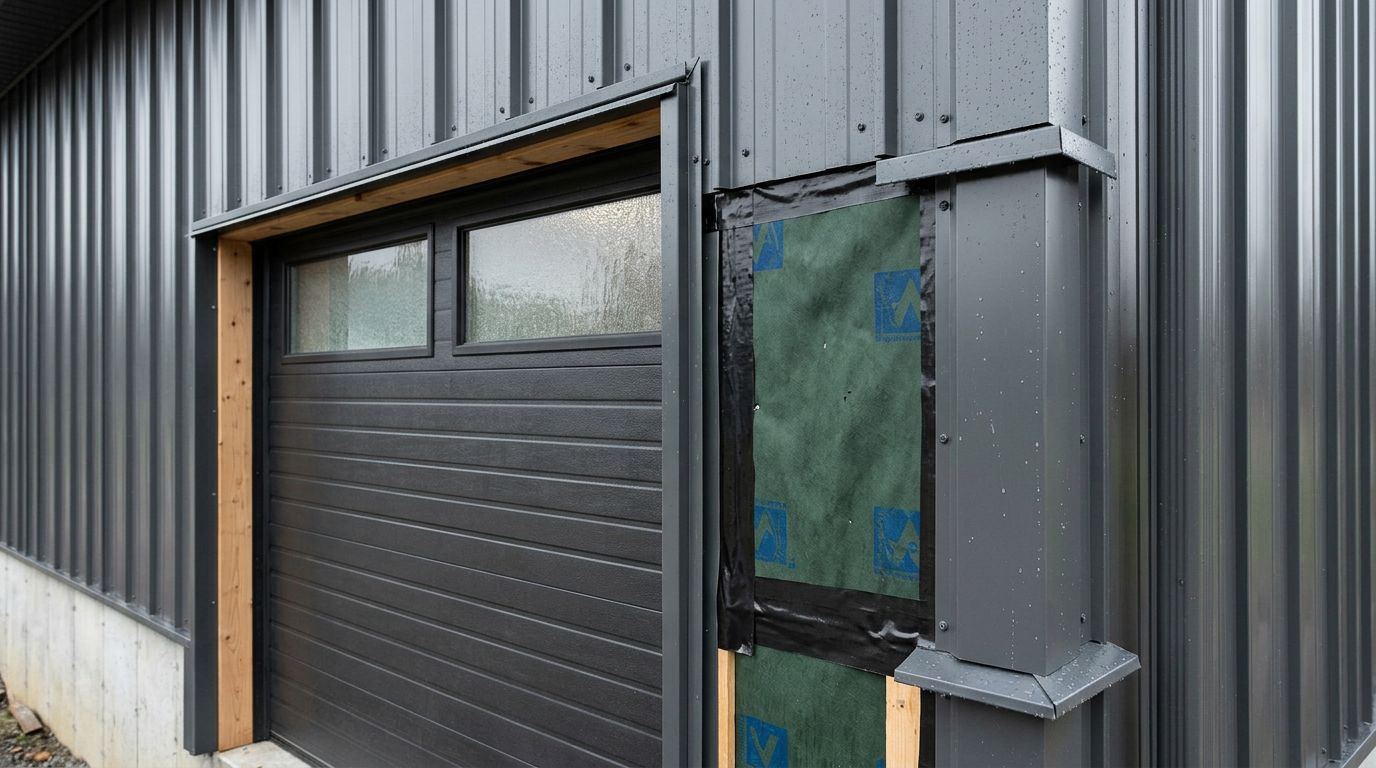
Rain rarely enters through the middle of a metal wall panel. Wind-driven rain finds seams, fastener holes, and trim joints around an overhead door. Proper metal siding flashing gives water an outward route while protecting the WRB and door seals. Begin with the opening and dra...
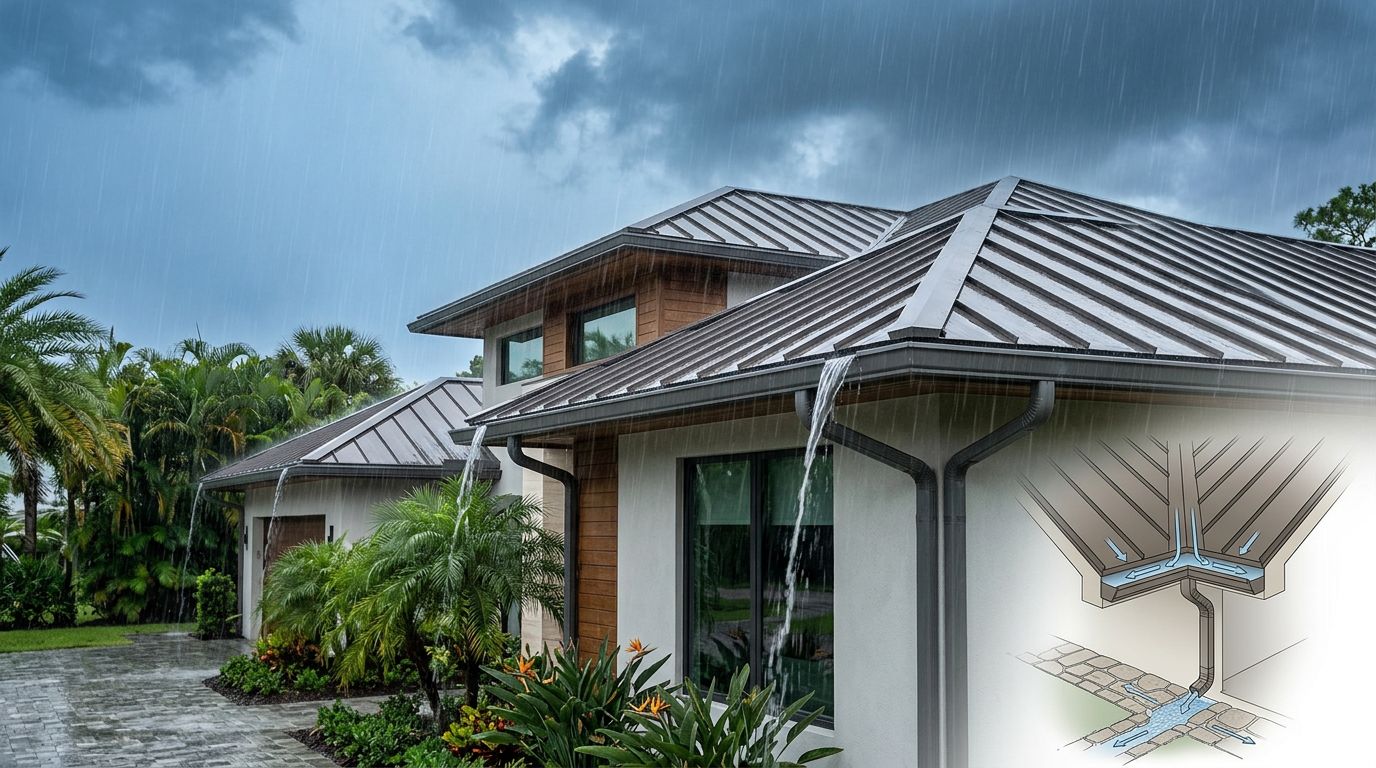
A metal roof can move a large volume of water to the eaves in a short time, especially during a Florida downpour. An undersized gutter may overflow at valleys, stain the fascia, and discharge water beside the foundation. For accurate Florida gutter sizing , calculate the roof...
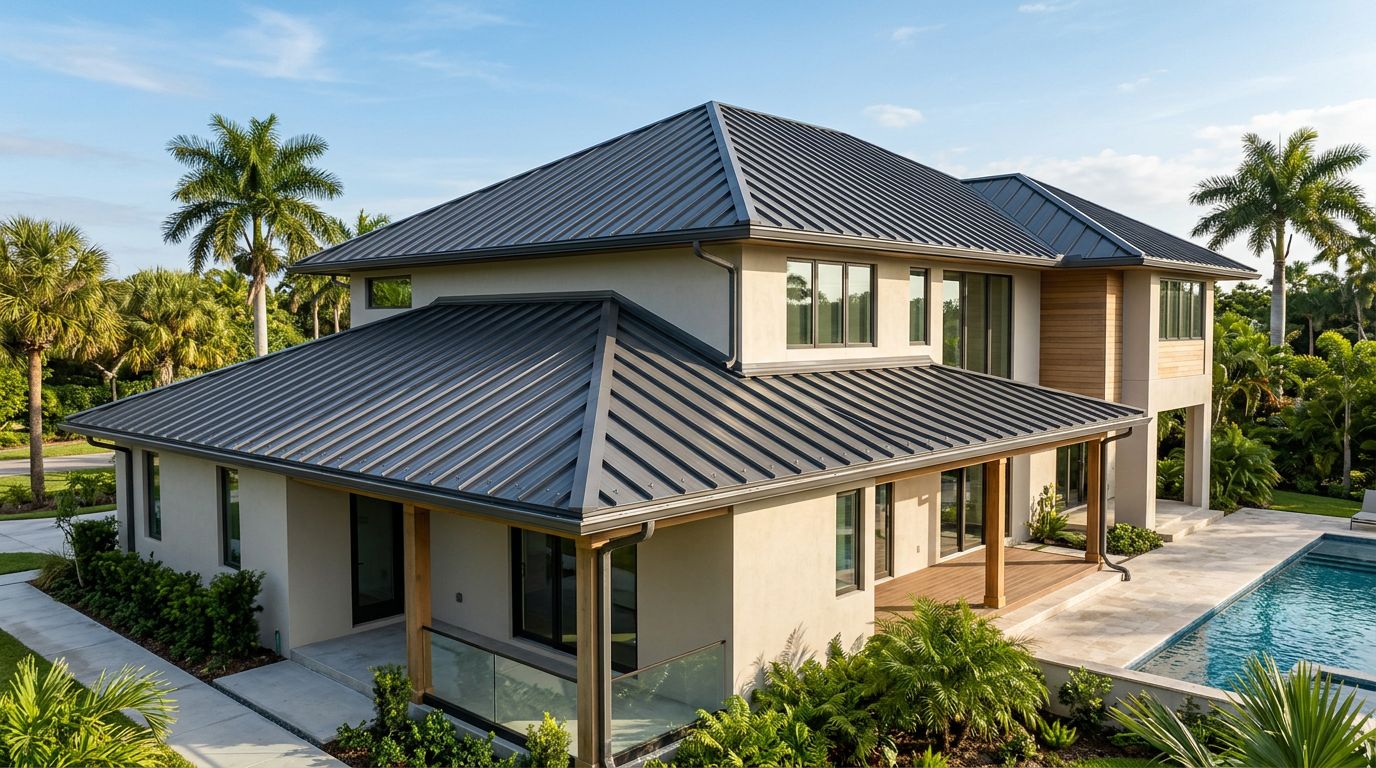
Can you mix metal roofing panel profiles on one building? Yes, but the safest approach is to use each profile on a separate roof plane, addition, porch, or wall section. Mixing panels across one continuous slope often creates fit, drainage, fastening, and flashing problems tha...
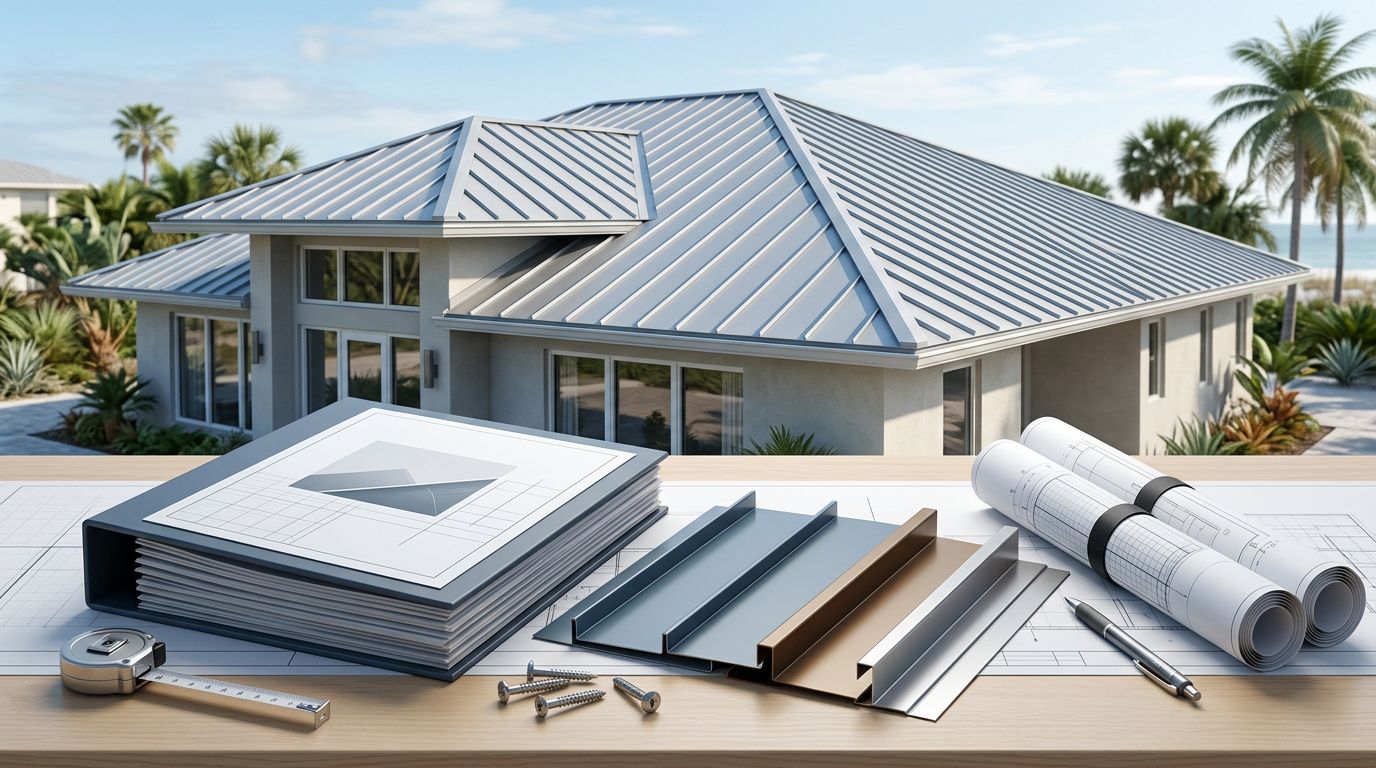
A metal roofing submittal can clear a Florida plan review or create weeks of delay. The difference usually comes down to matching the exact panel system, attachment method, wind criteria, and project documents. For contractors, roofers, estimators, architects, and reviewers, t...
Ready to start?
Speak with our professional sales staff today. We are available to answer questions, provide estimates and start your order.

1. Call Today
(866) 479-8080
Sales representatives are standing by
2. Choose Your Metal Roof Panels
Residential, commercial and ag available
3. Select a Color for Your Roof
Preset colors and paint-able options
4. Determine Necessary Flashing Profiles
Standard sizes and custom trim pieces
5. Purchase Accessories for the Project
Screws, rivets, sealants and more
6. Pickup or Have Order Delivered
Delivering anywhere in the state of Florida