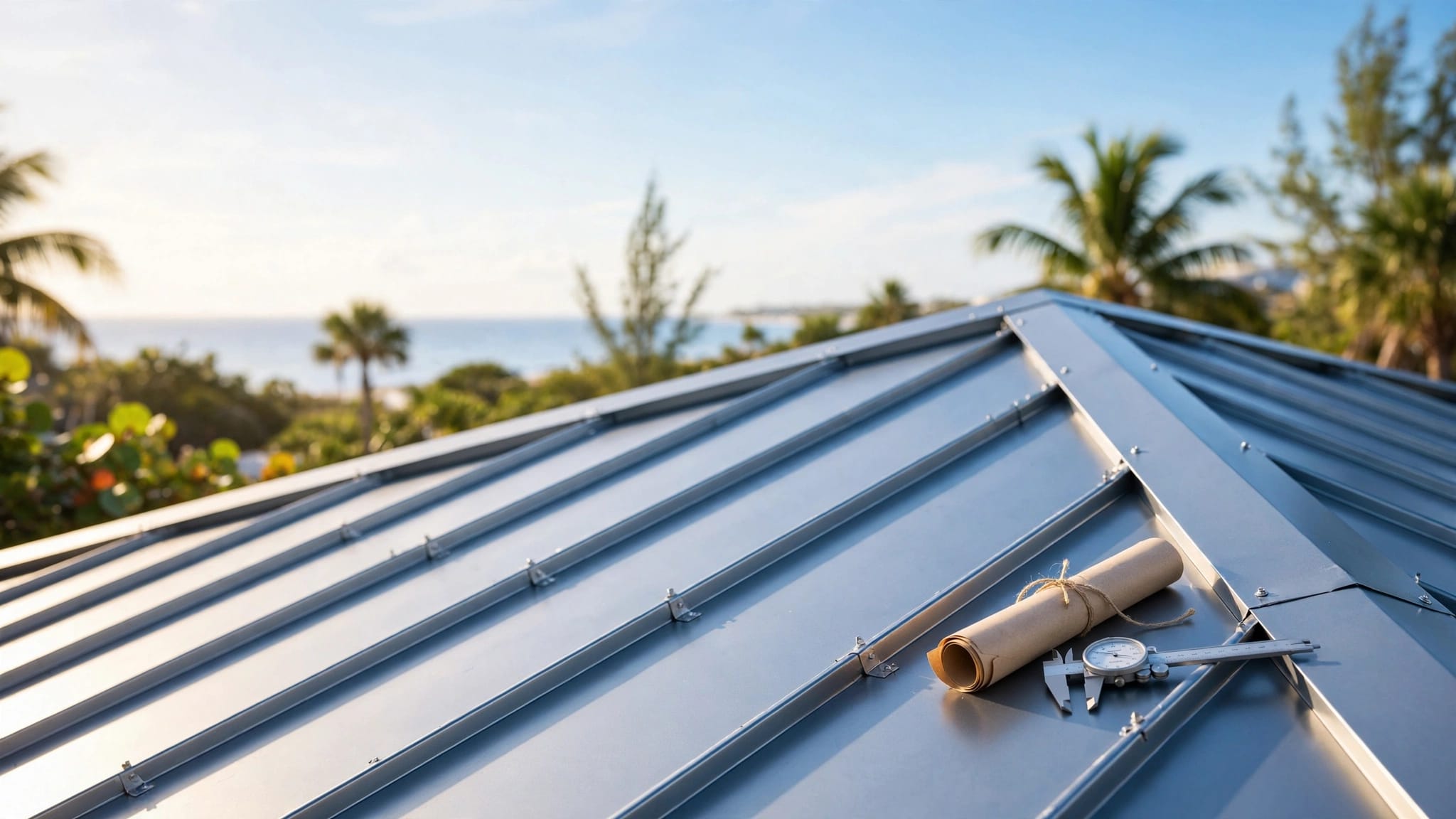
Metal Roofing Change Orders: What Belongs in Writing

A metal roofing change order can affect the roof's cost, schedule, appearance, and approval status. A short note that says "add trim" or "change panels" leaves too many details open to interpretation.
Clear metal roofing change orders identify the exact panel system, dimensions, quantities, accessories, finish, and reason for the revision. They also show who approved the change and whether it affects the permitted roof assembly. That paper trail matters even more on Florida projects, where wind exposure, heavy rain, and county requirements can affect the material selection.
Why Metal Roofing Change Orders Need More Than "Add Trim"
Roof materials are manufactured to match specific profiles and measurements. A vague change can produce the wrong piece, delay fabrication, or create a field fit problem.
Identify the exact panel profile
Use the actual panel name in the change order. Write PBR, R, 5V, standing seam, or Ag/Multi-Rib instead of "ribbed metal" or "corrugated panel."
Profile names affect coverage width, side-lap details, trim compatibility, fastener placement, and installation instructions. A trim piece made for one panel may not fit another profile, even when both panels look similar from the ground.
The change order should also identify the roof area affected. For example, write "PBR panels on the west porch roof" instead of "change the rear panels." Include a plan detail, elevation, marked photograph, or drawing when the location could be misunderstood.
Separate material, location, orientation, and quantity
Each revised item needs enough information for someone to order and install it without guessing. Include:
- Panel or trim profile
- Roof plane, wall, elevation, or opening
- Length, width, and leg dimensions
- Quantity and unit of measure
- Left-hand or right-hand orientation
- Color and finish
- Related fasteners, closures, sealants, or accessories
A change order should also state whether the replacement material is added to the original scope or substituted for material already ordered. That distinction affects the final quantity, credit, waste allowance, and delivery.
What Metal Roofing Change Orders Should Include
The strongest documents connect the requested change to the actual roof assembly. They describe what changes, why it changes, and what other materials must change with it.
Panels, gauge, substrate, and approval status
Write the panel profile, gauge, finish, substrate, and installation surface. The substrate might be plywood, wood purlins, or another specified framing system. Do not assume that a panel approved for one substrate applies to another.
Florida projects also require careful attention to product approvals and wind conditions. The written order should identify the applicable Florida Product Approval or Miami-Dade NOA when the project requires one. The installed assembly must match the approval details, including the panel, attachment method, edge metal, and related components.
For product-specific information, review the details for PBR and R metal roofing panels before approving a substitution. The supplied product information identifies different gauge and approval conditions for non-HVHZ and HVHZ applications, so the exact system must be confirmed.
Trim dimensions and fabrication details
"Add flashing" is not enough. Name the profile and show where it goes. Common items include eave drip edge, rake trim, valley flashing, wall flashing, headwall flashing, ridge cap, hip cap, and transition trim.
Include every dimension needed for fabrication. That may include face width, leg lengths, hemmed edges, returns, notches, cutouts, end conditions, and piece lengths. Also identify whether each piece is straight, tapered, handed, or formed for a specific intersection.
A useful reference is this guide to how to order custom metal roof trim. It emphasizes matching the real panel profile, trim location, orientation, finish, lengths, quantities, and fabrication details before production.
Fasteners and related accessories
A panel change often affects more than the panels. The revised order may require different screws, stitch screws, rivets, closure strips, sealant, ridge vent, pipe boots, or EPDM components.
State the fastener type, length, finish, quantity, and intended use when those details are known. Identify whether the fasteners attach panels to plywood, purlins, or another structural member. If the change involves a ridge, sidewall, valley, or penetration, list the closure and sealant requirements beside the trim item.
A complete supply list can prevent small omissions that stop installation. Use a complete metal roof material list to compare panel, flashing, overlap, waste, and accessory quantities before approving the revision.
Keep Scope, Cost, and Schedule Together
A material revision becomes difficult to manage when the physical change is documented separately from its financial and scheduling effects. Put those items in the same change order.
State the original quantity, revised quantity, added quantity, deleted quantity, unit price, extended price, freight, tax, and labor adjustment when applicable. If a substituted material creates a credit, show that credit rather than listing only the new charge.
Metal prices can change because steel and aluminum costs, tariffs, inventory, and production conditions affect supplier pricing. Include the quote date and the period for which the revised price applies. Do not rely on a verbal price from an earlier conversation.
The schedule section should identify whether the change affects fabrication, delivery, installation, inspection, or other work. A custom trim revision may require a new drawing review before fabrication. A panel substitution may affect accessory quantities or require confirmation of the approved assembly.
The change order should also state whether work can continue while the revision is reviewed. That decision belongs in the project records, especially when exposed decking, open edges, or temporary weather protection are involved.
Florida Approval and Wind Details Belong in Writing
Florida roofs can use similar-looking panels while requiring different documents and attachment details. A change order should not treat approval status as a general feature of every product.
Match the approved assembly
List the exact panel profile, gauge, substrate, fastener pattern, edge treatment, and trim details tied to the approval. If the change affects a roof edge, ridge, hip, valley, wall flashing, or penetration, identify the revised detail.
The Florida Product Approval for roofing systems guidance notes that trim and edge metal must match the installed system. That includes areas where wind can reach the roof edge and begin lifting or peeling components.
If the project is in Miami-Dade or Broward County, confirm whether High-Velocity Hurricane Zone requirements apply. For other Florida locations, document the applicable wind criteria and approval information instead of using a generic "Florida approved" description.
Record unresolved questions
If the supplier, installer, plans, and approval documents do not agree, write the conflict into the change-order review. Identify the question, the person responsible for confirmation, and the date when an answer is needed.
The product information supplied for PBR and Ag/Multi-Rib panels shows why this matters. The listed gauge and approval conditions differ by product and application. The change order should name the exact product page or approval document being used, then obtain written confirmation before fabrication or installation.
Custom Trim Requires a Drawing Review
Custom trim often creates the most expensive mistakes because the material may be formed specifically for one roof condition. A wrong dimension or swapped orientation can make a piece unusable.
Show the roof condition
Attach a marked-up drawing or field sketch for unusual intersections. Show the direction of water flow, adjacent panels, wall locations, openings, and the intended overlap. Photos can help, but they should include measurements and clear location labels.
For each piece, identify left and right ends, inside and outside corners, hems, returns, notches, and cutouts. A label such as "west rake, left-hand end" is more useful than "rake piece number two."
Check the fabricated pieces before installation
When custom trim arrives, compare it with the approved drawing before sending it to the roof. Check profile, color, finish, length, orientation, dimensions, hems, and cutouts.
The metal roof flashing profiles page lists profiles such as Universal Ridge Cap and Universal Hip Cap. The change order should still confirm that the selected profile matches the project's panel system and roof detail.
Document any discrepancy immediately with photographs and a written notice. Do not cut, bend, or install a questionable piece before the supplier and project team decide how to proceed.
A Practical Change-Order Workflow
A consistent process helps homeowners and contractors keep decisions clear.
- Describe the existing scope. List the original panel, trim, accessory, quantity, and location.
- State the requested revision. Explain what will be added, removed, substituted, relocated, or re-fabricated.
- Attach supporting information. Include drawings, field measurements, approval documents, product data, photographs, or revised material lists.
- Price every effect. Show material, labor, freight, tax, credits, and any schedule adjustment.
- Confirm compatibility. Check the profile, substrate, fasteners, sealants, closures, finish, and approval status.
- Obtain written approval. Identify the approving owner, contractor, designer, or other authorized party, along with the approval date.
- Update the order and installation records. Make sure the supplier, installer, inspector, and project file use the same revision.
For Florida deliveries, the supplier may need the final roof measurements and trim details before production. Mid Florida Metal Roofing Supply lists standard and custom trim, roofing accessories, estimates, and delivery throughout Florida, so the change order should make clear whether the revised material will be picked up or delivered.
Key Takeaways
- Name the exact panel profile instead of using general terms such as "ribbed metal."
- Put dimensions, quantities, orientation, finish, and location in every material revision.
- Treat trim, fasteners, closures, sealants, and vents as part of the same change.
- Record gauge, substrate, approval status, wind criteria, and attachment details.
- Show added costs, credits, freight, labor, and schedule effects in writing.
- Review custom trim against an approved drawing before installation.
- Resolve conflicting product information before fabrication.
- Keep the signed change order with the contract, plans, delivery records, and installation documents.
FAQ About Metal Roofing Change Orders
Should a homeowner approve a change order verbally?
A verbal discussion can help the team understand the issue, but the final approval should be written. The record should show the revised scope, price, schedule effect, and materials involved. Review the roofing contract before approving any change, and consult a qualified professional if the parties disagree about payment, responsibility, or contract rights.
Does changing the panel profile require a new approval review?
It can. A different profile may have different coverage, fastening, gauge, substrate, wind, or product-approval details. Ask the contractor or design professional to confirm whether the change affects permits, engineering, inspections, or the approved roof assembly.
What should happen if custom trim arrives wrong?
Stop installation of the questionable piece and compare it with the approved measurements and drawing. Photograph the issue, identify the affected roof location, and notify the supplier and contractor in writing. Record whether the piece needs replacement, modification, or a new approval before work continues.
Who should keep the final change-order record?
The homeowner, contractor, supplier, and any design or inspection professional involved should retain the same final version. Include the approval date, revision number, attachments, delivery information, and evidence that the installed materials match the approved change.
Conclusion
A metal roofing change order should function as a clear set of production and installation instructions. Panel profiles, trim dimensions, accessories, approval details, costs, and schedule effects all belong in the written record.
Florida conditions make precision especially important. When every revision is tied to the correct roof location and assembly, the project has a better chance of avoiding wrong materials, fabrication delays, disputed charges, and preventable installation problems. Review the contract and project requirements before signing, and bring in a qualified professional for disputes or jurisdiction-specific questions.
Share Our Metal Roofing News Articles
Related Posts