How To Order Custom Metal Roof Trim Without Mistakes
Ordering custom metal roof trim shouldn't feel like a gamble. Yet one wrong bend, one bad measurement, or one color mismatch can stall a job fast. The good news is that most trim errors come from a few common misses, and they're easy to avoid.
The smartest way to order is simple, order by exact shape, size, panel profile, and approval drawing. Don't order by trim name alone. Names change from one supplier to the next, but metal still has to fit the roof.
Start with the roof details, not the trim label
A lot of trim orders go wrong before the quote even starts. Someone asks for "gable trim" or "drip edge," and the supplier pictures one thing while the buyer means another. That gap causes rework.
Trim names often vary by shop. One supplier may call it rake trim , while another calls it gable trim . "Drip cap" and "drip edge" also get mixed up. So, start with the trim's job and shape, not the label.
A few quick terms help:
- Profile means the trim's bent shape.
- Leg means each flat side of the trim.
- Hem means a folded edge for stiffness and a cleaner finish.
- Return means a short bend that turns back toward the roof or wall.
- Handed means left-hand or right-hand orientation, when the part only fits one way.
Profile matching matters just as much. A trim piece for AG or Multi-Rib won't always fit PBR, 5V, or standing seam. Rib height, panel spacing, and closure placement all change the bend you need. A quick look at flashing profiles for metal roofs helps you compare common shapes before you request a custom piece.
Use this quick pre-order check before you ask for pricing:
| Item | What to confirm | Why it matters |
|---|---|---|
| Panel profile | AG, PBR, 5V, standing seam, or other exact profile | The trim has to fit the panel shape |
| Trim location | Eave, rake, ridge, sidewall, endwall, valley | Same trim name can mean different bends |
| Leg sizes | Roof leg, face leg, return, hem | Wrong sizes lead to bad fit or poor coverage |
| Angle | Roof pitch or bend angle | The trim can sit wrong even if lengths look right |
| Handedness | Left-hand, right-hand, or centered | Some parts only work on one side |
| Finish | Exact color and paint finish | Mismatch stands out and may not match panel sheen |
If you're working at the gable edge, this rake trim selection guide can help you compare similar edge pieces.
If the trim name matches but the bend profile doesn't, stop the order.
Build an order sheet before you ask for a quote
A vague request invites a vague result. "Need custom trim for a metal roof" isn't enough. Instead, send a simple order sheet with the facts the supplier needs.
Step-by-step order process
- Write down the exact panel profile
Use the real panel name, not "corrugated" or "ribbed metal." If the project uses PBR, AG, 5V, or standing seam, say that up front. - Measure each trim run on the roof plan
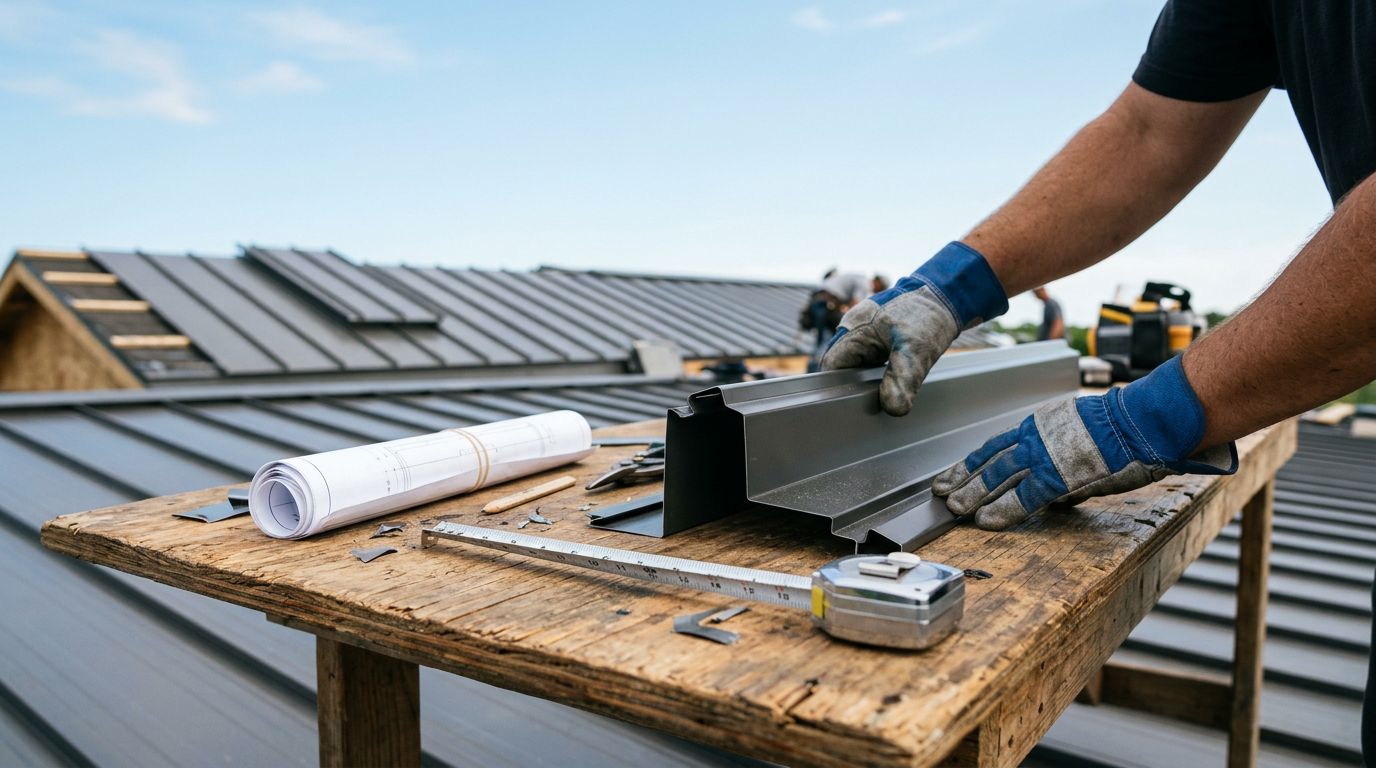
Don't lump separate runs together. Measure every eave, rake, valley, or wall line on its own. Also note if a run has an inside corner, outside corner, or break. - Sketch the trim shape with dimensions
A hand sketch works fine. Show each leg size, the bend direction, and any hem or return. If the trim is left-hand or right-hand, label it clearly. - Match the color and finish to the panels
"White" isn't enough. Ask for the same color name, color code if available, and the same finish type as the roof panels. In Florida sun, a close match can still look off. - List quantity, piece lengths, and special details
Say whether you want standard lengths or longer custom lengths. Also note laps, notches, cutouts, or open hems if the detail calls for them.
Here's a simple example. "Need 10 pieces of charcoal gable trim" leaves too much open. A better order line would read like this: "PBR rake trim, charcoal, painted steel, 1-1/2-inch roof leg, 4-inch face, 1/2-inch hem, left-hand and right-hand pieces, cut to listed lengths."
That level of detail saves phone calls and jobsite guessing. It also helps the supplier tell you if something looks off before production starts.
If eave trim is part of the job, this guide on choosing eave drip edge for metal roofs is a useful reminder that small bend changes affect water flow.
Treat the approval drawing as the final checkpoint
An approval drawing is the last clean chance to catch a mistake. It shows the bend shape, dimensions, angle, hems, and often the orientation of the piece. Never treat it like paperwork to rush through.
Review the drawing against the roof plan, not from memory. A trim piece can look close and still be wrong by half an inch. That's enough to create gaps, exposed wood, bad water flow, or trim that won't sit flat.
What to confirm before you approve
- Every leg dimension matches your sketch or field notes
- The trim type and location match the roof detail
- Left-hand and right-hand pieces are shown correctly
- Color and finish match the roof panel order
- Lengths and quantities are correct
- Hems, returns, notches, and cutouts appear where needed
- Panel profile compatibility is stated or confirmed by the supplier
Then ask direct questions. Keep them simple, and get clear answers:
- Does this trim match my exact panel profile?
- Do you call this rake trim, gable trim, or something else?
- Will the finish match my panel order, not just look close?
- Are closures, sealant, or fasteners needed with this trim?
- Can you revise the drawing if one leg size changes?
- What's the longest piece length you can supply for this profile?
A good supplier would rather fix a drawing than remake trim. That protects your schedule and your budget.
Conclusion
Ordering trim the right way comes down to accuracy , not guesswork. Match the trim to the panel profile, measure each piece carefully, and review the approval drawing line by line. If a name sounds familiar but the shape looks different, slow down and verify it. That extra check now is far cheaper than replacing trim later.
Share Our Metal Roofing News Articles
Related Posts