How To Choose Rake Trim For Florida Metal Roof Edges
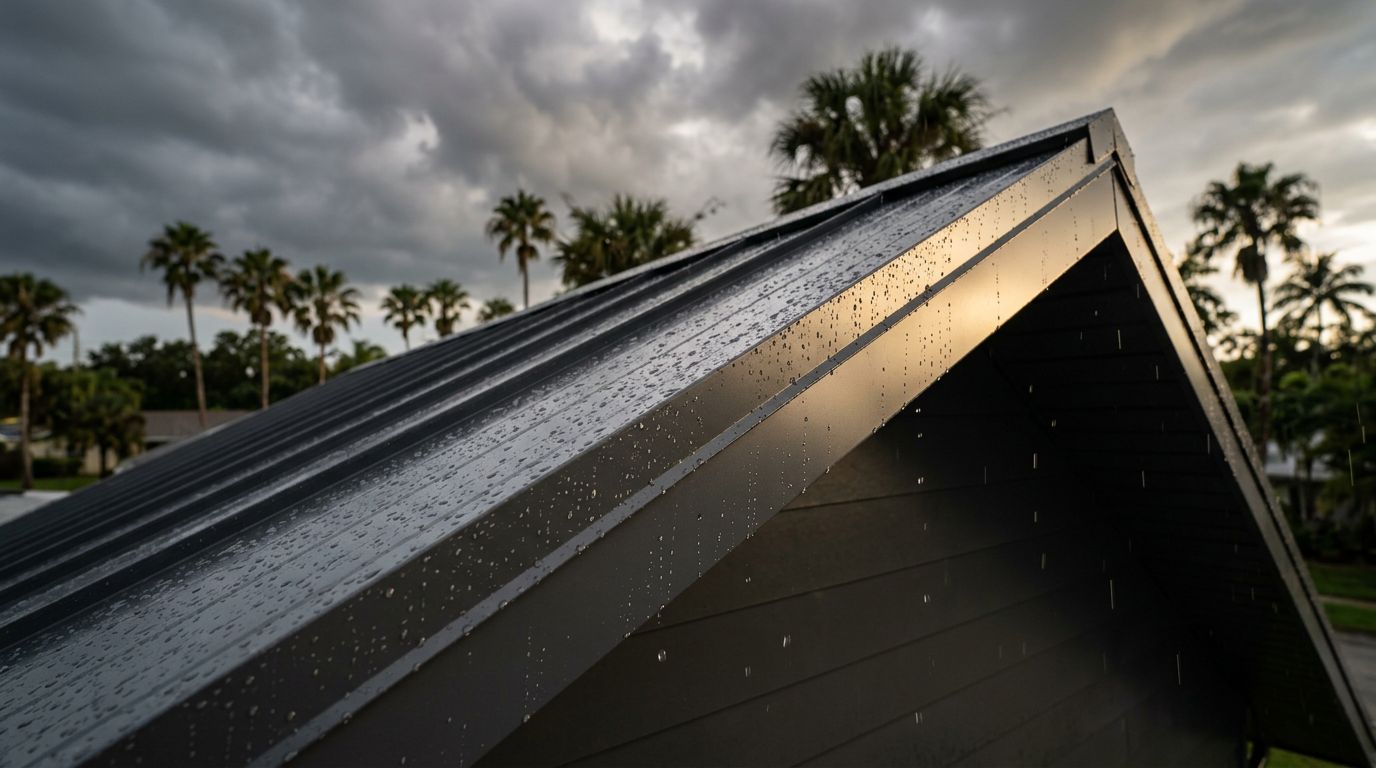
Rake edges take the first hit in a Florida storm. Wind grabs the gable edge, rain drives sideways, and small gaps turn into big problems fast.
That's why metal roof rake trim isn't just a "finish" piece. It's edge protection, wind resistance, and water control, all in one line of metal.
Below is a practical way to choose the right rake trim for your panel profile, your roof edge build, and Florida's code and approval reality (including HVHZ when it applies). You'll also get step-by-step selection criteria, a field-ready checklist, and fixes for common rake-edge failures.
What rake trim actually does on a Florida metal roof
The rake is the sloped edge that runs from eave to ridge along the gable end. On a metal roof, rake trim covers the panel edge, protects the roof-to-fascia line, and reduces wind's ability to get under the system.
If the rake detail is weak, you usually see one of these issues first: edge leaks, lifted panels, rattling trim, or fasteners backing out. Florida weather makes those problems show up sooner because wind-driven rain finds shortcuts, and daily heat cycles work metal parts loose over time.
Good rake trim helps in three main ways:
- Blocks wind entry at the edge. Wind pressure builds at corners and edges. A tight rake detail reduces "lift-start" points.
- Manages water at the gable line. Rake trim should direct water onto the panel surface, not into the fascia or underlayment.
- Stiffens the roof perimeter. The right shape and gauge can reduce flutter and vibration.
Rake trim is edge flashing. If it's treated like decoration, the roof edge usually pays for it later.
If you want a quick refresher on terms, Mid Florida Metal Roofing Supply has a plain-language guide on roof rake components and flashing terms. It helps when you're talking to your supplier, crew, or inspector.
Match rake trim to your panel profile and your edge build-up
Rake trim has to fit the roof you're building, not the roof you wish you had. The "best" rake trim is the one that matches (1) the panel profile, (2) the roof edge thickness, and (3) the approved installation details for your system.
Start by confirming your panel type:
- Exposed-fastener panels (like AG or PBR style) often use rake trim that can bridge rib height and accept closures.
- Standing seam usually uses a different edge approach (cleats, hems, and manufacturer-specific rake details).
Next, look at your edge build-up. A roof with new fascia, thicker decking, added underlayment layers, or a vented nailer at the edge changes how the trim sits. If the fascia leg is too short, water can run behind gutters or stain fascia. If the roof leg is too short, wind-driven rain can track under the trim.
This quick table helps you line up typical needs with common rake trim features:
| Roof condition at the gable edge | Rake trim features that usually help | Why it matters in Florida |
|---|---|---|
| Exposed-fastener ribbed panels | Taller roof leg, room for closures | Seals rib voids, reduces wind-driven rain entry |
| High wind exposure (open areas, coast, corners) | Stiffer profile, heavier gauge, continuous cleat (when used) | Reduces flutter and helps fasteners hold alignment |
| Fascia needs better coverage | Longer fascia/down-leg, hemmed edge | Directs water away, looks cleaner, reduces drips behind fascia |
| Frequent edge leaks in past roofs | Compatible sealant path and closure layout | Stops capillary paths and "backflow" under trim |
For a sense of what profiles are available (and how many options exist), browse flashing profiles including rake and gable trim options. Even if you custom-order, seeing the standard shapes helps you choose faster.
Code and approvals: keep it real, and verify before you order
Florida roofing is permit-driven for a reason. In many areas, especially in HVHZ or coastal zones, edge details and fastener patterns get extra scrutiny. As of March 2026, the safest approach is simple: match your trim and attachment to the product approval and the manufacturer's installation instructions , then confirm your local AHJ requirements.
If your project is in or near HVHZ (or you're using HVHZ-rated assemblies), verify:
- Florida Product Approval for the roof assembly (and any required edge details).
- Miami-Dade NOA where required.
- The specified edge fastener type, spacing, and substrate attachment.
Don't guess at fastener spacing at the rake. Use the approved detail for your exact system.
Step-by-step: choosing metal roof rake trim that holds up in storms
Use this process whether you're a homeowner ordering material or a contractor dialing in a takeoff.
1) Identify the roof panel profile and rib height
Write down the exact panel profile name and whether it's exposed-fastener or standing seam. Rake trim has to clear ribs and land flat where it's supposed to seal.
2) Measure the edge build-up, not just the roof pitch
At the gable edge, note decking thickness, underlayment layers, and any edge nailer or vent products. Those small thickness changes affect trim fit.
3) Decide what you need the trim to do
Most Florida rake trim decisions come down to two priorities:
- Water control (longer legs, better return, better closure fit)
- Wind resistance (stiffer shape, correct fastening, reduced flutter)
Pick the priority first, then choose the profile that delivers it.
4) Choose the profile style that matches your roof
Common rake trim styles include gable trim, extended rake, and sculptured or commercial rake profiles. The "right" one depends on leg lengths, returns, and how it interfaces with closures and fascia.
If you're unsure, a practical rule helps: if the roof sits high and catches wind, or the gable gets hammered by rain, lean toward a profile with more coverage and stiffness , not less.
5) Select material and finish for Florida conditions
Match trim metal type and finish to the panels when possible. Mixed metals can create corrosion risks, especially in humid or coastal air. Also consider heavier gauge when the profile spans more distance or when wind exposure is high.
6) Confirm fastener strategy before ordering
Plan the attachment method early. For many exposed-fastener systems, the rake detail includes screws, stitch fasteners, closures, and sealant. If you don't plan the stack-up, crews improvise on the roof, and edges suffer.
For installers who want a visual walkthrough, Mid Florida Metal Roofing Supply includes an install metal rake trim video that shows typical sequencing on AG-style panels.
Rake trim checklist, plus troubleshooting for edge leaks and blow-off
Use this checklist before you place a material order or start install.
Quick selection and install checklist
- Panel profile confirmed (AG, PBR, 5V, standing seam, etc.)
- Rake trim profile selected to clear ribs and cover fascia properly
- Leg lengths verified against real edge build-up measurements
- Closures planned (inside or outside closure type, and where they sit)
- Sealant plan set (tape or sealant location, compatible with finish)
- Fastener type and spacing confirmed per manufacturer and approvals
- Edge underlayment detail verified , especially at the gable line
- Local code and approvals checked (AHJ, Florida Product Approval, Miami-Dade NOA if required)
Troubleshooting: common rake-edge failures (and what usually causes them)
Problem: Water stains on gable fascia or soffit
Cause is often short fascia leg, missing hem, or water running behind the trim. Fix it by using a longer down-leg, adding a return, and confirming drip direction into the gutter line.
Problem: Drips or leaks during sideways rain
This usually points to missing closures at rib voids, poor sealant placement, or a rake trim shape that doesn't sit tight to the panel ribs. A better-fitting profile plus correct closures typically solves it.
Problem: Rake trim rattles or "oil cans" in wind
This often comes from thin trim, wide flat sections, or fasteners spaced too far apart for the exposure. A stiffer profile, correct spacing, and solid substrate attachment reduce movement.
Problem: Edge panels lift or the trim peels back
Most failures trace to the attachment schedule, the wrong fasteners, or fastening into weak wood. Verify substrate thickness, fastener embedment, and the approved edge detail for your system.
If the rake edge fails, don't just add more screws. First confirm the profile fit, closures, and approved fastening pattern.
Conclusion
A Florida roof edge is a stress test, not a cosmetic detail. When you choose metal roof rake trim that matches your panel, fits your edge build-up, and follows the approved attachment details, you cut down leak risk and improve wind performance.
Before you order, measure the edge, pick the right profile, and verify current local requirements and approvals with your AHJ. Then install it like it matters, because at the rake, it does.
Share Our Metal Roofing News Articles
Related Posts