How to Estimate Standing Seam Clip Quantities Before You Order
A clip count that misses by a few dozen pieces can slow a roof job fast. Order too few, and the crew waits. Order too many, and money sits in a box on site.
With standing seam clips , the quantity depends on panel length, support spacing, clip type, wind load, and the approved assembly. Florida projects add heat and wind to that mix, so a guess is rarely enough. A clean takeoff starts with the panel system and the drawings, then moves into the math.
Start with the panel system, not the clip count
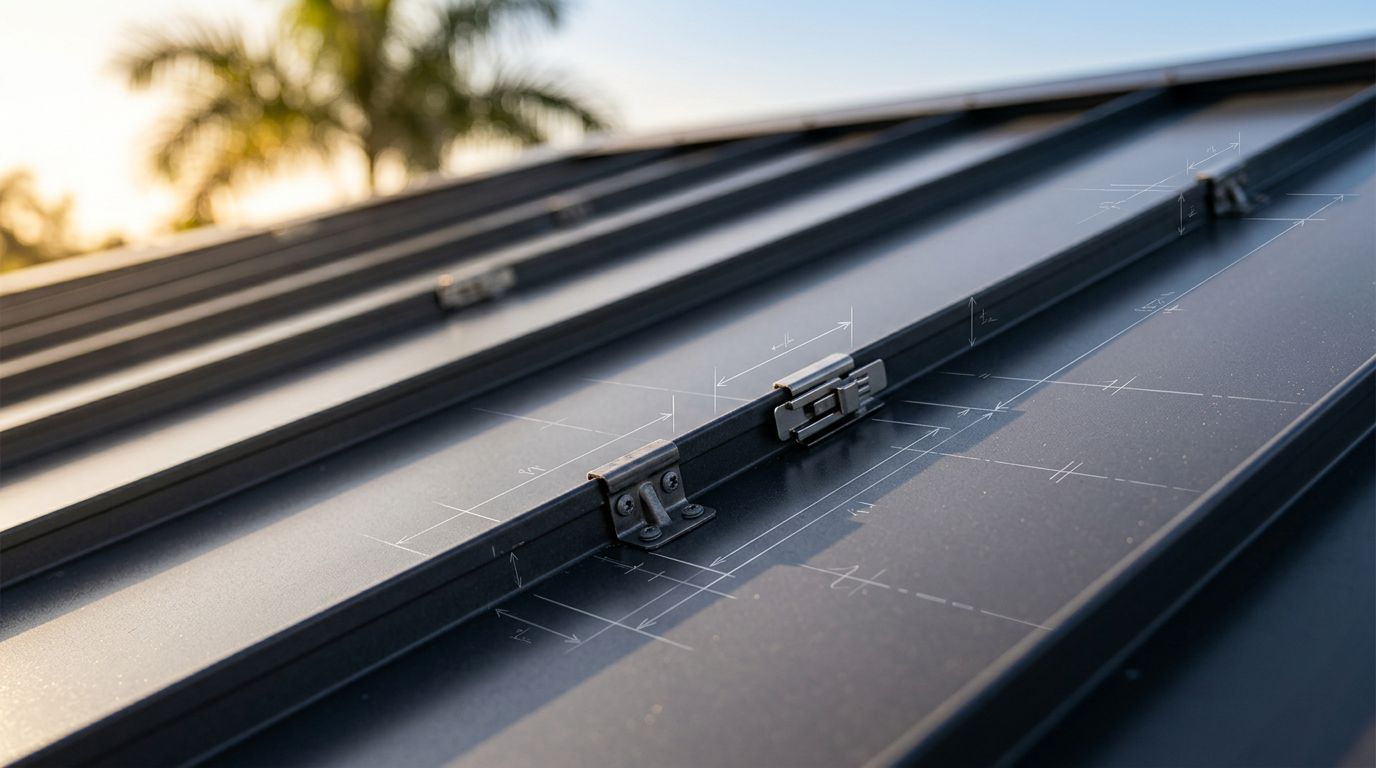
Standing seam clips are not one-size-fits-all parts. A clip that works on one panel profile may not fit another, and the clip style can change the way the panel moves under heat and wind.
If you are comparing clip styles, standing seam clip types is a useful place to start. Fixed clips and floating clips do different jobs, so the count only makes sense once the system is known.
The first question is simple: how is the panel supported? Some roofs attach to purlins. Others fasten to a deck or another substrate. That choice changes the count because the clip lands at each support point the panel crosses.
Square footage alone will not get you there. Two roofs can have the same size and very different clip totals. Long panel runs, tight support spacing, and edge zones all push the number up.
Gather the details that change the math
A solid takeoff begins with the same set of project details every time. If one piece is missing, the clip count becomes a rough guess.
Before you order, gather this information:
- Panel profile and seam type
- Panel length and layout direction
- Support spacing, purlin spacing, or deck attachment lines
- Clip type, fixed or floating, and the approved fastening pattern
- Perimeter, ridge, hip, valley, and other zone details
- Wind uplift criteria and engineer notes
- Waste allowance for damaged or missing clips
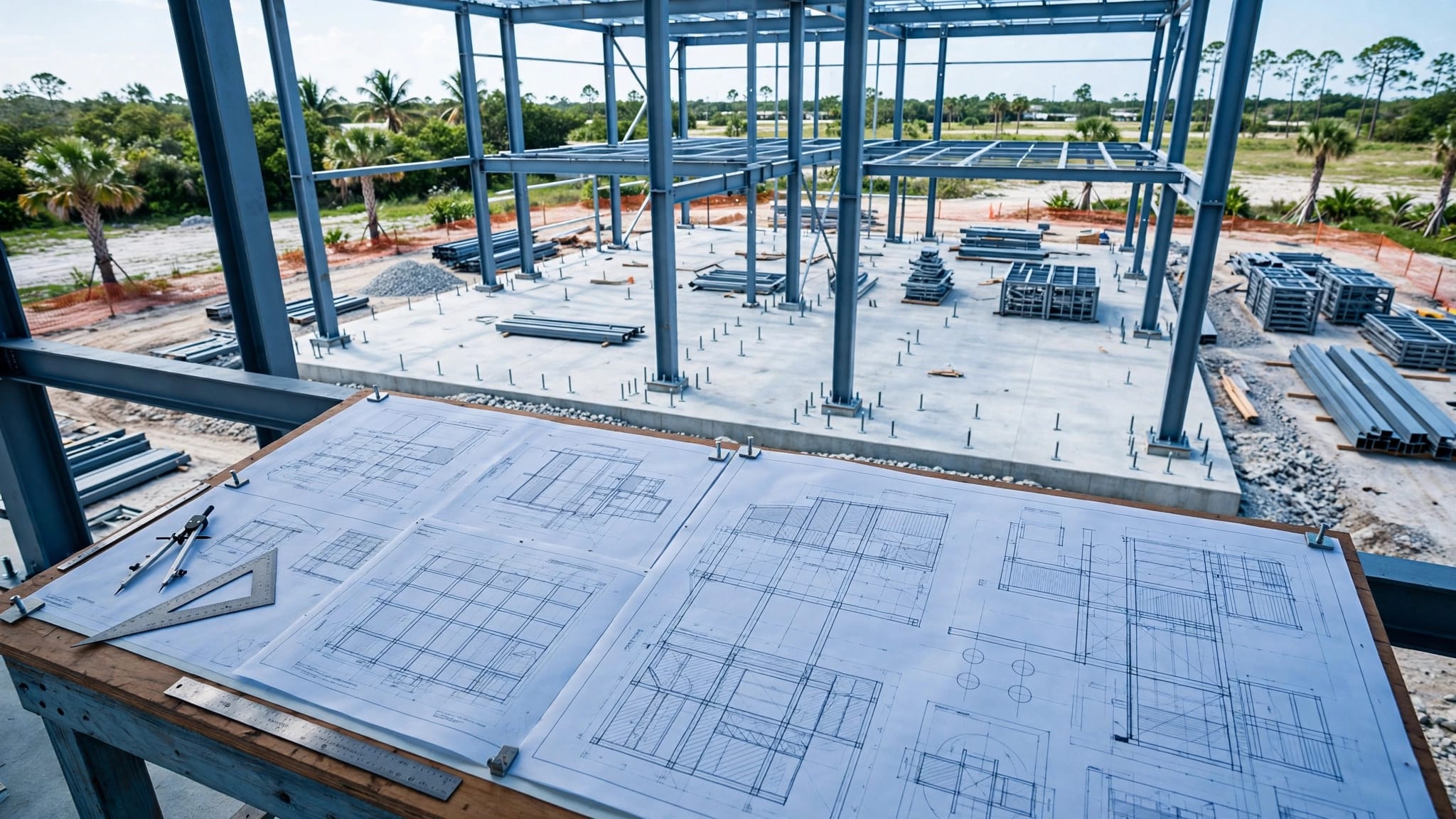
The best source is the approved shop drawings, the manufacturer's install manual, and the project engineer when one is involved. Florida work deserves extra care because wind zones can change the clip schedule. A standing seam clip spacing guide helps you read those schedules, but the final count still has to match the approved assembly.
Approved shop drawings beat rules of thumb every time. If the detail changes at the edge, the count changes too.
Use a simple formula for standing seam clip quantities
For a straight roof run, the math is basic once the support layout is known.
Simple formula:
Total clips = number of panels x support points per panel + allowance
Here, support points per panel means the number of structure lines the panel crosses. If one panel runs from eave to ridge and crosses seven support lines, that panel needs seven clips in that run, unless the approved detail says otherwise.
A quick example makes the process clearer.
| Item | Example | Count |
|---|---|---|
| Panels on one roof slope | 16 | 16 |
| Support points per panel | 7 | 7 |
| Base clip count | 16 x 7 | 112 |
| Field allowance | 5% | 6 |
| Order total | 112 + 6 | 118 |
In this example, the slope needs 112 clips before allowance. A 5 percent cushion adds six more, so the order is 118 clips.
That cushion covers small losses, bent pieces, and field changes. It does not replace the approved detail. If the drawings call for extra clips in certain zones, use that schedule instead of a flat allowance.
A second way to think about the count is by seam support. Each panel line receives clips at the support points it crosses. So the total grows with both panel count and support count. Long runs with tight spacing need more clips than short runs with wide spacing, even on the same roof.
Factor in wind zones, clip type, and thermal movement
Florida roofs face heat, storms, and long sun exposure. That matters because clip spacing and clip type can change with the panel profile, substrate, engineering, wind uplift requirements, and manufacturer specifications.
On longer runs, floating clips may be used where the system allows because the panel needs room to move with temperature swings. Fixed clips can be right for some assemblies, but they are not the answer for every roof. If you are weighing that choice, reducing roof rippling in heat explains why clip choice matters on hot Florida roofs.
The clip schedule can also tighten at ridges, corners, and perimeter areas. Wind pressure is often stronger there, so the approved drawings may call for a different spacing pattern than the field area. That means the final clip count is not always one simple number across the whole roof.
The safest habit is to use the most demanding approved schedule on the job. If the edge condition needs closer spacing, the order should reflect that. If the manufacturer's manual and the shop drawings disagree with a shortcut estimate, the drawings win.
Common estimating mistakes to avoid
Clip takeoffs usually go wrong for a few predictable reasons. Catching them early saves time and keeps the order close to the real need.
- Counting by roof square footage instead of support lines
- Using one spacing pattern for the whole roof when edge zones differ
- Mixing fixed and floating clips in the same count without checking the approved detail
- Forgetting panel transitions, end laps, or slope changes
- Leaving out a small allowance for damage or field changes
- Ordering before the drawings and manufacturer instructions are final
The biggest mistake is treating the clip count like a loose material estimate. It is part of the roof attachment system, so the details matter. A roof with the right panel count but the wrong clip schedule can still fail the takeoff.
A good habit is to write down the source for each number. Note the panel profile, support spacing, clip type, and the revision date on the drawing set. If the job changes, you can trace the count instead of starting over.
Conclusion
Standing seam clip quantities are easy to estimate once the panel system, support spacing, and approved clip schedule are clear. The job gets harder when the takeoff leans on guesswork instead of drawings and manufacturer details.
Use the panel run, count the support points, add only a small allowance, and then verify the final number against the approved shop drawings. For Florida roofs, that extra check matters because wind zones, heat, and substrate details can change the count fast.
A careful clip estimate keeps the order close, the job moving, and the roof tied to the system it was designed for.
Share Our Metal Roofing News Articles
Related Posts