Standing Seam Oil Canning in Florida Heat, What Causes It, How to Reduce It (panel width, clip type, substrate)
If you’ve ever looked across a standing seam roof at 5 p.m. in Florida and noticed faint waves in the flat areas, you’re not alone. Standing seam oil canning is one of the most talked about metal roof “issues” because it’s so visible in our bright sun, not because it usually causes leaks.
The good news is oil canning is most often a cosmetic effect, and there are practical ways to reduce it when you plan the panel layout, choose the right clip system, and start with a flatter substrate.
Why oil canning looks worse on Florida roofs (heat + harsh reflections)
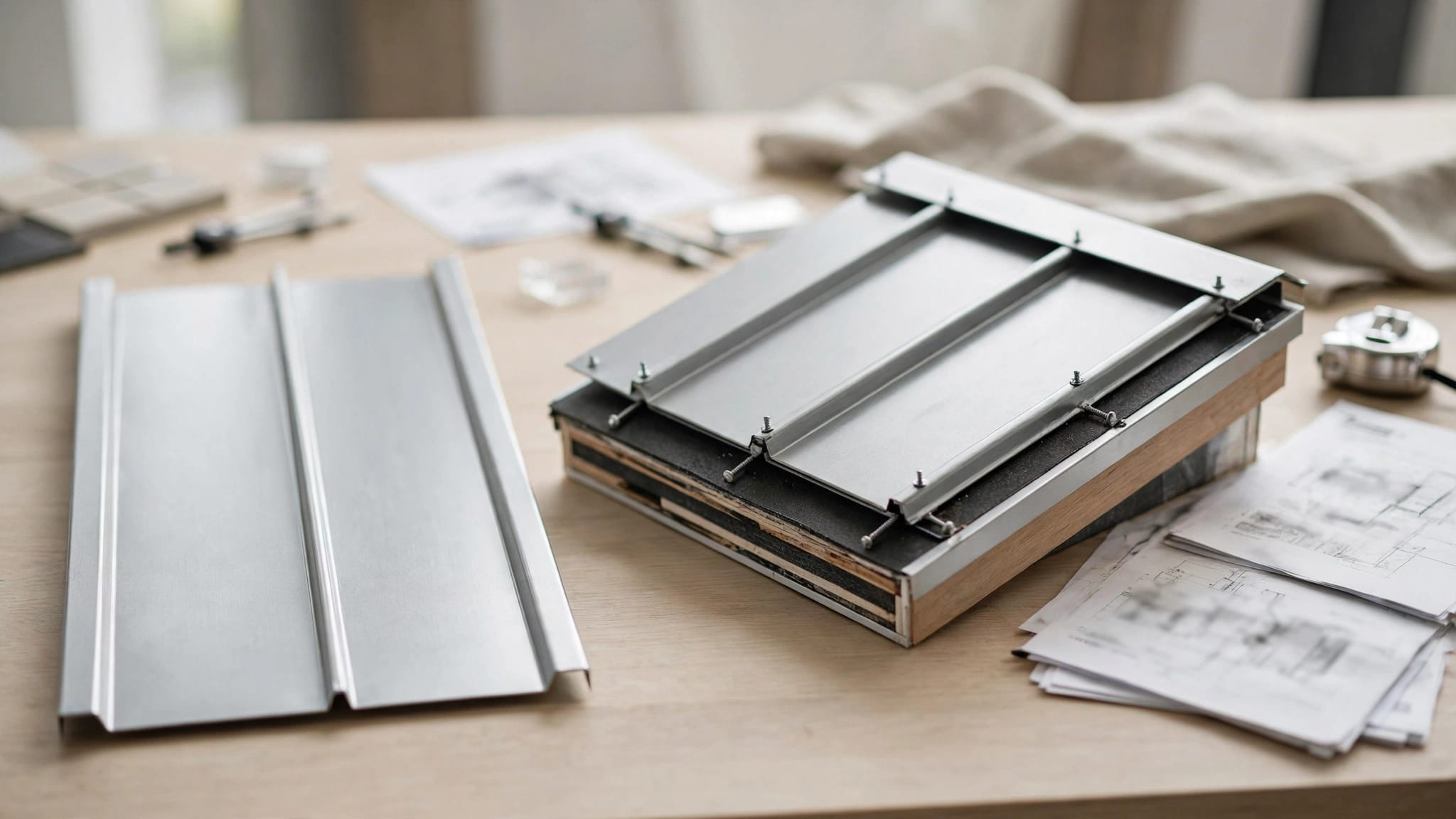
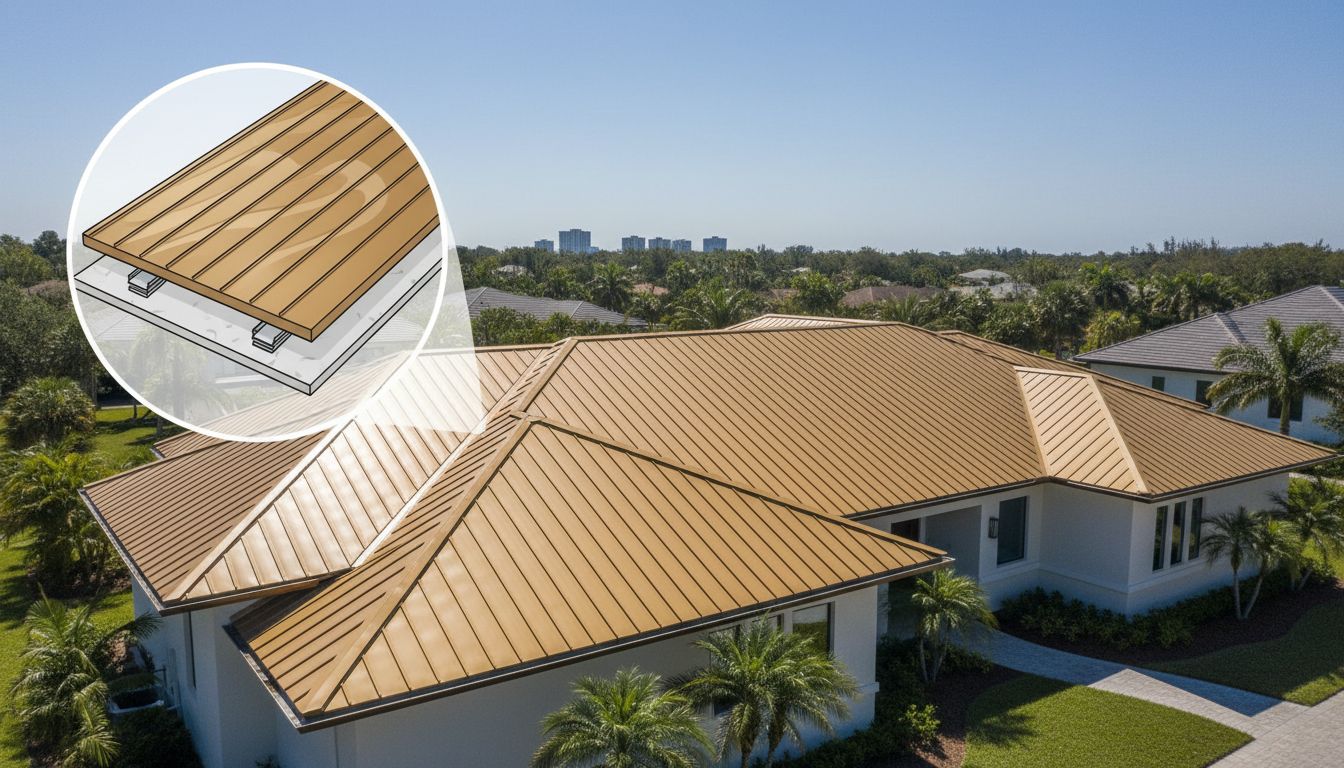
 Cutaway view of a standing seam assembly showing where waviness can appear and how heat-driven movement stresses the panel, created with AI.
Oil canning is the visible waviness in the flat “pan” between standing seams. Think of a thin metal baking sheet that pops slightly when you press it, it’s the same idea, just much subtler.
Florida makes that waviness easier to spot for three reasons:
First, high roof surface temperatures . Metal expands as it heats up and contracts as it cools. On long runs, that movement can build stress in the panel pan, especially if anything restricts sliding.
Second, glancing sunlight . When the sun hits the roof at a shallow angle, reflections act like a flashlight across a textured wall. Small ripples look bigger because the highlight and shadow exaggerate the shape.
Third, wide open sight lines . Many Florida homes have long, simple roof planes. That clean look is part of why people choose standing seam, but it also gives your eye a long “runway” to notice reflection changes.
For a straight, non-alarmist explanation of waviness and why lighting angle matters, see this industry overview from FRSA: Oil canning in metal roof and wall systems. And if you want to compare how different roofs look in real installs, it helps to scroll a standing seam panels photo gallery before you finalize specifications.
What actually causes standing seam oil canning (plain-language physics)
Oil canning usually comes from stress that’s already in the metal, stress added during installation, or stress created by the roof deck below.
Thermal expansion and “held” panels
When a panel heats up, it wants to get a little longer. If the panel can’t slide the way the system intends, that movement has to go somewhere. The flat pan is the easiest place for a tiny buckle to show up.
Rule of thumb: longer panel runs increase movement . Longer runs don’t guarantee oil canning, but they raise the stakes for clip selection, clip spacing, and clean detailing at eaves and ridges.
Residual stress from rollforming and handling
Panels are formed from coil. That process can leave slight internal stresses, even when the panel meets spec. Add rough handling, stacking panels unevenly, or lifting a long panel the wrong way, and you can “lock in” a slight distortion before the panel ever reaches the roof.
Substrate issues that telegraph through
Standing seam panels follow what’s underneath. If the deck has a hump at a truss line, a shallow dip between rafters, or uneven fastener lines, the panel can bridge and then “read” that unevenness in reflected light.
Rule of thumb: a flatter deck shows a flatter roof . Fixing deck flatness costs money up front, but it can save a lot of frustration after install.
How to reduce oil canning (panel width, clip type, and substrate), with trade-offs
 Wider pans tend to show waviness more in reflected light than narrower pans, created with AI.
Panel width and profile choices
In general, narrower pans show less oil canning because there’s less flat area to ripple. Moving from a wider profile to a narrower profile can make waviness less noticeable from the curb.
The trade-off is simple: more, narrower panels usually mean more seams, more labor, and sometimes higher cost . It can also change the roof’s look, especially on modern homes where wide, clean lines are the goal.
Many owners also choose striations or minor stiffening ribs in the pan. Those don’t “fix” stress, but they break up reflections so the eye doesn’t catch a long, smooth highlight. The trade-off is aesthetics, striations look more textured and some architects prefer a dead-flat appearance.
Thicker material can help too. As a rule, heavier gauge (thicker) panels are stiffer and can be less prone to visible waviness, but they cost more and may affect forming details at trim and penetrations.
Clip system and panel movement
 Fixed vs floating clip concept showing how allowing movement can reduce stress in long runs, created with AI.
Clip choice matters because it controls how the panel reacts to heat. On longer runs, floating (expansion) clips can reduce stress by letting the panel slide as temperatures change. Fixed clips can be fine in the right system, but if too much of the roof is “locked down,” stress often shows up as rippling.
Clip spacing also plays a role, closer spacing can support the panel better, but it must match the manufacturer’s tested assembly and the project’s wind-uplift requirements. In Florida, that means following product approvals and the panel maker’s install manual, and using project engineering when required.
Substrate, underlayment, and flattening work
If appearance is a top priority, budget for substrate prep. Options include replacing uneven sheathing, correcting framing issues, or adding a flattening layer where the panel manufacturer allows it. This is one of the few mitigation steps that helps no matter what profile you choose, but it’s also the most labor-heavy.
If you’re still weighing system options, this introduction to standing seam panels is a helpful primer on how standing seam assemblies go together.
Step-by-step: how to specify a standing seam roof to reduce oil canning
Use this as a practical checklist for architects, roofers, and homeowners, then confirm details with the panel manufacturer’s installation manual and the project engineer.
- Choose the panel profile intentionally : If oil canning sensitivity is high, consider narrower pans and/or striated pans (accepting the visual change).
- Pick a sensible panel length strategy : Avoid extremely long continuous runs when the design allows breaks (hips, transitions, or controlled joints), since longer runs move more.
- Select an appropriate gauge and metal type : Thicker panels are typically stiffer, but weigh cost, forming needs, and availability.
- Decide on finish with reflections in mind : High-gloss finishes and dark colors can show more waviness under harsh sun. Matte or lower-sheen finishes can be more forgiving.
- Specify clips for movement : On longer runs, consider floating clips where the system allows. Make sure clips match the panel system and approvals.
- Set clip spacing per tested assembly : Follow the manufacturer’s uplift tables and Florida code requirements, and don’t “value engineer” fasteners or clip layout.
- Write substrate flatness expectations into the scope : Require a clean, true deck, and define how humps and dips will be corrected before panels go down (verify the tolerance the panel maker calls for).
- Add installer QA steps : Confirm panel storage, handling, lift method, alignment, and seaming practices, since damage before fastening can become permanent-looking ripples.
Conclusion
Standing seam oil canning is usually a visual side effect of metal’s natural movement, plus stress from forming, fastening, and what’s under the panel. In Florida, bright sun makes small waves look bigger, especially on wide, smooth pans. If appearance matters most, focus on panel width , clip system that allows movement on long runs, and a flatter substrate, and always confirm details with the manufacturer’s manual and local engineering for wind-uplift and code compliance.
Share Our Metal Roofing News Articles
Related Posts