Metal Siding Base Trim Guide for Florida Pole Barns
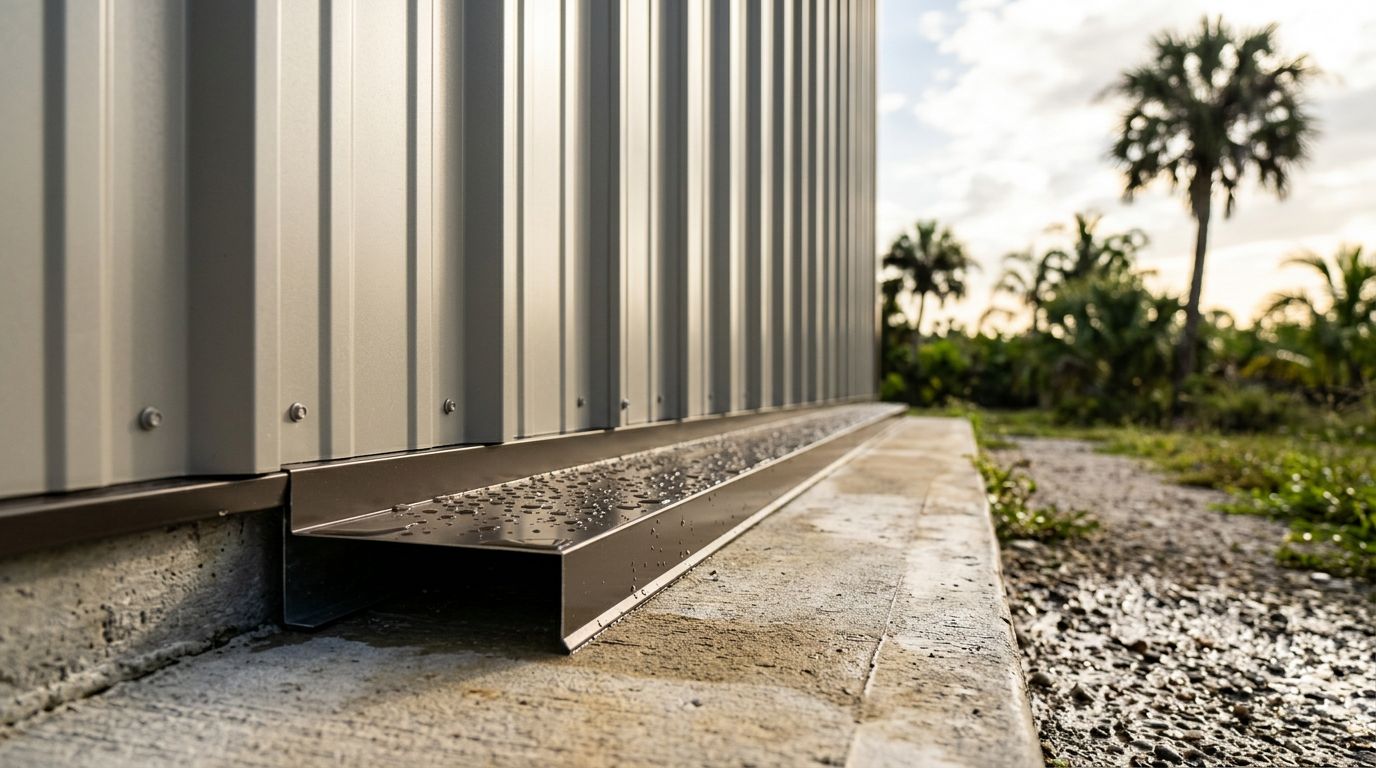
Florida pole barn walls take a beating from rain, splashback, heat, and salty air. The bottom edge of the wall is one of the first places to show it.
That is why metal siding base trim matters more than many buyers expect. It closes off the panel edge, helps move water away from the building, and keeps the bottom of the wall looking finished instead of exposed. If the trim is the wrong shape or installed poorly, water finds a path. In Florida, that path usually leads to trouble.
What base trim does at the bottom of the wall
Base trim sits where the siding meets the slab, stem wall, grade, or skirt board. On a pole barn, that lower edge often gets hit by wind-driven rain and runoff. It also sees mud, lawn spray, and debris. Good trim gives that area a clean break and a clear drain path.
The part does a few jobs at once. It covers cut panel ends, helps block bugs and birds, and keeps wind from working under the siding. It also gives the wall a straight bottom line. That matters on long pole barn walls, where even a small wave in the trim is easy to spot.
In Florida, the trim has to do more than look neat. It needs to hold up to wet weather and long stretches of humidity. Standing water near the base of the wall can shorten the life of the panel edge, screws, and framing. Good trim helps limit that risk by shedding water away from the wall instead of trapping it against the building.
Picking the right base trim for Florida weather
Not every trim profile fits every wall. The right choice depends on the siding profile, wall height, slab detail, and how much exposure the barn gets. A trim that works well on a dry inland lot may not hold up as well near the coast or in a low spot that stays wet.
Material matters too. Most pole barn trim is made from the same general metal family as the siding panels, which helps with fit and corrosion resistance. Matching the panel and trim material is a smart move when possible. Mixed metals can create early wear in humid air.
The finish matters as well. Florida sun fades weak coatings fast, and rain tests every seam. A durable painted finish helps the trim keep its color and slow surface wear. The gauge, or thickness, also counts. A heavier piece can stay straighter on long runs and in windy areas.
Here is a simple way to compare common trim choices:
| Trim choice | Best for | Helps with | Watch for |
|---|---|---|---|
| Standard base trim | Simple wall bases with steady slab height | Basic edge coverage and water shedding | Can look weak on long or uneven runs |
| Hemmed or folded base trim | Exposed edges that need more stiffness | Cleaner bottom line and better rigidity | Must match the panel profile well |
| Wainscot-style trim | Taller wall bases or accent wall sections | Better coverage where the wall starts above grade | Needs careful measuring at transitions |
| Custom-formed trim | Nonstandard walls, special profiles, or long runs | Tight fit and cleaner drainage detail | Requires exact dimensions and clear notes |
A trim that looks small on paper can control a lot of water in real life. That is why the shape and fit matter as much as the color.
Measuring the wall before you order
The best trim in the wrong size still causes problems. Before you order, measure the wall base the same way you measure panels, with care and patience. On a pole barn, the lower wall often changes from one bay to the next. Slabs may slope. Grade may rise. Corners may not be square.
Start with the actual panel profile. A ribbed wall panel needs different clearance than a flat profile. Then measure the height from the slab or finished grade to the point where the panel starts. If the wall sits above a skirt board or concrete stem wall, measure that detail too.
Corners and openings need extra attention. Door jambs, framed openings, and wall returns often need cutbacks or special bends. A small mistake here can leave gaps that collect water. If you need a custom profile or long runs, ordering custom metal trim for pole barns helps reduce the chance of a bad fit.
Write down the panel name, the trim location, and the exact lengths. If the trim has a left-hand and right-hand version, label it. That step sounds simple, yet it saves time on site. It also keeps the crew from forcing one piece to do the job of another.
Installation details that make the trim last
A good trim piece can still fail if it goes on crooked or sits where water can collect. Florida weather punishes sloppy installation. Therefore, the bottom edge should be straight, secure, and able to drain.
First, set a true line before fastening anything. A chalk line or level line helps keep the bottom edge even across the wall. If the slab slopes, keep the trim aligned to the building, not to the uneven ground. That gives the wall a cleaner look and a more predictable water path.
Next, pay attention to overlaps and joints. Long walls often need trim pieces joined together. Those laps should face away from the main water flow when possible. Sealant can help at the joint, but it should not be the only thing holding back water. The trim shape should do most of the work.
Use fasteners that match the job. Coated fasteners are common on metal buildings because they handle weather better than bare steel. Keep fasteners snug, but do not crush the trim. Overdriving screws can twist thin metal and leave low spots where water sits.
Keep the trim above soil and mulch. If the bottom edge gets buried, it traps moisture and shortens the life of the siding.
Clearance matters as well. The trim should not sit in standing water, packed dirt, or concrete splash zones. Where the building meets a roof edge or lean-to detail, the wall trim and roof trim should each do their own job. For that part of the building, choosing the right eave trim for pole barn metal roofs helps keep the drainage path clean from top to bottom.
Storm checks and routine care
Florida storms can bend trim, loosen fasteners, and open small gaps that were fine the week before. A quick inspection after heavy rain or wind can catch problems before they spread.
Look for these issues:
- Loose or missing screws near corners and laps.
- Rust streaks, which can point to worn coating or trapped moisture.
- Bent lower edges, especially where equipment or debris has hit the wall.
- Open seams at joints or around openings.
- Sealant that has cracked, pulled away, or collected dirt.
Clean debris from the base of the wall while you inspect. Leaves, fertilizer, mulch, and mud all hold moisture against metal. That is bad news in a humid climate. If you spot scratched paint or exposed steel, touch it up sooner rather than later. Small damage often stays small when it gets sealed fast.
Routine checks matter on the coast and inland. Salt air speeds up wear, but wet soil and sprinkler spray can do damage too. A trim system that looks fine from the driveway can still hide weak spots at the back side of the building.
Conclusion
A pole barn can have strong framing and good panels, yet still fight water at the bottom edge. That is why metal siding base trim deserves real attention. It helps direct drainage, protects the wall base, and keeps the building cleaner in Florida weather.
Measure carefully, match the trim to the panel, and keep the bottom edge out of standing water. When those pieces line up, the wall lasts longer and the whole building looks sharper.
Share Our Metal Roofing News Articles
Related Posts