What Causes Metal Roof Side Laps to Separate
A small gap at a metal roof side lap can turn into a leak faster than many owners expect. In Florida, heat, wind, and sudden rain put extra stress on panel seams, especially when the roof was installed with the wrong overlap or fastener pattern.
A separating lap often starts with a small mistake, then gets worse as the panels move through the seasons. Here is what usually drives the problem, what warning signs to watch for, and when repair stops making sense.
Why metal roof side laps separate
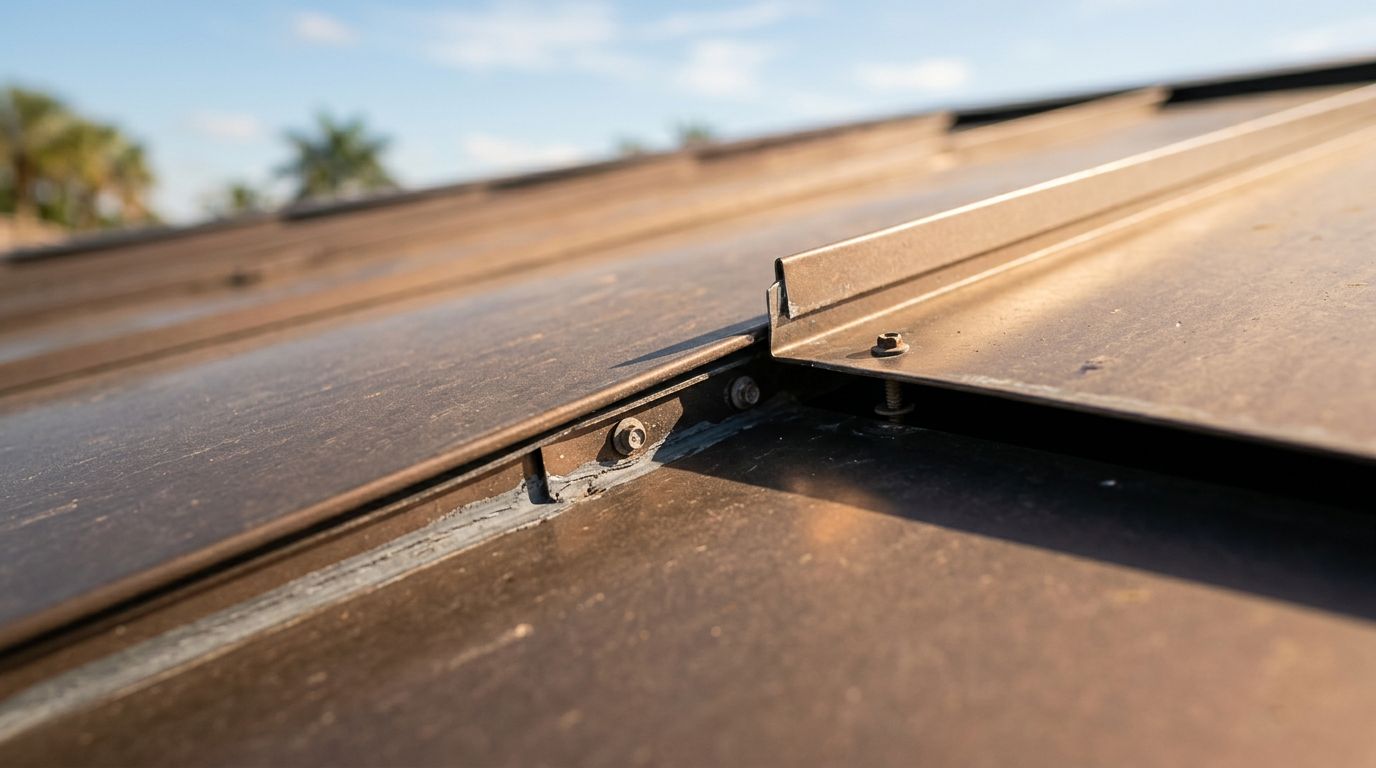
A side lap is where two panels overlap along the long edge. That overlap needs tight contact, proper sealant, and the right fasteners. If any part of that system is off, the seam can open.
Common causes usually include:
- Fasteners placed in the wrong spot : Screws set too high, too low, or too far apart can leave the lap loose.
- Too little sealant : When the lap has weak or missing sealant, wind-driven rain can work into the joint.
- Incorrect overlap : If the panel edges do not overlap enough, the seam has less grip and pulls apart faster.
- Thermal movement : Metal expands in daytime heat and contracts at night. Florida roofs cycle through that movement again and again.
- Substrate movement : Decking, purlins, or framing that shifts even a little can break the lap's alignment.
- Aging materials and weather : UV, salt air, heavy rain, and old sealant all reduce how well the seam holds.
Poor installation often shows up in small ways first. Uneven ribs, loose fasteners, or laps that never sat flat can create a weak spot that keeps growing. Installers can also overdrive screws, which pinches the panel and builds stress at the seam. Underdriven fasteners cause a different problem, because the panel can shift and rub until the lap loosens. When a roof needs replacement panels or a new layout, matching the profile matters, because overlap and rib height affect how the seam seals. The right metal roofing panel profiles help the roof fit together the way it was designed to.
A lap that moves once will often move again after heat, wind, or both.
Signs the separation is getting worse
A widening seam is easier to spot when you know what to look for. One sign is a thin dark line that appears along the overlap. Another is sealant that looks cracked, dried out, or pulled away from the panel edge.
You may also see rust streaks, dirt trapped in the lap, or water stains below the seam inside the building. If the roof has already leaked, damp insulation or a stained ceiling often shows up after the next hard rain. In stronger wind, the panel edge may flutter or lift slightly. That movement usually means the seam is no longer holding tight.
Ignoring those signs can lead to bigger problems. Water can reach fasteners, underlayment, and roof decking. Over time, that can mean stains, corrosion, rot, and more loose panels during a storm. A small opening can also pull dirt and moisture into the joint, which makes later repairs harder. Once the seam starts to grow, the damage usually does too.
Repair or replace the roof panels?
Not every open lap calls for a full replacement. If the gap is small, the panel is still flat, and the substrate underneath is sound, a repair may be enough. That can include re-fastening, adding compatible sealant, or replacing a damaged panel section.
A full replacement makes more sense when movement has spread across several seams, the edges are bent, or the fasteners have started to fail in more than one area. If the roof deck or framing has shifted, patching one seam rarely solves the whole problem. A contractor should check the fastener holes, seam alignment, and the condition of the deck before deciding.
| Situation | Repair may work | Replacement makes more sense |
|---|---|---|
| One or two small gaps | Yes | No |
| Sealant failure on otherwise sound panels | Yes | No |
| Multiple open seams on one slope | Sometimes | Often yes |
| Rust, bent edges, or stretched fasteners | Limited | Yes |
| Movement in decking or framing | Limited | Often yes |
If you are comparing replacement options, the panel profile matters as much as the color. A system with a cleaner seam layout may be a better fit for some roofs. Some owners also look at standing seam metal roofing panels when they want fewer exposed side laps in the finished roof. That choice can simplify maintenance later, especially on roofs that take a lot of sun and wind.
How to prevent side-lap separation in Florida weather
Prevention starts with good installation, but maintenance matters too. Florida weather is hard on any roof, so a quick check after major storms can catch a problem before it spreads.
- Inspect laps for cracks, lift, or missing sealant.
- Check exposed fasteners for back-out or rust.
- Clear leaves and debris so water does not sit at the seam.
- Reseal damaged laps with products made for metal roofing.
- Avoid power washing directly into seams, because water can force its way into weak spots.
- Schedule inspections before hurricane season and after long heat waves.
Contractors should also confirm the correct overlap during installation, because a lap that starts out too short usually stays a weak point. Homeowners should watch for changes after wind events, especially on older roofs and coastal properties. Fresh scratches, missing coating, or loose trim deserve attention too, since those small issues can help corrosion start at the seam.
Conclusion
Side laps separate for a few simple reasons: movement, weak fastening, poor overlap, and weather wear. Once the seam starts to open, the gap often grows faster than people expect.
The good news is that early repairs are often possible when the roof structure is still sound. Catch the warning signs early, and the fix is usually far easier than dealing with water damage later. A tight lap is a small detail, but it keeps the whole roof doing its job.
Share Our Metal Roofing News Articles
Related Posts