On-Site Roll Forming vs. Factory-Length Roof Panels
A metal roof panel's length can affect delivery, installation, and the number of end laps, but it doesn't determine the roof's overall performance. For Florida homeowners and contractors, the bigger decision is whether to form panels at the jobsite or order panels cut to length at the factory.
On-site roll forming can reduce transportation challenges on long roofs. Factory-length panels can simplify planning, handling, and quality control. Both options can produce a dependable roof when the profile, coating, fasteners, flashing, and installation method match the building and local requirements.
Key Takeaways
- On-site roll forming creates continuous panels at the project, while factory-length panels arrive ready for installation.
- Panel length is only one part of roof performance.
- Wind rating depends on the tested roof assembly, including clips, fasteners, spacing, substrate, and installation.
- Corrosion resistance depends on the steel coating, paint system, site exposure, and material compatibility.
- Factory and field-formed panels both need accurate measurements, proper flashing, and professional installation.
How the Two Panel-Fabrication Methods Work
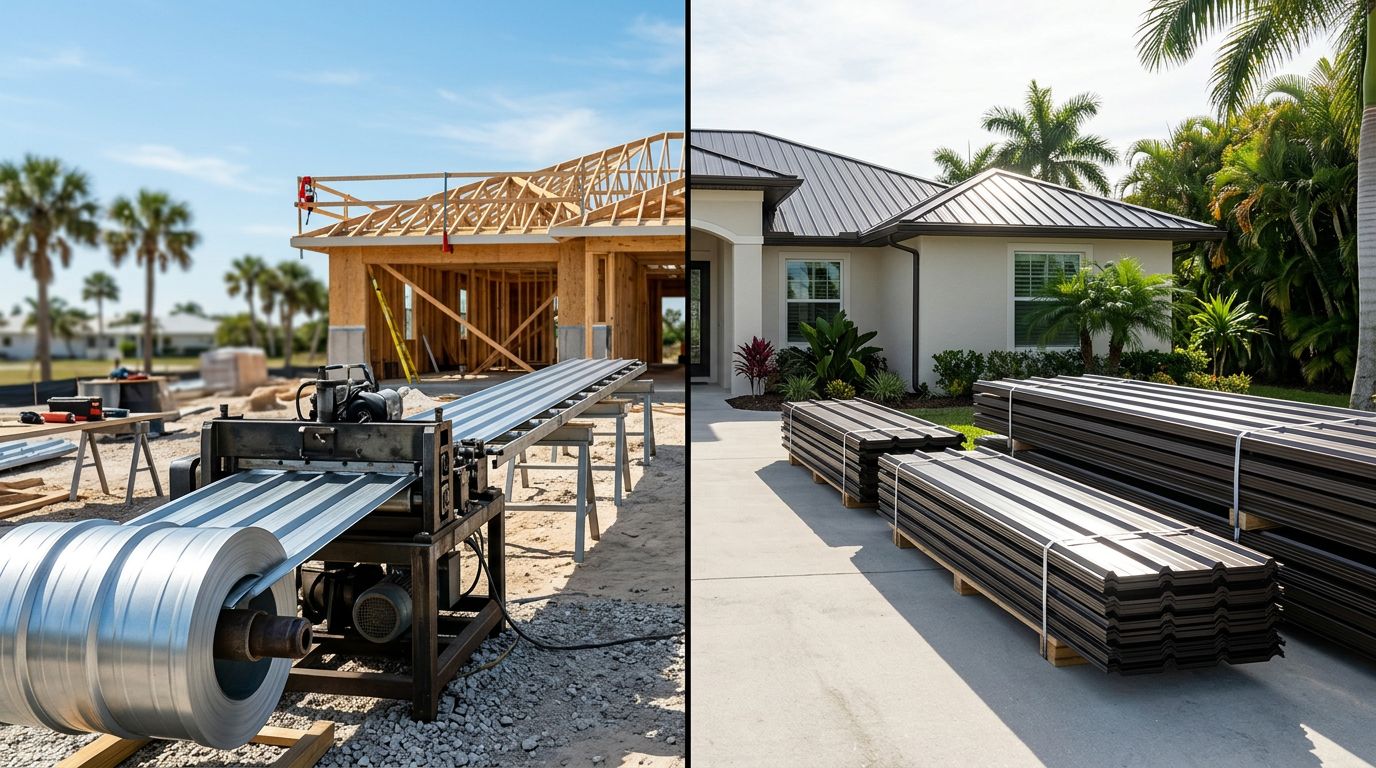
A factory-length panel is formed, cut, inspected, and bundled at a manufacturing facility. The supplier then ships or delivers the panels to the jobsite in predetermined lengths. Contractors order each panel based on roof measurements, layout, profile, gauge, color, and other project details.
This method works well for many residential roofs because the panels arrive ready for the crew to place and fasten. The contractor can organize bundles by roof slope or building section before installation. Factory production also gives the supplier a controlled setting for forming consistent ribs, seams, and edges.
With on-site roll forming , a portable machine forms flat steel coil into the finished roofing profile at the project. The operator enters the required length, runs the coil through the machine, and cuts each panel according to the roof plan. The process can create long panels that are difficult or costly to transport after factory production.
The fabrication method doesn't automatically tell you which roof is stronger. A properly formed factory panel can perform well, and a field-formed panel can fail if the machine is poorly adjusted or the installer mishandles the material. The finished roof depends on the complete system and the quality of the work.
Panel profiles also have different installation requirements. A contractor may compare metal roofing panel profiles such as AG or Multi-Rib, PBR or R, standing seam, and 5V before deciding how the project should be fabricated and installed.
Florida Conditions Put the Focus on the Complete System
Florida roofs face heat, intense sunlight, heavy rain, high humidity, and strong wind events. Properties near the Gulf of Mexico or Atlantic coast also face salt exposure. These conditions make material selection and installation details more important than panel length alone.
Wind performance
A long panel may reduce the need for an end lap, but it doesn't create a wind-rated roof by itself. Wind performance depends on the approved assembly, which can include:
- Panel profile and steel thickness
- Clip or fastener type
- Fastener spacing and placement
- Roof deck or purlin design
- Roof slope and panel orientation
- Eave, ridge, rake, and penetration details
- Installation workmanship
Florida code requirements can vary by location. High-Velocity Hurricane Zone requirements apply in Miami-Dade and Broward counties, while other areas follow their own wind-speed and exposure provisions. Your contractor should verify the current requirements for the building location and use products with the needed Florida Product Approval or other accepted approval documentation.
A factory-length panel and an on-site formed panel can both be part of an approved system, but the approval must match the actual profile, gauge, fastening pattern, and installation details. Ask for the documentation before ordering material.
Corrosion resistance
Salt air can shorten the useful life of an improperly selected or installed metal roof. The steel substrate, metallic coating, paint finish, exposed cut edges, fasteners, and trim all affect corrosion resistance.
Galvalume-coated steel and painted finishes are common choices, but the correct specification depends on the project location and exposure. A coastal roof may need more attention to coating selection, fastener materials, trim details, and cleaning practices than a roof several miles inland.
Panel length doesn't change the base metal's corrosion resistance. However, handling during field forming, cutting, stacking, or installation can damage the finish. Scratches, metal shavings, and contact with incompatible materials can create trouble later if crews don't remove debris and repair approved areas correctly.
Watertightness
Longer panels can reduce the number of horizontal end laps. That can simplify one part of the roof, especially on long, uncomplicated slopes. Still, water can enter through side seams, penetrations, poorly fitted trim, exposed fasteners, open laps, or damaged sealant.
Standing seam systems use clips and mechanically connected seams, while exposed-fastener panels rely on fasteners, washers, laps, sealants, and flashing. Each system has its own installation rules. The roof pitch, drainage path, snow-free design, rain intensity, and penetration layout also matter.
A continuous panel can reduce one potential leak location, but it cannot correct poor flashing or incorrect fastening.
Side-by-Side Comparison for Florida Projects
The following comparison shows where each fabrication method usually fits.
| Project factor | On-site roll forming | Factory-length panels |
|---|---|---|
| Panel length | Forms panels to measured jobsite lengths | Ships panels cut before delivery |
| Long roof slopes | Handles long runs with fewer transport limits | May require careful shipping and staging |
| End laps | Can reduce or eliminate laps on suitable slopes | Depends on ordered lengths and roof layout |
| Jobsite needs | Requires machine access, coil handling, and trained operation | Requires delivery access and safe bundle storage |
| Measurement changes | Can offer more flexibility during production | Changes may require new fabrication or reordered panels |
| Material handling | Long panels still need careful movement and support | Shorter bundles may be easier to stage |
| Schedule | Depends on machine availability and site readiness | Depends on manufacturing and delivery timing |
| Quality control | Depends on field setup and operator skill | Benefits from controlled factory production |
Neither column guarantees a lower price. An on-site setup may reduce freight for long panels, but it can add equipment, crew, coil, and mobilization costs. Factory panels may cost more to transport, yet they can fit a simpler roof installation with fewer production requirements at the property.
The best comparison uses the entire material and labor package. Include panels, trim, fasteners, sealants, clips, delivery, equipment, staging, waste, and installation time.
When On-Site Roll Forming Makes Sense
On-site roll forming is often practical for large agricultural, commercial, and industrial roofs with long, straight slopes. It can also help when the project requires panel lengths that create transportation or handling problems.
A field machine allows the crew to produce panels after confirming actual site dimensions. That flexibility can help when existing framing varies slightly or when the roof plan includes long uninterrupted runs. It may also reduce the number of factory-made pieces that need special transport.
The site must support the process. The contractor needs enough room to position the equipment, load the coil, form the panels, and move finished pieces without dragging or sharply bending them. A congested residential lot, steep driveway, narrow access road, or heavily landscaped property may make field production difficult.
Operator experience matters. The machine must be set for the selected profile and material. Incorrect adjustments can affect rib shape, seam engagement, panel width, and cut accuracy. Crews also need a plan for lifting long panels onto the roof without creasing or twisting them.
On-site production can be a good fit when:
- The roof has long, straight sections.
- The property has sufficient access and staging space.
- The contractor has the correct roll-forming equipment.
- The project schedule supports field fabrication.
- Long panels would create a significant transportation problem.
The method becomes less attractive when the roof has many short sections, complex hips and valleys, or limited equipment access. In those cases, factory-cut pieces may be easier to sort and install.
When Factory-Length Panels Are the Better Choice
Factory-length panels are often the practical option for homes with multiple roof planes, dormers, valleys, hips, porches, and other changes in direction. The supplier can cut panels for each area and prepare matching trim, flashing, fasteners, and accessories.
This method also fits smaller projects where bringing a roll-forming machine to the property would add unnecessary cost or scheduling demands. A contractor can order the needed material package, arrange delivery or pickup, and begin installation once the roof deck and underlayment are ready.
Accurate measurements remain important. Factory panels are made before the crew arrives, so an incorrect dimension can lead to waste or delay. The contractor should confirm eave-to-ridge measurements, panel coverage, trim dimensions, lap requirements, penetrations, and the direction of installation before placing the order.
Delivery planning deserves attention in Florida's wet season. Bundles should arrive when the site can receive and protect them. The crew needs a safe storage location that limits standing water, contamination, and unnecessary handling. Long panels must stay supported during unloading and movement.
For homeowners, factory-length panels can make the quote easier to review. The estimate may show panel quantities, lengths, trim, fasteners, sealants, and delivery as separate items. That detail helps you compare proposals without treating a low panel price as the total roof cost.
How to Choose the Right Option
Start with the roof design, not the fabrication method. A simple gable roof with long slopes presents different challenges than a multi-plane roof with several valleys and penetrations.
Next, ask the contractor or supplier for the proposed system details. Confirm the panel profile, gauge, steel finish, color, fastener or clip type, spacing, underlayment, flashing, sealant, and required approvals. Also ask whether the specified assembly covers your wind zone and building type.
The following questions can help you compare bids:
- Which panel profile and thickness are included?
- Is the roof assembly approved for the property's Florida location?
- How will the crew handle eave, ridge, rake, valley, and wall transitions?
- Will the design use end laps, and where will they occur?
- What coating and fastener materials fit the property's exposure?
- Are custom trim, closures, sealants, and replacement pieces included?
- Who takes responsibility for field measurements and damaged material?
- How will panels be delivered, stored, lifted, and protected?
A contractor who proposes on-site roll forming should explain the machine setup, coil specifications, quality checks, and panel-handling plan. A contractor ordering factory-length panels should explain how the lengths were calculated and how the bundles will reach the roof safely.
For Florida homeowners, the right choice is usually the method that gives the crew accurate material, a documented roof system, and enough control to install every detail correctly. Panel length can improve logistics, but it cannot replace a sound specification.
Conclusion
On-site roll forming and factory-length panels are fabrication choices, not separate standards of roof quality. On-site forming can help with long slopes and difficult transportation, while factory panels often suit smaller or more complex roofs.
The dependable choice is the one that matches the building layout, site access, Florida wind requirements, coastal exposure, and contractor's installation process. Wind rating, corrosion resistance, and watertightness come from the specified system and professional installation as well as panel length.
Share Our Metal Roofing News Articles
Related Posts