Fixed Vs. Floating Standing Seam Clips In Florida
You're installing a standing seam roof in Florida. Wind howls off the Gulf, heat bakes the panels daily, and you need clips that hold up. Pick the wrong standing seam clips , and stress builds, leading to oil canning or uplift failure. Fixed or floating? The choice affects everything from thermal movement to hurricane performance.
Most builders face this decision early. Panel length, wind zones, and local codes all play in. Florida demands systems tested for real conditions. Let's break down fixed and floating clips so you choose right.
How Standing Seam Clips Work in Metal Roofs
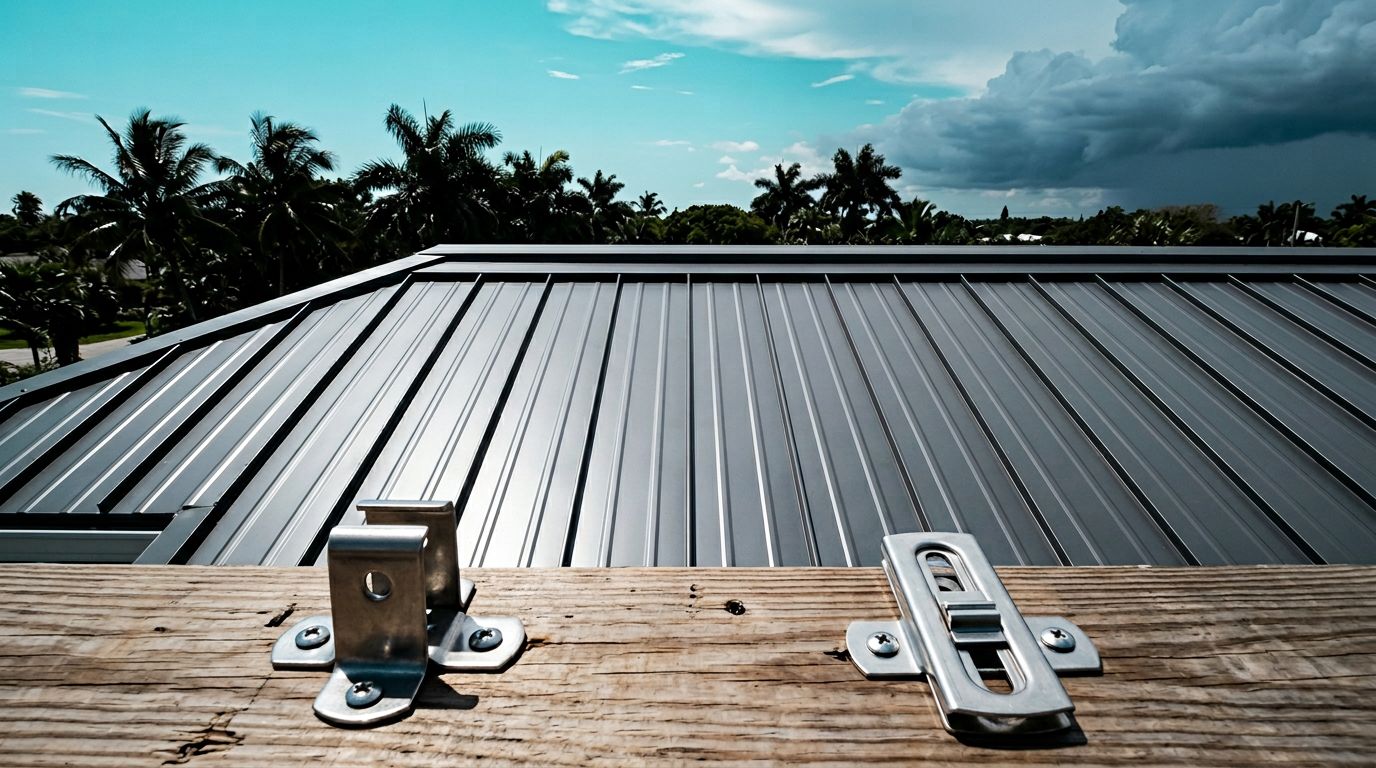
Standing seam clips fasten panels to the deck without piercing the surface. They hide under seams for a clean look and better water shedding. In Florida, these clips face daily expansion from 140-degree roof temps and 150-mph gusts.
Clips grip the panel edge and screw into plywood or purlins. Spacing tightens near edges and corners because wind pulls hardest there. For example, field areas might use 18-24 inches on center. Perimeters drop to 12 inches. Always check the panel maker's uplift tables first.
Heat drives movement too. Panels grow inches on long runs. Clips control that slide or lock it down. Substrate matters because uneven decks telegraph waves through thin metal. Thicker gauges resist better, but clips still decide stress points.
Poor clips cause oil canning, those wavy pans from locked expansion. See reducing oil canning with panel width and clips for substrate tips. Right choice boosts longevity in our salty air.
Fixed Clips: Lock It Down for Stability
Fixed clips anchor panels rigidly. They prevent side-to-side slide. You screw the clip base firm, and it clamps the male leg tight. No give.
Builders like them for short runs under 50 feet. Stability shines in high-uplift zones because nothing shifts. Corners and eaves get fixed clips often. They match mechanical seams well.
Downside hits in heat. Florida sun expands aluminum 0.02 inches per 10 feet per 100 degrees. Fixed clips resist that, so stress ripples the pan. Long panels amplify it.
Use fixed clips when engineer specs demand zero movement. Codes require matching tested assemblies. Florida Product Approvals list allowed spacing and substrates. Fixed works on steeper slopes too, where water sheds fast.
Spacing follows wind maps. Central Florida interiors use wider gaps. Coasts tighten up. Always verify with standing seam clip spacing for Florida wind loads.
Floating Clips: Let Panels Breathe and Move
Floating clips allow slide. A slotted base lets the panel shift along its length. You still fasten secure, but thermal growth happens free.
Perfect for runs over 75 feet. Heat cycles won't buckle flats because panels expand into the slot. Less oil canning shows in bright sun.
Wind performance stays strong if spacing fits tests. Floating clips suit snap-lock or mechanical systems rated for movement. Coastal spots benefit because salt spray won't seize parts.
Trade-off is slight flex under gusts. Pair with tighter spacing in corners. Engineers spec them based on panel length and exposure. Florida's 2023 code (still active April 2026) ties to ASCE 7 pressures.
Install per maker guides. First clip near eaves stays fixed sometimes. Check step-by-step standing seam panel installation for seaming notes.
Fixed vs. Floating: Side-by-Side Comparison
Clip choice boils down to movement needs. Here's how they stack up in Florida realities.
| Feature | Fixed Clips | Floating Clips |
|---|---|---|
| Movement Allowed | None | Thermal slide along panel |
| Best For | Short runs, high-uplift edges | Long runs, heat expansion |
| Oil Canning Risk | Higher on long panels | Lower, panels shift free |
| Wind Hold | Excellent rigidity | Strong with proper spacing |
| Cost | Often cheaper | Slightly more, slots add step |
| Florida Fit | Interiors, steep slopes | Coasts, low slopes over 1/4:12 |
Fixed wins for simple stability. Floating handles our expansion cycles better. See minimum slope for standing seam roofs in Florida; low pitches need movement control.
Mix them. Fixed at ends, floating in field. Always engineer-stamp for permits.
Factors That Drive Clip Choice in Florida
Panel length tops the list. Under 40 feet? Fixed often suffices. Longer? Go floating to avoid stress.
Wind zones dictate spacing. HVHZ like Miami demands FPA-certified clips. Central areas follow risk category pressures.
Roof design factors in. Hips and valleys add turbulence, so tighten clips. Substrate flatness prevents telegraphing; uneven plywood worsens waves.
Coastal exposure corrodes standard clips fast. Galvanized or stainless steel lasts. Heavy rain tests seals too, so match underlayment.
Manufacturer testing rules all. Uplift tables give exact combos. Florida code requires approved assemblies. Consult engineers for custom jobs.
Heat dominates daily. Panels hit 160 degrees, contracting at night. Floating reduces fatigue.
Making the Right Call for Your Roof
Fixed clips lock panels solid for short, stable runs. Floating ones permit essential slide on longer spans. In Florida, hurricanes and heat demand tested systems.
Balance factors like length and winds. Follow maker specs and codes. Your roof lasts decades when clips match reality.
Property owners, check approvals early. Builders, quote per zones. Strong clips mean fewer callbacks after the next storm.
Share Our Metal Roofing News Articles
Related Posts