Metal Roof Pipe Boot Guide For Florida Vents And Stacks
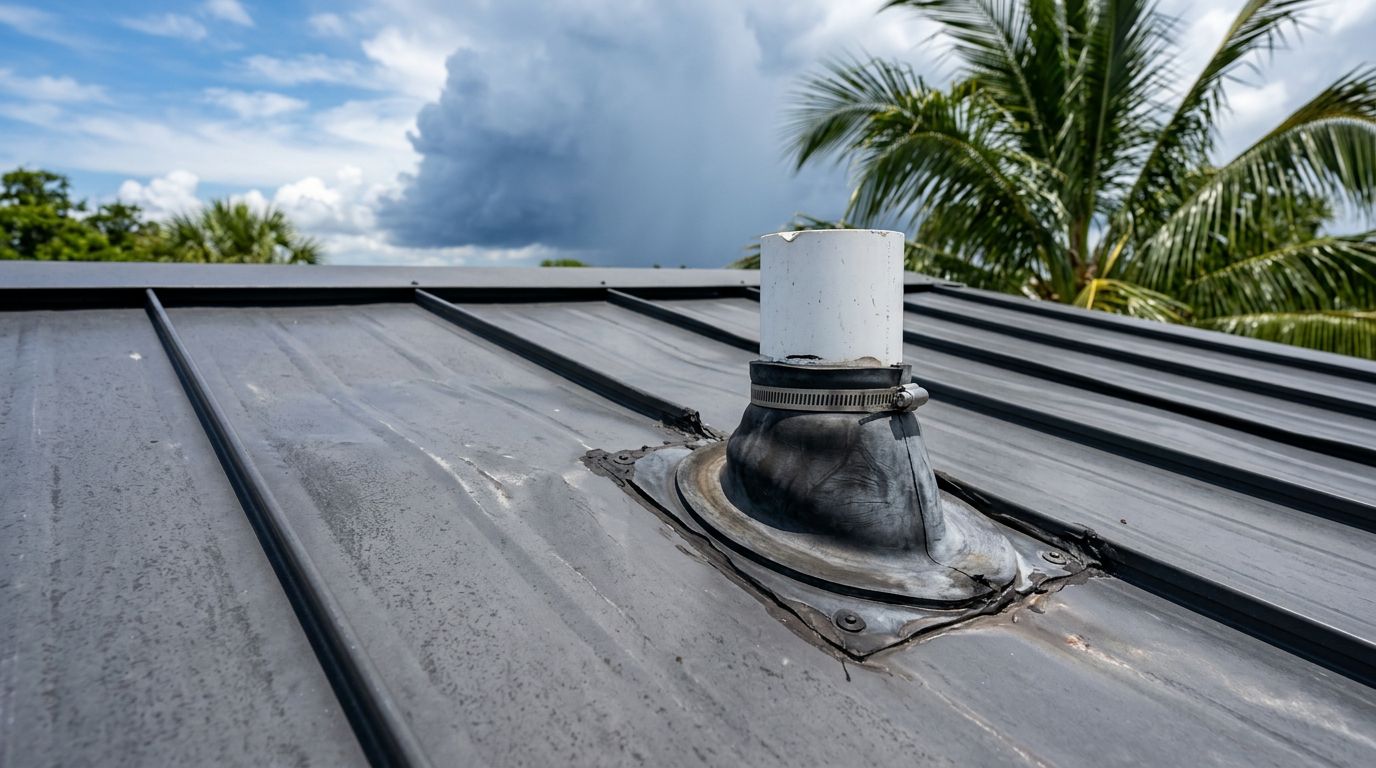
A roof penetration is like a straw poked through a raincoat. If the seal around it isn't right, water finds the gap fast. On a metal roof, the most common penetration is a plumbing vent or stack, and the part that keeps it dry is the metal roof pipe boot .
Florida makes pipe boots work harder than most states. Sun bakes rubber, afternoon storms hit sideways, and hurricane season tests every fastener and seam. This guide explains how pipe boots fail, how to pick the right one for your panel profile, and what details matter most when you install or replace one.
What a metal roof pipe boot does (and why Florida exposes weak installs)
A metal roof pipe boot is a flashing assembly that seals the round pipe coming through your roof. It has two jobs that sound simple, but aren't: keep water out, and still allow movement.
Metal panels expand and contract every day in Florida heat. If the boot is clamped down like a rigid lid, the panel movement can stress the rubber cone and the screw holes. Over time, that stress turns into splits, lifted edges, or tiny gaps that only leak during wind-driven rain.
Vents and stacks also sit in high-risk water paths. Valleys carry heavy flow, ribs channel runoff, and standing seam pans can move water quickly during downpours. Placement matters as much as the boot itself. When a pipe lands too close to a seam, you end up "customizing" the flashing on the roof, and that's when shortcuts show up.
If you want a quick refresher on the broader category, it helps to understand what roof flashing is and how each flashing piece has its own job.
Here's the uncomfortable truth: many leaks blamed on "bad panels" are really boot problems. Rubber ages, sealants dry out, and screws back out after years of vibration and thermal cycling.
If a pipe boot only survives gentle rain, it's not installed for Florida. Plan for heat, movement, and wind-driven water from day one.
Choosing the right pipe boot for Florida vents and stacks
Not all pipe boots are equal, and "fits the pipe" is only the start. You're matching the boot to the pipe size, the panel profile, the roof slope, and your exposure (inland vs coastal, or High-Velocity Hurricane Zone rules).
Most metal roof pipe boot options fall into a few common types. Use this table to narrow it down before you order materials.
| Pipe boot type | Best use case | Florida pros | Common watch-outs |
|---|---|---|---|
| EPDM cone with metal base (aluminum or coated steel) | Many exposed-fastener panel roofs, common residential stacks | Handles heat well when UV-rated, easy to source, flexible seal | Cheap EPDM cracks sooner, base must match ribs and flats |
| High-temp silicone cone boot | Hot vent pipes, strong sun exposure, long-term durability focus | Better heat and UV tolerance than basic rubber | Costs more, still needs correct sealant and fasteners |
| Split retrofit boot (wrap-around with clamp) | Repairs when you can't lift the pipe, or for replacements | Faster replacement, less disruption | Clamp must be tight, seal line must be clean and dry |
| Custom curb and flashing detail | Large stacks, odd shapes, standing seam where screws are limited | Best control over water shedding and movement | More labor, must follow the roof system's details |
Material choice matters in Florida because corrosion and UV both show up early. Near the coast, pick corrosion-resistant metals and compatible fasteners so you don't create galvanic issues. For the cone, avoid bargain plastic and low-grade rubber. They tend to get brittle in sun.
Also, don't treat pipe boots as "extras." They're part of a complete system. If you're gathering the rest of your supplies, this overview of pipe boots and flashing for metal roofs helps you think through sealants, closures, and other parts that affect penetrations.
Finally, keep local rules in mind. Florida requires flashing at roof penetrations, and some areas (like HVHZ counties) may require products with specific approvals. Your inspector decides what passes, so confirm the current code edition and local amendments before you buy.
Installation details that prevent leaks on metal panels (new or replacement)
A good install starts before the boot touches the roof. First, place the penetration in the right spot. Aim for the flat of the panel when possible, not on a major seam or where ribs force the flange to bridge gaps. When the flange can sit flat, the seal lasts longer.
Next, make room for movement. Many installers oversize the hole slightly so the pipe doesn't bind the panel as it expands and contracts. That small detail helps reduce stress on the boot cone.
From there, focus on three sealing layers that work together:
- Underlayment tie-in : When you can, integrate a self-adhered membrane or approved underlayment detail around the opening before the boot goes down. This helps if water ever gets under the flange.
- Primary seal under the flange : Butyl tape is a common choice because it stays tacky and seals well under compression. Apply it in a continuous bead, then set the boot base without stretching it.
- Mechanical fastening that doesn't distort the flange : Use the correct screws and spacing for your boot and panel type. Tighten evenly, and stop before you "dish" the flange.
After fastening, many crews add a neat top bead of compatible sealant around the cone to shed water and protect the cut edge. Sealant should support a good flashing detail, not replace it.
Replacement work has its own traps. Old sealant residue is the enemy. Clean the panel surface well, remove loose rust, and don't seal over wet or chalky paint. If your roof has other leak-prone flashing areas, reviewing spotting failed roof flashing in Florida can help you catch problems before the next storm.
Once installed, test it. A controlled hose test (spray above the boot, not directly up under it) and an attic check can confirm the seal before you call the job finished.
Conclusion: treat pipe boots like storm hardware, not trim
A metal roof pipe boot is small, but it guards a big opening. In Florida, the best results come from the right boot material, smart placement on the panel, and sealing that allows for movement. If you're seeing cracks, lifted edges, or recurring stains around a vent, don't wait for hurricane season to confirm the leak.
When in doubt, ask your installer what boot they're using, how they're sealing the flange, and how the detail meets local inspection rules. A dry penetration today is peace of mind during the next sideways rain.
Share Our Metal Roofing News Articles
Related Posts