Metal Roof Flashing Details That Fail in Florida, How to Spot Bad Wall, Valley, and Chimney Flashing
Florida rain doesn’t fall politely. It comes sideways, pushed by wind, looking for the smallest opening. That’s why metal roof flashing matters so much. Panels shed most water, but flashing handles the awkward spots, roof-to-wall joints, valleys, and chimneys, where leaks love to start.
The tricky part is that flashing can look “fine” from the yard and still be installed in a way that fails after the first hard storm. This guide focuses on what Florida homeowners and property managers can spot safely, without climbing onto the roof.
A safe way to inspect metal roof flashing (no roof-walking)
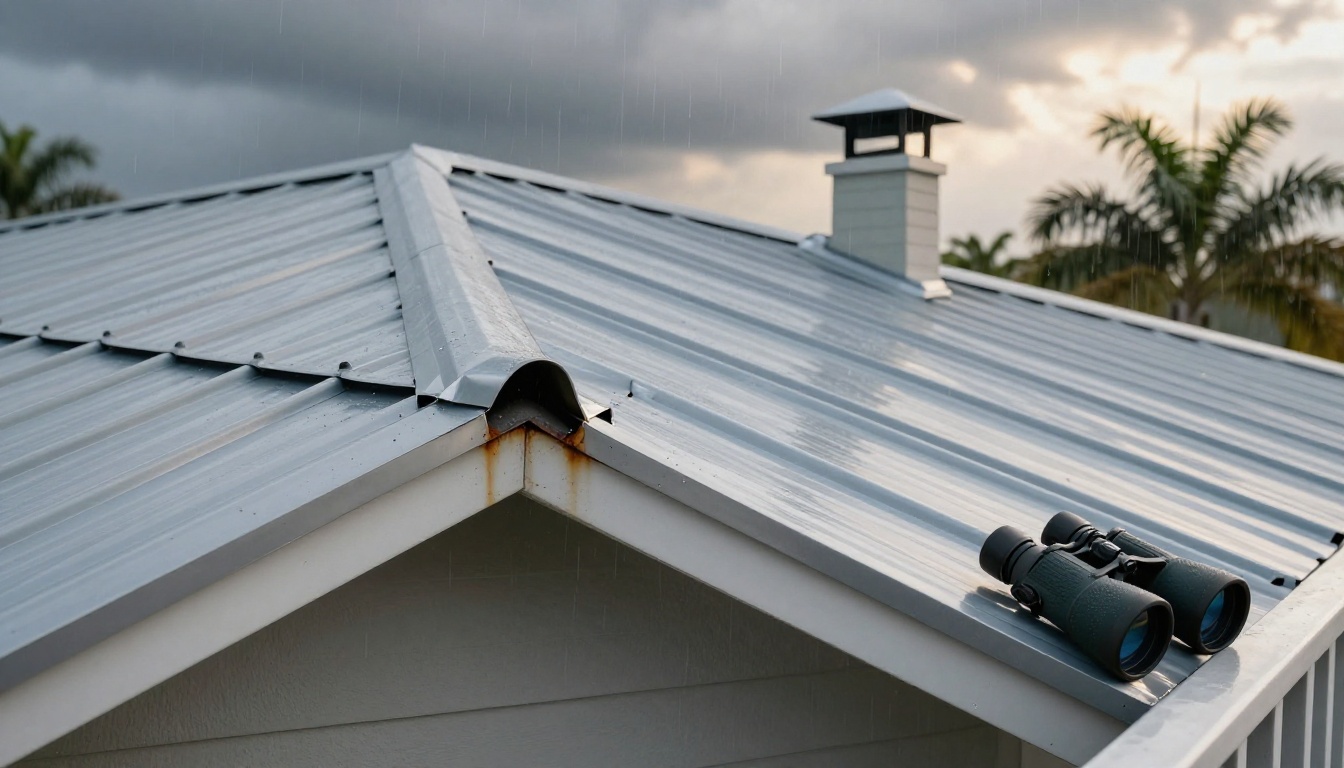
Skip the ladder-to-roof routine. Metal panels can be slick, edges are sharp, and a small misstep can turn into a fall. Instead, do a ground-level inspection with binoculars, plus an attic check after heavy rain.
From the ground, look for bent metal, gaps, “tar lines,” missing pieces, and fasteners where water should be flowing. Inside, check the attic for stains, damp insulation, rusted nail tips, or daylight at joints. If you’re new to the terms roofers use, this quick explainer on roof flashing basics for metal roofs helps you talk through what you’re seeing.
Also keep in mind code context: Florida is using the 8th Edition Florida Building Code (2023) through 2026, but the final call on what’s accepted is always your local AHJ (building department) and the FBC edition they enforce. For the source text many roofers reference, see the Florida Building Code Residential section on metal roofs.
Wall and sidewall flashing failures (where stucco and metal meet)
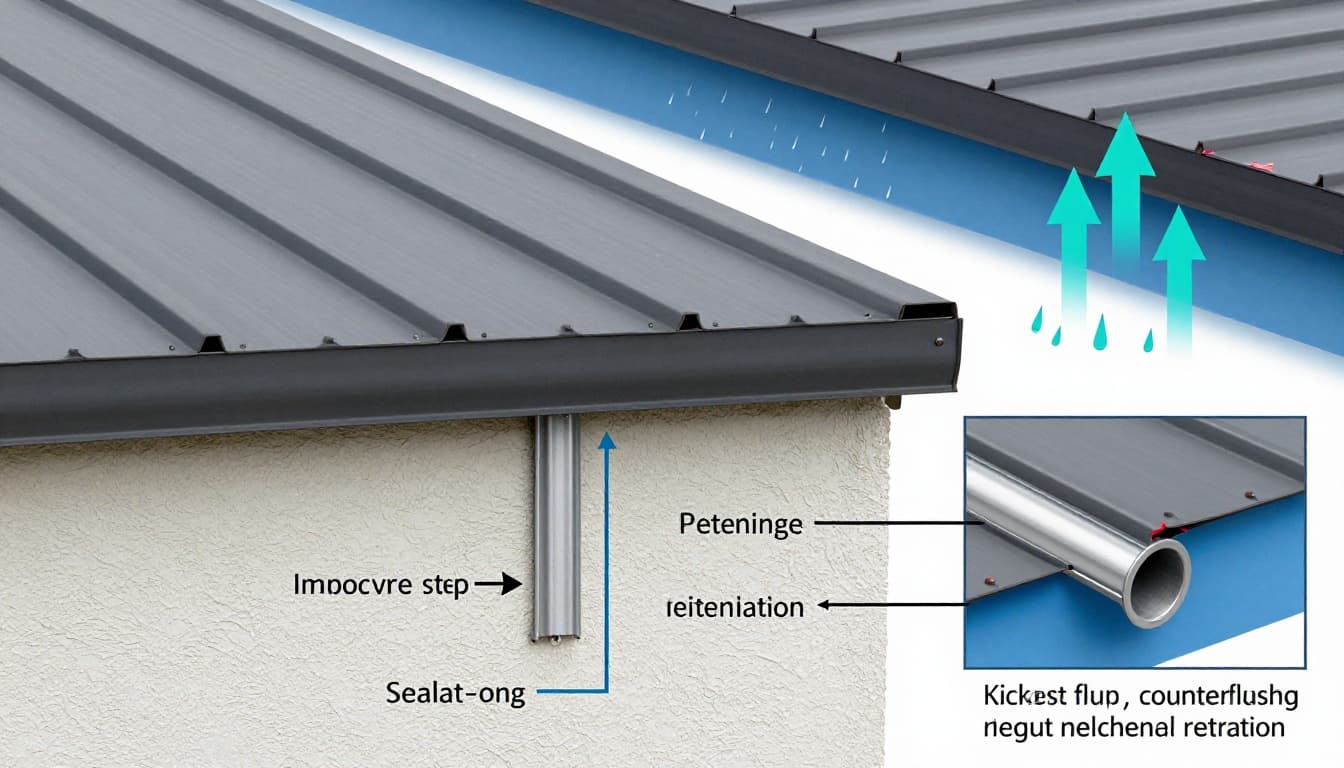 Diagram of common wall flashing mistakes versus a correct roof-to-wall detail, created with AI.
A wall joint is like a roof’s “seam in a raincoat.” If it’s stitched wrong, water runs behind it, not off it. In Florida, the most common failures are missing kickout flashing , reverse-lapped water-resistive barrier (WRB), and terminations that rely on caulk instead of a mechanical stop.
Sidewall areas should use step flashing or a properly detailed continuous sidewall with the right underlayment integration, plus counterflashing (often set into a reglet in masonry or stucco) so water can’t get behind the metal. Sealant should support the detail, not be the detail.
Red flags you can spot from the ground or eave line:
- Dark streaks on stucco right above the roof line, or bubbling paint indoors on that wall.
- A straight bead of caulk at the wall that looks like it’s doing all the work.
- No visible kickout diverter at the bottom where the roof meets a wall and gutter.
- Loose or “oil-canned” flashing along the wall line, especially after storms.
- Fasteners placed where water flows, or fasteners backed out along the wall trim.
Acceptable vs unacceptable wall flashing examples
| Acceptable | Unacceptable |
|---|---|
| Kickout flashing at the lower end of the wall to throw water into the gutter | No kickout, water dumps behind fascia or into stucco |
| Counterflashing integrated into a reglet or proper wall termination | Surface-caulked edge that can peel in UV and heat |
| Proper laps that shed water downhill | Reverse laps that funnel water inward |
| Mechanical termination (cleat, reglet, or fastened termination bar as designed) | “Sealant-only” termination with no hard stop |
If you need to match the right trim shapes to the job, start with a reference like metal roof flashing shapes and sizes so the roofer isn’t improvising on site.
Valley flashing failures (the roof’s drainage highway)
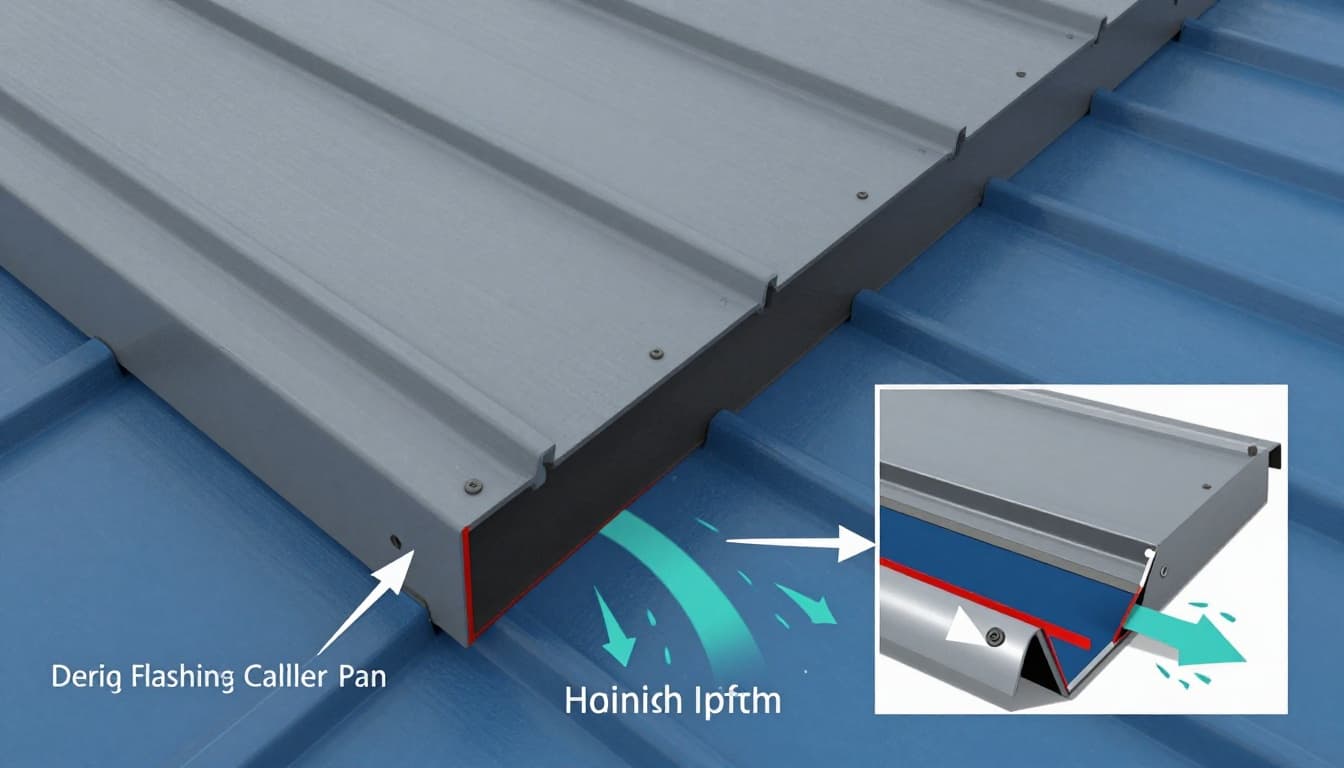 Diagram showing why valley details leak in wind-driven rain, created with AI.
Valleys move a lot of water fast. During wind-driven storms, they also see uplift and backflow. A valley that “works fine” in light rain can leak badly in a tropical downpour.
Common Florida issues include undersized valley pans , exposed fasteners in the water channel, and edges without a hem (a small fold that stiffens metal and helps block capillary action). Debris makes it worse. A palm frond dam can turn a valley into a bathtub.
Florida code language also points to wider protection in valleys, including underlayment requirements beneath the valley area. Your roofer should be able to explain how their valley underlayment width and laps meet the details for your specific roof system and local requirements.
Red flags you can often see with binoculars:
- Screws or rivets located in the lowest part of the valley.
- A valley that looks narrow, with panel edges crowding the center.
- Rust lines, stained metal, or chronic wet debris packed in the valley.
- Sealant smeared across the valley as a “fix.”
- Visible gaps where valley metal meets eave trim or gutter.
Acceptable vs unacceptable valley flashing examples
| Acceptable | Unacceptable |
|---|---|
| Wide valley pan with hemmed edges | Narrow pan with raw cut edges |
| No fasteners in the valley’s main water channel | Exposed fasteners where water concentrates |
| Proper laps that run downhill and stay sealed as specified | Up-slope laps or short overlaps that can backwater |
| Clean, open flow path with regular debris control | “Closed” valley that traps leaves and sludge |
Chimney flashing failures (water hits, then swirls)
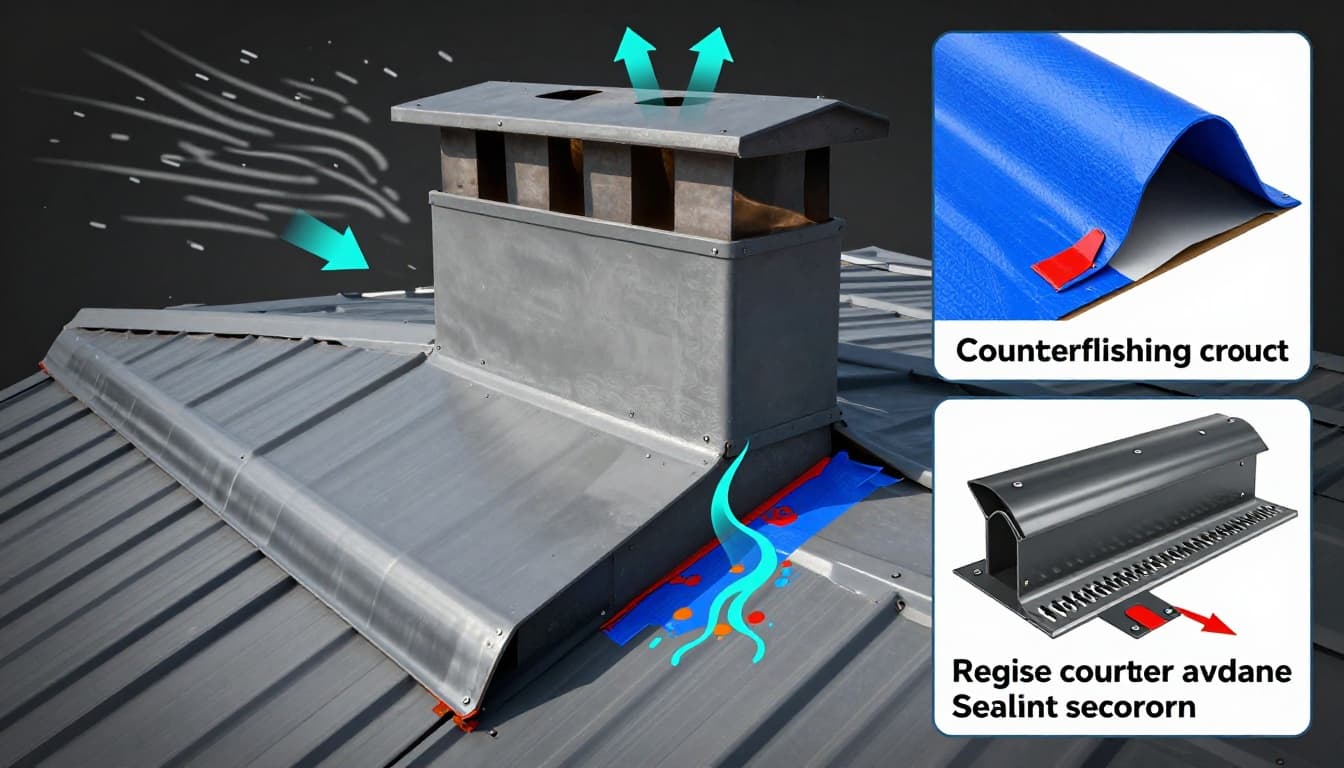 Diagram comparing poor chimney flashing to a better cricket and counterflashing setup, created with AI.
Chimneys are leak magnets because water doesn’t just run past them, it eddies around them. That swirling shows up as staining on the downhill side, wet insulation nearby, and rust on nearby metal.
The biggest “tell” in Florida is over-reliance on roof cement or caulk. Sun and heat bake sealants, then storms flex the metal, and the bead cracks. A better approach uses a proper apron at the front, step or side flashing along the sides (as the design calls for), and counterflashing that’s mechanically set into masonry (reglet cut), not simply face-sealed.
Also ask about a cricket (a small peaked diverter) behind wider chimneys. Florida code language commonly calls for crickets when chimneys exceed a certain width (often 30 inches). Your roofer should confirm what applies to your chimney and local AHJ.
Red flags you can spot without climbing:
- Tar or roof cement smeared around the chimney base.
- Counterflashing that looks glued to the brick instead of set into it.
- No cricket behind a wide chimney on a steeper roof plane.
- Corrosion where different metals touch (a compatibility problem).
- Stains or mold smell in the attic near the chimney chase.
Acceptable vs unacceptable chimney flashing examples
| Acceptable | Unacceptable |
|---|---|
| Counterflashing set into a reglet cut and properly sealed | Surface-caulked metal edge on brick or stucco |
| Cricket behind wider chimneys to split water flow | Flat back side that traps water and debris |
| Step flashing or properly detailed side flashing that sheds water | One-piece “picture frame” metal that fights panel movement |
| Sealant used as secondary protection | Sealant used as the primary waterproofing method |
What to request from a roofer before you approve repairs
Before anyone “touches up” flashing, get proof of what they found and what they’re changing. A good contractor won’t mind, and it helps you compare bids.
Ask for:
- Labeled photos of each problem area (before and after), plus one wide shot for location.
- The permit plan (if required) and the name of the local AHJ enforcing it.
- Manufacturer installation requirements for the roof system being used, including flashing laps and underlayment tie-ins.
- Fastener placement notes (especially near valleys and walls), based on the system design.
For deeper detail on how steps fit together across a metal roof system, keep metal roof installation instructions handy when reviewing proposals.
Conclusion
Florida storms don’t forgive sloppy details. When metal roof flashing fails, the leak usually starts small, then spreads into walls, insulation, and framing. Use binoculars, use the attic, and focus on walls, valleys, and chimneys first. If you spot the red flags above, bring in a licensed roofer to verify the detail, document it, and fix it with mechanical terminations and correct laps, not a fresh bead of caulk.
Share Our Metal Roofing News Articles
Related Posts