Pipe Boot Flashing For Metal Roofs In Florida
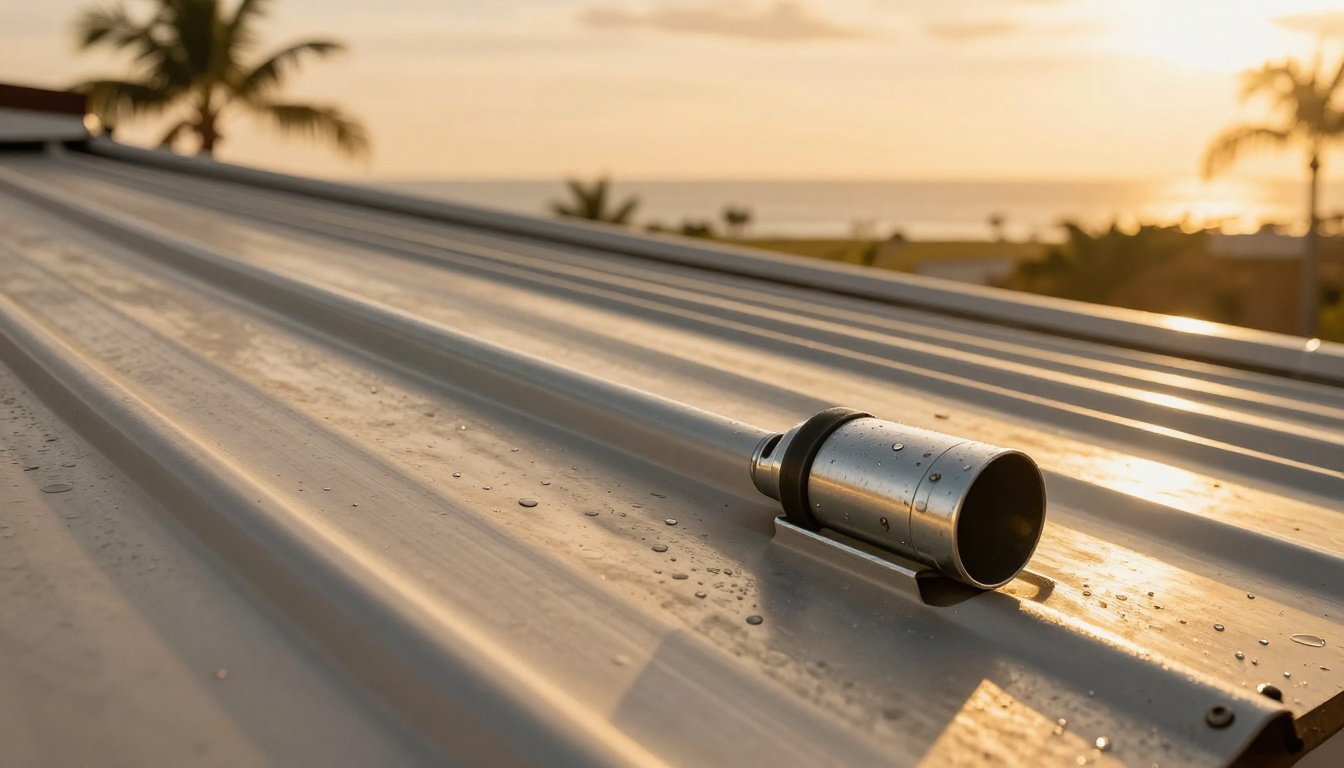
A metal roof can take years of Florida sun, rain, and wind, yet one small detail still causes most "mystery" leaks: the pipe penetration. If you've ever seen a stain appear out of nowhere after a summer downpour, the metal roof pipe boot is one of the first places to check.
Pipe boot flashing sounds simple, a rubber boot and a metal base, but Florida makes it harder. UV exposure cooks materials, salty air speeds corrosion near the coast, and hurricane season tests every screw and seal. The good news is that the right boot, installed the right way, can stay tight for a long time.
Why pipe penetrations leak first on Florida metal roofs
Think of a roof penetration like a straw pushed through a drink lid. The lid might be strong, but the hole is still the weak point. On a metal roof, that weak point also moves.
Metal expands and contracts every day. In Florida, the temperature swing between a cool morning and a hot afternoon is enough to work fasteners and stress sealant beads. Add wind uplift, wind-driven rain, and debris, and pipe boots get punished.
Here are the most common failure causes seen on Florida roofs:
- Wrong boot material for the conditions : Some rubbers crack early under UV, or don't like high surface temps on darker panels.
- Bad sizing at the pipe : If the opening is cut too large, the boot can't grip the pipe and water follows the pipe down.
- Fastener and washer problems : Corroded screws, over-driven screws, or missing washers let water creep under the flange.
- Sealant used as the "main" waterproofing : Sealant should back up the mechanical seal, not replace it.
- Rib and panel profile mismatch : A flat base fighting a tall rib leaves gaps, even if it looks sealed on day one.
If you're newer to metal roofing terminology, it helps to understand how pipe boots fit into the bigger flashing system. This overview of what roof flashing is makes it easier to talk through details with your contractor or crew.
A clean install should shed water even if the sealant bead weathers. Plan for movement, not perfection.
Choosing a metal roof pipe boot that holds up in UV, salt air, and storms
A good metal roof pipe boot starts with the right material, the right base, and the right fasteners. In Florida, those choices matter more than brand names.
EPDM vs silicone, what actually matters in Florida
Most residential and light commercial metal roofs use EPDM or silicone boots. EPDM is a common pick for UV and ozone exposure, while silicone shines when sustained high temperatures are expected (for example, certain hot exhaust applications). Always match the boot to the pipe type and temperature, then match the base to the panel.
Here's a quick way to compare common options:
| Boot type | Best fit for | Strengths in Florida | Watch-outs |
|---|---|---|---|
| EPDM rubber boot | Plumbing vents, many standard penetrations | Strong UV and weathering performance, good flexibility | Not for very hot pipes unless rated for it |
| Silicone rubber boot | Higher-heat penetrations | Handles higher continuous temperatures | Can cost more, still needs correct sealant and fasteners |
| Retrofit split boot | Existing pipes where you can't remove cap | Great for repairs without disconnecting pipe | Seam must be sealed and fastened correctly |
Base shape and roof profile, don't ignore the ribs
Metal panels aren't flat. 5V, Multi-Rib, and PBR-style panels have highs and lows that can leave voids under a boot flange. Choose a boot with a malleable base that can conform to the panel, and make sure the flange lands where you can fasten properly.
Also consider exposure:
- Coastal jobs : Favor corrosion-resistant fasteners and compatible materials, especially where salt mist reaches the roof.
- High-wind areas : Use fasteners and spacing that keep the flange tight to the panel, even under uplift and vibration.
For boots, screws, butyl tape, and other components that support watertight penetrations, review roof pipe penetration seals and boots so you're not hunting for missing parts mid-install.
Installation details that keep pipe boot flashing watertight in hurricane weather
Even the best boot can fail with a rushed install. The goal is a sealed cone-to-pipe fit, a fully supported flange-to-panel fit, and fasteners that won't loosen or rot out.
A practical, job-site install sequence
- Confirm pipe outside diameter and choose a boot with the right size range. Don't "make it work" with a loose fit.
- Mark and cut the cone opening carefully. Cut small, then test fit. The boot should stretch slightly around the pipe.
- Clean the panel surface where the flange will sit. Dust, oil, and metal shavings reduce seal quality.
- Set the boot and form the base to the panel ribs. Press and shape the flange so it sits tight with no rocking.
- Apply sealant under the flange (as specified for metal roofing), then fasten the flange with gasketed screws.
- Tighten screws to snug, not crushed. Over-driving can split washers and dish the flange.
- Detail the top edge at the cone if required by the boot design, especially on steeper slopes or exposed locations.
If your crew benefits from seeing the process on the exact panel style, these pipe boot installation on metal panels clips can help align everyone on sequencing and placement.
Wind-driven rain detailing tips (where Florida roofs get tested)
Placement matters. Whenever layout allows, keep penetrations out of valleys and out of heavy runoff lines. If a pipe must land in a busy water path, treat it like a higher-risk detail and slow down.
A few field-proven habits help:
- Seat the flange on solid panel areas where fasteners bite well.
- Use sealant and tape in a way that supports drainage, not dams it.
- Keep metal shavings off the roof, because they rust and stain fast.
Florida code requirements vary by jurisdiction and roof system, especially in High-Velocity Hurricane Zones. Use this guidance as educational only, and confirm project requirements with the Florida Building Code, product approvals, and the roof panel and boot manufacturer instructions.
Safety notes for Florida roof work (don't skip these)
Heat and storms add risk on metal panels. Plan the workday like you plan the flashing.
- Working at height : Use proper fall protection, stable ladders, and controlled material staging.
- Heat exposure : Schedule intense work early, hydrate, and watch for heat stress on reflective and dark panels.
- Lightning risk : Stop work when storms build. Metal roofs and open roof decks are not a place to "finish one last boot."
Catching problems early: what to inspect after summer storms
Pipe boots rarely fail all at once. They give clues first. Walk the roof a couple times a year, and always after major wind events.
Use this short checklist:
- Look for cracks or splits in the boot cone, especially on the sun-facing slope.
- Check the flange screws for back-out, rust, or missing washers.
- Scan for sealant gaps at flange edges, or sealant that has hardened and pulled away.
- Inspect for ponding dirt rings above the boot that hint water is slowing down.
- Check the attic or deck underside for staining around the penetration, not just at the ceiling.
When you see early wear, you can often replace the boot before it becomes a ceiling repair. For older roofs, consider upgrading to a retrofit boot for repairs where pipe disassembly isn't practical, but take extra care sealing the split.
Conclusion
A pipe penetration is a small opening with big consequences. In Florida, a metal roof pipe boot has to handle sun, movement, salt air, and wind-driven rain without giving up its grip. Choose the right boot material, match the base to the panel, and install it with tight, disciplined detailing. Then inspect it like you would any other high-risk roof area, because a five-minute check can prevent a long, expensive leak.
Share Our Metal Roofing News Articles
Related Posts