Florida Metal Roof Permit Checklist for Homeowners and Contractors
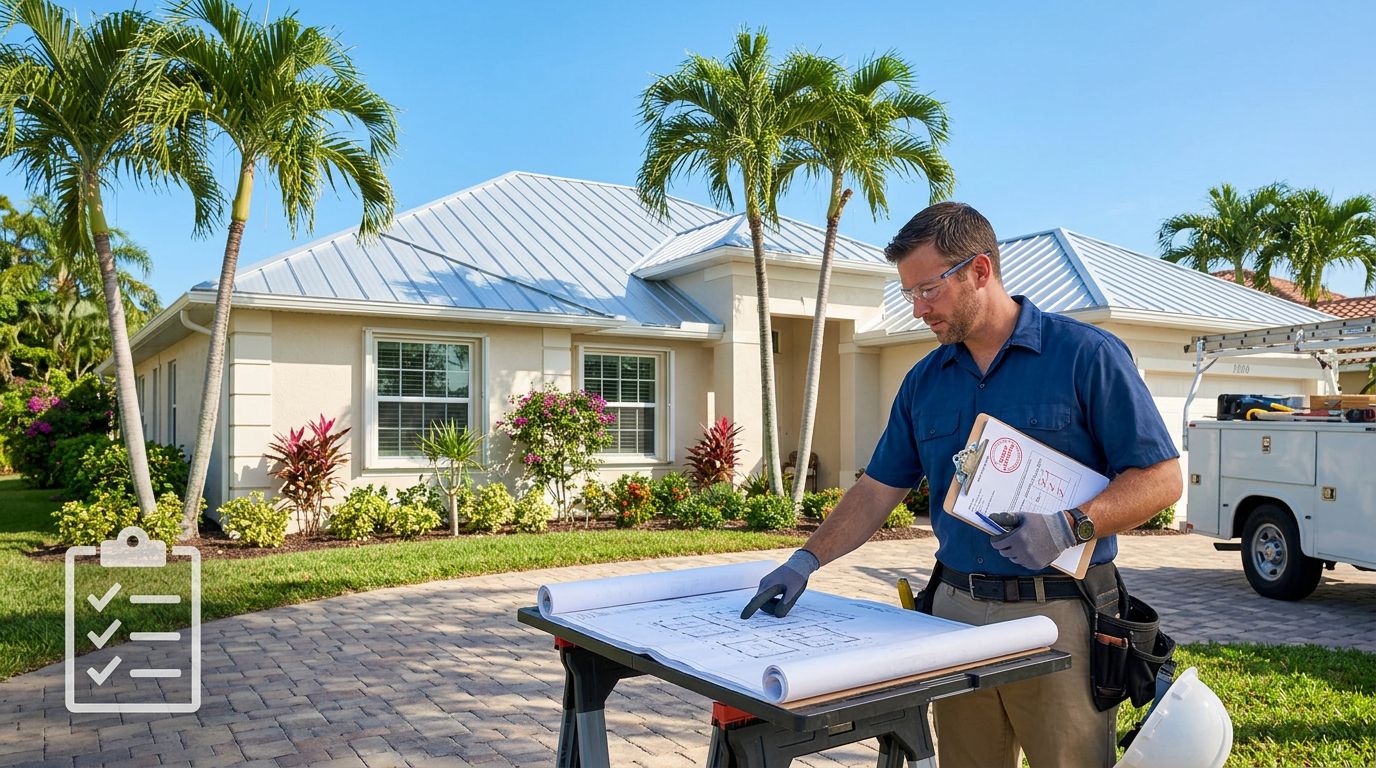
Getting a Florida metal roof permit can feel like packing for storm season. Miss one small item, and the delay hits fast.
The good news is that most permit problems follow a pattern. Plans don't match the product approval, local rules were assumed instead of checked, or the inspection file is too thin. If you own the home or run the crew, this guide helps you sort the statewide rules, the local AHJ details, and the metal-roof items that inspectors watch most closely in 2026.
What every Florida metal roof permit needs
Across Florida, a reroof or full metal roof replacement usually needs a permit. The same goes for an overlay, major repair, structural change, or new roof penetrations. Small repairs may fall outside permit rules in some places, yet local building departments make that call.
At the state level, permit reviewers usually want the roof system to match the current Florida code cycle, the approved product paperwork, and the maker's install instructions. For metal roofing, that means the panel profile, gauge, deck type, fasteners, underlayment, and attachment pattern must work together as one tested system.
Before submittal, confirm your Florida Product Approvals for metal roofing. If the job sits in Miami-Dade or Broward, or the AHJ asks for it, a Miami-Dade NOA may also be required.
Here's the simple split between statewide items and local add-ons:
| Statewide baseline | Often changed by the local AHJ |
|---|---|
| Permit for most reroofs and replacements | Local forms and affidavit requirements |
| Florida Product Approval for the roof system | Extra engineering or site details |
| Installation must match approval documents | Inspection sequencing |
| Licensed contractor, or eligible owner-builder | Floodplain and zoning review |
| Wind-resistance compliance | Miami-Dade NOA requests outside HVHZ |
Most reviewers also want a clear scope of work. "Install metal roof" isn't enough. A better scope lists tear-off or overlay, panel type, underlayment, flashing, edge metal, fastener schedule, and any deck repairs.
As of March 2026, many Florida departments still focus heavily on wind resistance, uplift attachment, and proof that the installed roof will match the submitted assembly. That matters because a metal roof is not just a finish layer. It's part of the home's wind-resisting shell.
Where county and city rules change the job
Florida has one code framework, but local building departments still shape the real process. The Authority Having Jurisdiction, or AHJ, is the final checkpoint. That's why the same roof system can move smoothly in one county and stall in the next.
Local changes often show up in four places. First, submittal forms vary. Some cities want a roofing worksheet, product approval cover sheet, or owner acknowledgment form. Second, wind design expectations can change by location, height, exposure, and distance from the coast. Third, floodplain or zoning review may apply before roofing review starts. Fourth, inspection timing can differ, especially when decking, dry-in, or structural repairs are involved.
Overlay jobs need extra care. If the plan is metal over shingles, verify both code fit and local approval before ordering panels. This guide on Florida code rules for metal roof overlays is a helpful starting point, but the building department still gives the final yes or no.
Homeowners should also separate permit rules from HOA rules. An HOA may care about color or profile. The permit office cares about code, approvals, and inspections. One doesn't replace the other.
For official verification, check Florida Building Code Online, the Florida Product Approval database, the Miami-Dade NOA directory when needed, your county or city permit page, and the DBPR contractor license lookup. Permit fees often land around $150 to $600 or more, depending on scope and location.
Florida metal roof permit checklist from submittal to final
A clean permit file saves time because it answers the reviewer's first questions before they ask them.
Before you apply
Homeowners should gather the property address, roof measurements, photos, current roof condition, and any insurance or claim documents tied to the work. Contractors should confirm license status, scope, panel profile, deck type, and whether the job is a tear-off, repair, or overlay.
If the roof area is large or the scope changed during estimating, ask the AHJ how the current code applies. Large repair areas can trigger wider upgrade demands.
What the permit set should include
Most metal roof permit packages need these basics:
- Scope of work : Clear description of the reroof plan
- Product approvals : Matching panel, trim, and system documents
- Fastener and attachment details : Field, edge, and corner patterns
- Underlayment information : Type and placement
- Site or roof plan : Enough detail for review and inspection
- Contractor license information : Or owner-builder paperwork, if allowed
- Engineering, when required : Often for structural changes or special uplift conditions
Crews should keep the matching metal roofing installation manuals on hand. Reviewers and inspectors may compare the jobsite work to those details.
A passed submittal doesn't guarantee a passed roof. Inspectors compare the installed assembly to the approval documents, not to the sales quote.
What inspectors usually check
Metal roof inspections often look simple from the ground. Up close, they're detail-driven. Inspectors commonly check deck condition, dry-in, underlayment laps, flashing, edge metal, panel attachment, and whether screws match the approved schedule. On exposed-fastener systems, they also look at screw location, spacing, and washer compression. On standing seam roofs, they focus on clips, seams, trim, and movement details.
Common red flags include missing approval sheets, mixed components, wrong fasteners, unapproved panel substitutions, and roof-to-wall or valley flashing that doesn't match the submittal. If the roof system calls for tighter fastening in edge and corner zones, crews need to follow that pattern exactly.
In short, the permit file starts the job, but the inspection closes it.
A Florida metal roof permit is less about paperwork volume and more about paperwork that matches the roof on the house. Start with approved products, verify the local AHJ rules early, and keep the field work tied to the submitted details. Whether you're the homeowner or the contractor, verification is what keeps the project moving. Before ordering materials or starting tear-off, confirm the final requirements with the local building department.
Share Our Metal Roofing News Articles
Related Posts