How to Prevent Galvanic Corrosion on Metal Roofs
Galvanic corrosion can wear down a metal roof long before the panels look old. It starts when dissimilar metals touch and moisture gives them a path to react.
Florida makes that problem easier to trigger. Humidity hangs in the air, rain gets into laps and seams, and salt near the coast speeds up wear.
The fix is not one product. It's a system built on material compatibility , separation, drainage, coatings, and regular checks.
Why galvanic corrosion starts on roofs
Galvanic corrosion is an electrical reaction. One metal gives up material, while the other is protected. Water acts like the bridge between them.
That is why the damage usually shows up at fasteners, flashings, valleys, gutters, and penetrations. Those spots stay wet longer, so the reaction has more time to work.
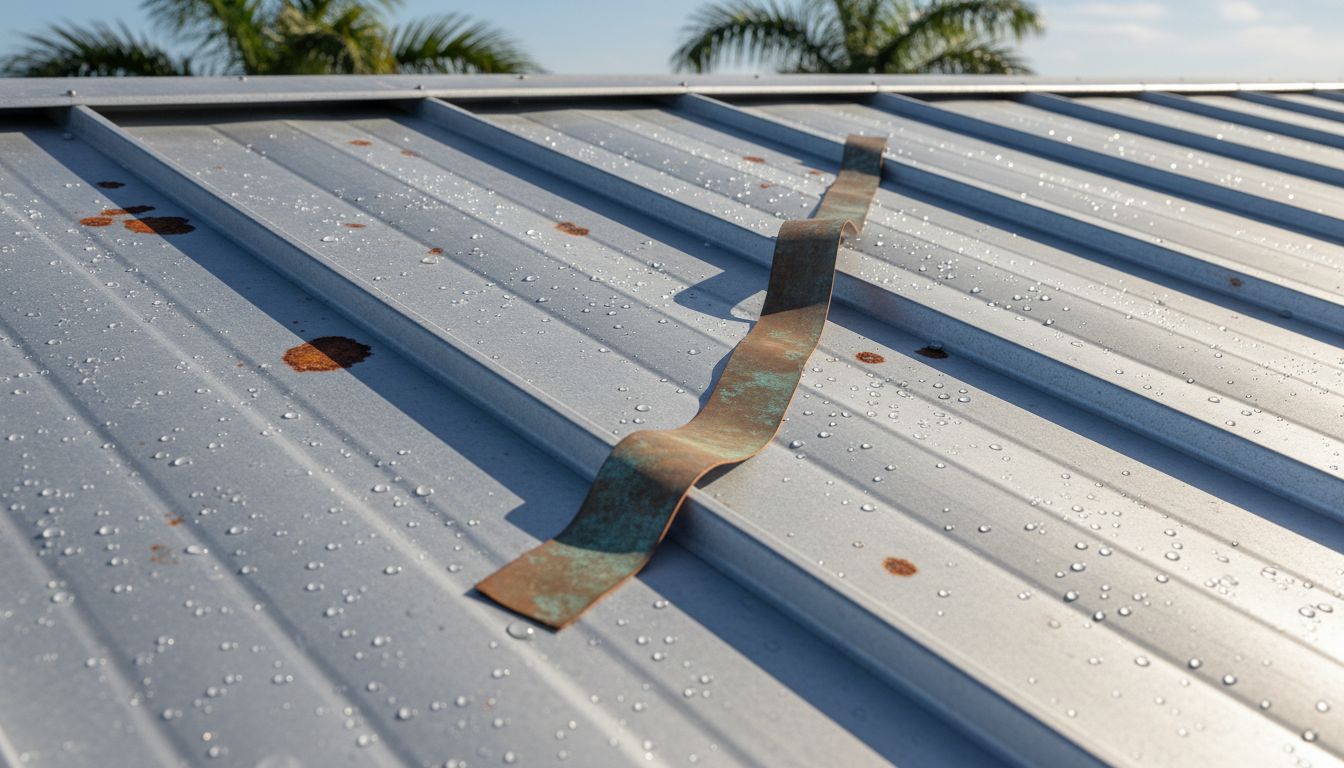
Runoff can spread the problem too. Copper draining onto aluminum is a classic example. The metals do not need to share a big contact area for trouble to start.
Galvanic corrosion needs two metals, a wet path, and time. Break one part of that chain, and the risk drops fast.
The wettest parts of a roof deserve the most attention. Eaves, wall transitions, cut edges, and hardware around penetrations are the places where small mistakes become expensive.
Choose compatible metals and fasteners
Material choice matters before the first panel goes up. When you can, keep panels, trim, flashings, and screws in the same metal family.
That matters even more in Florida, where warm rain and salt air keep joints damp. Galvalume, galvanized steel, and aluminum all perform well in the right system, but they are not interchangeable.
If you're sorting parts for a new job, choosing corrosion-resistant fasteners for metal roofs matters as much as picking the panels. The fastener coating, washer material, head style, and approval all need to fit the panel.
Here's a quick comparison of common trouble spots and safer choices.
| Problem pairing | Safer approach |
|---|---|
| Copper flashing draining onto aluminum panels | Use matching aluminum flashing, or fully isolate the copper with an approved barrier |
| Plain steel screws in coated panels | Use approved long-life coated or stainless fasteners for that roof system |
| Bare steel trim against Galvalume | Match the trim material, or separate the metals with gaskets and sealant |
| Copper straps or fittings touching roof parts | Keep the metals apart and seal all contact points |
The safest choice is still a single-metal system. Every extra transition adds another place for moisture to sit.
Exposed-fastener roofs need special care. Long-life fasteners for warranty compliance matter because a rusty screw can stain the panel and weaken the attachment long before the roof reaches the end of its life.
Use separation layers where metals meet
Even a good material choice can fail if the metals touch in the wrong place. Separation barriers give the roof a buffer.
Nonconductive washers, gaskets, isolation tape, underlayments, and compatible sealants help keep metal-to-metal contact from forming a bridge. That detail matters at ridges, valleys, sidewalls, skylights, and pipe boots.
It matters on standing seam roofs too. Concealed clips reduce exposed hardware, but clips and screws still need compatibility. Durable fasteners for humid metal roofing systems are part of the roof assembly, not an afterthought.
Factory finishes and touch-up coatings add another layer of defense. They slow moisture entry at cut edges, scratches, and drilled holes. They do not fix a bad metal pairing, but they buy time.
A few small habits help a lot:
- Seal cut edges and field-drilled holes right away.
- Keep dissimilar metals from touching through hidden brackets or clips.
- Use approved barriers at flashings and transitions.
- Replace damaged washers and sealants before water gets in.
Keep water moving and inspect weak spots
Corrosion needs moisture, so drainage is part of the fix. Keep gutters clear, clean debris from valleys, and correct low spots that hold water after storms.
Runoff control matters too. Copper, lead, and other dissimilar metals should not shed water onto aluminum, Galvalume, or steel surfaces. A small change in a flashing detail can prevent years of streaking and pitting.
That is especially important in Florida, where heavy rain can sit on a roof longer than you expect. Wet debris and trapped leaves work like a sponge, and that gives corrosion more time to start.
Regular inspection closes the loop. Check screw heads, washers, cut edges, sealant joints, and any place where a different metal was added later.
Look after severe weather, then again before hurricane season. White powder on aluminum, red rust on steel, or staining below a flashing all deserve quick attention. Early touch-ups cost far less than panel replacement.
A better metal roof starts with compatibility
The best defense against galvanic corrosion on metal roofs is simple and practical. Match the metals, separate the ones that must meet, and keep the roof dry.
Florida roofs take heat, salt, and rain all year. That makes the small details, fasteners, barriers, coatings, and drainage, just as important as the panels themselves.
When those parts work together, the roof lasts longer and looks better. That is the real fix, and it starts before the first screw goes in.
Share Our Metal Roofing News Articles
Related Posts