Exposure B vs. C vs. D for Florida Metal Roofs
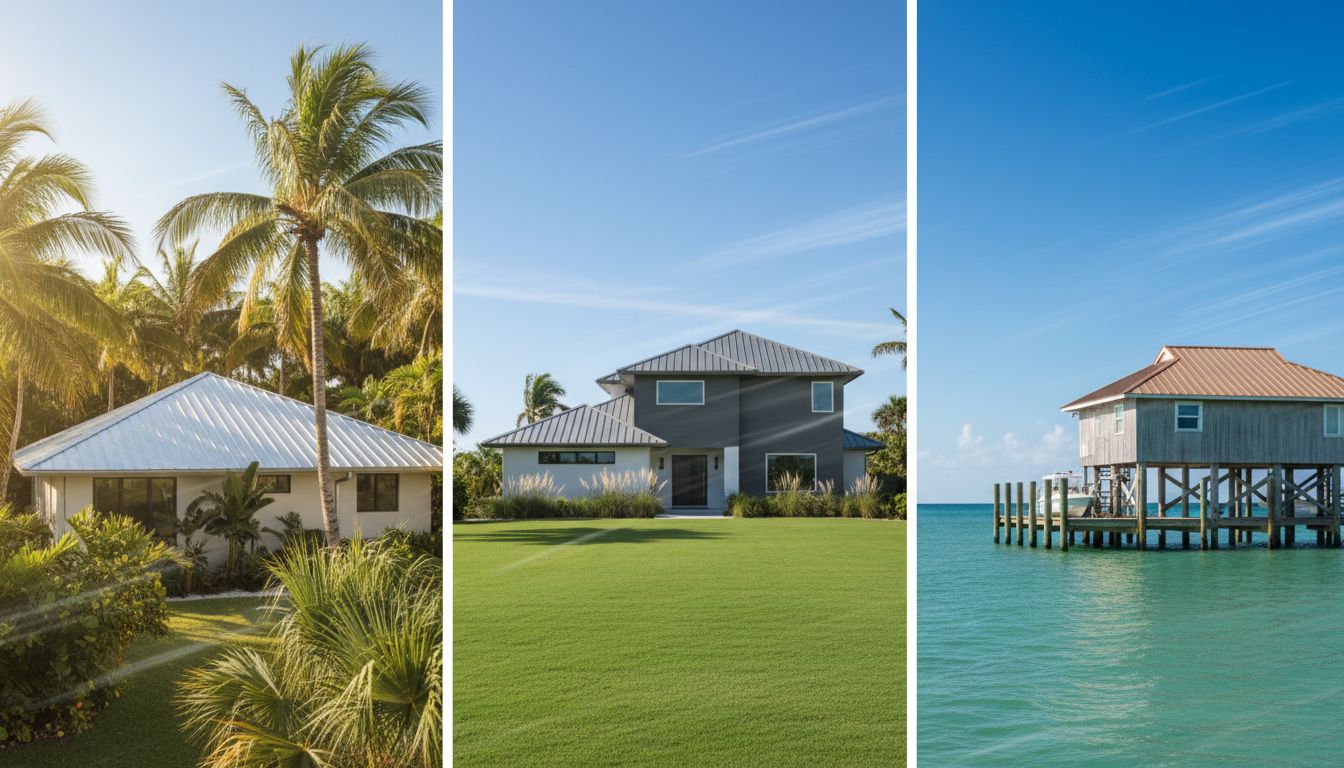
Florida roofs do not all face the same wind load. A house in a tree-lined neighborhood may fall under Exposure B , while an open lot or waterfront site may push the roof into C or D .
For metal roofs, that category changes more than a permit line. It affects design pressure, panel approval, fastener spacing, clips, trim details, and sometimes the whole roof assembly.
If you are planning a replacement or a new build, Florida roof exposure should be sorted out early. The right category keeps the roof design grounded in the site, not guesswork.
Why Florida roof exposure changes design pressures
Wind does not hit every roof the same way. Trees, nearby homes, and other buildings slow it down. Open fields and open water do the opposite.
That is why two homes with the same wind speed can still need different roof systems. The code uses the exposure category to adjust the wind load on the structure. Mean roof height also matters, because taller roofs catch more wind.
In plain terms, exposure is about what the wind sees before it reaches your roof. A sheltered neighborhood and a wide-open shoreline are not the same test. For a useful starting point, see wind uplift ratings by exposure category B, C, D, which connects exposure to panel choices.
That is why the category should come from the site conditions and the permit set, not a ZIP code alone. Local permitting offices, roofing contractors, and licensed engineers look at the full wind design before they approve the roof assembly.
Exposure B, C, and D in plain English
The easiest way to compare the categories is side by side.
| Exposure | What the site usually looks like | Florida example | What it means for the roof |
|---|---|---|---|
| B | Sheltered by homes, trees, and other obstructions | A suburban neighborhood in Orlando or Lakeland | Lower wind pressure than the other two |
| C | Open terrain with fewer obstructions | Open land, a large cleared lot, or the edge of a big inland lake | Higher pressure than B, often the middle ground |
| D | Open water or shoreline exposure with long, unobstructed fetch | A barrier island, bayfront lot, or a home facing open water | Highest wind pressure and the strictest detailing |
Exposure B is the most forgiving of the three. Exposure C is common when the site is open and the shelter around it is thin. Exposure D is the toughest case, and it usually appears where water and open fetch dominate the upwind direction.
If the site feels exposed in a storm, the code may treat it that way too, even when the neighborhood looks calm on a clear day.
One important point, though, is that the exact category still depends on the surrounding terrain, mean roof height, distance from open water, and local interpretation. A lot of Florida properties sit near the border between two categories, so the final call should not be based on a rough guess.
What exposure means for metal panels and fastening
Exposure category does not pick the panel for you, but it changes what the panel must handle. A system that works in a sheltered inland neighborhood may not work on a more open coastal site.
That is where product approval and attachment details matter. Standing seam roofs can perform very well, but the clip spacing must match the wind pressures. See standing seam clip spacing for Florida wind loads for a clear example of how the attachment plan changes with design pressure.
Exposed-fastener panels can also work on Florida roofs. The key is the approved assembly, the screw pattern, and the substrate. If the roof deck is part of the system, the fastening plan has to match the expected wind load. A guide to Florida roof deck attachment rules for metal roof re-roofs is helpful when you are comparing re-roof options.
Roof zones matter too. The field, edges, and corners do not behave the same in wind. Corners and perimeters usually need the most attention, because they see the highest pull.
That means a roof can pass in one area and fail in another if the attachment schedule is too light. The system has to work as a whole, from the deck up.
When Florida homeowners should confirm the category
Some sites are easy to place. Others are not.
You should ask for confirmation when the property is near a lake, bay, canal, or open field. The same is true for taller homes, homes with unusual roof shapes, and properties on the edge of changing terrain. New subdivisions can also be tricky, because a site may look sheltered now but still qualify as more open under the code.
The current Florida code process still depends on the permit set and the adopted wind standard for the project. As of April 2026, many projects are still moving under the Florida Building Code 8th Edition (2023), while the next edition is expected later in the year. That makes it even more important to match the submission to the local review.
A Florida metal roof permit checklist for wind zones can help you gather the right documents before you order panels or schedule labor.
If the site sits near open water or the roof height is unusual, bring in a Florida-licensed engineer, roofing contractor, or permitting authority to confirm the exposure category. That small step can save a lot of rework later.
Conclusion
Exposure B, C, and D are not just labels. They are wind inputs that change the way a Florida metal roof has to perform.
The safest path is simple. Confirm the site conditions early, match the approved assembly to the pressure, and pay close attention to edges, corners, clips, and deck attachment.
A roof built for the right Florida roof exposure is far easier to permit, install, and trust when storm season returns.
Share Our Metal Roofing News Articles
Related Posts