Florida Metal Roof Attic Intake Vent Guide for Balanced Airflow
Florida heat does not stay outside for long. If your attic intake is weak, the whole roof system feels it, especially under metal roofing where heat moves fast and mistakes show up early.
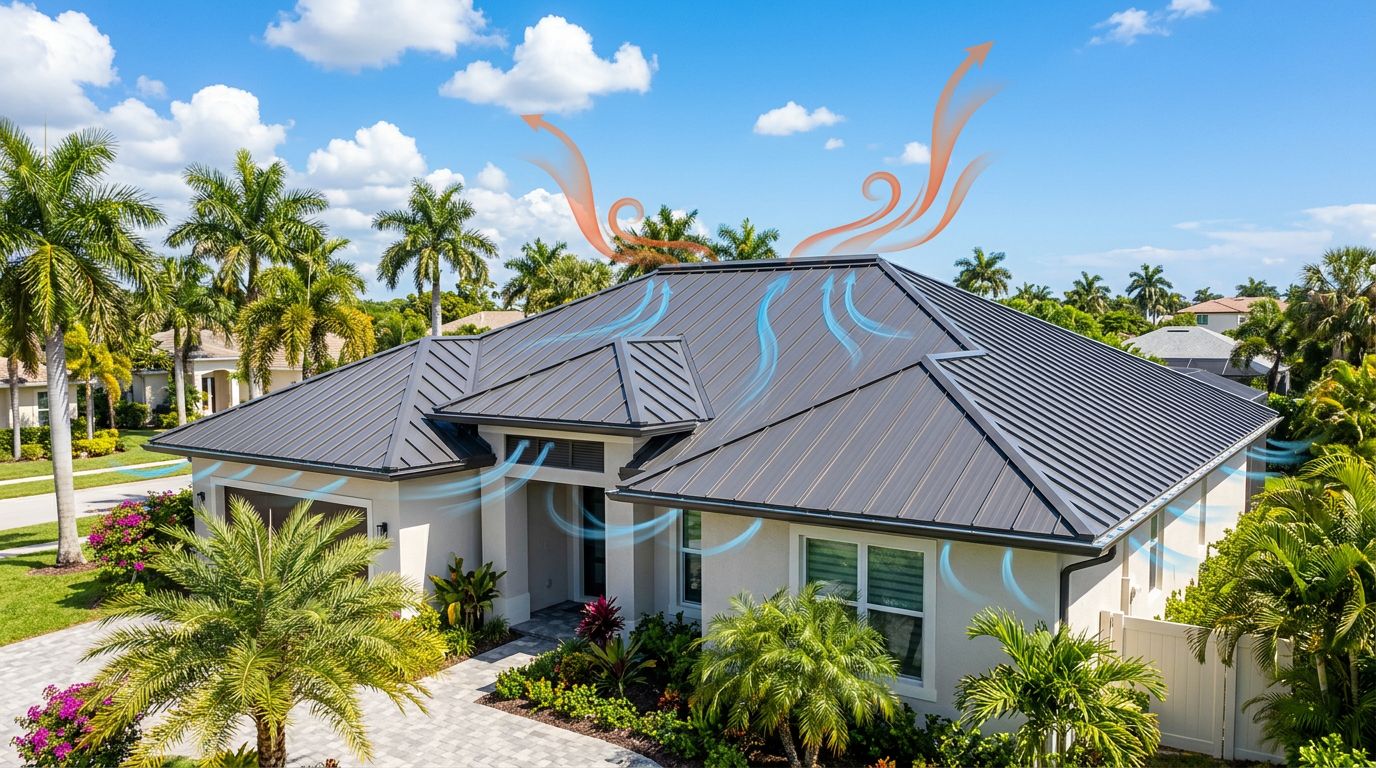
A good metal roof attic vent setup is simple in concept. Cool air enters low, warm air leaves high, and the system stays balanced. The hard part is matching that airflow to the roof shape, attic layout, and the metal panel system on the job.
That balance matters more in Florida because humidity, rain, and long cooling seasons keep pressure on the roof assembly. The right intake vent helps the attic breathe without creating leak points or fit problems.
What the intake side does on a metal roof
Intake vents pull outside air into the attic, usually through soffits or eaves. That fresh air replaces hot air that rises and exits through the exhaust vents near the ridge or upper roof area.
On a metal roof, intake matters because the roof deck and attic can heat up fast. When air cannot enter low, exhaust vents lose much of their effect. The result is uneven airflow, trapped heat, and a harder working HVAC system.
For Florida homes, the idea is simple. The intake path should be open, protected, and sized to match the exhaust side. If one side is oversized, the whole system gets out of balance.
More exhaust does not fix weak intake. It usually makes the system less stable.
That is why intake should be planned with the rest of the roof system, not treated as a last-minute add-on.
How to size intake with exhaust in Florida
Florida code references commonly use Net Free Ventilation Area or NFVA, which is the open area that actually moves air. For many enclosed attics, the common target is 1 square foot of NFVA for every 150 square feet of attic floor area. Some assemblies may qualify for a 1:300 path when the design includes balanced intake and exhaust, along with the right moisture control details.
For the current code language and product references, the Florida Building Code Online is the place to check before you build or permit.
The key point is balance. Intake and exhaust need to work together. If the attic has too much exhaust and not enough intake, airflow can stall or pull air from the wrong places.
For metal roofing jobs, that balance is often discussed alongside ridge ventilation. Our ventilation for metal roofing page gives a useful look at how ridge vents and closures fit into the system.
A simple way to plan the job is this:
- Measure the attic floor area.
- Check the required NFVA for that size.
- Split intake and exhaust so the airflow stays balanced.
- Confirm the vent product rating, because screens and covers reduce open area.
If the roof shape does not support a continuous ridge vent, the exhaust plan may change. In that case, the intake side still has to match the chosen exhaust type. The ridge vent vs box vents for metal roofs guide is a helpful companion when the roof layout gets more complex.
Choosing the right intake vent for your roof
Most Florida homes use soffit vents for intake. They sit low, stay out of the weather, and work well when the soffit space is clear. That makes them the first option on many projects.
Still, not every roof has the same soffit depth or attic shape. Some homes have limited soffit area, blocked framing, or details that make a standard vent hard to use. In those cases, the intake plan may call for a different vent style or a more careful layout.
A metal roof adds another layer of planning. The intake product has to fit the roof assembly, and the panel profile matters. Standing seam, PBR, R panel, ag panels, and 5V all handle closures and edge details a little differently.
That is why product compatibility matters so much. A vent that works on one roof may not suit another. The underside detail, trim, underlayment, and closure pieces all need to line up.
If the eave or ridge detail uses foam closures, make sure the venting plan matches them. The foam closure strips for each panel profile guide is useful when you need to pair venting with the right panel ribs and seal points.
When you compare intake options, keep the decision simple:
- Use soffit intake when the soffit is open and continuous.
- Use a different intake detail when soffit space is limited.
- Match the intake vent to the roof panel, trim, and exhaust design.
- Follow the manufacturer instructions for the exact product on the job.
Installation details that trip people up
Many vent problems start at the edges, not the vent itself. The intake path can look fine from the ground and still fail because insulation blocks the soffit or the vent opening is too small.
Another common issue is mixing parts that were never meant to work together. A roof may have one panel profile, one ridge detail, and a vent product from a different system. That can create gaps, weak fastening, or poor water control.
Keep an eye on these points during install:
- Airflow path, which should stay clear from soffit to attic.
- Fastener and sealant choice, which should match the roof system.
- Closure type, which should fit the panel ribs and vent design.
- Product approval and instructions, which should match the permit set.
Florida weather raises the stakes here. Wind-driven rain, heat, and long sun exposure all punish sloppy details. So, even a good vent product can fail if the surrounding metal roofing parts do not fit well.
The best results come from treating the intake vent as part of the roof system, not a separate piece. That approach protects the attic, keeps airflow steady, and helps the whole assembly work the way it should.
Conclusion
A solid Florida metal roof attic intake vent plan starts with balance. Intake has to match exhaust, and both have to fit the roof design, attic layout, and approved product details.
For Florida jobs, the safest approach is to verify NFVA, confirm compatibility with the metal panel system, and check the current code and manufacturer instructions before install. When those pieces line up, the attic can breathe the way it should, and the roof performs better for the long run.
Share Our Metal Roofing News Articles
Related Posts