How to Match Screw Colors on Metal Roof Repairs
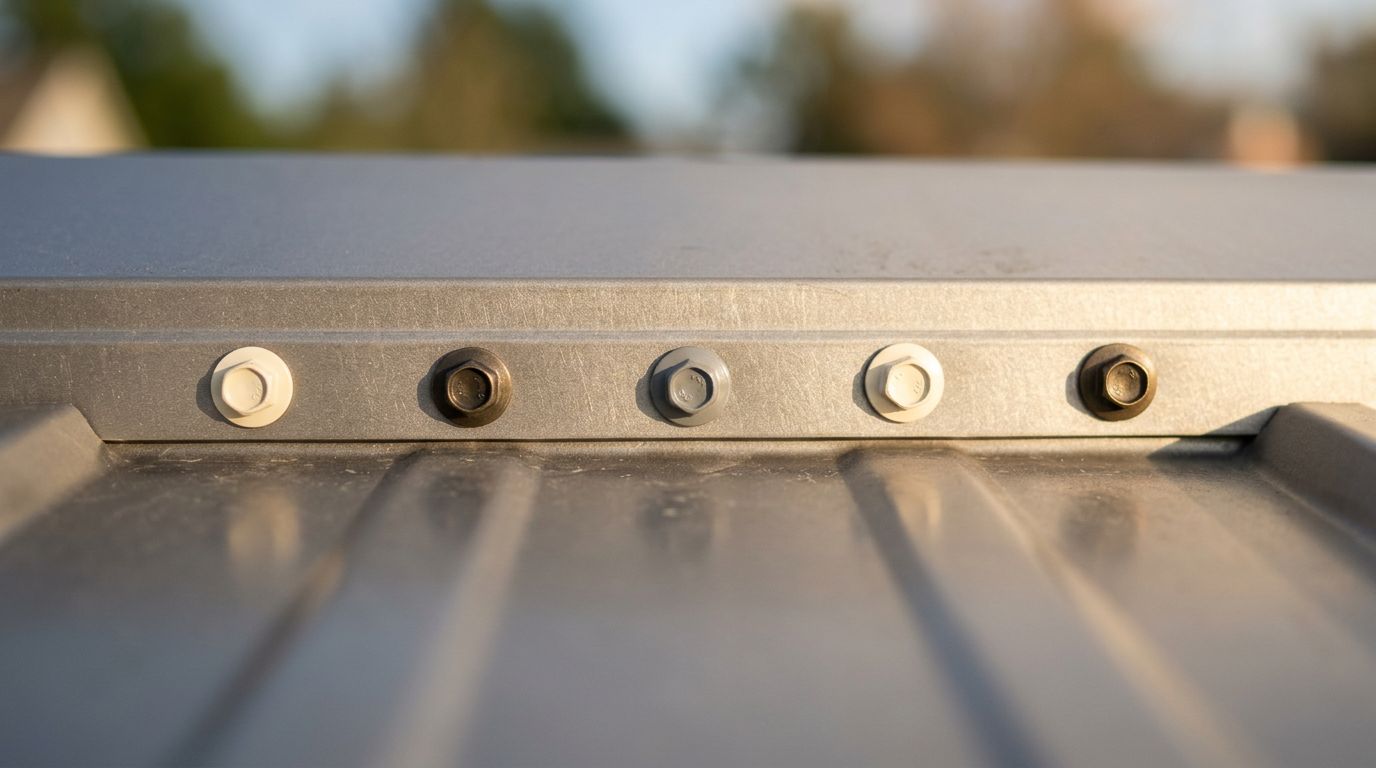
A small screw head can stand out like a bright pebble on a driveway. On a metal roof, that matters, because a repair should look clean and hold tight.
Matching metal roof screw colors sounds simple until you compare two brands or a roof that has spent years in Florida sun. The label on the box may look close, yet the finished roof tells a different story.
The good news is that you can get a strong match without guessing. Start with the panel finish, compare real samples in daylight, and check the fastener details before you buy.
Why screw color names can fool you
Color names are not universal. One maker's "ivory" may lean warm and creamy, while another's version looks pale and flat. The same goes for bronze, white, gray, and black.
That happens because roof coatings are made on different systems, with different pigments and surface textures. A name on a chart is only a reference point. It is not proof of a match.
Before you order, compare the screw against the exact roof panel finish, not just the name. Bring a removed screw, a photo of the panel, and, if possible, a small panel sample or a hidden trim piece. A supplier can compare those side by side much faster than they can work from memory.
This simple checklist helps you avoid the most common mistake, which is matching the label instead of the surface.
| What to compare | Why it matters | What to check |
|---|---|---|
| Manufacturer color name | Names vary by brand | Match the chart code, not just the color word |
| Panel finish type | The same color looks different on different coatings | PVDF, SMP, Galvalume, matte, or glossy |
| Sheen or gloss | Shine changes how visible the screw head looks | Flat, satin, semi-gloss, or glossy |
| Weathering | Sun and rain change the current roof color | Compare to the roof as it looks now |
| Lighting | Color shifts in sun, shade, and cloud cover | Check samples outside, not under shop lights |
The takeaway is simple. The closer the match looks on the roof, the less the repair draws the eye.
Match the screw to the panel finish, not just the shade
A screw color that looks perfect on a chart can still miss on the roof if the finish is wrong. A glossy screw head on a matte roof often sticks out more than a slightly off-color matte screw.
Florida roofs make that even more obvious. Strong sun pulls out glare, and salt air can age coatings faster near the coast. That means sheen matters almost as much as color.
If the roof has a factory-baked finish, try to match that finish family first. A PVDF-coated panel usually looks different from a basic painted panel, even when both are called gray or white. Galvalume also needs its own approach because the surface has a metallic look that reflects light.
The best match is the one that disappears in full sun and still looks right from the curb.
If you're not sure which fastener style belongs on the repair, review choosing metal roof fasteners before you buy replacement screws. The head style, washer type, and coating all affect how the repair looks and performs.
A practical field method that gets better results
The easiest way to match a replacement screw is to work in order. Don't start with a catalog photo. Start with the roof itself.
- Find the least weathered spot. Look under ridge caps, trim, or other protected areas. Those spots often show the original color better than the exposed field.
- Pull one old screw if you can. A screw from the same roof gives you the best reference. If the old screw is rusted, compare it with a protected sample too.
- Check the sample outside. Natural light shows color more accurately than a garage or warehouse light. Hold the sample against the roof at different angles.
- Compare finish, not only color. A slightly darker matte screw can blend better than a lighter glossy one.
- Order a small test batch first. If the match is close, test a few screws before buying the full repair quantity.
This method saves time because it mirrors how the roof is actually seen. The human eye notices contrast more than exact color labels, especially on long roof runs.
If the roof repair also includes scratched panel paint, use metal roof touch-up paint for Florida scratches that actually helps to keep the rest of the repair consistent. A good screw match works best when nearby scratches and scuffs are handled the same way.
The hardware details matter more than the shade
A matching screw that leaks is still the wrong screw. Color is only one part of the job.
The fastener has to match the panel type, the coating, the washer, and the required length. If any of those are off, the repair can fail even when the screw head looks perfect.
Pay close attention to these points:
- Fastener type : Use the screw style designed for that panel and attachment point.
- Washer condition : The bonded washer should be flat, flexible, and uncracked.
- Coating : Coastal or high-humidity areas need corrosion resistance that fits the roof system.
- Length : The screw has to bite into the right substrate without being too short or too long.
- Head profile : A low-profile or hex head may look different after installation, so choose the right style for the location.
If you want a fast reference on head styles and where they belong, the metal roof screw guide for Central Florida is a useful check before you re-fasten a roof.
For coastal or humid sites, also compare coatings with the rest of the system. Compatible metal roof fasteners explains why mixed metals can create early wear, staining, and corrosion. In Florida, that step matters as much as color matching.
What to do when the original color is faded or discontinued
Many repairs happen on roofs that are no longer the color they were on day one. Florida sun can fade dark panels, wash out bright ones, and soften the difference between trim and field panels.
If the original screw color is discontinued, compare against the roof as it looks now. Do not match a fresh catalog color to an old weathered roof unless you want the repair to stand out.
Use this approach when the original match is gone:
- Match to the most protected existing screw you can find.
- Compare the screw against a weathered panel section, not just a new panel description.
- Choose the closest current color, then test it in sunlight.
- If the new screw is slightly darker, that often blends better than one that is too bright.
- Replace screws in the same visible area as a group so the roof looks consistent.
A small difference is easier to hide than a mixed patch of several close shades. Uniformity matters more than perfection.
If the roof has light scratches or exposed edges around the repair, an approved touch-up product can help the whole area look more finished. The key is to stay within the roofing system, not to use random household paint.
Florida sun makes the final check worth the time
Florida roofs live under hard light, heavy rain, and long heat cycles. Because of that, a screw that looks close indoors may look wrong outdoors.
Light neutrals, grays, and metallic tones often blend better on weathered roofs because they carry less visual contrast. Dark screws can work well too, but they show fading and oxidation faster when the roof is in full sun all year.
Salt exposure near the coast adds another layer. A screw with the wrong coating may discolor early, even if the color match looked fine on day one. That is why a repair should never stop at appearance. The screw has to stay intact, resist corrosion, and hold the panel where it belongs.
When you check the color in direct sunlight, step back to normal viewing distance. A repair that looks good from the ground is usually the right choice. A repair that only looks right with your nose against the panel is not.
Conclusion
Matching screw colors on a metal roof repair takes more than reading a box label. The best results come from comparing the current roof finish, the gloss, the weathering, and the actual fastener sample in daylight.
Once the color is close, make sure the screw is also the right type, length, washer, and coating. That balance is what keeps the repair neat, dry, and built to last.
A good roof repair should fade into the background. If the screws disappear and the roof still performs, you got the match right.
Share Our Metal Roofing News Articles
Related Posts