Metal Roof Touch-Up Paint for Florida Scratches That Actually Helps
A small roof scratch can age fast in Florida. Strong sun, salt air, and daily moisture give bare metal very little time.
If the damage is minor, metal roof touch up paint can help protect the finish. But the wrong product can create a bigger problem by peeling, trapping moisture, or causing warranty trouble. Start with the roof's coating system, not the paint aisle.
First decide if the scratch is a touch-up job at all
Not every scratch belongs in the do-it-yourself pile. A narrow surface mark in the factory finish is one thing. A deep gouge, active rust, open seam, loose fastener, or bent panel is another.
For most Florida homes, roof safety comes first. Metal gets slick from dew, salt film, pollen, and afternoon humidity. If the area is steep, high, or close to an edge, bring in a licensed roofer with fall protection.
Touch-up paint is best for small, isolated scratches on painted or coated panels. It is not a fix for leaks, seam movement, flashing problems, or widespread coating failure. If the scratch is near a wall, valley, chimney, or curb, the damage may be part of a larger detail issue.
Before you buy anything, check the roof paperwork. The coating warranty may limit what products you can use, how much area can be field-touched, and whether the repair must match the original finish. That matters even more on high-end painted systems. If you are comparing finishes, this guide to Kynar 500 vs SMP paint for Central Florida metal roofs helps explain why some coatings hold color longer under Florida sun.
Also confirm whether the roof is painted steel or bare Galvalume. Those are different surfaces, and they age differently. A paint touch-up that works on a coated panel may look odd, or wear badly, on a mill-finish panel. This overview of painted vs unpainted metal roofing in Florida gives useful background before you try to match a repair.
How to choose metal roof touch up paint without hurting the finish
Florida heat punishes shortcuts. A generic spray paint from the hardware store may look close on day one, then fade, chalk, or peel long before the roof does.
The safest choice is manufacturer-approved touch-up paint made for your panel color and coating type. That may come as a pen, bottle, or small brush-applied kit. Color matters, but chemistry matters more. PVDF, SMP, and other factory finishes do not all react the same way to field-applied products.
This quick chart helps sort the good options from the risky ones:
| Better choices | Products to avoid |
|---|---|
| Factory-matched touch-up paint or pen | Generic spray paint |
| The panel maker's approved repair product | House paint or porch paint |
| Mild soap, clean water, soft cloths | Harsh solvents unless approved |
| Small applicator for narrow scratches | Wire brushes and abrasive pads |
| A roofer's repair plan for deeper damage | Roof cement or random caulk over a scratch |
The goal is not to repaint a whole spot until it disappears. The goal is to seal exposed metal with the least amount of product needed. Thick paint blobs collect dirt, stand out from the roof, and can fail early under UV.
If a scratch reaches bare steel near the coast, fix it soon. Salt and humidity shorten the grace period.
Coastal Florida adds another layer of risk. Salt air can settle on the roof even miles inland. Once the factory finish is broken, corrosion can start faster at cut edges, panel ends, and around exposed fasteners. Because of that, do not cover active rust with a heavy coat and hope for the best. Clean the area as directed, use the approved repair product, and call a roofer if the metal is pitted, flaking, or stained beyond the scratch line.
How to touch up minor scratches safely and neatly
Once you know the scratch is minor and the product is approved, keep the repair small and controlled. A tidy touch-up protects the panel. A rushed one often leaves a visible patch.
- Pick a safe day. Work only on a dry roof, with no dew, rain, or storm risk. Early morning can still be slick in Florida, so wait until the surface is fully dry.
- Clean the scratch gently. Use mild soap and water to remove dirt, chalk, pollen, and salt residue. Then rinse well and let the area dry completely.
- Read the product instructions. Some touch-up paints need shaking, stirring, or a narrow temperature range. Follow those limits, especially in hot weather.
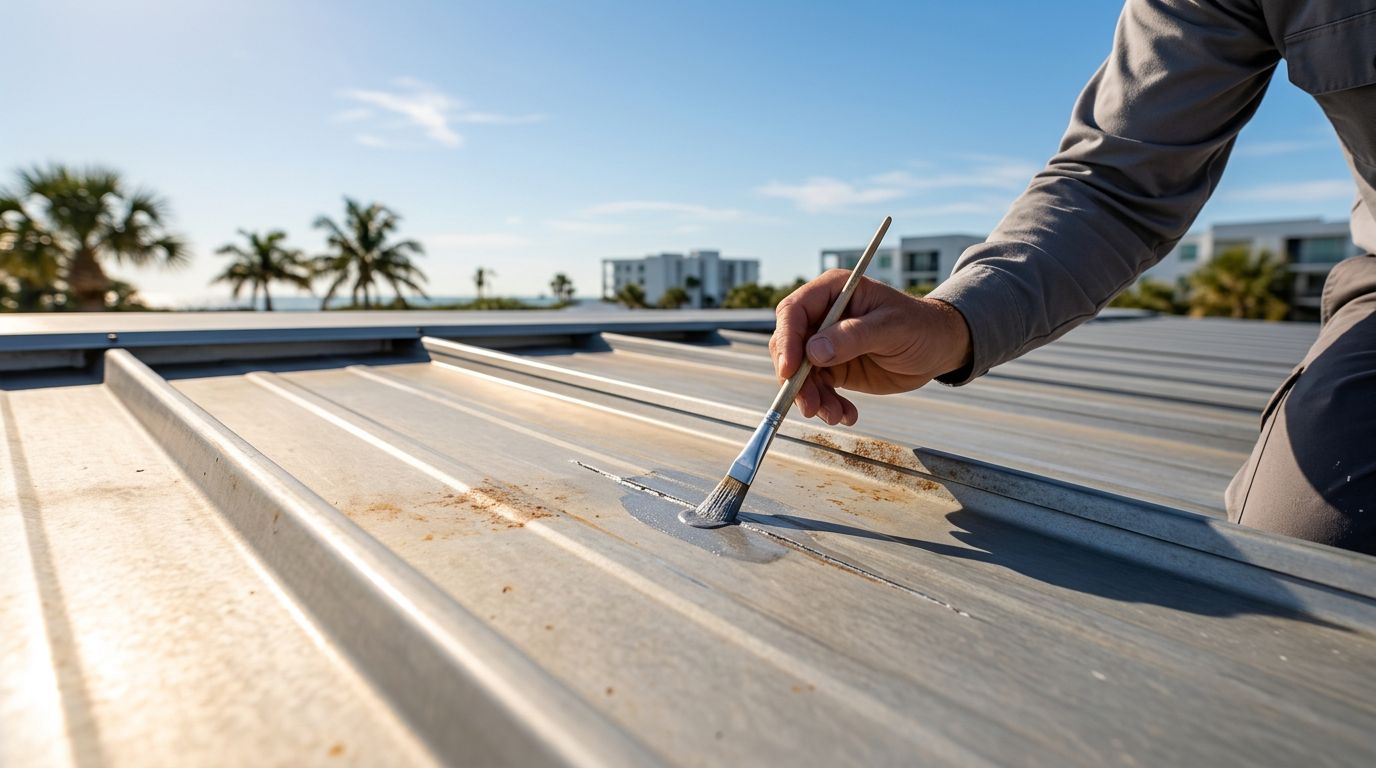
- Apply a thin coat only to the damaged area. Use a small brush or the applicator that came with the product. Keep the paint on the scratch, not in a wide halo around it.
- Let it cure as directed. If the label warns against direct midday heat, listen to it. Florida panel temperatures can climb fast.
- Check the spot later. Look for rust bleed, blistering, poor adhesion, or a scratch that is wider than it first appeared.
A few extra cautions matter. Do not sand aggressively unless the manufacturer says you should. Do not paint over wet metal. Do not smear sealant over a scratch and call it repaired.
Paint also does not replace a flashing fix. If the damage sits at trim, a pipe boot, a valley, or a roof-to-wall joint, get the detail checked. Many leaks start there, and the problem is often mechanical, not cosmetic. This guide to Florida metal roof flashing failures to avoid is a good reference when a "scratch" turns out to be part of a failing detail.
For property managers, keep a simple record of the repair. Note the date, panel color, product used, and roof location. That makes future warranty questions much easier to handle.
A minor scratch does not need a major reaction, but it does need the right one. In Florida, the best repair usually starts with the warranty , the coating type, and a manufacturer-approved touch-up product.
If the damage goes beyond the finish, or the roof cannot be reached safely, stop there. A small scratch is cheap to fix. A fall, a voided warranty, or a hidden flashing problem is not.
Share Our Metal Roofing News Articles
Related Posts