What Causes Rust Bleed Around Metal Roof Fasteners
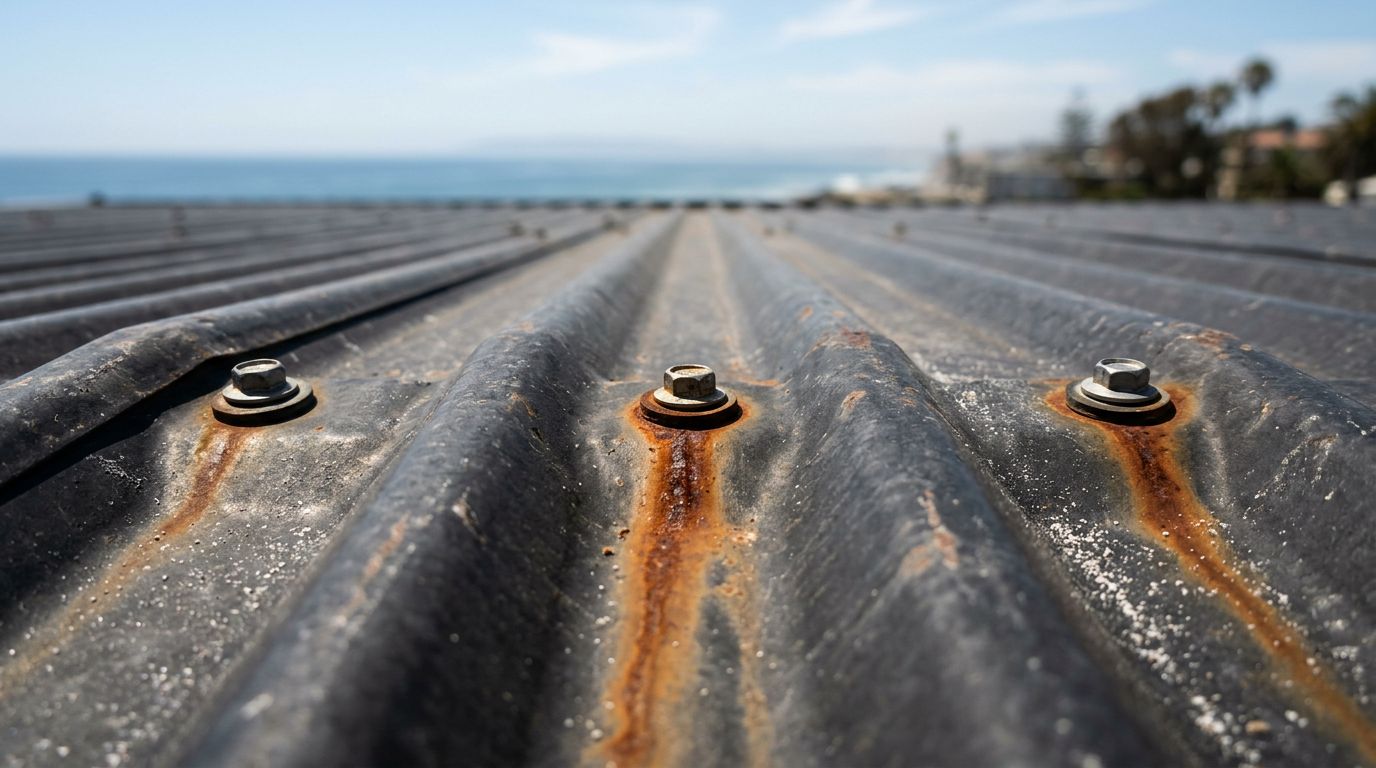
Rust streaks around roof screws usually start small. Then they spread down the panel and catch your eye from the driveway.
On a metal roof, those stains can mean a simple fastener issue or an early leak problem. In Florida, heat, salt air, and daily moisture make the problem show up faster.
The good news is that rust bleed around metal roof fasteners often has a clear cause. Once you know what to look for, the fix is easier to plan.
Why fasteners start rusting and staining panels
Most rust bleed begins at the fastener head, the washer, or the edge of the hole. Water sits there, oxygen gets in, and corrosion starts.
Washer failure is one of the most common causes
Exposed-fastener roofs use screws with sealing washers. Those washers press against the panel and help keep out water.
Over time, the washer can harden, crack, flatten, or pull away from the metal. When that happens, water reaches the screw head and starts the rust cycle.
Sun, heat, and age make this worse. In Florida, that wear happens faster than many owners expect.
Screw depth matters more than most people think
An overdriven screw squeezes the washer too much. That can split the washer or damage the coating around the hole.
An underdriven screw leaves the washer loose. Water can work under it with every rain or wind-driven shower.
Both problems can cause rust streaks. Both also leave the fastener more likely to fail over time.
Metal mismatch can speed up corrosion
When the fastener material does not match the panel or trim, corrosion can start early. Coastal air makes this even more of a concern.
Choosing the right part matters, and a metal roof fastener selection guide helps explain why coated and stainless options perform better in harsh exposure.
Rust at one screw does not always mean a big roof problem. It does mean the fastener needs a close look.
Coating damage and age add up
Paint, plating, and factory coatings protect the fastener. Once that protection wears away, the steel underneath is exposed.
Scratches during installation, tool damage, and years of weather all strip away that barrier. After that, the screw rusts, then the rust stains the panel below it.
Moisture trapped under debris can do the same thing. Leaves, pollen, and dirt hold water against the fastener head longer than a clean surface would.
How to inspect rust bleed without making the problem worse
A safe inspection starts from the ground. Use binoculars or a zoom camera and look for streaks, lifted washers, missing screws, and rust at the fastener heads.
If you can view the roof from a window or ladder on level ground, check the same areas after a rain. Fresh water marks often point to the active trouble spot.
A professional inspection is the better choice when the roof is steep, slick, or high. It's also smart when the stains are widespread or the fasteners are hard to reach.
The table below shows the difference between cosmetic staining and a leak warning.
| Visible sign | What it often means | Leak risk |
|---|---|---|
| Light orange streaks below a screw | Early surface rust or aging coating | Low, at first |
| Rust around the washer edge | Seal failure or water entry at the fastener | Moderate |
| Bubbling paint, soft panel edge, or pitting | Corrosion is moving past the surface | Higher |
| Interior stain or damp insulation | Water is reaching the roof assembly | High |
Light staining can stay cosmetic for a while. Once the metal around the screw pits, lifts, or softens, the fastener is no longer just ugly, it's part of a leak path.
A roof inspection should also check the attic or underside when access is safe. Fresh moisture, dark wood, or damp insulation near the same area is a strong sign the fastener is no longer sealing well.
Repair options that fit the problem
The right repair depends on how far the rust has spread. A single bad screw needs a different fix than a row of failing fasteners.
In many cases, the repair is local and targeted:
- Replace failed screws and washers when the rust is limited to a few spots.
- Use the correct screw type and length so the fastener bites properly without overdriving.
- Clean and seal small stain areas after the source has been fixed.
- Touch up damaged coating when the panel metal is still sound.
- Replace a panel or section if the holes are enlarged, the metal is thinning, or the corrosion is advanced.
If the issue comes from the wrong fastener choice, the repair should correct that first. A comparison of self-drilling vs self-tapping screws can help match the screw to the deck, framing, and panel type.
A little sealant can help in the right place, but it should not be used to cover a bad install. Sealant over a cracked washer or loose screw is a temporary patch, not a real repair.
When rust is isolated, a fastener swap and spot repair are usually enough. When the panel metal is thin around many fasteners, replacement of the affected section makes more sense.
A full roof replacement is only justified when corrosion is widespread, the roof has repeated leaks, or the panels and framing are no longer sound. Many roofs with fastener rust do not need that kind of work.
Conclusion
Rust streaks around screw heads are often the roof's way of waving a flag. The cause is usually a failed washer, the wrong screw depth, coating wear, metal mismatch, or years of moisture exposure.
The best next step is a careful inspection that separates cosmetic staining from real leak risk. When the problem is caught early, a focused fastener repair often solves it without major work.
A roof with a few rusty screws can be repaired. A roof with widespread corrosion needs a closer look before the damage spreads.
Share Our Metal Roofing News Articles
Related Posts