How to Prevent White Rust on Stored Metal Panels
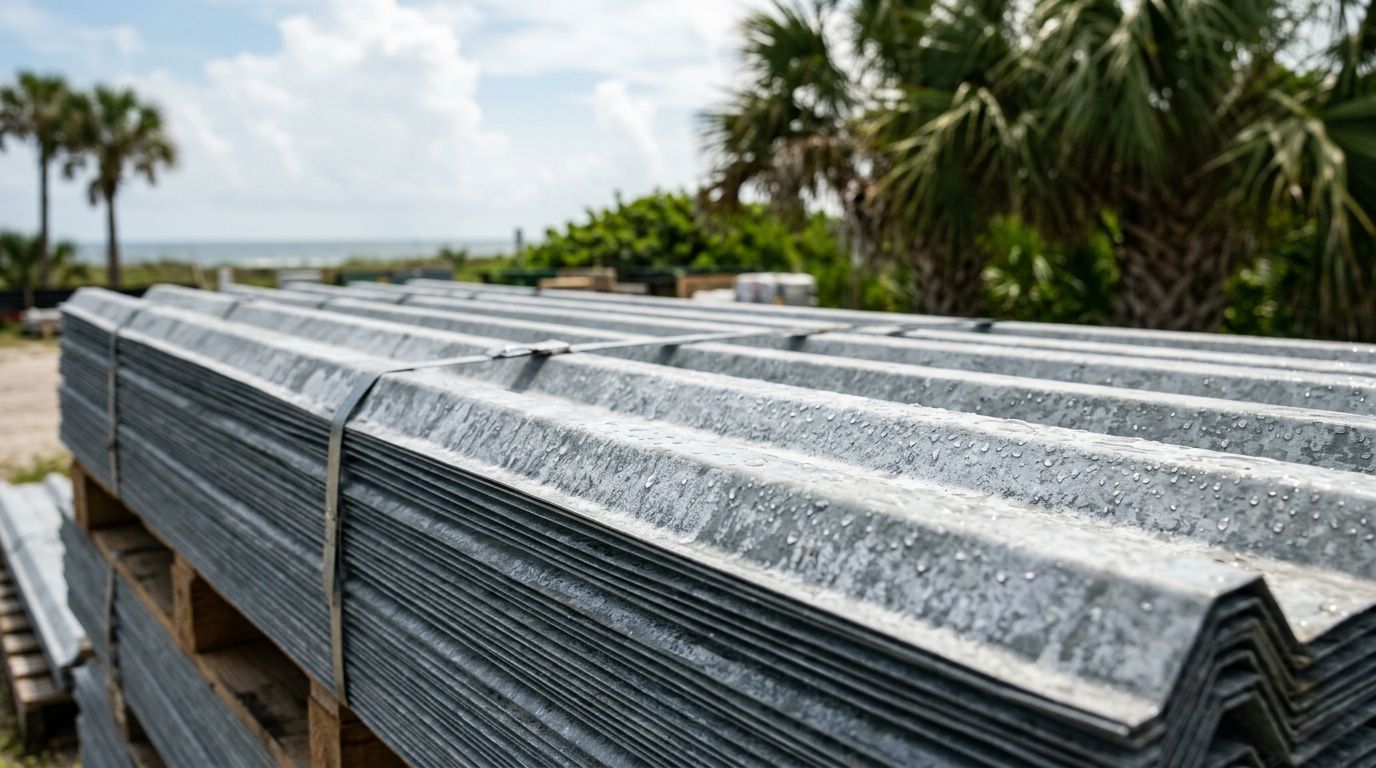
Stored metal panels can look fine on the day they arrive, then show a chalky white film a week later. That film is white rust, and it often starts when moisture sits too long on zinc-coated steel.
Florida makes the problem worse. Humidity, rain, morning dew, and salty air all work against dry storage, so white rust prevention starts the moment the panels leave the truck. The good news is that most cases come down to storage, airflow, and simple inspection habits.
What white rust is, and why it shows up in storage
White rust is a corrosion product that forms on zinc-coated metal when moisture stays trapped on the surface. It often appears as a white, powdery, or dull gray film. On galvanized panels, it can show up before the panels ever reach the roof.
The key issue is trapped moisture. A covered bundle can still get wet from rain, condensation, or damp air. If the panels stay stacked tight, the moisture has nowhere to go, so it lingers on the coating.
Florida storage conditions make that cycle easy to repeat. Warm days, cool nights, and sudden showers can create condensation inside a wrapped bundle. Coastal sites add another layer of risk because salt air holds moisture close to the surface.
White rust starts with moisture trapped against the coating, so dry storage matters more than a tight cover.
This problem is different from red rust on bare steel. White rust affects the zinc layer first, while red rust usually shows up after the base metal is exposed. That matters because cleanup methods are not the same, and some damage is hard to reverse.
Store panels so moisture cannot sit on them
Good storage gives water a path out and air a path in. That sounds simple, but it takes discipline on a job site. A bundle that looks protected can still be sitting in a damp trap.
Start by keeping panels off the ground. Use pallets, dunnage, or 4x4s so air can move underneath. Bare soil, wet grass, and concrete all hold moisture longer than most people expect.
Then add a slight slope so rainwater sheds instead of pooling. Even a small pitch helps. If you cover the bundle, use a cover that keeps rain off but does not seal the stack shut.
A practical storage setup usually follows these rules:
- Keep bundles raised off the ground.
- Leave room for air to move under and around the panels.
- Tilt the stack so water drains away.
- Use a breathable cover, not a tight plastic wrap that traps damp air.
- Leave the ends open or tent the cover so condensation can escape.
- Keep panels away from standing water, sprinklers, and splash zones.
- Separate steel panels from treated lumber, copper, or other dissimilar metals.
If the panels arrive wet, dry them before long-term storage. A bundle that sat through rain on the truck can trap water between sheets. That moisture needs to come out before the stack is wrapped again.
The same care applies when panels are moved around the yard. Panels that arrive straight from the truck need the same care as stored bundles, especially when you're moving metal roofing materials across a wet yard. Sliding them on damp concrete or stacking them in a low spot can undo the rest of your storage plan.
For a more detailed field setup, the panel storage and handling guide for Florida job sites is a useful reference.
Florida storage conditions that raise the risk
Some storage spots invite trouble faster than others. The table below shows the conditions that cause the most problems, along with the better choice.
| Storage condition | Why it raises risk | Better choice |
|---|---|---|
| Tight plastic wrap | Traps condensation and blocks airflow | Use a breathable cover with open ends |
| Panels on bare concrete | Concrete holds moisture and wicks it upward | Raise bundles on dunnage or pallets |
| Low ground or flood-prone spots | Water can sit under the stack after rain | Pick a higher, draining area |
| Bundles stacked flat with no pitch | Water pools on the cover and seeps in | Add a slight slope for drainage |
| Long-term storage near sprinklers | Repeated wetting keeps the coating damp | Move bundles away from spray zones |
| Contact with copper or treated lumber | Dissimilar materials can speed corrosion | Separate materials before stacking |
The pattern is clear. White rust often starts in places that stay wet a little too long. A dry site is better than a perfect-looking cover.
Humidity matters too. In Florida, a bundle can feel dry in the afternoon and still pick up condensation overnight. That is why a panel stack that sits still for days needs more attention than a stack that is picked up quickly.
Shade can help, but shade alone is not enough. A shaded corner may stay cooler, yet it can also stay damp longer. Air movement is the real goal.
Inspect bundles before installation
Storage checks take little time, but they can save an entire bundle. Inspect panels when they arrive, after heavy rain, and again before installation.
Look for white haze, powdery spots, water marks, and any area where panels stayed wet against each other. Pay close attention to cut edges, panel ends, scratches, and fastener areas. Those spots lose protection faster than flat surfaces.
A simple inspection routine helps:
- Open the cover and check for trapped moisture.
- Separate a few panels and look between sheets.
- Feel for dampness on the coating and on the protective wrap.
- Check the bottom layer, since it gets the least airflow.
- Re-stack the bundle with dry spacers if needed.
- Move any affected panels to a dry, open area.
Do not wait until install day to check a bundle that sat outside through rain. By then, white rust can spread across hidden surfaces.
If the panels will remain on site for more than a day or two, inspect them again. A stack that looked fine on Monday can look very different on Friday after a storm or a humid stretch.
What to do if you spot white rust
Small spots of white rust need fast attention, but the right response depends on how far it has spread. A light surface film may be cleaned if the coating manufacturer allows it. Use the gentlest method first, usually clean water and a soft cloth, then dry the panel right away.
Heavy bloom, rough texture, pitting, or damaged coating is a different situation. That can mean the protective layer has already been compromised. In that case, cleanup alone is not enough.
Avoid harsh methods. Wire brushes, abrasive pads, pressure washers, and strong acids can do more harm than the rust itself. They can scratch the finish or strip more coating from the panel.
The safest approach is simple:
- Stop the moisture source first.
- Dry the affected panels fully.
- Separate damaged panels from clean stock.
- Follow the panel maker's care instructions.
- Replace panels that show deep damage or coating loss.
White rust removal is not the same as white rust prevention. Removal deals with damage that already happened. Prevention keeps the panel from getting there in the first place.
Keep storage habits consistent on every job
The best storage plan fails if it changes from one delivery to the next. One bundle gets raised on pallets, another sits on wet ground, and the risk goes up fast. Consistency matters more than fancy equipment.
Set the storage spot before the panels arrive. Make sure the area drains well, stays clear of sprinkler spray, and has room for airflow around the stack. If the site is tight, use a designated staging area instead of squeezing bundles into the nearest open corner.
It also helps to assign one person to check the cover and the base of the stack. That small habit catches problems early. A loose cover, a tilted bundle, or a wet bottom layer is easier to fix on day one than after a week of Florida weather.
Contractors who store panels for longer periods should think in terms of weather cycles. Rainy afternoons, humid nights, and cool mornings all create new moisture risks. A bundle that survives one storm may still need to be dried again before installation.
Conclusion
White rust usually starts with one thing, moisture left sitting on the coating. Raise the panels, let air move, and keep the bundle out of standing water. Those basic steps do more than any quick fix after the damage has started.
For stored metal panels, dry contact and airflow are the real defenses. Check the bundles, watch the site conditions, and act fast when moisture shows up. That habit protects the finish, the schedule, and the panels you plan to install.
Share Our Metal Roofing News Articles
Related Posts