Panel Storage And Handling Guide For Florida Job Sites
Ever opened a panel bundle and found water marks, white rust, or a musty smell? In Florida, that can happen fast. Humid air, daily pop-up rain, salty coastal wind, and strong gusts can turn good material into a problem before the first panel goes on the roof.
This guide is written for superintendents, foremen, and material handlers, but it's also useful for homeowners watching a project. The goal is simple: panel storage handling that prevents moisture damage, corrosion, swelling and delamination of packaging or wood skids, and wind-related incidents.
Keep one rule in mind: panels don't usually "fail" on the roof first. They often get damaged on the ground.
Receiving and staging panels so you don't start behind
Most job site issues begin at delivery. If the bundle shows up wet, strapped wrong, or dropped in the wrong spot, the crew spends the next day fixing preventable problems.
Start with a quick receiving routine:
- Inspect immediately : Look for torn wrap, crushed corners, bent ribs, strap marks, or standing water in the bundle. Note it on the bill of lading and take photos.
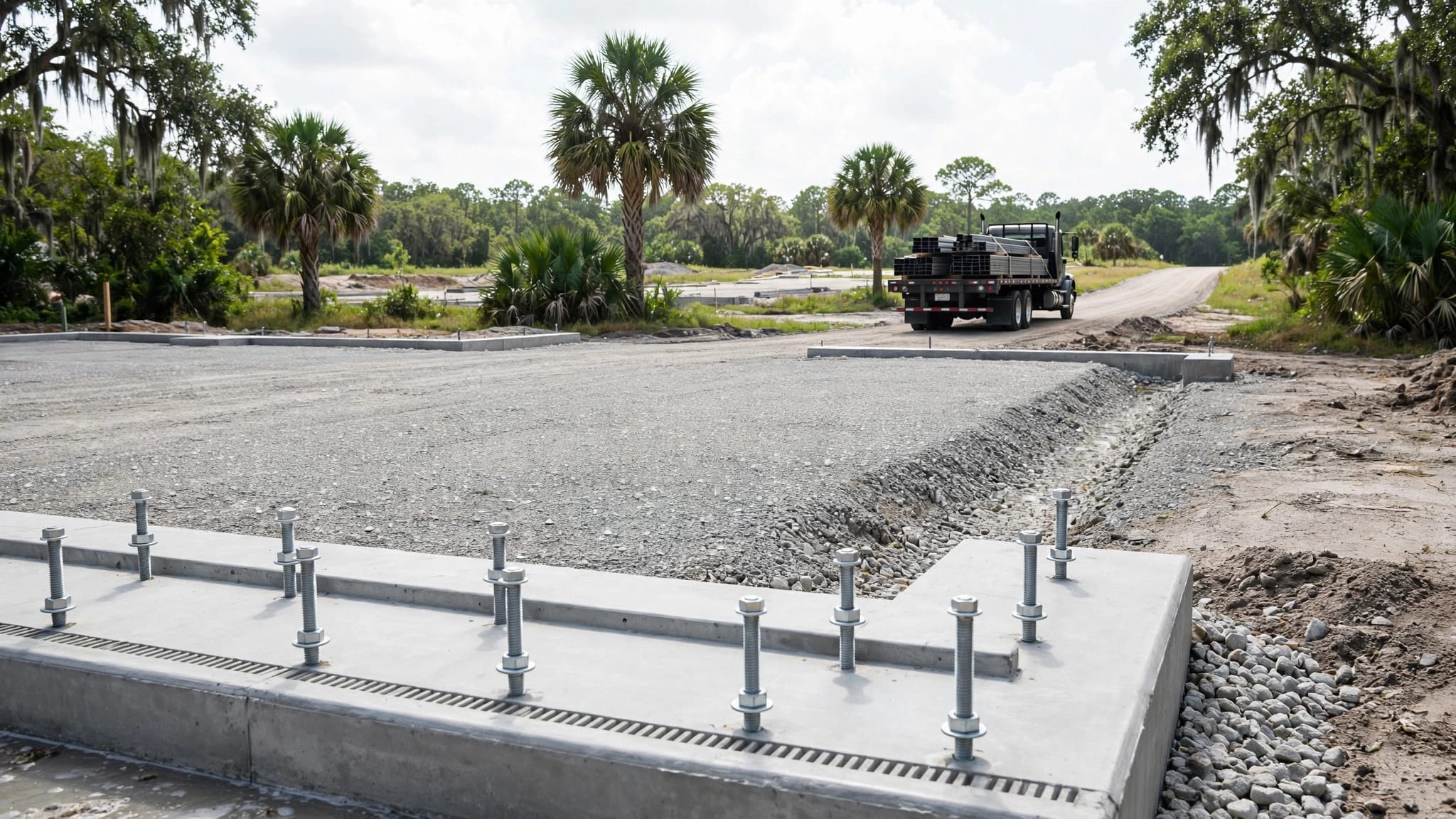
- Stage on high ground : Pick a spot that drains after heavy rain. Avoid low areas near downspouts, washout, or muddy traffic lanes.
- Plan the equipment path : A forklift route that crosses soft sand or ruts invites a tip-over or a dropped load.
- Keep bundles out of the wind funnel : Between buildings, at the end of long corridors, or on open slabs, gusts can lift loose covers and slam panels together.
If your crew needs a refresher on what "all materials accounted for" looks like, use a job-start materials list like this complete materials checklist for Florida metal roofs. It helps prevent the classic problem of perfect panels but missing closures, trim, or fasteners that then sit onsite longer than planned.
A clean delivery and a dry staging area can save more time than any "fix it later" effort.
Storage that prevents moisture, mold, and corrosion in Florida humidity
Florida storage is a moisture-control job first. Even if rain never hits the bundle, condensation can. Trapped moisture leads to wet storage staining, coating damage, and corrosion that shows up as spots, blistering, or edge bleed.
Use these field-proven basics:
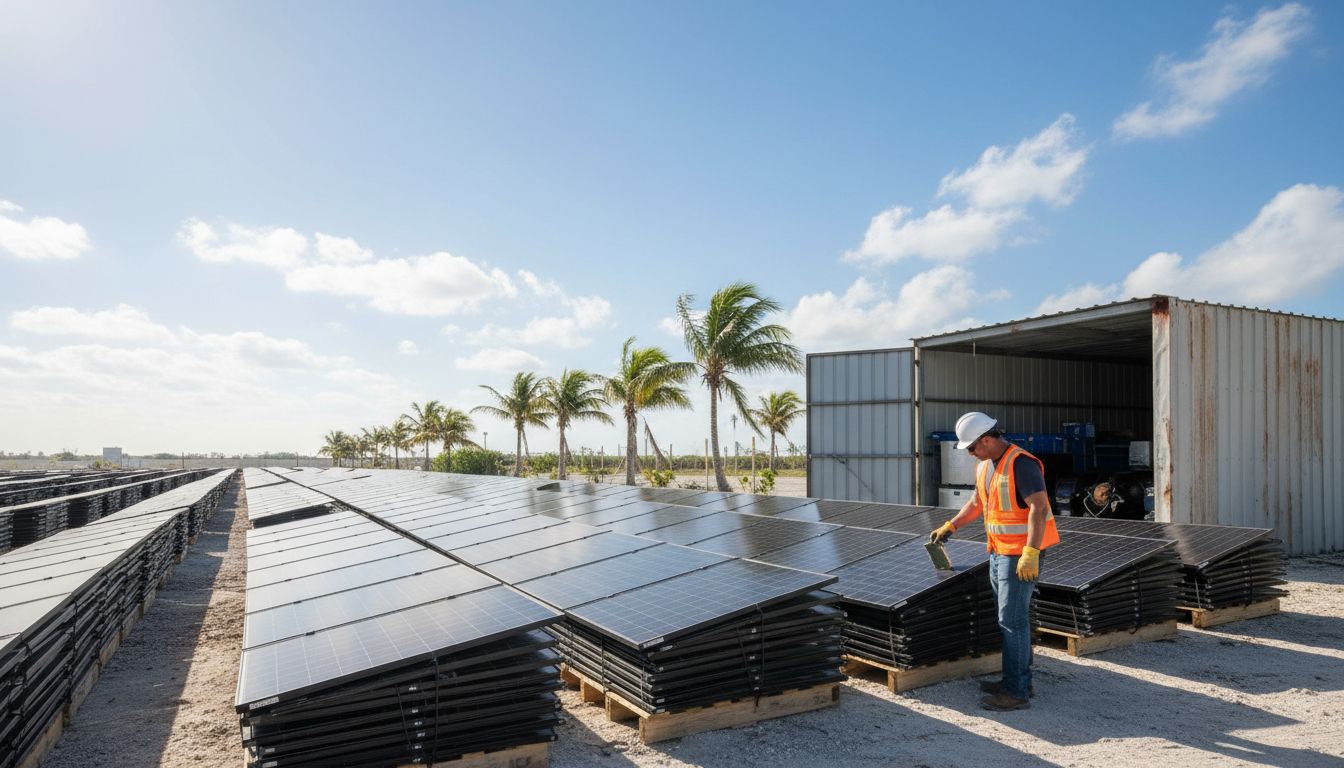
Get panels off the ground. Put bundles on pallets, 4x4s, or dunnage so air can move under them. A practical target is 6 inches or more of clearance. More is better on sandy sites that stay damp.
Create drainage, not a bathtub. Store bundles with a slight slope so water runs off the cover instead of pooling. Even a small pitch helps.
Cover for rain, but leave ventilation. Tight plastic wrapped to the ground can trap moisture. Instead, use a cover that sheds water but still breathes. Leave the ends open or tent the cover so air can move. The goal is shade plus airflow.
Keep the factory wrap in perspective. Shipping wrap protects during transit, not long-term outdoor storage. If the bundle is going to sit, open the wrap in a controlled way and re-cover with ventilation.
Separate dissimilar metals and protect edges. Don't store copper or treated lumber in contact with steel panels, and don't let panel edges sit against concrete where water can wick and stay.
Follow the manufacturer's stacking limits. Profiles vary, and so do gauges. If you must stack, keep bundles aligned, support them evenly, and avoid point loads that can oil-can panels. When in doubt, store single-high.
Here's a quick reference table crews can scan during setup:
| Risk on Florida job sites | What to do | Why it matters |
|---|---|---|
| Condensation trapped in bundle | Vent covers, keep ends open, allow airflow under bundles | Trapped moisture speeds staining and corrosion |
| Ground moisture wicking up | Store on dunnage with clearance | Prevents constant damp contact and moldy skids |
| Rain pooling on cover | Add slight slope, tent the tarp | Standing water finds seams and soaks bundles |
| Salt exposure near coast | Reduce outdoor time, keep panels clean and dry | Salt accelerates corrosion at scratches and cut edges |
If panels need to sit longer than planned, shorten the "time exposed" by moving them indoors, or at least under a roofed laydown. In Florida, days add up quickly.
Handling panels safely (and keeping them straight)
A good panel can get ruined in one lift. Bends, edge dents, and scratches often happen when a panel flexes like a diving board or when a worker drags it across a rib.
For manual handling, keep it simple:
- Carry panels on edge when possible for stiffness, and support the length.
- For long panels, use enough handlers. A practical spacing is 10 to 12 feet between handlers, with someone near each end.
- Don't grab or lift by the seam alone. Support under the flat and near the ribs.
- Never slide panels across each other. Lift, separate, then set.
For forklift and crane picks, slow down and protect the finish:
- Use forks spread wide with padded contact points, and keep the load low while traveling.
- Keep bundles level. Twisting a bundle can kink panel ends.
- When using a crane, use non-marring straps and a spreader bar when needed, so the straps don't crush edges.
Wind is its own hazard. OSHA's construction storage rule (29 CFR 1926.250) requires materials stored in tiers to be secured to prevent sliding, falling, or collapse. On Florida sites, also think "flying." Strap bundles down, and don't leave loose panels or trim where gusts can grab them.
Once panels are on the roof, avoid staging more than the crew can install that day, especially in storm season. If you want install sequencing tips that reduce handling and re-stacking, this metal roofing installation best practices guide pairs well with a storage plan.
Common mistakes and fixes crews can apply today
Small habits cause most pre-install damage. Fixing them usually takes minutes.
- Mistake: Covering bundles with a tarp sealed to the ground.
Fix: Tent the cover and leave ends open for airflow. - Mistake: Storing in a low spot "just for the weekend."
Fix: Move to high ground, add dunnage, and slope the stack. - Mistake: Leaning long panels against a wall.
Fix: Store flat with full support, leaning invites bends and edge damage. - Mistake: Dragging panels to separate them.
Fix: Lift and place. Add a second person if the panel is awkward. - Mistake: Letting bundles sit near active cutting and grinding.
Fix: Keep panels upwind and away from sparks and metal dust that can embed and rust.
If your crews run Multi-Rib or Ag panels often, these AG panel installation video tutorials are also a good way to reinforce handling habits before the first sheet comes off the stack.
Pre-hurricane / severe weather action plan (job site ready)
When a named storm is in the cone, panel storage handling becomes a safety issue, not just a quality issue. Make one person accountable, and run this plan early.
- Stop new deliveries and confirm ETA changes with suppliers.
- Move bundles indoors when possible (warehouse, container, or enclosed building).
- If material must stay outside, band and strap bundles to ground anchors or heavy rack systems, not loose pallets.
- Remove loose tarps that can become sails. Re-cover only if you can secure ventilation and tie-downs.
- Pick up trim and accessories (ridge caps, rake trim, closures, boxes of fasteners). Small items become projectiles first.
- Document condition with photos before and after the storm, then inspect for water intrusion right away.
After the weather clears, open the bundle enough to check for trapped water, then dry and re-stack with airflow.
Conclusion
Florida doesn't give you many "dry storage" days in a row, so treat panel laydown like part of the roof system. Keep bundles off the ground, shed water, allow airflow, and secure everything for wind. Most importantly, follow the panel manufacturer's instructions for stacking and lifting limits, because profiles and gauges vary.
A clean, dry bundle installs faster and looks better when it's done, and panel storage handling is how you get there.
Share Our Metal Roofing News Articles
Related Posts