Metal Roof Gauge Guide For Central Florida: 24 Gauge Vs 26 Gauge
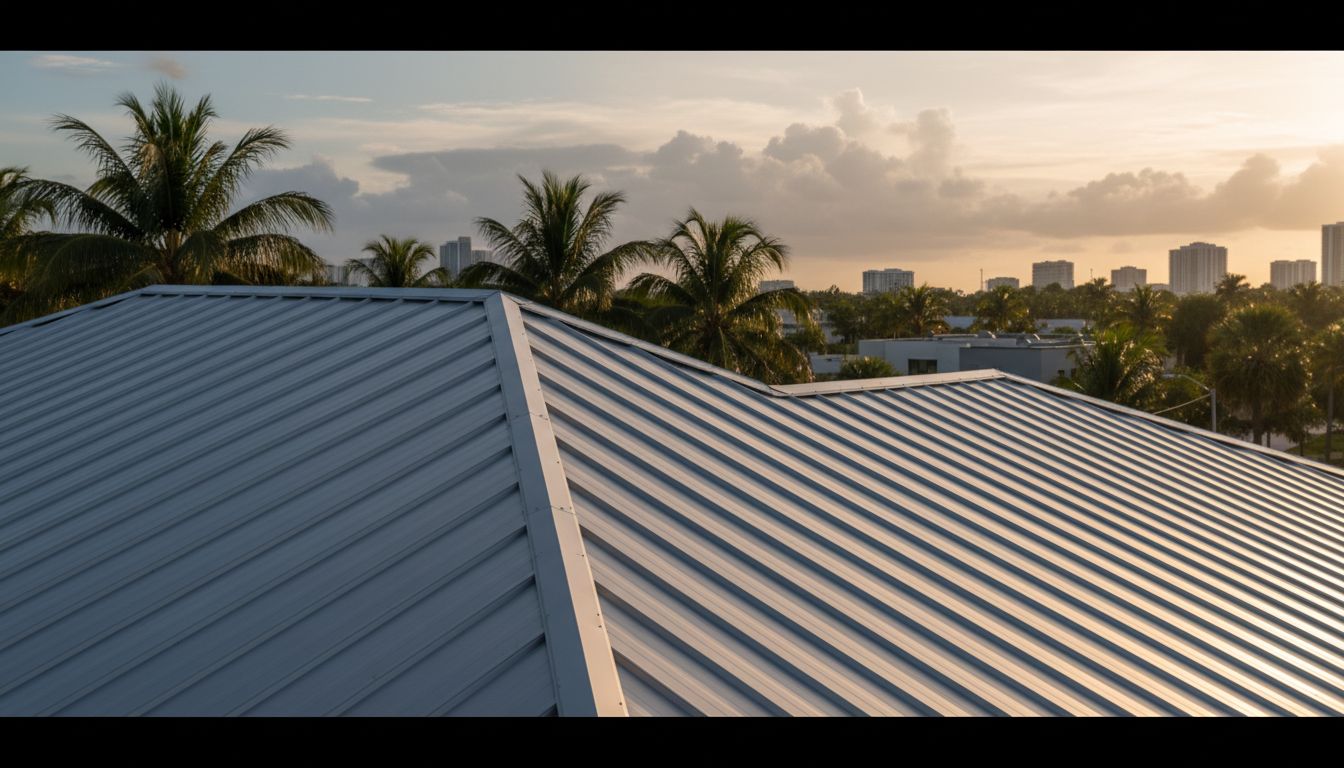
Picking a metal roof gauge in Central Florida can feel like choosing between two "good" options, until you picture July heat, sideways rain, and a late-season wind event all hitting the same roof.
Here's the bottom line for most Orlando to Tampa corridor homes and small commercial buildings: 26 gauge often works great when the roof is well-supported and properly detailed , while 24 gauge earns its keep when you want extra stiffness, dent resistance, and a more forgiving roof during install and service work .
Gauge is only one part of the system, though. Florida performance comes from the full assembly, including panel profile, fasteners, underlayment, and Florida approvals.
What "metal roof gauge" means (and why Florida cares about systems, not just thickness)
Gauge is a thickness rating. Lower number equals thicker metal. In roofing steel, 24 gauge is commonly around 0.023 to 0.025 inches base metal thickness, while 26 gauge is often around 0.018 to 0.020 inches (exact values vary by spec and coating, so always check the manufacturer data).
In Central Florida, thickness matters because roofs take a daily workout:
- Thermal movement from strong sun, then quick cool-down storms
- Wind uplift from thunderstorms and tropical systems
- Foot traffic from HVAC service, solar work, and routine roof checks
- Flying debris that can dent panels and stress fasteners
Still, Florida code compliance is usually not a "pick 24 or 26" decision. It's about tested assemblies and documented approvals.
Florida inspections typically don't hinge on gauge alone. They hinge on whether the roof system matches a tested, approved assembly for your site conditions and installation method.
Panel shape also changes how a gauge performs. A stiff rib profile can make 26 gauge behave stronger than people expect, while a wide flat pan can show movement and oil canning even in thicker metal. If you're still choosing between profiles, this guide to Central Florida metal roof panel options helps connect gauge to panel style.
24 gauge vs 26 gauge metal roofing in Central Florida: what you'll notice in real life
Most buyers compare gauge like they'd compare a truck bed. Thicker steel feels tougher, but cost and practicality matter. Here's a quick side-by-side that reflects what homeowners and small commercial owners typically experience.
Below is a plain-English comparison of the two most common options.
| Category | 24 Gauge (thicker) | 26 Gauge (thinner) |
|---|---|---|
| Dent resistance | Better against hail, branches, ladder bumps | Good, but dents show up easier |
| Stiffness and "feel" | Stiffer, less flex during handling and service | More flex, needs good support and careful handling |
| Common best fit | Standing seam, long runs, roofs that see foot traffic | Exposed-fastener panels, budget-focused projects |
| Oil canning risk | Can be reduced, but not eliminated | Can be more noticeable on wide flats |
| Material cost | Higher upfront | Lower upfront |
| What makes it pass inspection | Matching a tested approval and install pattern | Same, approvals and install pattern matter most |
So when is 24 gauge worth it?
Choose 24 gauge more often when the roof has higher consequences or more abuse. For example, a standing seam roof over a home with regular HVAC work is like a hallway floor in a busy house. It gets walked on. The extra stiffness helps the roof stay straighter, and it's less likely to show dents from routine service.
24 gauge also makes sense when you're pushing performance details, such as longer panel lengths, more exposed sites, or cleaner architectural lines. Many owners also like that it feels "more solid" during install, which can reduce little handling mistakes that show up later.
On the other hand, 26 gauge is plenty in many Central Florida situations. A well-installed ribbed exposed-fastener roof on a garage, barn, or small commercial building can perform for decades when it follows an approved fastener pattern and uses the right underlayment. In other words, 26 gauge is not "cheap," it's just a smart match for the right job .
Cost tends to be the deciding tie-breaker. In many markets, 24 gauge comes in notably higher per square, simply because there's more metal. If you'd rather put budget into better underlayment, improved venting, or upgraded fasteners, 26 gauge can be the better overall build.
Choosing the right gauge in 2026: approvals, roof slope, and mistakes that cause leaks
Along the I-4 corridor, the "right" gauge is the one that fits a documented assembly for your roof, then gets installed with discipline. That starts with the Florida Building Code requirements and product approvals your inspector expects to see. If you want a clear overview of what gets checked, read Florida building codes for metal roofing.
Use Florida Product Approval like a checklist, not a label
Florida Product Approval is where the real answers live. Approvals list the tested configuration, including panel type, substrate, underlayment notes, and fastener spacing patterns that tie back to uplift testing (often based on standards such as ASTM E1592). Start by confirming the exact system you're buying and installing. You can also review available documentation on Florida Product Approvals for metal panels.
Two common ways projects go sideways:
- The crew swaps fasteners because "they're basically the same."
- Someone follows a generic detail, not the approved assembly.
Either one can fail inspection, or worse, pass inspection but leak later.
Don't ignore slope, because water finds the smallest shortcut
Gauge doesn't fix a slope problem. Low-slope roofs demand panel profiles and seam details designed to shed water under wind pressure. Before you commit to an exposed-fastener roof on a borderline pitch, check minimum roof slope guidance for Central Florida metal roofs. A roof can look "almost steep enough" until the first storm pushes water uphill.
Pitfalls that matter more than 24 vs 26
Gauge debates get a lot of attention, but these issues cause most real-world call-backs:
- Mixing metals : Dissimilar metals can trigger galvanic corrosion. Copper and steel details are a classic problem, and some treated lumber can also accelerate corrosion without proper separation.
- Wrong fasteners or bad screw technique : Overdriven screws crush washers. Underdriven screws don't seal. Both leak. Use corrosion-resistant fasteners that match the approval, and don't mix random leftovers.
- Underlayment mismatch : In wind-driven rain, underlayment is the backup plan. Use what the assembly calls for, and detail transitions, valleys, and penetrations carefully.
- Installer quality and layout : Crooked panel layout, missed butyl tape, and sloppy trim work can ruin a 24 gauge roof just as fast as a 26 gauge roof.
A thicker panel can't "save" an install that ignores spacing, sealant locations, or flashing details.
FAQ: quick answers homeowners ask
Is 29 gauge OK in Central Florida?
Sometimes, but it's usually better for light-duty applications (sheds, certain wall panels, and some agricultural uses). For most homes and many commercial roofs, 24 or 26 gauge is the safer starting point because it handles foot traffic and handling better. Always match the approval for your use case.
Does thicker metal mean a quieter roof?
Not by itself. Noise depends more on decking, underlayment, attic insulation, and how the panel is attached
. A well-insulated assembly can make either gauge quiet.
Does gauge affect insurance?
Insurance credits usually track to documented wind mitigation features and code-compliant installation. Gauge can support stronger assemblies, but the bigger factor is a permitted roof that matches tested approvals and proper attachment details.
Conclusion
For most Central Florida projects, 26 gauge is a solid choice when the roof system is engineered, approved, and installed with care. When you want extra stiffness, better dent resistance, and a roof that's more forgiving during service life, 24 gauge is often worth the upgrade. If you're unsure, don't pick by feel, pick by the approved assembly and how your roof will be used in real life.
Share Our Metal Roofing News Articles
Related Posts