Hail Damage On Metal Roofs In Florida What To Look For
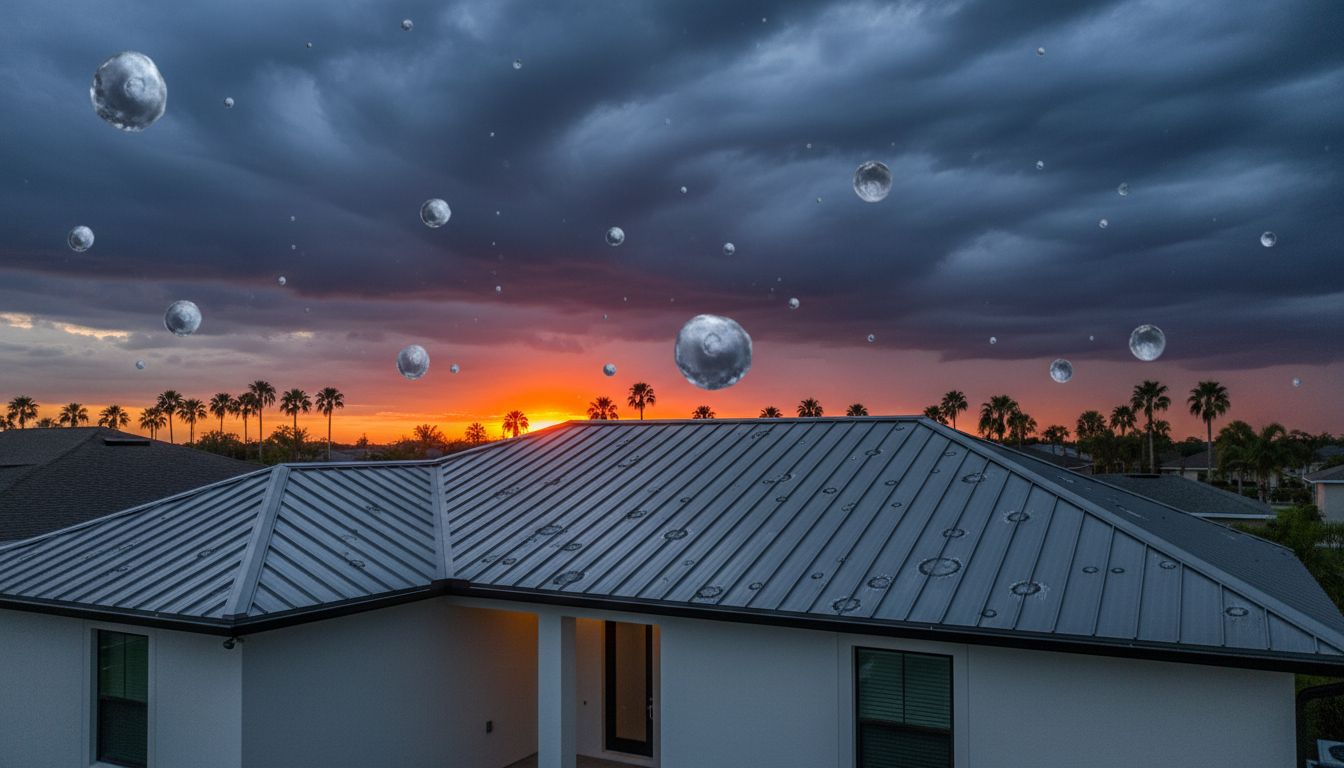
Florida storms can feel like a drumline on your roof, rain, wind, then suddenly hail. Even though metal roofing is tough, metal roof hail damage can still happen, and it isn't always obvious from the yard.
The goal after a storm is simple: figure out whether you're looking at harmless dents or a problem that can lead to leaks, rust, or loose panels later. This guide covers what to check, where hail hits hardest on a metal roof, and when to call a qualified pro right away.
Why hail can damage a metal roof (and why Florida makes it trickier)
Metal panels handle a lot, but hail impacts can leave two types of results: cosmetic damage (looks bad, still sheds water) and functional damage (water control is compromised). The hard part is that cosmetic and functional issues can look similar at first.
Hail most often causes dents on flat areas of panels, but the real risk zones are the places that already work hardest during Florida weather, such as seams, ribs, fasteners, flashing, and roof penetrations. If hail distorts a panel edge or a seam, wind-driven rain can sneak in later.
Florida adds a few extra stressors:
- High winds can tug on panels that were loosened by hail impacts.
- Heavy rain tests every overlap, sealant line, and flashing lap immediately.
- Salt air (even inland, depending on wind patterns) can accelerate corrosion if hail chips coatings or exposes bare metal.
- Hot sun bakes sealants and washers, so small impact issues can grow faster over time.
If you want a quick way to gauge hail risk in your area, review local National Weather Service updates like the NWS Melbourne hail threat page. It helps you match your inspection urgency to what actually fell.
A common "miss" after hail is focusing on dents in the field of the panel while ignoring flashing and fasteners, those are where leaks usually start.
What to look for after a hailstorm (a safe, practical inspection flow)
Start with safety. Don't climb a wet metal roof, and don't step onto a roof you suspect is damaged. Most homeowners can gather useful evidence from the ground, the attic, and the perimeter.
First, do a slow walk-around and look up with binoculars. Next, check inside for new water signs. Then, document everything before you clean up too much.
Here's a simple, storm-to-inspection flow that works well in Florida:
- Ground-level roof scan : Look for dent patterns on panels, ridge caps, and hip caps. Pay extra attention to slopes facing the storm.
- Fasteners and washers (exposed-fastener roofs) : Spot "backed-out" screws, tilted screws, or cracked neoprene washers. Hail can shock fasteners, and wind later finishes the job.
- Seams and locks (standing seam roofs) : Look for waviness at seams, shifted clips, or gaps at transitions. Even slight seam distortion can change water flow.
- Flashing and penetrations : Check around pipe boots, skylights, vents, chimneys, valleys, and sidewall flashing. Hail can split rubber boots or dent flashing so it no longer lays tight.
- Gutters and downspouts : Dents, granule-like debris, or fresh scuffs often confirm hail direction and intensity.
- Attic and ceilings : Use a flashlight. Look for wet insulation, darkened decking, staining near penetrations, or damp smells after heavy rain.
- Paint and coating chips : On painted steel or aluminum, small chips matter in Florida. They can become corrosion points if ignored.
If hail fell with strong winds, broaden your inspection. A roof can look fine, yet the storm may have lifted an edge or shifted trim. For more context on the components that keep water and wind out, see the key parts of a durable Central Florida metal roof.
The difference between cosmetic dents and functional hail damage
Homeowners often ask, "If it isn't leaking, am I fine?" Sometimes yes, but not always. Functional metal roof hail damage usually shows up at connection points and edges, not in the middle of a panel.
Use this table to sort what you're seeing before you call it "just dents."
| What you see | Often cosmetic | Often functional |
|---|---|---|
| Shallow dents in flat pan areas | Yes, if coating is intact | No, unless dents distort ribs or water paths |
| Dents on ribs or major corrugations | Sometimes | Yes, if rib shape changes or overlap is affected |
| Chipped paint, exposed metal | No | Yes, because corrosion can start |
| Split pipe boot, cracked sealant | No | Yes, likely leak risk |
| Deformed flashing at walls or valleys | No | Yes, water can wick or blow underneath |
| Loose screws, missing washers, widened holes | No | Yes, water entry and uplift risk |
A pro inspection matters most when the roof uses exposed fasteners, has lots of penetrations, or sits in salt air. In those cases, small changes can snowball into leaks during the next heavy rain.
For a Florida-focused look at storm conditions and timing, the NWS Tampa Bay graphical hail information can also help confirm when hail was present in your area.
When to call a professional immediately (and what to do next)
Some warning signs shouldn't wait for the next storm. If you notice any of the items below, get a qualified, insured metal roofing contractor involved quickly:
- Active leaks , wet insulation, or ceiling stains after the storm
- Lifted trim , loose ridge cap, or displaced flashing
- Multiple backed-out screws or fasteners that won't re-seat
- Damaged pipe boots or torn sealant around penetrations
- Panels that look shifted at eaves, rakes, or end laps
- Coating loss with visible bare metal, especially near the coast
Once you've done the safe checks, focus on clean documentation. That protects you whether you're planning repairs now or later.
Take these steps while everything is still fresh:
- Photograph dents and damage from several angles, include close-ups of fasteners and flashing.
- Capture wide shots that show each roof plane, plus gutters and downspouts.
- Record the storm date, time, and any hail size reports from local weather alerts.
- Keep receipts for temporary mitigation (tarps, dehumidifiers) if needed.
If you're dealing with insurance questions, it also helps to understand how a roof system and installation details affect risk and coverage. This post on metal roofs lower insurance in Central Florida explains why documentation and roof type matter.
Finally, if repairs are needed, having the right parts on hand reduces delays. This metal roofing materials checklist Central Florida is a helpful way to think through fasteners, sealants, flashing, and other essentials that often get overlooked.
For code and product approval research, start with the Florida Building Code Online site. It's a practical reference when you're confirming approvals for roofing products used in Florida.
Brief safety and workmanship disclaimer
Always follow the roof panel manufacturer's instructions and any local code requirements. Avoid walking on a roof after a storm, and use qualified, licensed, and insured professionals for inspections and repairs.
Conclusion
Hail doesn't have to punch a hole in a panel to cause problems. In Florida, the biggest risks from metal roof hail damage often show up at fasteners, seams, flashing, and penetrations, especially when wind and heavy rain follow. Start with safe, ground-level checks, then document what you see before cleanup hides the evidence. When in doubt, get a professional inspection, because the cheapest time to fix hail damage is before the next storm tests it again.
Share Our Metal Roofing News Articles
Related Posts