How to Estimate Butyl Tape Rolls for Metal Roof Trim
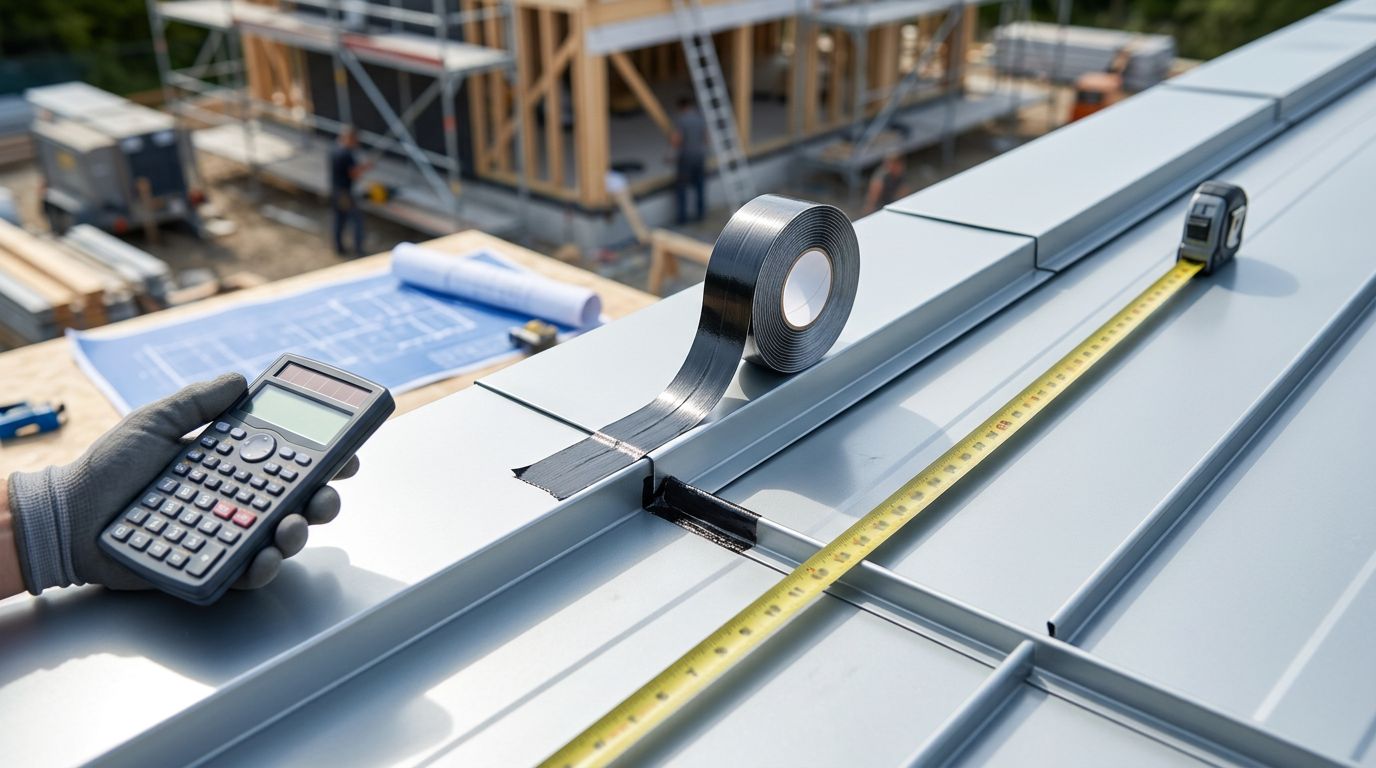
Butyl tape runs out faster than many roof jobs expect, especially once trim laps, corners, and extra seal lines get added. If the estimate is light, the crew stalls at the roof edge. If it is heavy, the job carries unused rolls back to the shop.
A clean count starts with the trim layout, then moves through overlaps, tape runs, waste, and roll length. Once those pieces are measured, the math stays simple.
Measure the trim that will actually receive tape
Start with the trim schedule, not the roof size. Measure every piece that will get sealant tape, including eave trim, rake trim, drip edge, wall flashing, and any custom transitions. Use installed linear footage, because sheet size and finished length are often different.
A fast takeoff works best when you write it in order. First, list each trim type. Next, measure the linear feet for each run. Then total only the runs that share the same tape detail.
That keeps you from counting trim that does not need tape at all. It also helps when the project has mixed profiles or custom bends. If you are unsure where the laps belong, check the metal roof trim overlap requirements before you place the order.
A quick sketch on paper helps too. Mark where each piece starts and stops, then note which edges get sealed. That small step can save a lot of guesswork later.
Count overlaps before you convert to rolls
Every lap adds tape length. If a trim piece overlaps another piece by 4 inches, that overlap needs to be in the takeoff. Ten laps at 4 inches each add 40 inches, or about 3.3 feet. Small laps add up fast on a long roof.
The lap detail controls the tape count, not the trim length alone.
Include corner joints, end laps, and field cuts if the installation calls for tape there. If the manufacturer wants a full lap strip or a wider seal at the joint, follow that detail instead of guessing. A few extra inches per joint can change the final roll count on a long roof.
This is where many estimates go off track. People count the trim line once, then forget the tape needed at each splice. If the roof has 20 joints, that mistake grows fast.
Decide whether the detail needs one tape run or two
Some trim gets a single strip of butyl tape. Other trim needs two runs, usually when the lap is wider, the edge is more exposed, or the manufacturer calls for parallel seal lines. This choice matters because it doubles the footage before waste gets added.
Eave details often use a different seal path than rake details, and sealing metal roof drip edge laps is not the same as proper tape placement for roof rake trim. Confirm the profile before you count tape. A one-run estimate on a two-run detail will miss by a wide margin.
For simple sheltered laps, one line may be enough. For wider trim, exposed corners, or details that see wind-driven rain, two lines are common. The safest move is to match the tape plan to the trim drawing or product sheet, not to a habit from another job.
Convert footage into roll count
Use a simple formula:
- Base footage = trim footage + lap allowance
- Required footage = base footage x number of tape runs
- Order footage = required footage x waste factor
- Rolls needed = order footage divided by roll length, rounded up
Here is a worked example using a common 50-foot roll.
Suppose a job has 260 feet of trim, 10 laps at 4 inches each, and one tape run. The lap allowance is 40 inches, or 3.3 feet. The base footage is 263.3 feet. With a 10% waste factor, the order footage is 289.6 feet. Divide that by 50, then round up. The job needs 6 rolls.
The same roof with two tape runs changes the math fast. The base footage stays 263.3 feet, but the tape footage becomes 526.6 feet before waste. Add 10%, and the order lands at about 579.3 feet. With 50-foot rolls, that means 12 rolls.
| Example | Calculation | 50-foot roll count |
|---|---|---|
| One run | (260 + 3.3) x 1.10 = 289.6 feet | 6 rolls |
| Two runs | (260 + 3.3) x 2 x 1.10 = 579.3 feet | 12 rolls |
The same math works with 100-foot rolls. You just divide by 100 instead of 50. The best estimate is the one that matches the roll length you are buying.
A smaller job can still use the same formula. If the trim total is short, the roll count may still round up to the next full roll, because partial rolls are rarely useful on site.
Add a waste factor that fits the job
Waste is normal, and it usually comes from cutoffs, short returns, torn starts, and the odd bad cut. For a simple roof with long straight runs, 5% may be enough. For most jobs, 10% is safer. For complex trim, tight corners, or a first-time install, 15% is a better buffer.
Florida jobs often bring extra cut points because of custom trim, wind exposure, and mixed edge details. That does not mean you need to pad the order wildly. It does mean the estimate should leave room for the pieces that will not be reusable.
I like to round up on waste instead of down. Extra tape on the shelf is easier to handle than a short order on the roof. If the last roll stays unopened, it still has value for the next job.
Confirm product width, roll length, and install details
Before you place the order, check the tape width, roll length, and installation requirement from the product sheet. A narrow tape may need two runs where a wider tape needs one. A short roll changes the count even when the footage is the same. Some trims want tape only at laps, while others call for a continuous strip.
Width matters as much as length on many trim details. A 3/4-inch strip and a 1-inch strip do not cover the same seam the same way. That is why product specs matter before you buy.
That check matters even more when the trim is custom or profile-specific. Match the tape plan to the actual trim detail, not to a general rule from another roof.
Conclusion
Estimating butyl tape rolls gets easier when you break the job into clean parts. Measure the trim that will be sealed, add every lap, choose one run or two, then round up with a sensible waste factor.
That simple process keeps the order close to the real need. It also keeps the crew from stopping short when the last trim piece is ready to go on.
Share Our Metal Roofing News Articles
Related Posts