How to Hem Metal Roof Panels at Eaves and Rakes
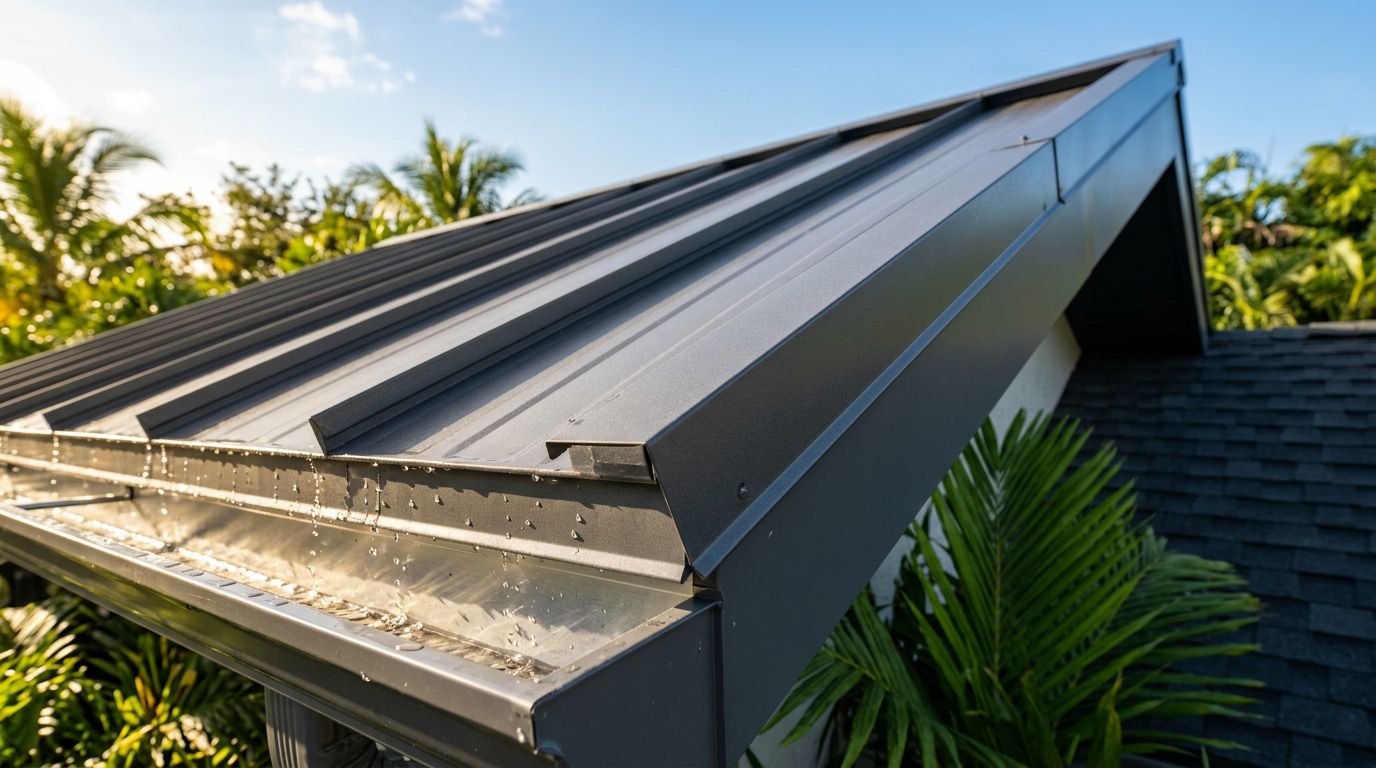
A clean hem makes a roof edge look finished, but it does a lot more than that. It helps metal roof panels shed water, stay stiffer at the edge, and sit tighter against trim.
That matters on Florida roofs. Wind can catch a loose edge fast, and a bad fold shows up even faster. Before you cut or bend anything, check the metal roofing installation instructions for the exact panel profile, trim, and fastener details.
Why the hem changes at eaves and rakes
The edge detail is not the same on every side of the roof. Eaves and rakes both need a clean finish, but they handle water and wind in different ways.
| Roof edge | What the hem does | Main thing to watch |
|---|---|---|
| Eave | Closes the cut edge and helps water drop cleanly away from the roof line | Overhang, drip path, and alignment with fascia or gutter trim |
| Rake | Covers the cut edge and helps the panel sit tight against rake trim | Wind lift, trim fit, and a straight visual line |
| Both | Stiffens the panel edge and hides raw metal | Burrs, waviness, and paint damage |
The goal is the same, a tidy, protected edge. The method changes because the trim changes. At the eave, the hem has to work with the water path. At the rake, it has to work with the side trim and resist lift at the corner.
A hem can hide a cut edge, but it can't fix a crooked layout.
Set up the panel before you bend anything
The fold starts with layout. If the first panel is out of square, the hem will only make the problem harder to hide. A straight run keeps the edge line clean and makes the trim fit the way it should, so review the panel squaring guide before you lock in the first sheet.
Use a tape, chalk line, square, and a marker that won't stain the finish. Mark the panel length first, then mark the hem allowance based on the profile and trim package. Keep the cut line and bend line clear, because mixing them up leads to short edges and weak folds.
A press brake gives the cleanest long hem. A hand seamer works well for shorter runs, touch-ups, and small corrections. Either way, the edge should be straight before it gets folded.
How to hem metal roof panels step by step
- Measure the overhang and trim depth.
Confirm how far the panel should reach past the fascia or rake trim. Mark both edges so the hem has room to form without stealing coverage. - Mark the bend line and cut line.
Keep the marks parallel to the panel edge. If the line wanders, the hem will wander too. On long panels, check the mark at both ends before you cut. - Cut cleanly and remove burrs.
Use snips, shears, or the right cutting tool for the panel gauge. Then deburr the edge. Sharp metal catches gloves, scratches paint, and makes the fold uneven. - Notch corners where the fold will stack.
Corners need relief so the metal can turn without bunching. A small notch keeps the hem flat and helps the trim sit down tight. This matters at rake returns and at panel ends near eaves. - Pre-bend the edge before closing the hem.
Start with a shallow bend, then finish the fold. That two-step move protects the paint and keeps the metal from cracking at the crease. For thicker material, use steady pressure instead of forcing one hard bend. - Dry fit the panel before fastening.
Set it in place and check the edge at both ends. Look for gaps, twists, or a hem that rides up on the trim. If the first panel edge is off, fix it now, not after the screws go in. - Fasten in the right order.
Start with the first point that holds the panel in position, then work outward so the hem stays flat. Use the fasteners called for in the panel guide. Overdriving screws can pull the edge out of shape.
Safety habits that matter with sharp panel edges
Sharp cut edges can slice skin fast. Wear cut-resistant gloves, eye protection, and long sleeves when you handle hemmed panels. Support long sheets with a helper or a panel cart, because one bent corner can turn into a bad cut or a scratched finish.
Also, keep the work area clear. A panel laying on gravel, scrap metal, or a rough deck picks up damage before it ever reaches the roof. Clean handling saves time later.
Common hemming mistakes and how to avoid them
- Leaving no extra material for the fold . If the cut is too tight, the hem will shrink the edge and can change your overhang.
- Using one heavy bend instead of a staged fold . That usually leaves a wavy line or cracks the coating.
- Forgetting to notch the corners . The metal bunches, and the trim sits proud.
- Mixing up eave and rake details . The edge may look close, but the trim and water path are different.
- Fastening before the panel is fully seated . Once the screws go in, the edge is harder to straighten.
- Skipping the final visual check . A slight twist at the hem stands out across the whole roof plane.
A good rule is simple. If the edge does not sit flat by dry fit, it will not improve after fastening. Fix the cut, the bend, or the layout before you move on.
Conclusion
Hemming metal roof panels at eaves and rakes is about control. The cut has to be clean, the bend has to match the trim, and the edge has to stay straight from end to end.
When you treat eaves and rakes as separate details, the roof looks sharper and performs better. That clean fold is small, but on a Florida roof, small details take the most abuse.
Share Our Metal Roofing News Articles
Related Posts