Why Foam Closure Strips Fail on Metal Roofs
Foam closure strips look small, but they often decide whether a metal roof stays tight or starts leaking at the edges. When they fail, water, insects, and wind-driven debris find easy entry points.
In Florida, heat, storms, and strong UV exposure can wear them out faster than many owners expect. The bigger problem is that many failures start with a simple fit or installation mistake, not a bad roof panel.
Why foam closure strips break down
Foam closure strips are seals, not structural parts. They need the right shape, the right compression, and the right location. When one of those is off, the strip starts to lose its job.
The most common failure is a poor match between the closure and the panel rib. If the foam does not fit the panel profile, it leaves tiny gaps or gets crushed in the wrong places. Either way, water and air can move through the seam.
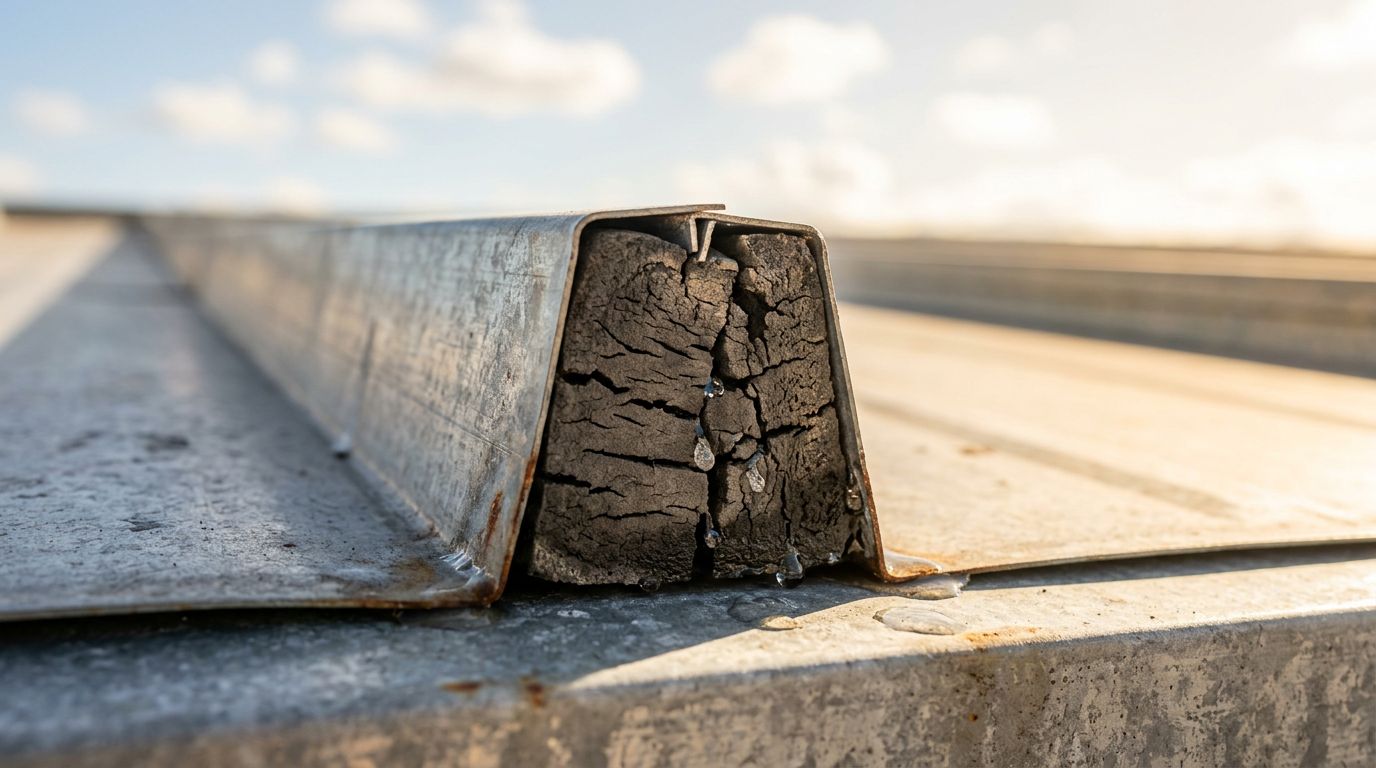
Material quality matters too. Low-density foam can flatten fast under heat and pressure. A strip that feels fine on install day may shrink, harden, or take a permanent set after a few hot seasons. Storage also plays a role. If closures sit in the sun before install, they can age before they ever touch the roof.
Adhesives and sealants can create another problem. Some products react badly with foam, so the closure softens or breaks down near the contact point. Fasteners can also pull panels out of line, which puts uneven stress on the strip.
A closure strip only works when it matches the panel, the detail, and the movement of the roof.
Choosing the right shape matters as much as the material. If you are matching parts to a ribbed panel, matching closure strips to panel profiles keeps the foam seated where it should be.
How failure shows up on a metal roof
A failed closure strip does not always show up as a dramatic leak. More often, the signs are small at first.
You may see stains at the eave or ridge, then damp decking after a hard rain. Sometimes the roof sounds different too. Loose edges can rattle in the wind or let air move where it should not.
Here are the most common clues:
- Water marks near ridge caps, eaves, or panel ends
- Small insects, birds, or debris getting under the panel edge
- Cracked, flattened, or brittle foam at visible openings
- Rust or wet spots near trim, fasteners, or underlayment
- Drafts or dust inside the attic or ceiling cavity
Those symptoms often point to a gap that opened slowly over time. The closure may still be in place, but it no longer seals the rib shape. In other cases, the strip has shrunk enough that the opening is only a few millimeters wide. That is enough for wind-driven rain to reach the wrong side of the panel.
A weak closure also changes how the rest of the roof performs. Water that sneaks past the edge can stain wood, damage insulation, and shorten the life of nearby flashing. Then a minor seal issue turns into a bigger repair.
Installation mistakes that shorten the life of foam closures
Poor installation causes a lot of closure failures. The foam may be fine, but the setup works against it from day one.
One common mistake is over-compression. If an installer forces the panel down too hard, the foam gets crushed and loses rebound. On the other hand, too little compression leaves a gap and invites water. The strip needs a snug fit, not a smashed one.
Another issue is wrong placement. Inside closures belong at the eave under the panel. Outside closures belong under the ridge cap. If the roof has a vented ridge detail, the closure has to match that system. Using the wrong piece at the wrong location defeats the seal.
Cutting errors also cause trouble. Gaps at the ends of strips are easy entry points for water and pests. So are bends or folds from rough handling. Once the foam loses its clean edge, it does not seal as well.
Good roof work depends on the whole accessory package, not one part alone. That is why metal roofing accessories for a weather-tight install matter from the start. Screws, trim, flashings, and closures all need to work together.
Florida weather puts extra stress on closures
Florida roofs take a hard beating. Heat cycles pull panels apart during the day and tighten them again at night. Foam closure strips have to flex with that movement, and repeated stress wears them down.
Sunlight does damage too. UV exposure dries out foam that sits near open edges or exposed trim. Once the material gets hard, it stops sealing cleanly. Then wind and rain find the weak spot.
Humidity adds another layer of stress. Warm, moist air works its way into any opening, then condenses when temperatures change. That moisture can keep the surrounding detail damp long after the rain stops. In coastal areas, salt air raises the pressure even more.
Storms are the final test. Wind-driven rain pushes hard against ridges, eaves, and trim ends. If the strip is weak, it can let water pass during the first strong storm after installation.
Foam that looks fine from the ground can still fail where the panel ribs meet the edge detail.
That is why Florida roofs need closures that fit well and stay stable under heat. If the strip is soft, brittle, or flattened, it has already started to fail.
What contractors and property owners should do instead
The best fix is not a thicker strip. It is the right strip in the right place, installed the right way.
Start with the panel profile. A 5V panel does not use the same closure as a PBR or AG/Multi-Rib panel. The rib shape has to line up, or the foam will never seal properly. If there is any doubt, confirm the panel profile before ordering parts.
Then pay attention to the roof detail. Eave closures, ridge closures, and vented ridge closures each do a different job. Using one in the wrong spot creates a weak point that shows up later as a leak or pest issue.
A good install also needs clean fastener work. Screws should hold the panel in place without warping the edge. Trim should sit flat. Flashing should cover the transition without forcing the foam to carry extra load.
A simple field check helps too:
- Look for crushed, split, or missing closures.
- Check ridge and eave lines after storms.
- Replace foam that has hardened, shrunk, or lost shape.
- Review the nearby trim and fasteners, since closure failures often appear with other edge problems.
If a roof keeps leaking at the same spot, do not stop at the visible stain. Check the closure, the flashing, the fasteners, and the panel fit together. That is usually where the real problem lives.
Conclusion
Foam closure strips fail when fit, placement, and weather exposure work against them. In Florida, heat, UV, and wind-driven rain can speed that process along, so small mistakes show up fast.
The fix is clear. Match the closure to the panel profile, install it in the right location, and use accessories that support the whole roof edge. When those details line up, the roof stays quieter, drier, and far less likely to surprise you later.
Share Our Metal Roofing News Articles
Related Posts