Metal Siding Corner Trim for Florida Pole Barns
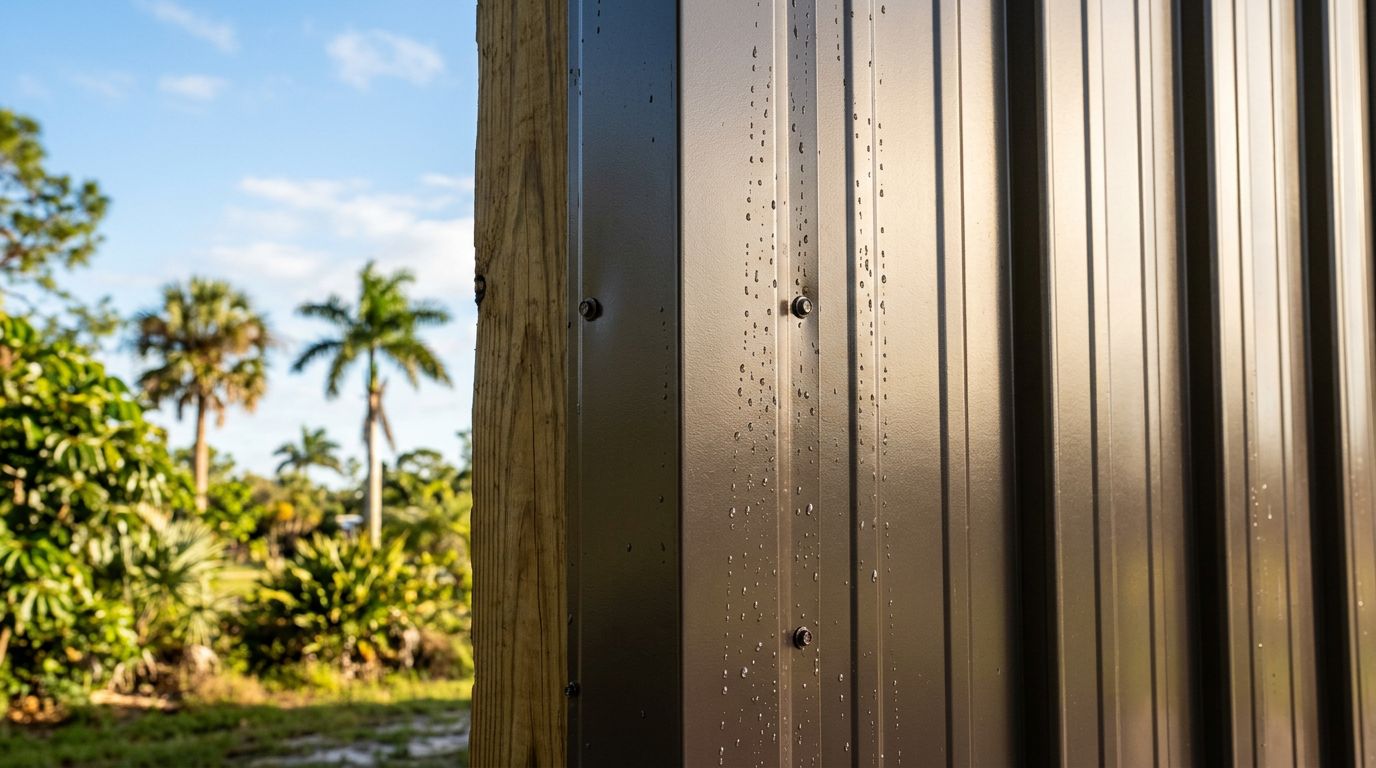
Florida pole barns take a beating at the corners. Wind-driven rain, hot sun, and salty air hit those seams first, and weak trim shows it fast.
Metal siding corner trim closes those edges, keeps water out, and gives the wall a clean line. When it fits the panel profile and is fastened the right way, it lasts longer and looks better. When it does not, leaks, rust stains, and loose edges show up after the first hard storm.
The details matter more in Florida than they do in mild climates. The sections below cover the trim types, install steps, buying points, and mistakes that cost time and money.
Why corner trim matters so much in Florida
Corner trim does more than cover a rough edge. It directs water away from the panel joint, hides cut ends, and helps the wall stay tight during high wind.
That matters on Florida pole barns because moisture hangs around. Humidity slows drying, heavy rain pushes water sideways, and coastal air can speed up corrosion. A corner that looks fine on a dry day can start leaking once a storm tests the seam.
Good trim also helps the whole building look finished. On storage barns, workshops, and ag buildings, a clean corner keeps the wall line straight and protects the panel edges from damage during use.
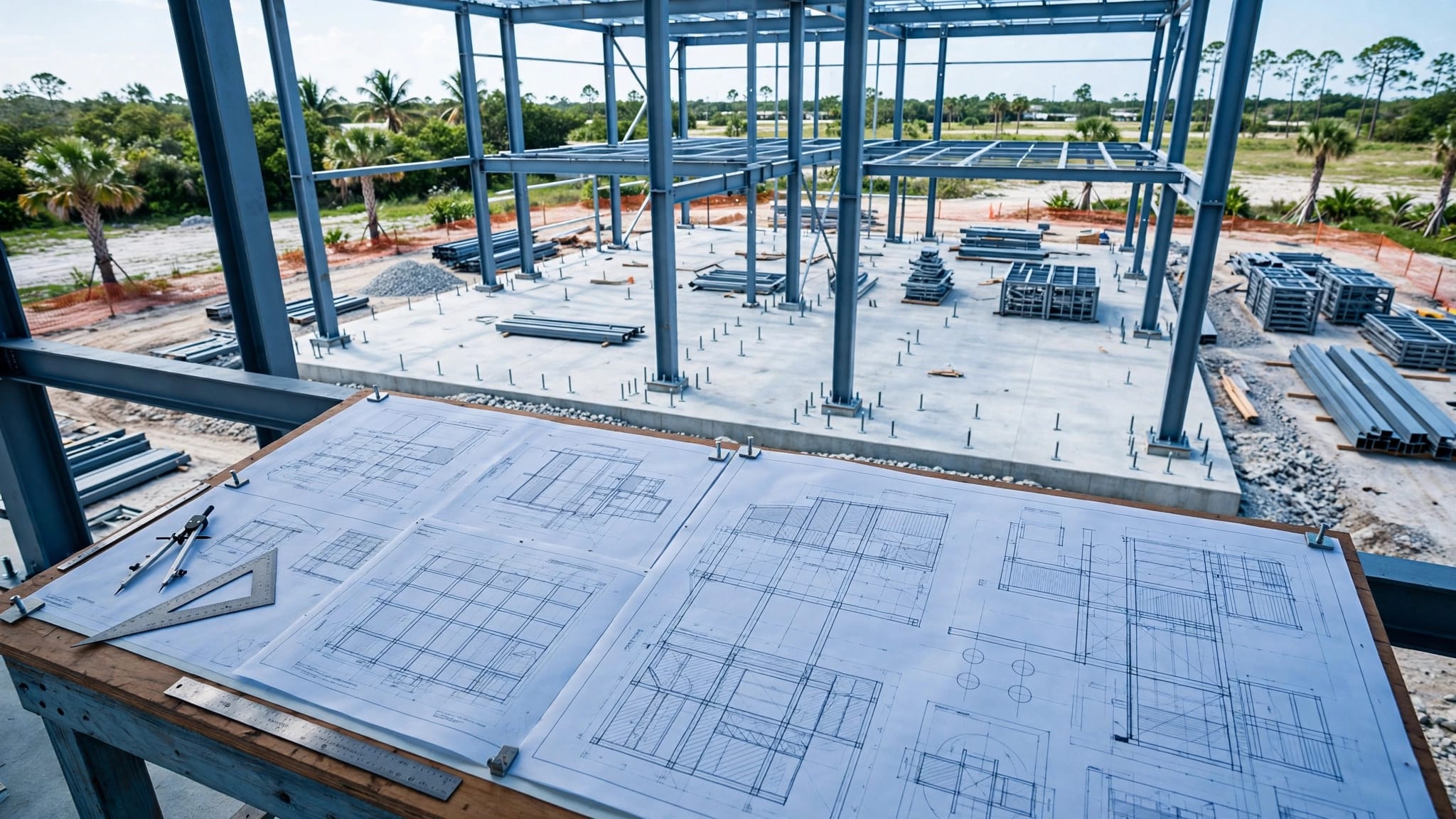
If the barn is part of a new build, it helps to plan the trim along with the framing and panel layout. Pole barn kits for Florida make that easier because the wall, roof, and accessory parts stay in the same plan.
Picking the right trim profile for your wall panels
The best corner trim starts with the panel profile. A piece that fits one wall system may leave gaps on another, and those gaps can collect water.
| Trim type | Best use | Why it helps in Florida |
|---|---|---|
| Outside corner trim | Exposed wall corners | Covers cut edges and sheds wind-driven rain |
| Inside corner trim | Recessed joints or inward corners | Helps close the seam and keeps debris from building up |
| Custom corner trim | Tall walls, odd angles, or mixed profiles | Reduces weak laps and gives a tighter fit |
The finish matters too. Galvanized or coated steel holds up better when the barn sees constant moisture. Color match is more than looks, because a matched finish usually means the trim belongs with the same panel family.
Length also matters. Longer pieces mean fewer laps, and fewer laps mean fewer places for water to sneak in. When a corner needs a special bend or a longer run, how to order custom metal trim without mistakes is a useful reference before you place the order.
A tight-looking corner still fails if the profile is wrong. Water does not care how neat the edge looks from the ground.
Installing corner trim on a Florida pole barn
Good trim can still fail if the install is sloppy. Start with a clean layout, use the right fasteners, and keep the overlap where water can shed away from the joint.
Measure the wall before you cut
Measure each corner from the base to the top, then check the panel layout around it. If the wall is not perfectly square, mark the real corner line, not the one you hoped for.
Dry-fitting a piece before fastening saves trouble. It also shows whether the trim covers the cut panel edge without forcing the metal out of shape.
Set the overlap before fastening
If the corner needs more than one piece, plan the overlap before you drive a screw. Put the lap where water runs over it, not where it can sit and soak in.
Use sealant only where the trim detail calls for it. Too much sealant traps dirt and makes future repairs messy. Too little leaves a path for rain.
Fasten with the right spacing
Use corrosion-resistant screws with washers that compress evenly. Set them straight and do not crush the washer, because that shortens the life of the joint.
Corners need tighter fastening than flat field areas because wind pressure is stronger at the edge. The metal siding fastener placement guide is a helpful companion when you set screw spacing near trim and panel edges.
Seal, inspect, and finish
Touch up cut edges and scratches as soon as you spot them. Bare steel rusts fast in Florida, especially near the coast.
After the first heavy rain, walk the wall and check for lifted washers, open seams, or drips inside the barn. A small fix on day one is easier than a leak later.
What to check before you order
Buying the right trim is easier when you slow down and check a few basics first.
- Match the trim to the exact wall panel profile.
- Pick a coating and color that fit the site exposure.
- Ask for lengths that reduce lap joints on tall walls.
- Confirm inside, outside, left-hand, or right-hand bends if the corner needs them.
- Order the trim with the wall plan, roof plan, and framing plan in mind.
If you are starting a new build, pole barn kits for Florida can help keep those parts aligned before anyone starts cutting steel.
Local Florida requirements can vary by county and project conditions, so match the order to the site, the wall height, and the wind exposure. That is especially true on barns near open water or in areas that see stronger storms.
Common mistakes that lead to leaks and rust
Most corner trim problems come from a few simple misses. They are easy to avoid once you know where they happen.
- Too little overlap leaves a path for wind-driven rain.
- Screws driven too hard crush the washer and weaken the seal.
- Bare cuts and scratches rust fast, especially near salt air.
- The wrong trim profile leaves gaps at the panel ribs.
- Using a field fastening pattern at the corner weakens the edge.
Another common issue is mixing parts from different panel systems. A trim that looks close enough on the bench can fit poorly once it meets the wall.
Fasteners matter just as much as the metal. If the screw coating or washer type does not match the environment, the corner will age faster than the rest of the barn.
Keeping the corners in good shape after storms
Corner trim does not need much care, but it does need a quick look after rough weather. Walk the building after heavy rain or strong wind and check the corners first.
Look for open laps, missing screws, bent edges, or sealant that has pulled away. Near the coast, rinse off salt spray now and then so residue does not sit on the finish.
Debris around the base can also trap water against the lower trim. Keep the area clear, and replace damaged pieces before moisture gets behind the wall panel.
Conclusion
Florida pole barns take the worst of the weather at the corners. That is why trim choice, overlap, fastening, and sealing matter so much.
When the profile fits the panel, the screws hold the right way, and the laps stay tight, the wall has a much better chance against rain, humidity, and wind. For any project, match the details to the building and check local Florida requirements by county and site conditions before you order or install.
Share Our Metal Roofing News Articles
Related Posts