Internal Roof Drain Flashing on Low-Slope Metal Roofs
A drain detail can look small and still be the first place water finds trouble. On a low-slope metal roof, one loose transition, one wrong sealant, or one rigid connection can send water where it never belonged.
That's why internal roof drain flashing has to do more than cover an opening. It has to work with the roof slope, the membrane, the drain body, and the metal components around it. If those parts don't match up, Florida rain will find the weak spot fast.
Key Takeaways
- Internal drains need a clean sump, a secure clamping ring, and a watertight membrane transition.
- Drain bodies, membranes, sealants, and metal components all have to be compatible.
- Low-slope metal roofs move with heat, so rigid flashing details can fail early.
- Ponding water, rust stains, and repeated wet spots are common warning signs.
- Regular cleaning and inspections help catch drain problems before they spread.
How Internal Roof Drain Flashing Works on Low-Slope Metal Roofs
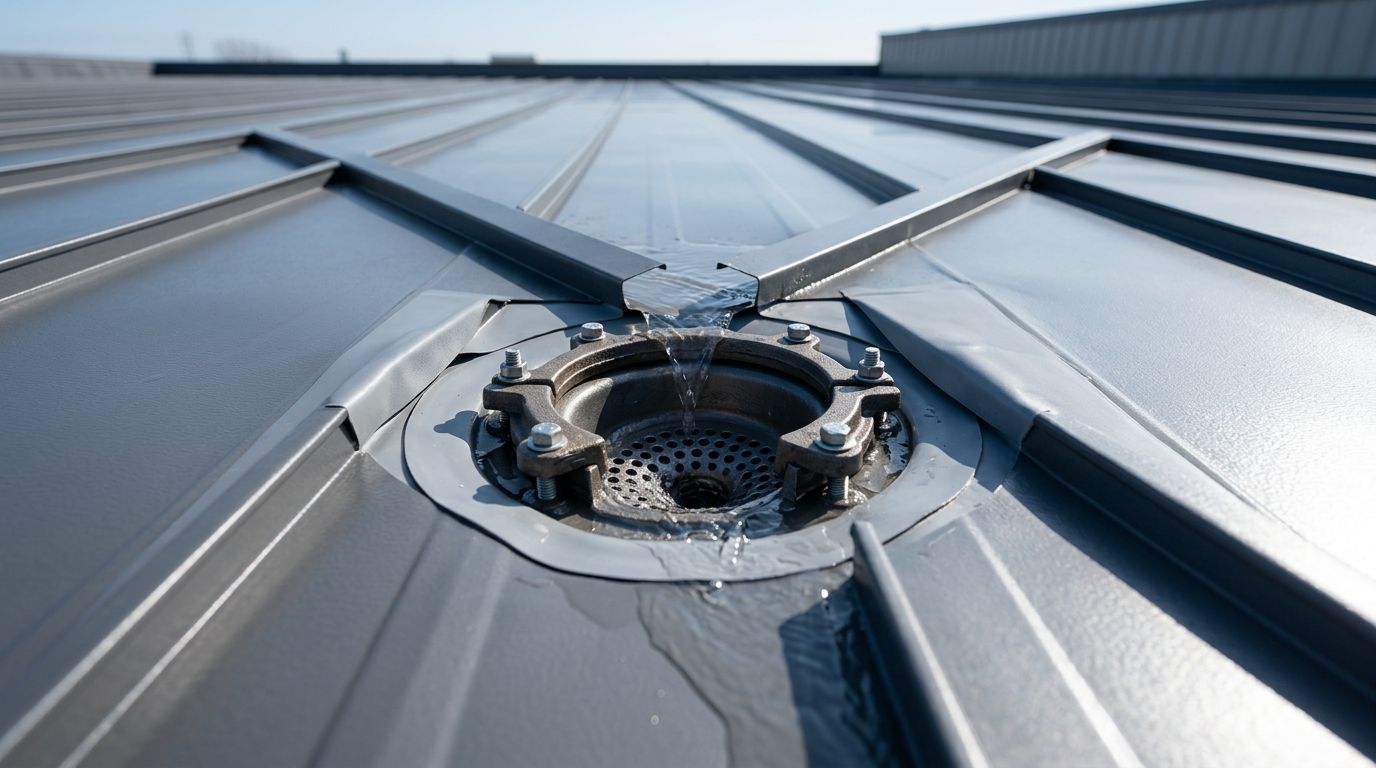
Internal drains collect water at low points in the roof and send it into the building drainage system. On a low-slope metal roof, that process starts before the water reaches the drain body. The roof surface, underlayment or membrane layer, tapered insulation, and sump area all guide water toward the opening.
That means the flashing detail is really a transition system. It has to seal the drain bowl, bond or clamp to the membrane, and tie into the surrounding roof assembly without creating a shortcut for water. If the roof uses standing seam panels or another metal panel profile, the drainage path also has to respect panel layout and seam location.
If water can sit still, it will test every seam, corner, and fastener around the drain.
The drain opening should sit in a proper sump, not in a flat pocket. Water should flow to it, not pool around it. When the slope is weak or the transition is rough, water lingers long enough to work under laps, stress sealant, and expose fasteners.
Where Compatibility Problems Start
Drain details fail when parts from different systems are forced together. A membrane that doesn't bond correctly to the drain flange, a sealant that can't handle постоян exposure to water, or a metal trim piece that reacts badly with nearby metals can all start a leak.
The safest approach is to match the drain body, membrane, fasteners, and sealant to the roof assembly already in use. Manufacturer instructions matter here, because details change by membrane type and roof profile. A TPO or PVC membrane, for example, does not use the same attachment method as EPDM or modified bitumen.
The table below shows the main compatibility points to check before work starts.
| Component | What to check | Why it matters |
|---|---|---|
| Drain body | Material, flange size, and approved membrane type | The drain has to accept the roof membrane cleanly |
| Clamping ring | Fit, tightening pattern, and gasket condition | Uneven pressure can leave gaps or damage the membrane |
| Membrane or liner | Approved attachment method and overlap size | The waterproof layer needs a full, continuous seal |
| Sealant and tape | Wet-service rating and manufacturer approval | The wrong product can separate after heat or standing water |
| Metal trims and fasteners | Metal compatibility and corrosion resistance | Mixed metals can corrode, stain, or weaken the detail |
When a drain opening needs a shaped transition piece, metal roofing flashing profiles help the detail fit the roof instead of forcing a patch to do the job.
A related issue comes up when the drain ties into edge metal or a nearby runoff path. In that case, choosing the right eave drip edge for metal roofs helps keep water moving away from vulnerable edges instead of back toward them.
Movement and Expansion Matter More Than People Think
Metal roofs expand and contract as temperatures change. In Florida, the daily cycle can be hard on rigid details, especially around penetrations and drains. A flashing that looks tight on day one can pull apart once the roof starts moving.
The drain detail should never lock the roof into place. Instead, it should allow the panel system and the membrane assembly to move the way they were designed to move. That usually means careful fastener placement, correct clip use on standing seam systems, and enough flexibility in the flashing transition to absorb movement without tearing.
A good drain detail also avoids sharp folds and hard stress points. Rounded transitions hold up better than kinked metal or over-tight membrane corners. The goal is a smooth path for water and a stress-free path for the roof materials.
Three movement issues come up often:
- Long panel runs can push and pull the surrounding flashing.
- Fasteners placed too close to the water path can loosen or corrode.
- Sealant joints that are asked to carry movement often split or separate.
If the roof also depends on nearby transition metal, that detail needs the same attention. A drain may be watertight on its own, but the surrounding flashing can still fail if the full roof system is not allowed to move.
Common Leak Points and Warning Signs
Leaks around internal roof drains usually start in predictable places. The drain body itself is rarely the only problem. More often, water slips through a corner, a clamp ring, or a seam that was never meant to stay wet.
Common leak points include:
- clogged strainers or domes that let water back up
- loose or uneven clamping rings
- membrane corners that wrinkle or split near the flange
- sealant that bridges gaps instead of bonding surfaces
- fastener holes too close to the wet zone
- poor slope into the sump, which leaves standing water
- cracked coatings or corrosion around cut metal edges
Warning signs often show up inside before they show up on the roof. Ceiling stains near the drain line, damp insulation, rust marks on fasteners, and repeated odors after rain all point to a detail that needs attention. Blistered membrane, soft decking, or water tracks below the drain opening are stronger clues.
After a heavy storm, check whether water is moving freely into the drain. If you see ponding that lasts more than a short time, the slope or the drain opening needs a closer look. A blocked dome can look harmless until the next downpour exposes the backup.
Installation and Maintenance Habits That Hold Up
A drain detail lasts longer when the work follows the roof order, not a rushed patch sequence. The sump should be formed first, the drain should be set squarely, and the membrane should lie flat before the clamp ring goes on.
- Form the sump so water moves naturally into the drain.
- Check that the drain body matches the membrane type and thickness.
- Clean the flange and surrounding surface before bonding or clamping.
- Use approved sealant only where the manufacturer calls for it.
- Keep panel ends, clips, and fasteners out of the direct water path.
- Test the area with water after installation, then inspect the detail again after the first heavy rain.
Maintenance matters just as much. Debris, leaves, and rooftop grit can clog a strainer fast, especially on flat or low-slope roofs. A simple cleaning schedule keeps the drain open and reduces the chance that water will sit at the flashing line.
Florida roofs also need storm-season inspections. After strong wind or heavy rain, check for displaced domes, rust staining, loose sealant, and damaged panel edges near the drain. If the roof uses custom trim around the drain zone, replacement parts should match the original profile as closely as possible. When a special piece is needed, custom metal roofing flashing profiles make it easier to keep the transition watertight and neat.
Conclusion
A low-slope metal roof handles water well when the drain detail is built with care. The drain body, membrane, sealant, and surrounding metal all have to work as one assembly.
The weak point is usually not the roof itself, it's the transition around the opening. When internal roof drain flashing is detailed for watertightness, movement, and material compatibility, the roof has a much better chance of staying dry through Florida weather.
Share Our Metal Roofing News Articles
Related Posts