How to Seal Old Satellite Dish Holes on a Metal Roof
A few old satellite dish holes can turn into a steady leak after one hard Florida rain. On metal roofing, water follows fasteners, seams, and tiny openings with very little help.
That is why a quick smear of caulk usually falls short. To seal metal roof holes the right way, you need a clean surface, a patch that fits the roof, and a sealant made for exterior metal.
Key Takeaways
- Old dish holes usually need more than sealant alone, especially on metal roofs that move in heat.
- Clean the area, remove loose rust, and patch solid metal with compatible materials.
- Use butyl tape , a metal patch, and a metal-roof-compatible sealant instead of household caulk.
- If the panel is rusted, bent, or torn, the repair may call for a roofer or panel replacement.
- Test the spot after the sealant cures, then check it again after the next storm.
Why old satellite dish holes leak on metal roofs
Satellite dish mounts leave behind screw holes, lag holes, or clusters of openings where brackets once sat. Over time, old sealant dries out, washers flatten, and the roof panel keeps expanding and contracting in the sun.
That movement matters. Metal roofs are built to flex a little, but rigid filler cracks when the panel shifts. Water then works its way under the old repair and into the roof deck.
Florida weather makes the problem worse. Heat, afternoon storms, wind-driven rain, and salt air near the coast all wear on exposed metal. A hole that looked harmless in dry weather can become a leak path fast.
Standing seam roofs and exposed-fastener panels both need care, but the repair method changes. Fasteners through a panel face are one thing. Holes near seams, ridges, or flashing details are another.
Choose the right repair for the size of the hole
A quick comparison helps before you start. The right fix depends on the condition of the metal, not just the size of the opening.
| Damage you see | Best repair | DIY or pro? |
|---|---|---|
| One or two clean screw holes in solid panel | Clean, treat bare metal if needed, then cover with a patch and sealant | DIY |
| Several old dish holes in one area | Use a larger metal patch that bridges every opening | DIY if the panel is sound |
| Rust, flaking coating, or thin metal | Treat light rust only if the metal is still strong | Often pro |
| Hole at a seam, ridge, or flashing | Use a repair suited to that roof detail | Usually pro |
| Torn, bent, or stretched panel | Replace the damaged section or panel | Pro |
The patch should sit on solid metal. If the panel flexes, crumbles, or flakes when you touch it, the roof needs more than a surface fix.
Materials that belong on a metal roof patch
The material list is short, but the quality matters. A metal roof repair needs products that can handle sun, rain, and movement.
Use these basics:
- Work gloves, safety glasses, and soft-soled shoes
- A wire brush or abrasive pad
- Mild cleaner and rags
- Rust-inhibiting primer for bare steel, if needed
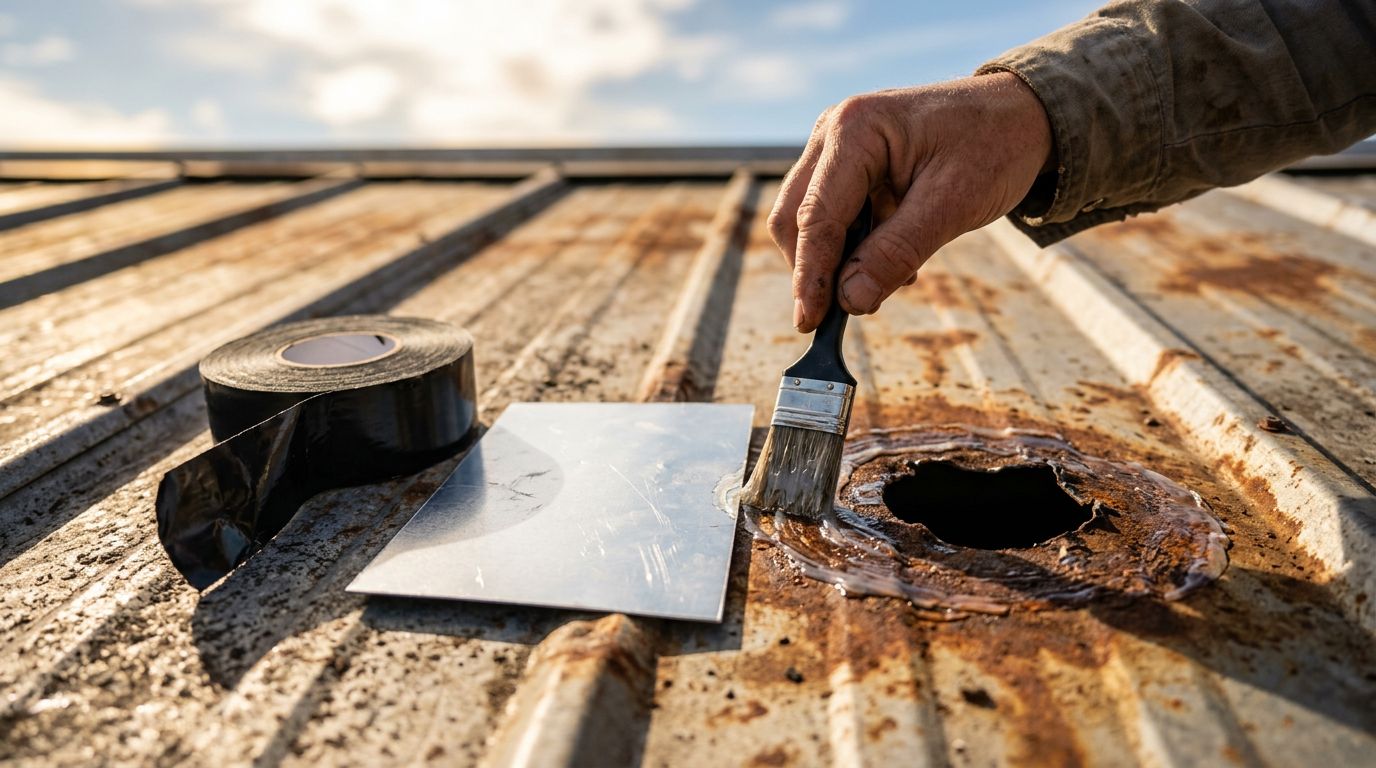
- Butyl tape
- A patch made from compatible sheet metal
- Neoprene-washer screws, if the patch needs fasteners
- A metal-roof-compatible sealant , usually polyurethane or an MS polymer product labeled for exterior roofing
Match the patch metal to the roof when you can. Avoid mixing metals that may corrode against each other. On ribbed or corrugated panels, a formed patch often sits better than a flat rectangle.
A bead of random caulk can hide the hole for a while, but roof movement usually opens it back up.
Step-by-step patching for old dish holes
Start on a dry day. Wet metal is slippery, and trapped moisture can ruin a repair before it begins. If the roof pitch is steep, use fall protection or bring in help.
- Mark every opening
Old satellite dish mounts often leave more than one hole. Mark each one with painter's tape or chalk so nothing gets missed. A single forgotten opening can keep the leak alive. - Remove old hardware and loose sealant
Back out screws, brackets, or anchors left behind by the dish. Scrape off brittle caulk, loose roofing cement, and any sealant that no longer bonds. If old fasteners spin, remove them carefully and keep the hole clean. - Clean the repair area
Wash away dirt, chalk, and loose coating. Then dry the panel completely. Sealant sticks best to clean metal, not to chalky paint or dusty rust. - Treat rust before patching
If you see light surface rust, brush it off and apply a rust-inhibiting primer where the product calls for it. If the metal is thin, scaly, or perforated, stop here and look at the larger repair. - Cut and test-fit the patch
Make the patch large enough to cover every hole with solid overlap on all sides. Round the corners so they do not catch wind or lift early. Test-fit it before applying tape or sealant. - Set the patch with tape and sealant
Place butyl tape or compatible sealant under the patch edges, then press the patch into position. If the patch needs screws, use the fewest needed to hold it flat, and tighten only until the washer seals. Over-tightening can flatten the washer and create a new leak path. - Seal the edges and fastener heads
Apply a neat bead of roofing sealant along the patch perimeter and over each fastener head. Smooth it enough to cover gaps, but do not smear it across the whole roof. The goal is a clean seal, not a blob.
For a lone hole in solid metal, some roofers use a sealed fastener or small cover plate. That can work on a sound panel. Old dish openings, though, often need a wider patch because several small holes age together.
When the roof needs more than a patch
A patch is fine when the roof metal is still strong. Once the panel is rusted through, badly bent, or torn around the old mount, the repair changes.
If the damage spreads across a seam, ridge, or flashing transition, a flat patch can fail early. Standing seam panels can be especially tricky because the seams move. In those spots, a roof repair that looks simple from the ground can turn into a bigger fix up close.
A roof with repeated patch jobs deserves a harder look too. If the old dish holes are only one part of a larger problem, deciding between repair and replacement will save time and repeated call-backs.
If a panel is damaged beyond a clean patch, replacing a damaged metal roof panel may be the better move. That is especially true when the opening has stretched the metal or the coating has failed around the holes.
If the metal is soft enough to flex hard under your fingers, patching it only delays the next leak.
Test the repair and keep an eye on it
Let the sealant cure for the full time listed on the tube before testing. Then check the repair with a controlled hose test or wait for the next light rain. Have someone watch from inside while water runs across the repaired area.
Start low and work upward in short sections. That helps you see whether water is entering at the patch or traveling from another spot. Check the attic, ceiling, or underside of the roof deck for dampness.
If the repair stays dry, add it to your regular roof checks. A simple follow-up after storms can catch small problems before they spread. A metal roof maintenance checklist is a smart place to track the spot, especially during Florida storm season.
Conclusion
Old satellite dish holes are small, but they can cause big headaches on a metal roof. The fix has to move with the panel, stand up to heat, and keep water out after the next storm.
Clean metal, a proper patch, and the right sealant will solve many of these repairs. When rust, tearing, or roof age gets in the way, a bigger repair is the safer choice.
Share Our Metal Roofing News Articles
Related Posts