Metal Roof Maintenance Checklist for Central Florida, What to Inspect Each Spring and After Storms
In Central Florida, a metal roof lives a hard life. Spring pollen sticks like flour on a damp countertop, humidity lingers, and storm season isn’t far behind. The good news is that metal roof maintenance isn’t complicated, it’s mostly about catching small problems before water finds a path inside.
This checklist is built for homeowners and property managers who want a clear plan for what to inspect each spring and what to re-check after storms. Use it as a quick routine, and as a paper trail if you ever need one.
When to inspect, and how to do it without getting hurt
Plan a spring inspection once the worst of winter grime and early pollen buildup has settled (many folks aim for March or April). Then inspect again after any event that brings high wind, hail, falling branches, or wind-driven rain. If a named storm passes through, don’t “wait and see.” Hidden damage can turn into a slow leak that shows up weeks later as a ceiling stain.
For post-storm checks, a practical timeline is within 24 to 72 hours after the storm, once it’s safe and daylight is good. If downed lines, unstable trees, or slick surfaces are around, delay the roof-walk and start from the ground.
Metal roofs get slippery fast, even with morning dew. They also don’t forgive casual footing. If you’re not used to roof work, do a ground-based inspection first with binoculars, a camera zoom, or a drone if you can fly it legally in your area. You can spot lifted edges, missing trim, and clogged valleys without stepping onto the panels.
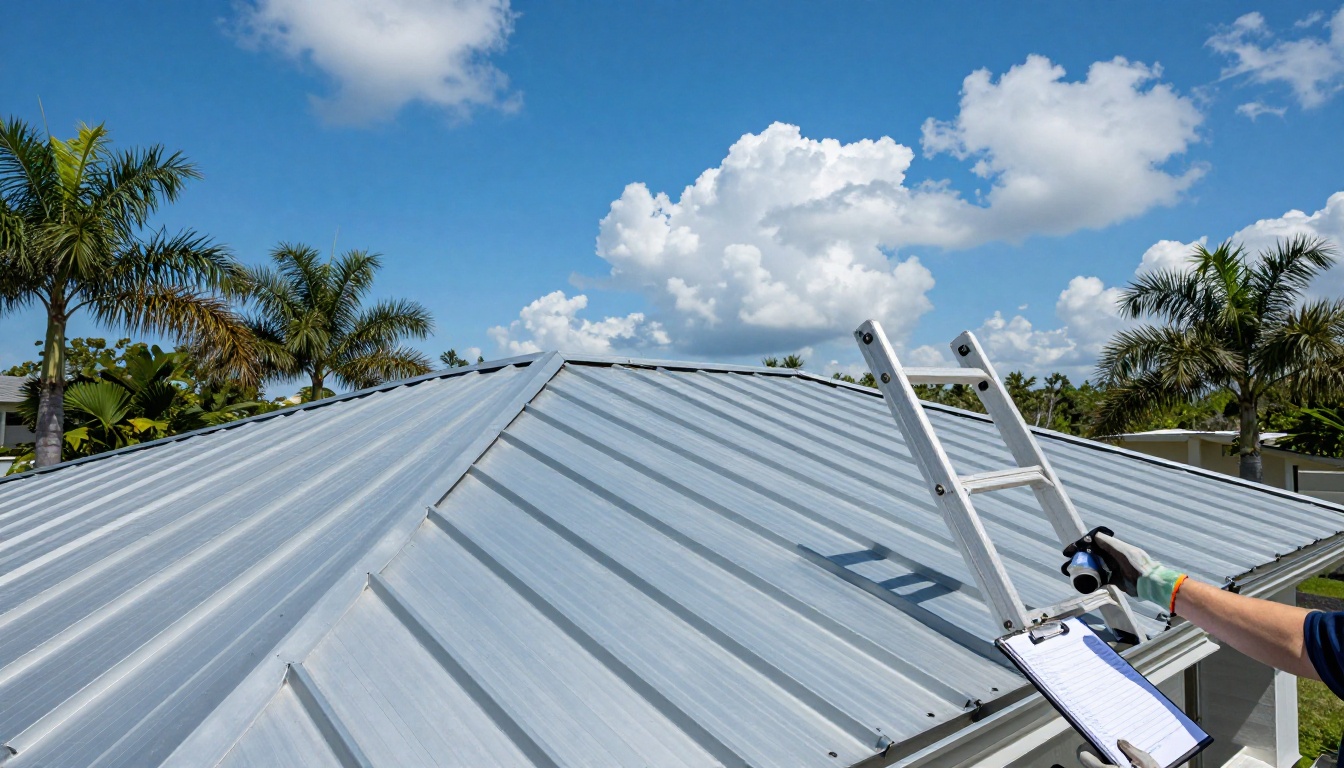
If you do use a ladder, set it on firm ground, extend it above the eave, and keep three points of contact. Avoid walking on a wet roof, and skip roof-walking entirely if the pitch is steep or the roof is tall. When in doubt, schedule a pro inspection and keep your own notes. For more upkeep habits that fit Florida conditions, see these expert metal roofing maintenance tips.
Spring checklist: what to inspect on panels, fasteners, flashing, and finish
Think of spring maintenance like rinsing sand out of a beach bag. The roof may look fine from the driveway, but gritty debris, leaf piles, and clogged drainage points can hold moisture in all the wrong places.
Before you inspect details, clear loose debris from gutters and valleys, and rinse dirt where it collects. If the roof needs a wash, stick with gentle methods that won’t scratch the finish. A simple guide to products and frequency is here: cleaning your metal roof safely.
Use this spring inspection list as your baseline:
- Metal panels : Look for oil-canning changes, new dings, punctures, or spots where panels look “shifted” out of alignment.
- Seams and laps : Check for gaps, lifted laps, or places where sealant looks thin, cracked, or missing.
- Fasteners and screws : Scan for backed-out screws, missing screws, and cracked or flattened washer heads.
- Sealant and caulking : Look for shrinkage, splits, and sealant that has pulled away from metal.
- Flashing at penetrations (vents, pipes, fans): Check boots and collars for cracks, loose edges, or UV damage.
- Wall and transition flashing : Inspect roof-to-wall lines for openings and loose counterflashing.
- Skylight flashing (if present): Look for loose edges and sealant failure at corners.
- Ridge caps : Check for uplift, missing closures, or fasteners that don’t sit tight.
- Valleys : Remove debris, then look for dents, pinholes, or rusty staining at overlaps.
- Gutters and downspouts : Confirm water can flow freely, and that straps and joints are secure.
- Coating and paint finish : Note chalking, peeling, deep scratches, or bare metal exposure.
- Rust or corrosion : Watch for orange staining, bubbling paint, or corrosion around cut edges and fasteners.
Wrap up by checking the “silent areas” inside. In the attic (or top-floor ceiling), look for water stains, damp insulation, musty odor, and condensation on nails or HVAC ducts. A metal roof can shed water perfectly, while a small flashing gap still lets wind-driven rain mist into the attic.
After storms: what to re-check fast, and what to document for insurance
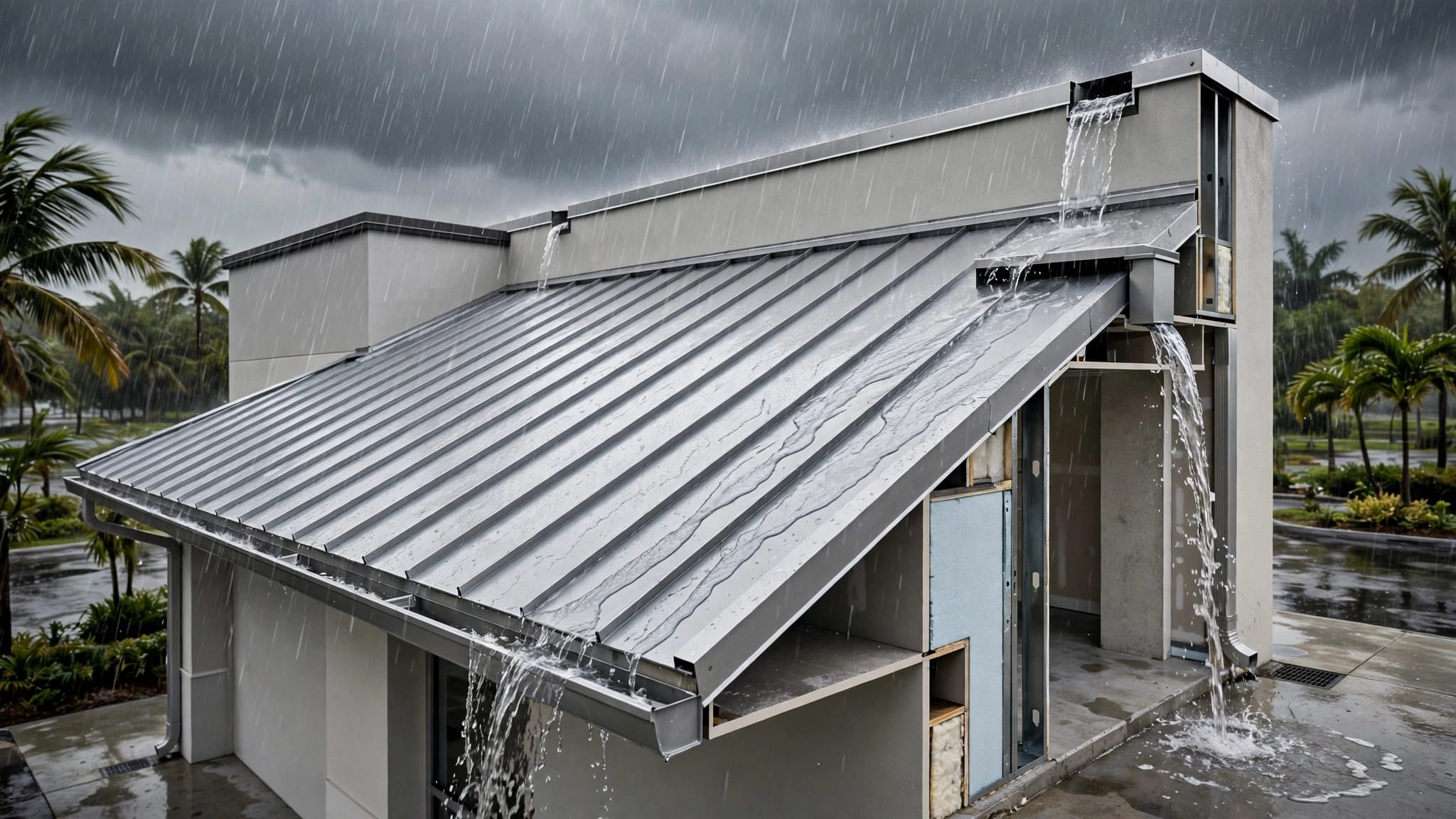
After severe weather, your goal is to confirm the roof still acts like a sealed umbrella, not a sieve. Wind can loosen edges and ridge areas first. Flying debris can dent panels. Heavy rain can overwhelm gutters and push water uphill at transitions.
Start with a ground scan. Look along eaves and ridges for anything that isn’t straight. Then, if it’s safe to get closer, use this storm-focused list:
- Displaced or missing panels : Any panel that looks shifted, lifted, or detached needs quick attention.
- Uplift at edges and ridge : Check rake trim, eave/drip areas, and ridge caps for “flutter” or gaps.
- Impact dents (hail or debris): Note dent clusters, especially near seams, valleys, and penetrations.
- Tree limb scraping : Look for long scratches that cut through the finish, plus bent trim at edges.
- Loose flashing : Inspect chimney, wall, skylight, and vent flashing for lifted corners or missing sealant.
- Fasteners that backed out : Wind vibration can loosen screws, especially on older roofs.
- Clogged gutters and downspouts : Overflow can back water up into fascia lines and roof edges.
- Valleys and low spots : Remove debris, then look for standing water marks and damaged metal.
- Roof penetrations : Check pipe boots for tears and collars for separation.
- Interior water clues : New ceiling stains, bubbling paint, wet window headers, or damp attic insulation.
For hurricane-prone properties, it helps to understand how wind paths and attachments work. The Florida Division of Emergency Management’s Hurricane Retrofit Guide for metal roofs is a solid, brand-neutral reference.
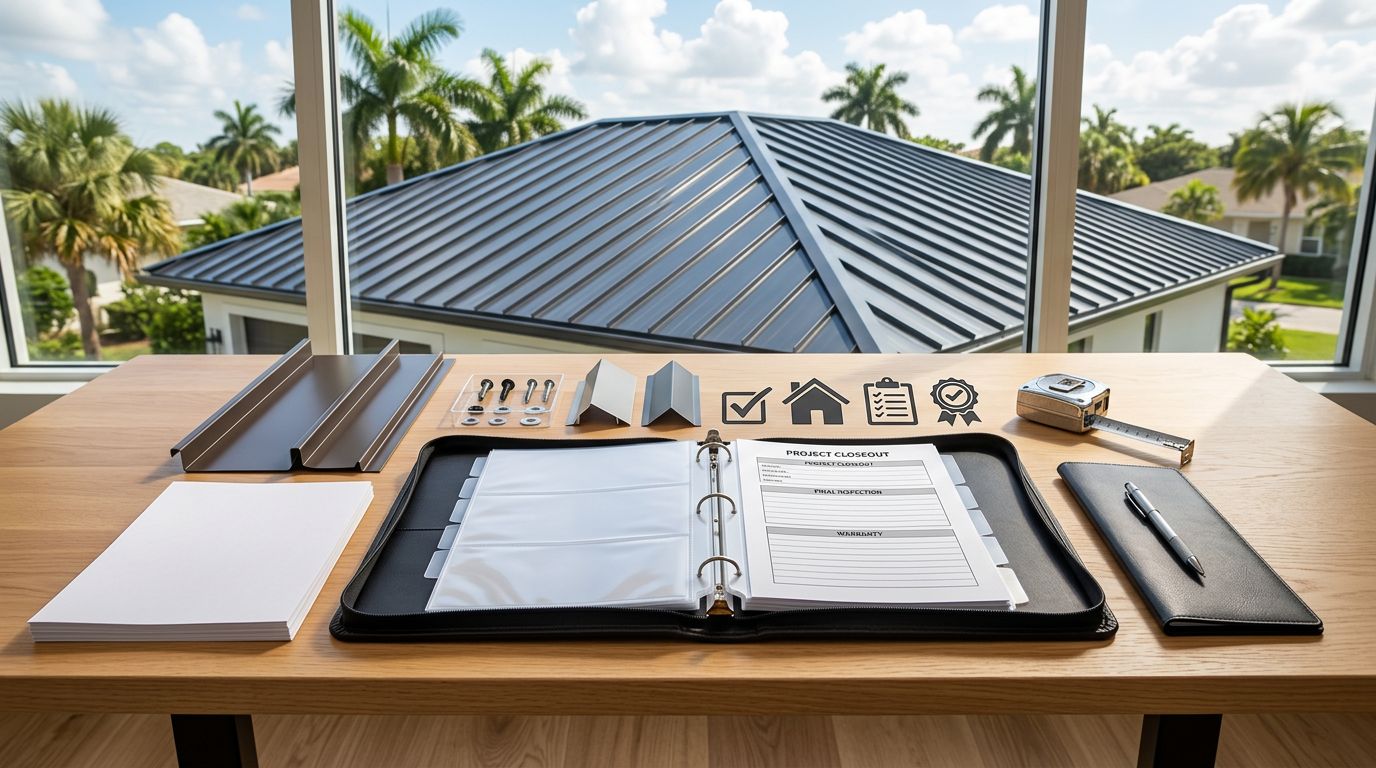
Mini checklist: document it for insurance (without promises)
Don’t rely on memory. Treat documentation like a receipt folder for your roof.
- Date and time of the storm and your inspection
- Wide photos of each roof plane (from ground or drone)
- Close photos of dents, lifted edges, loose flashing, and clogged valleys
- Interior photos of stains and wet materials (attic and ceilings)
- Short notes describing location (example: “north valley near vent stack”)
- Receipts and prior records (maintenance, repairs, cleaning)
If repairs are needed, avoid quick smears of random sealant or roof cement unless a qualified roofer advises it. Wrong products can trap moisture, make a mess of the finish, or complicate later repairs.
When you hire help, verify credentials. Florida’s official contractor lookup is the DBPR license search. And if you’re trying to judge how serious damage really is, this guide on metal roof repair vs replacement can help you sort cosmetic issues from performance risks.
Conclusion
A Central Florida roof doesn’t usually fail all at once. It fails the way a rain jacket fails, at the zipper, the seam, or the worn spot you didn’t notice. A simple spring routine, plus a careful post-storm check, keeps metal roof maintenance predictable and keeps surprises out of your attic. If you find anything you can’t explain from the ground, document it, then bring in a licensed pro to confirm what you’re seeing.
Share Our Metal Roofing News Articles
Related Posts