Metal Roof Corrosion in Coastal Florida, Galvalume vs. Aluminum vs. Painted Steel for Salt Air
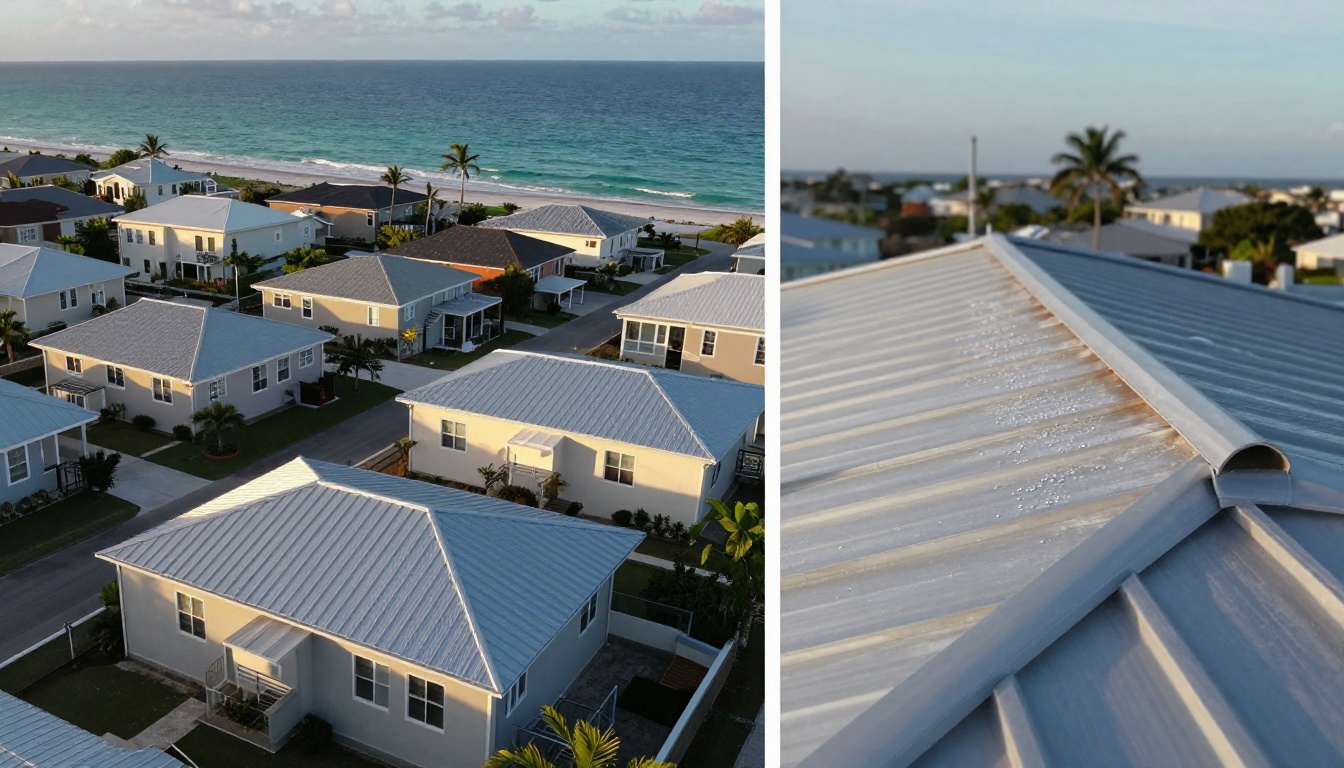
Salt air in Florida doesn’t “kind of” wear on metal, it works on it every day, like sandpaper you can’t see. Add high humidity, afternoon storms, and hurricane wind-driven spray, and a roof that performs great inland can age fast on the coast.
If you’re choosing a metal roof coastal florida homeowners can count on, the right answer depends on more than price. It comes down to how each metal reacts to salt, how the coating protects edges and fasteners, and whether the roof system sheds water without trapping it.
This guide breaks down Galvalume, aluminum, and painted steel for coastal exposure, plus what to specify so your bid doesn’t leave out the details that prevent corrosion.
Why coastal Florida corrodes metal roofs faster
Coastal corrosion is mostly chemistry plus time. Salt deposits land on the roof, then humidity and dew keep that salt wet. That thin film of salty moisture turns the roof surface into a weak electrolyte, which speeds up corrosion, especially at scratches, cut edges, laps, and fasteners.
Hurricanes make it worse. Wind-driven spray gets forced into seams and under edges, and debris can nick the coating. Corrosion often starts where you don’t notice it until it spreads.
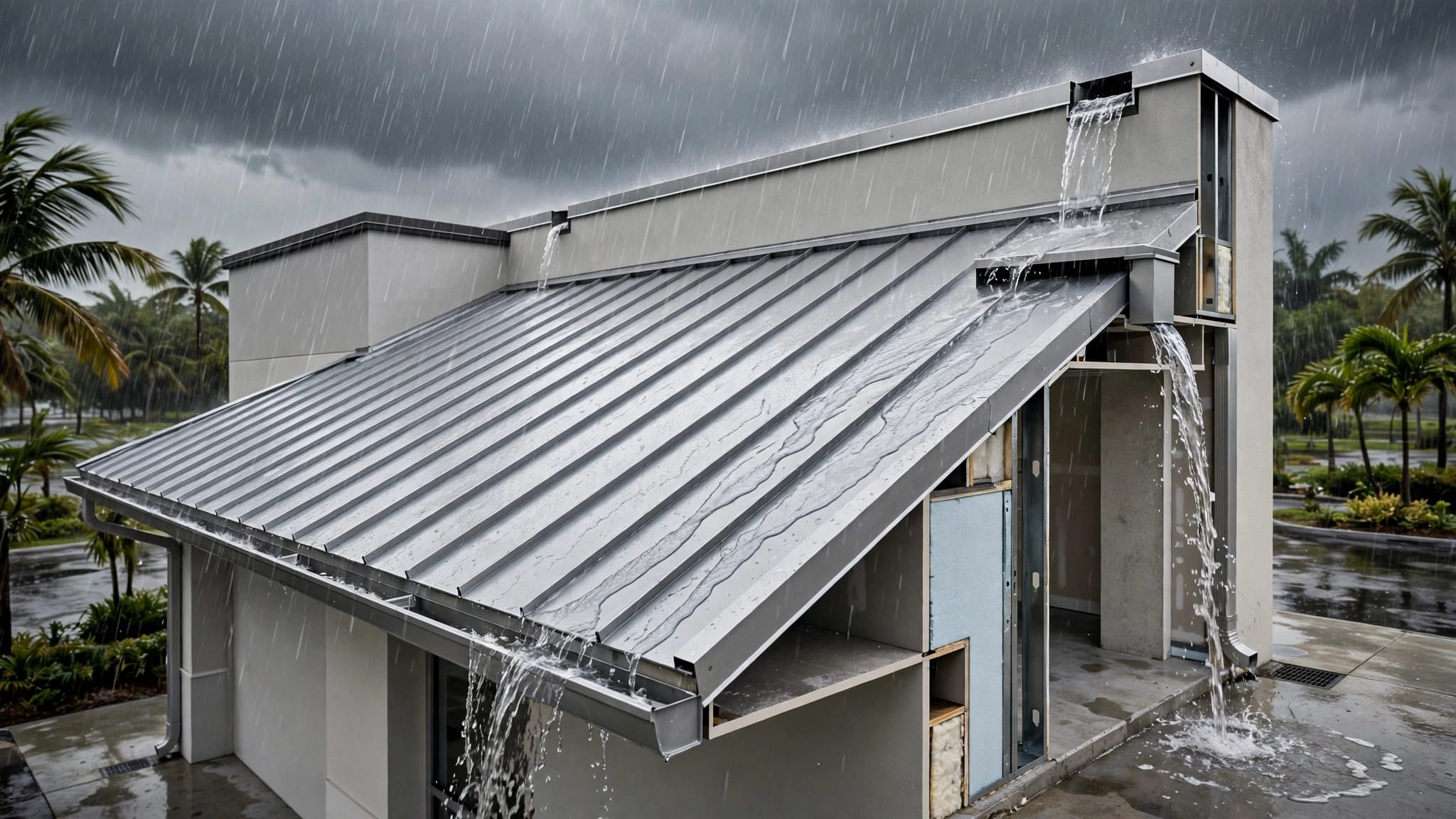
Coastal performance also depends on the full system, not just the panel. Panel profile, clip and fastener material, underlayment choices, ventilation, and how you handle dissimilar metals can matter as much as whether the panel is steel or aluminum. If you’re still comparing roof styles, this overview of comparing metal roof panel types for Central Florida helps frame the profile side of the decision (standing seam vs. exposed-fastener panels).
Galvalume vs. aluminum vs. painted steel in salt air (real-world selection criteria)
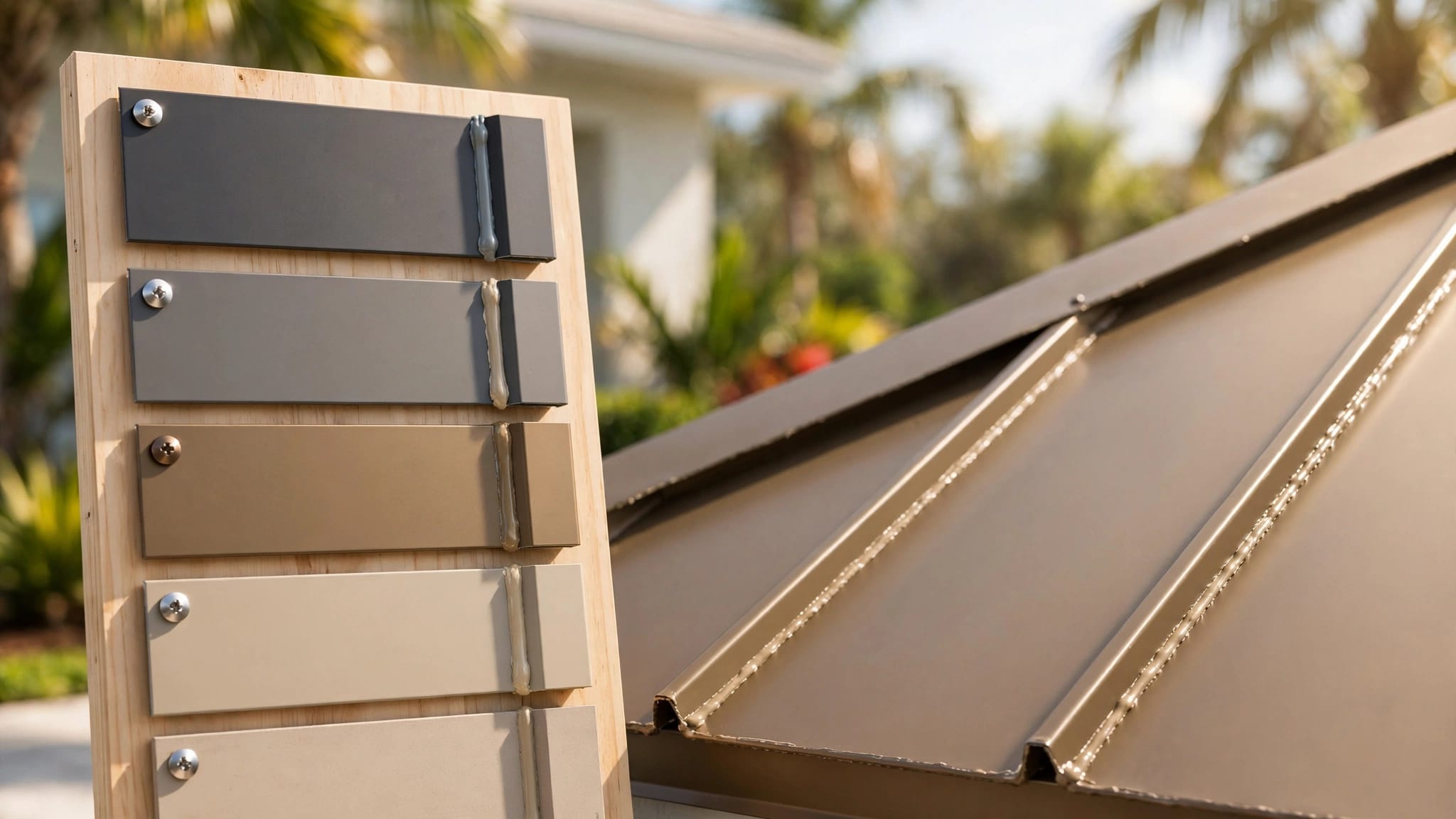
A quick reality check: “painted steel” is often Galvalume-coated steel under the paint, but not always. What you’re really choosing is the base metal, the metallic coating (if any), and the paint system on top.
For a coastal home, aluminum often wins on corrosion resistance, but steel can still be a solid choice if it’s the right coating, the right paint, and the details are done right. For a deeper material-only comparison, see Galvalume steel vs. aluminum differences.
| Option | Base metal and coating | Expected coastal corrosion resistance | Typical Florida cost range (material-only) | Maintenance needs | Best-fit coastal scenarios |
|---|---|---|---|---|---|
| Galvalume (bare) | Steel with aluminum-zinc alloy coating | Fair to good , depends on exposure distance and rinsing | ~$2.50 to $4.50 per sq ft | Moderate, rinse helps a lot | Budget-focused, not direct oceanfront, good drainage |
| Painted steel (SMP) | Steel (often Galvalume) with SMP paint | Good , paint protects, SMP varies by brand | ~$3.00 to $5.50 per sq ft | Moderate, watch chalking, touch up chips | Value builds, rentals, many coastal neighborhoods |
| Painted steel (PVDF) | Steel (often Galvalume) with PVDF paint | Good to very good , strong color and film durability | ~$4.00 to $7.00 per sq ft | Low to moderate | Higher-end homes, strong sun, visible roofs |
| Aluminum (bare or painted) | Aluminum sheet, sometimes painted | Very good , no red rust, watch galvanic and pitting | ~$4.50 to $8.50 per sq ft | Low to moderate | Oceanfront, bayside, heavy salt exposure |
| Aluminum (PVDF painted) | Aluminum with PVDF paint | Excellent , best combo for harsh salt plus sun | ~$6.00 to $10.00 per sq ft | Low | Long-life coastal roofs, premium specs |
Cost ranges vary by thickness, profile, color system, and order size, and they don’t include labor, tear-off, or hurricane-rated attachment upgrades.
If you’re torn between finishes, this breakdown of Galvalume vs. painted metal roof finish is a useful primer on why paint systems matter in Florida sun and moisture.
The corrosion problems you’ll actually see (and what causes them)
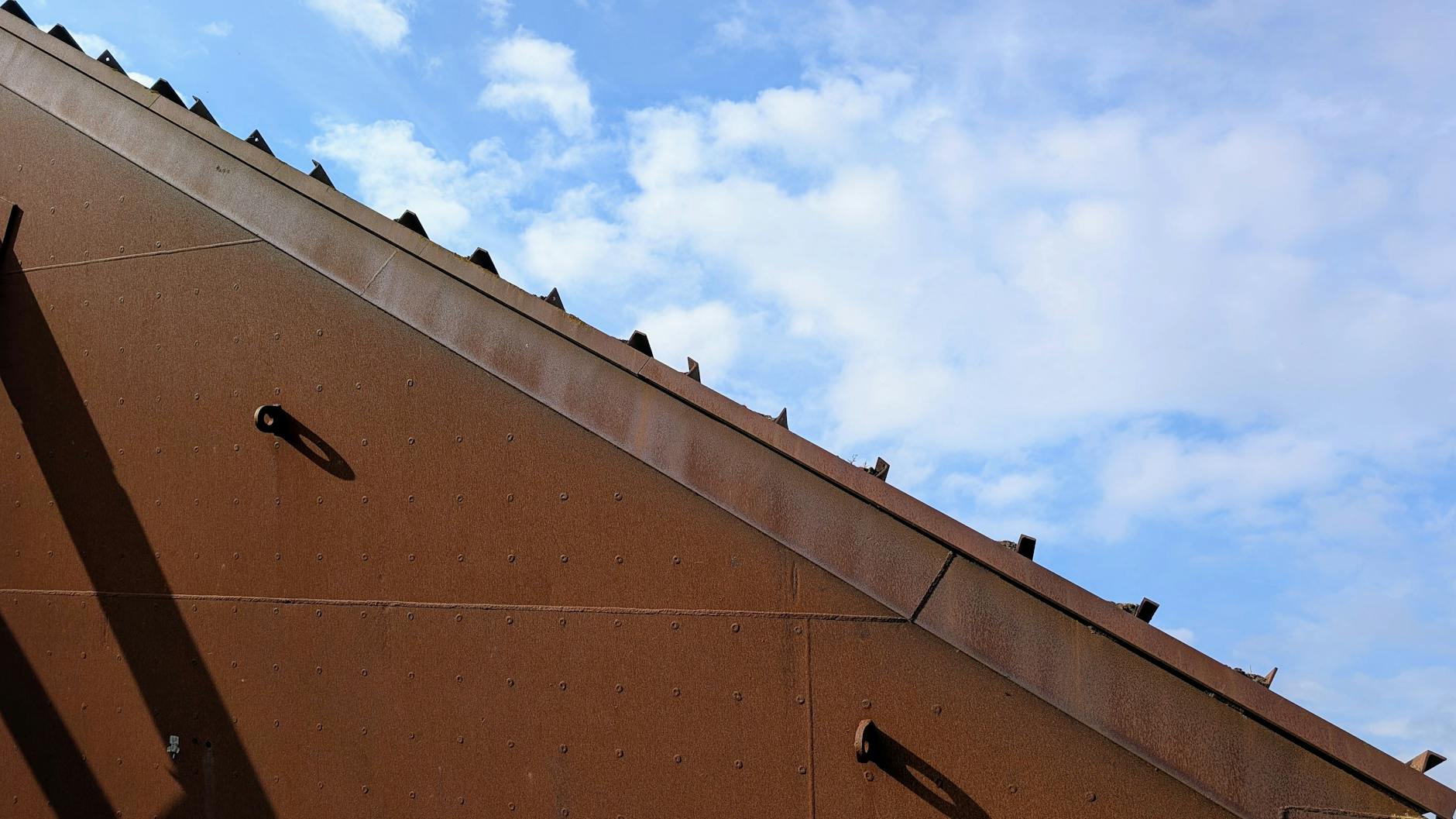
Photo by Andre
Coastal roofs rarely fail in one dramatic moment. Corrosion usually shows up in patterns. Knowing the pattern tells you what went wrong.
- Red rust (steel) : The classic orange-brown rust means the steel substrate is exposed. It often starts at scratches, cut edges, drill points, or places where water sits.
- White rust : A white, powdery oxidation that can occur on zinc or aluminum-zinc coatings when moisture gets trapped (tight stacks, wet debris piles, laps that stay damp).
- Pitting (aluminum) : Aluminum doesn’t get red rust, but it can pit in aggressive salt conditions, especially where deposits stay wet.
- Underfilm corrosion : Corrosion that creeps under paint after a chip or scratch. You’ll see bubbling, lifting, or paint flaking.
- Cut-edge creep : Corrosion that travels from a cut edge under the coating. Edge detailing and touch-up matter more on coast jobs.
- Fastener corrosion : Screws and washers are small, but they’re constant leak and rust points. In salt air, cheap plating fails early.
- Galvanic corrosion (dissimilar metals) : When two different metals touch in the presence of moisture, the less noble metal corrodes faster. Common coastal trouble pairs include aluminum panels touching copper , mixed-metal gutters and flashings, and incompatible fasteners. Treated lumber contact can also accelerate corrosion, so separation layers matter.
For more on coastal-specific material and install considerations, this overview of metal roofing in coastal areas gives good context on why system design matters as much as the panel.
Practical specs that slow corrosion in coastal Florida
Start with the profile. In salt air, standing seam usually ages better than exposed-fastener panels because it has fewer penetrations and hidden attachment points. Exposed-fastener roofs can still work, but they demand tighter maintenance, especially screw and washer replacement cycles.
Next is the coating choice. PVDF paint systems usually hold color and film integrity longer than SMP in harsh sun and salt, but the manufacturer and warranty language matter. If you’re choosing between metals and want a broader pros and cons view, this guide on choosing metal roofing materials for corrosion resistance helps set expectations.
Fasteners and accessories are where coastal jobs are won or lost:
- Use stainless fasteners where the exposure demands it (many contractors spec 300-series stainless near salt spray). Match fasteners to panel and warranty requirements.
- Isolate dissimilar metals. Use manufacturer-approved separators (tape, washers, compatible underlayments) so aluminum does not directly contact copper or other incompatible metals.
- Choose underlayment for heat and water, not just price. In valleys and eaves, peel-and-stick membranes reduce saltwater intrusion during wind events.
- Build in ventilation. A roof that can dry out resists corrosion longer.
- Protect edges. Clean hems, properly detailed drip edges, and sealed terminations reduce cut-edge creep and underfilm corrosion.
What to specify in your bid (so the coastal details don’t get “assumed”)
Keep this short, but specific:
- Panel material (Galvalume steel, painted steel type, or aluminum), plus thickness (gauge for steel, inches for aluminum).
- Coating system (SMP vs. PVDF), color, and manufacturer line if applicable.
- Panel profile (standing seam or exposed fastener), with Florida-appropriate wind attachment method.
- Fasteners (material grade, coating type, washer type), and confirmation they meet the environment.
- Dissimilar metal plan (how copper, aluminum, treated lumber, and steel are separated).
- Warranty terms for coastal zones (any mileage-from-coast limits, required cleaning, exclusions for salt spray).
- Cleaning plan (who does it, how often, and with what products).
Maintenance that actually helps (and what to avoid)
In coastal zones, a freshwater rinse is like brushing your teeth. It’s not glamorous, but it prevents problems.
Rinse roof surfaces and gutters with fresh water every 3 to 6 months in heavy salt exposure, and at least twice a year elsewhere near the coast. After hurricanes, rinse again once it’s safe.
Use mild soap, soft brushes, and lots of water. Avoid abrasive pads, harsh acids, and metal scrapers. Don’t use strong bleach mixes unless the panel maker allows it, and keep runoff away from landscaping and waterways.
Call a pro if you see widespread coating bubbles, active leaks, loose panels, fasteners backing out, or pitting that’s growing from season to season.
Conclusion
Coastal Florida metal roofing is less about picking a “magic” material and more about choosing a system that can handle salt, stay dry, and avoid bad metal pairings. Aluminum usually leads for salt air, painted steel can perform well with the right coating and details, and Galvalume needs smart planning near the water.
If you want your roof to look good in year 20, not just year 2, focus on panel profile, coating quality, fastener specs, and a simple rinse schedule . Salt never takes a day off, but your roof doesn’t have to surrender to it.
Share Our Metal Roofing News Articles
Related Posts