Metal Siding Fastener Placement Guide for Florida Wall Panels
Florida storms hit hard. One loose fastener on your metal siding can let wind tear panels free. You want walls that stand up to gusts, salt air, and rain. This guide shows you how to place fasteners right for strong wall panels.
Wrong placement leads to leaks, distortion, or total failure. Codes demand tight schedules, especially in high-wind spots. Follow manufacturer instructions, engineered plans, and Florida Building Code rules every time. Let's break it down so your install passes inspection and lasts.
Why Fastener Placement Drives Wall Strength in Florida
Wind doesn't lift evenly across walls. Corners and edges face the worst pull. Metal siding fastener placement decides if panels stay clamped or peel off.
Florida's 9th Edition Building Code, effective now in 2026, sets zone-based spacing. Field areas allow up to 12 inches between fasteners. Edges and corners need them every 6 inches for uplift resistance. This matches ASCE 7 wind maps and local rules.
Coastal exposure adds pressure. Category C or D sites demand corrosion-resistant parts. Salt air eats cheap screws fast. Always check your panel's Florida Product Approval for tested patterns.
Poor placement distorts panels or misses framing. That creates gaps for water. Strong installs use exact spots from the maker's guide. In short, placement isn't guesswork. It follows tested data for your wind zone.
Know Your Wall Zones Before Drilling
Walls split into zones like roofs do. Field gets lighter loads. Perimeters fight harder suction.
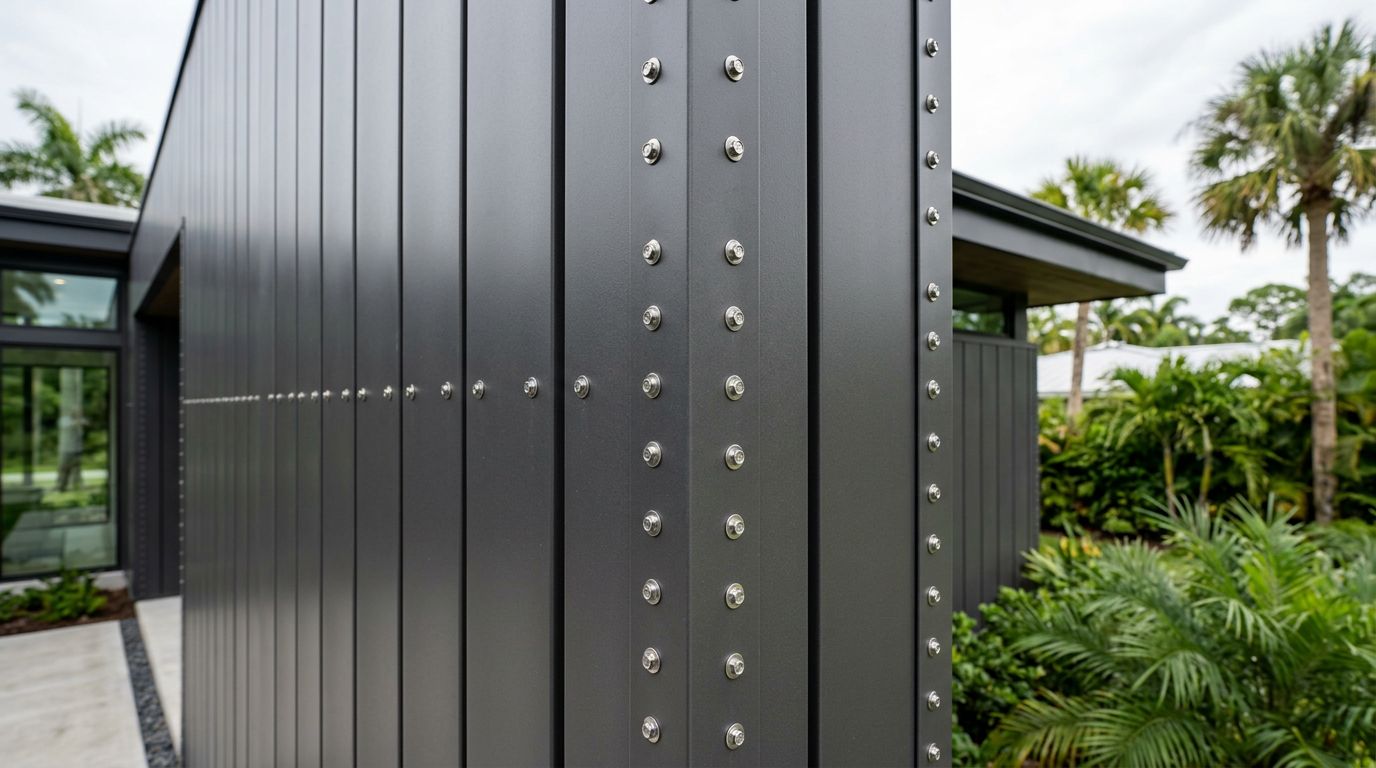
Start with field zones. Space fasteners 12 inches on center here. Place them in flat areas beside ribs, not on top. This clamps panels tight without buckling metal.
Edges demand more. Drop to 9 inches or closer. Corners go tightest at 6 inches. High-Velocity Hurricane Zones like Miami-Dade and Broward enforce this strictly. Non-HVHZ areas still zone by exposure and height.
Mark zones first. Use chalk lines along framing. Verify against engineered drawings. For example, PBR wall panels often tighten at transitions. Check details in PBR panel fastener placement for Florida roofs, as they apply to walls too.
Slope and height matter. Taller walls or sloped panels see higher forces. Your approval sheet shows the map. Layout prevents drift during install.
Pick Fasteners Built for Florida Conditions
Fasteners do more than hold. They seal and resist pullout.
Choose #10 or #12 wood screws for framing. Use self-drilling for steel. All need neoprene seal washers. These compress for watertight fits.
Corrosion rules coastal jobs. Go stainless steel or coated carbon steel. Avoid mixing metals; it sparks rust. Florida approvals list exact types, like RSRS nails for sheathing.
Drive into framing, not just sheathing. Aim for 1-inch penetration minimum. Overdriving crushes washers and leaks. Underdriving leaves play. Snug is best: washer dimples slightly, no gap.
Seal washers matter most in rain. They flex with metal movement. Without them, heat cycles open paths for water.
Tested assemblies pair fastener with panel gauge. A 29-gauge wall needs different embedment than 26-gauge. Match your substrate: wood studs, steel purlins, or sheathing.
Step-by-Step Guide to Fastener Placement
Prep saves headaches. Confirm panel profile, approval, and plans first.
Locate framing members. Panels fasten through to solid support. Skip hollow spots.
Position screws precisely. For ribbed panels like PBR or R-panel, drill next to major rib in the flat. Keep 3/8 inch from edges, 2 inches from cuts.
Space by zone. Field: 12 inches. Edge: 9 inches. Corner: 6 inches. Stagger rows for even hold.
At sidelaps, add stitch screws every 12-18 inches. Use butyl tape under laps first.
For end laps or trim, follow detail drawings. Closures block wind entry.
Drive perpendicular. Level gun keeps washers flat. Check first row before full run.
Inspect as you go. Washer seats firm? No distortion? Good. Fix early.
This matches Roof Application Standards 117 and 137. Always defer to your specific approval.
Avoid These Fastener Pitfalls on Florida Walls
Crews mess up spacing most. They use field patterns at edges. Storms expose that quick.
Overdriving kills seals. Panels wave then leak. Practice on scrap.
Wrong substrate bites too. Sheathing-only holds light. Frame penetration counts for wind.
Leaks hide at transitions. Skip closures or sealant, and water sneaks in.
Coastal crews forget coatings. Galvanized fails fast in salt. Upgrade early.
Distortion comes from rib-top screws. They buckle under load. Stick to flats.
Inspectors flag mismatches. Show your approval and drawings on site.
For similar roofs, see 5V crimp fastener placement guide for Florida roofs. Wall rules align close.
Fasteners Seal Your Walls Against Florida Storms
Right metal siding fastener placement turns walls into storm shields. Zone spacing, corrosion picks, and snug drives keep panels flat and dry.
Always start with manufacturer instructions and Florida approvals. Local codes and engineers fill gaps. Your walls deserve that care.
Skip shortcuts. A solid install means peace when winds howl. Check plans twice, drill once.
Share Our Metal Roofing News Articles
Related Posts