PBR Panel Fastener Placement for Florida Roofs
A metal roof can handle years of sun, rain, and storm pressure, but one bad screw pattern can become the weak link. In Florida, that weak link shows up fast, because wind uplift, salt air, and heat cycles don't give roofing shortcuts much mercy.
PBR panel fastener placement matters for homeowners, contractors, and property managers alike. Still, there is no universal screw map that fits every job. Fastener location and spacing can change by panel profile, roof shape, slope, wind zone, substrate, product approval, and engineered design. That's why the safest approach is simple, follow the current Florida Building Code, local jurisdiction rules, and the panel manufacturer's instructions for the exact assembly being installed.
Why Florida changes the fastening conversation
PBR is a through-fastened panel, so the screws do more than hold metal down. They help the roof resist uplift, shed water, and stay tight as the panel moves with heat. Think of the panel like a ruler on a table. If it's held in the right places, it stays flat. If it's pinned the wrong way, stress builds and trouble starts.
Florida makes those stakes higher. Uplift pressure is not even across the roof. Corners, eaves, rakes, and ridges usually see the highest forces. Therefore, a fastening pattern that works in the field may not work at the perimeter. Some tested Florida assemblies tighten spacing at edges and corners, sometimes as close as 6 inches on center in high-wind conditions, while the field may allow wider spacing. That is not a default schedule, though. It is only an example of how much approved layouts can change.
On a Florida roof, the field is not the edge. Fastener placement near the perimeter often carries the hardest load.
As of March 2026, Florida projects should also be checked against current product approvals and tested uplift data, not just habit. In Miami-Dade and Broward, this is even stricter because HVHZ rules apply. Elsewhere in the state, local wind speeds, exposure, and roof geometry still drive the design. Larger reroofs and repair scopes may also trigger current code requirements, so copying an old screw pattern is a gamble.
Where PBR screws usually go, and where crews get in trouble
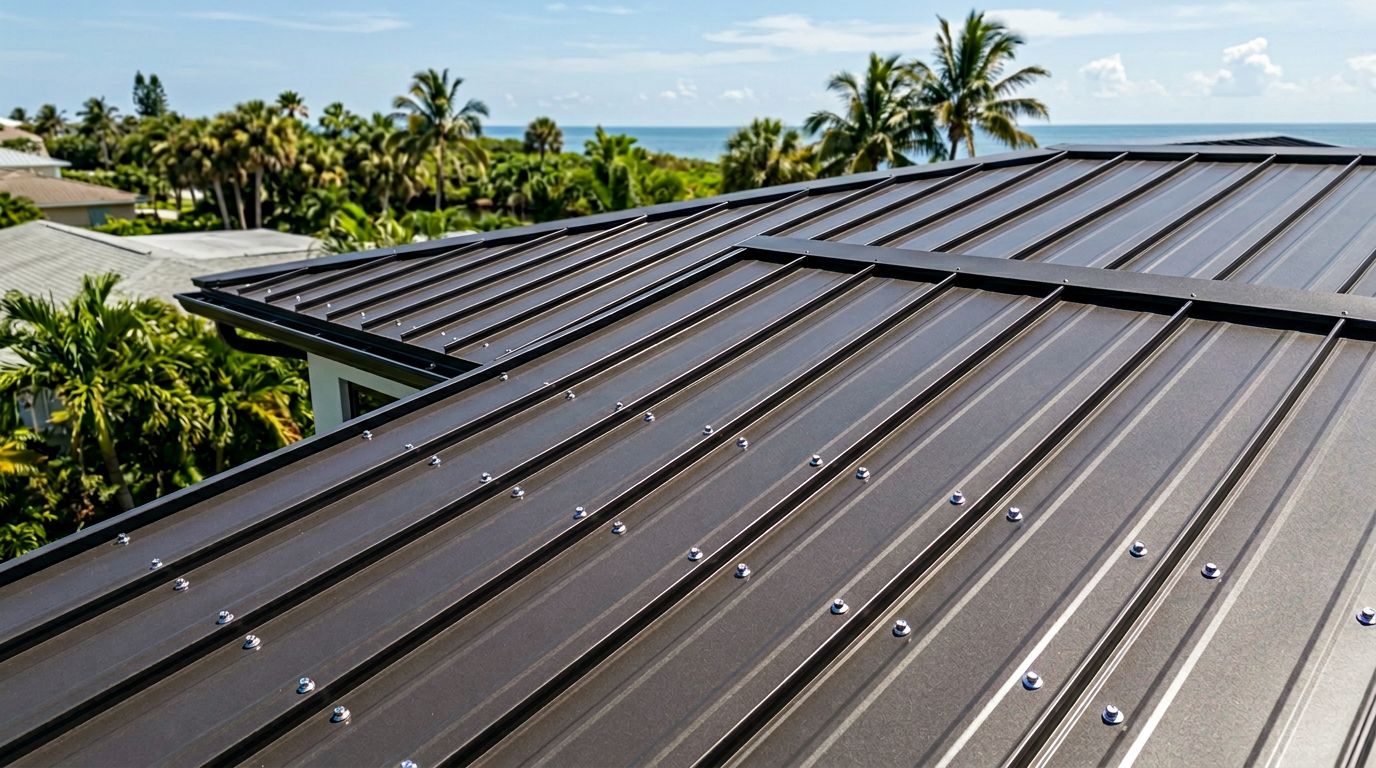
On many PBR roof systems, the main roof fasteners go in the flat bearing area next to the major rib , not on top of the high rib. That placement usually gives the washer a better seat and clamps the panel tighter to the support below. But "usually" is the key word here. Some profiles, trims, or tested assemblies call for different locations, so the panel manual always wins.
Problems start when installers treat every exposed-fastener panel the same. A screw driven in the wrong place can distort the panel, miss the structure, or trap movement. A screw driven at an angle can wrinkle the washer and leave a leak path. An overdriven screw crushes the washer. An underdriven one leaves a gap. None of those mistakes look dramatic on day one, yet Florida rain will find them.
This quick table shows the usual decision points that need verification:
| Roof area | Typical fastener intent | What to verify |
|---|---|---|
| Panel field | Clamp panel to support | Exact screw location on the profile, spacing, support alignment |
| Sidelap | Tie overlapping panels together | Stitch screw type, spacing, and lap sealant requirements |
| End-lap | Hold lap tight against uplift and water | Lap length, butyl tape placement, extra fasteners |
| Trim and transitions | Lock edges without creating leaks | Detail-specific screw type, closure strips, sealant layout |
The big takeaway is that placement is about more than "where the screw fits." It's about where the tested assembly needs restraint. It also has to account for movement. Florida heat expands long metal runs every day, which is why PBR attachment strategies for metal roof thermal cycling in Florida deserve attention before the first panel goes down.
Substrate, slope, and salt air all affect the fastener plan
Fastener placement changes when the substrate changes. Over steel purlins, the screw has to match the steel thickness and drilling range, and it must achieve the required penetration. Over wood-based decks or framing, thread style, embedment, and the approved assembly matter just as much. In other words, a screw that works on light-gauge steel may be the wrong choice for wood, even if the panel looks identical from above.
That's why approved details matter so much on Florida jobs. A PBR panel installed over open framing is not the same system as one installed over a solid deck with underlayment. The screw type, washer, and pattern may all shift. So will the water-management details.
Slope matters too. Exposed-fastener panels depend on gravity and tight seals. When the roof gets close to the lower limit for the profile, lap details and fastener accuracy become less forgiving. If the pitch is borderline, review PBR exposed-fastener roof slope requirements in Florida before finalizing the attachment plan.
Coastal conditions add another layer. Salt air shortens the life of weak coatings, cheap screws, and mismatched metals. Because of that, coastal projects often need upgraded corrosion resistance, subject to the panel approval and manufacturer guidance. Stainless steel, long-life coated fasteners, and compatible accessories can all come into play. What should never happen is mixing metals or finishes without checking compatibility first.
A practical field check before the roof is fully fastened
Even a good panel can fail if the layout gets loose. Before the crew runs full speed, slow down and verify the first installed area.
- Match the panel to the paperwork : Confirm the exact profile, gauge, fastener type, and approval sheet.
- Map roof zones : Mark field, edge, and corner areas so spacing doesn't drift where uplift is highest.
- Snap support lines : Screws should land where the approved assembly wants them, not where they look straight from the ladder.
- Check washer compression : The washer should seat firmly without mushrooming or splitting.
- Inspect the first few runs : It's easier to fix ten screws than five hundred.
For homeowners and property managers, this is also the right time to ask for the product approval, installation instructions, and any engineer-issued fastening plan. A trustworthy crew won't treat that request like a nuisance.
The bottom line
Good PBR panel fastener placement is not guesswork, and it's not one-size-fits-all. Florida roofs need fastening plans that match the panel profile, substrate, wind exposure, corrosion conditions, and approved assembly. When the screw pattern follows the code, local requirements, and manufacturer instructions, the roof has a much better shot at staying tight when the next storm arrives.
Share Our Metal Roofing News Articles
Related Posts