When to Use Rivets Instead of Screws on Metal Roof Trim
A trim detail can look clean on day one and still fail later if the fastener choice is wrong. On Florida roofs, heat, wind, and salt air make that choice matter even more.
Rivets and screws both belong in metal roofing work, but they solve different problems. The right answer depends on what the trim connects to, how visible the fastener will be, and whether you need to service that part later.
When rivets make more sense than screws
Rivets are the better fit when the connection is metal to metal and the back side is hard to reach. That comes up often on trim joints, hems, corners, and capped edges where you only have access from one side.
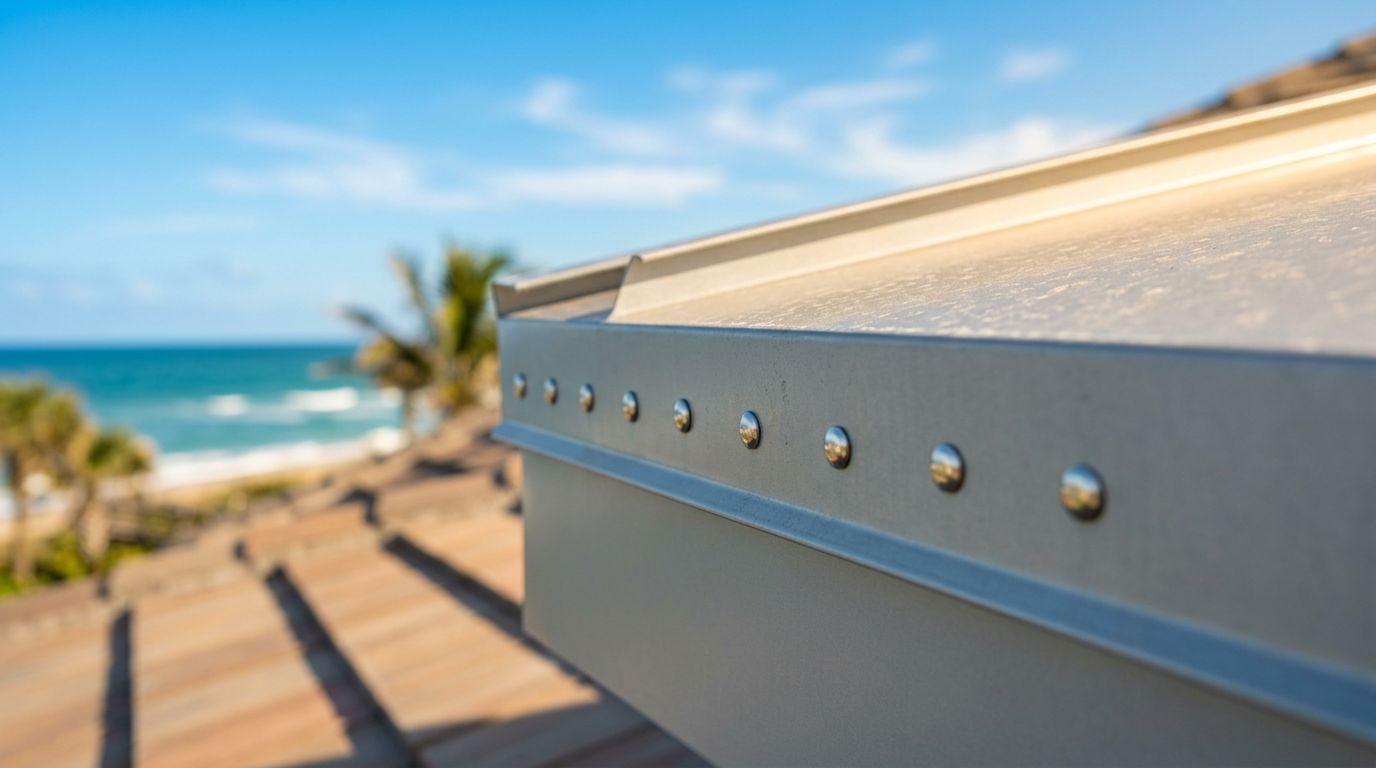
They also make sense when the visible face matters. A rivet head is smaller than most screw heads, so the detail can look flatter and more finished. On color-matched trim, that smaller footprint can keep the eye on the roof line instead of the hardware.
Rivets are common on pieces that do not need to be removed often. If you are fastening a splice, a corner, or a return bend that will stay put for years, a blind rivet gives you a permanent connection without needing a wrench behind the metal. That is useful on custom work and on trim profiles with tight bends.
This is also where the right accessory package helps. If the job calls for concealed trim joints or metal-to-metal fastening, stainless steel rivets for metal trim fit naturally with closures and sealants.
Rivets are strongest where the joint is tight, the back side is hidden, and the finished look matters.
One more point matters here. Rivets resist shear well, so they do a good job when two pieces of trim want to slide past each other. That makes them a smart pick on laps and joined edges that stay under stress from wind or thermal movement. They also avoid some of the washer issues that come with screws on exposed faces, because there is no gasket to overcrush or age out in the sun.
Where screws still win
Screws still beat rivets when the trim has to clamp firmly into wood or light-gauge steel. They also win when you need to back the fastener out later for repair, panel replacement, or rework.
That matters on many edge details. A drip edge or rake trim often needs a fastener that pulls the metal tight to the substrate. In that setup, the screw and washer do more than hold the piece in place, they also help seal the penetration. If the trim is moving against wood decking, screws usually give you the grip you need.
Screws are easier to service too. If a piece shifts, you can remove one and replace it without drilling out a rivet. For maintenance work, that saves time. It also helps when a contractor needs to confirm fit before the final fasten.
The catch is simple. Screws need the right length, washer, coating, and embedment. An overdriven screw can distort the trim or damage the seal. A screw that is too short can pull out. A screw that is too long can create problems on the back side. For a broader look at hardware choices, choosing metal roof fasteners is a useful starting point.
Screws also make more sense when the trim is part of a system that expects periodic removal. That includes some wall flashings, edge repairs, and temporary fit-ups during layout. Rivets can hold those areas, but they do not make service work any easier.
Rivets vs screws at a glance
This quick comparison helps when the job is still on the bench, not on the roof.
| Factor | Rivets | Screws | Better fit |
|---|---|---|---|
| Holding style | Permanent metal-to-metal lock | Mechanical clamp into wood or steel | Depends on substrate |
| Appearance | Smaller, flatter head | More visible head and washer | Rivets on exposed trim faces |
| Weather resistance | Good when used correctly in metal-to-metal joints | Good when washer, coating, and embedment are right | Tie, based on detail |
| Thermal movement | Good on laps and joints that need to stay snug | Better when the design expects movement at the deck | Depends on trim profile |
| Maintenance | Harder to remove | Easier to replace | Screws for serviceable parts |
| Best use | Hidden or tight trim joints | Trim that pulls into substrate | Match the fastener to the joint |
The takeaway is simple. Rivets help when the joint is the point, while screws help when the substrate is the point. In other words, the fastener should match what is doing the work.
That rule matters even more when product approvals spell out the fastening pattern. A trim piece can look right and still miss the mark if the fastener type, size, or spacing does not match the tested assembly.
Florida conditions change the answer
Florida roof trim lives with more heat swings than many people expect. A dark afternoon roof can get hot fast, then cool after a storm. That movement matters because trim expands and contracts every day.
Rivets can help on metal-to-metal trim pieces that need a stable, tidy connection. They are also useful where you want to avoid a washer sitting on the face of the trim and aging in the sun. Still, rivets are not a cure-all. If a trim piece must pull hard against a deck, screws usually handle that job better.
Wind exposure matters too. On corners, ridges, and eaves, the edge metal sees more uplift than the middle of the roof. Some details are built for rivets. Others are built for screws. The approval or installed system should decide that, not habit. On jobs that must meet Florida rules, trim attachment approvals matter as much as the fastener itself.
Salt air adds another layer. Near the coast, corrosion resistance becomes part of the fastener decision, along with the trim metal itself. Stainless components are often the safer choice where moisture hangs around and the hardware stays exposed. That is one reason corrosion-resistant roofing accessories belong in the conversation early, not after the trim is already up.
Thermal movement also changes how you fasten long trim runs. If every point is locked too rigidly, the metal can oil-can, twist, or telegraph stress through the finished face. A better detail may use screws at one end and rivets at another, or rivets on laps with screws at the substrate. The goal is a trim line that stays straight without fighting the roof.
On long eave and rake runs, that balance matters even more. A piece that is pinned too hard can buckle. A piece with too little grip can chatter in the wind. The right fastener pattern gives the trim room to move without loosening.
Common trim details that often favor rivets
Some trim jobs lean toward rivets because the shape or access makes screws awkward. The best way to think about it is by visibility and access. If you can only reach the joint from one side, rivets usually move up the list.
- Hemmed edges and returns : These often leave little room for a screw head. A rivet fits cleaner and keeps the line tight.
- Lap splices on long trim runs : When two sections overlap, rivets can lock the pieces together without a bulky head on the face.
- Corners and end caps : Tight bends often make backside access impossible, so blind riveting is the practical option.
- Visible decorative trim : On exposed fascia or accent pieces, a smaller head can keep the finish looking intentional instead of patched together.
Custom work benefits from this planning. If a trim needs a specific return, lap, or corner treatment, the attachment method should be part of the order, not an afterthought. The custom metal trim ordering guide is helpful when you want the piece, the profile, and the fastener plan to line up before install day.
A good field example is a rake trim splice on a long Florida roof edge. If the trim is metal to metal and the seam is visible from the ground, rivets often give a cleaner result. On a drip edge tied into wood decking, screws still make more sense because they pull the piece tight to the substrate.
Contractors often use both fastener types on the same roof. Screws hold the trim to the structure. Rivets stitch the visible metal pieces together. That mix is normal, and it usually gives the best balance of strength, appearance, and serviceability.
Conclusion
Rivets belong on metal roof trim when the joint is metal to metal, access is limited, and the finished look matters. Screws still win when the trim has to clamp into wood or steel and stay easy to service.
That decision gets sharper in Florida, where heat, wind, and salt air all test the edge details. The best trim job is the one that matches the profile, the substrate, and the approved fastening pattern, not the one that uses the same fastener everywhere.
If a trim detail will be seen, touched, and exposed to Florida weather, choose the fastener that fits the job, not the habit.
Share Our Metal Roofing News Articles
Related Posts