Self-Drilling vs Self-Tapping Screws for Metal Roofing
A metal roof can leak at a fastener long before the panels wear out. That's why self-drilling vs self-tapping screws is not a small detail, especially on Florida roofs where heat, rain, and wind test every connection.
The right screw depends on the panel, the framing, and the thickness of the metal it goes into. A screw that works on thin trim can fail on steel purlins, and a fastener that saves time can still leave a weak seal if it's the wrong type. The difference starts at the tip.
What changes between the two screw types
The simplest way to separate them is by how they start the hole.
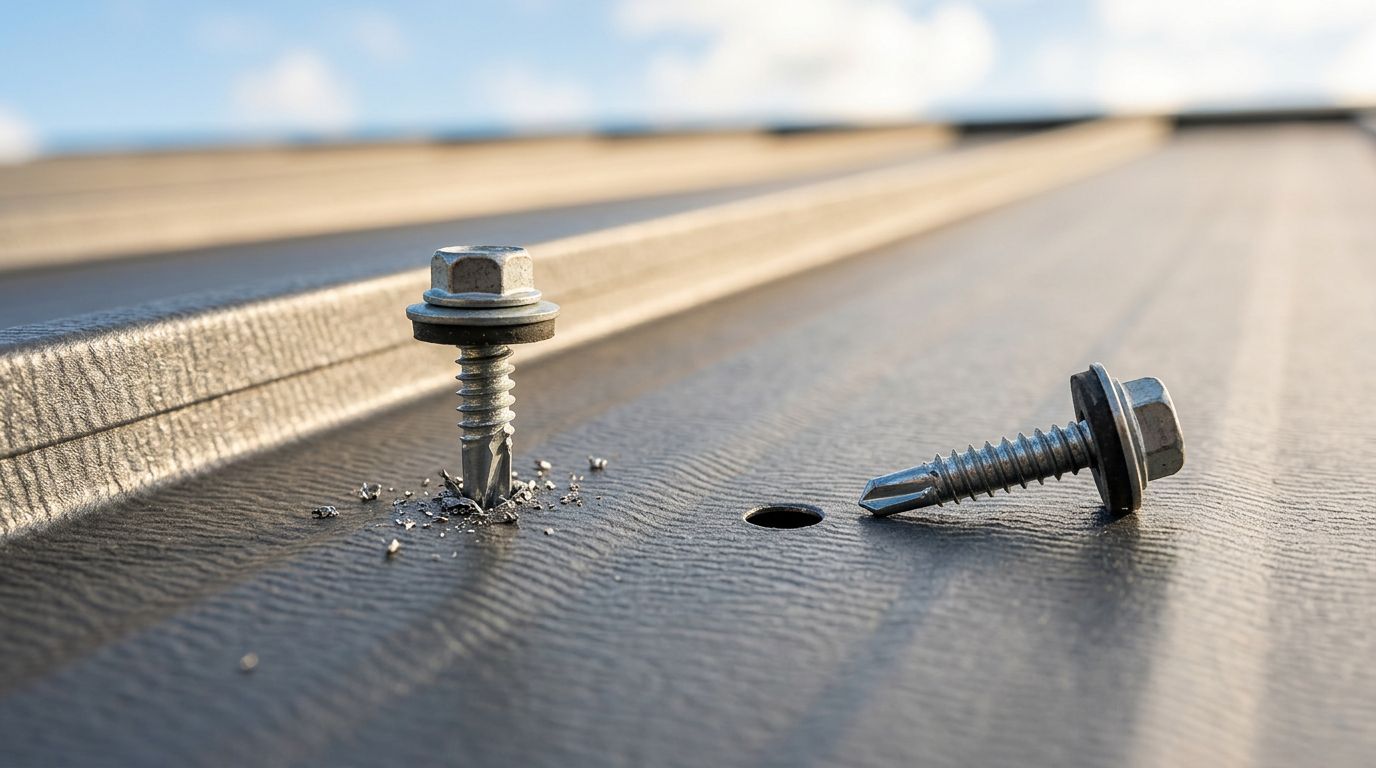
A self-drilling screw has a drill-point tip. It cuts through the metal and then forms threads as it goes. That means one tool, one motion, and no separate pilot hole in most metal roofing jobs. On a roof, that matters because fewer steps usually means faster installation and fewer alignment mistakes.
A self-tapping screw cuts threads too, but it usually depends on a pre-made hole when you're fastening into metal. In other words, it taps the threads after the opening already exists. Some people use the term loosely, so the key question is not the label alone. It's whether the screw has a drill-point tip or needs a pilot hole.
For roofing, that difference affects everything from labor time to leak risk. If you are shopping for fasteners and want a broader look at screw types, the choosing the right fasteners for your metal roof page is a useful place to compare options.
Self-drilling screws are the faster choice on most metal roofing jobs. Self-tapping screws still have a place, but they fit more limited situations.
Where each one belongs on a metal roof
On most exposed-fastener metal roofs, self-drilling screws are the default choice. They work well when you fasten panels to steel purlins, steel framing, or other metal supports. They also help when you need to keep production moving on a larger roof.
That speed matters on long panel runs. It also helps when you are fastening trim pieces, rake edges, or closures where alignment is tight. With a drill-point screw, the bit does the work and the screw follows the same path. That clean path gives the washer a better chance to seat evenly.
Self-tapping screws make more sense when the metal is thin and the hole is already there, or when the job calls for careful, slower placement. They may show up in light trim work, small repairs, or situations where you pre-punch the holes first. In roofing, though, they are less common for fresh panel installation because the extra step slows the job.
There is one important exception. If your roof fastens to wood, you usually need wood screws with sealing washers, not a standard metal self-tapper. The substrate changes the answer.
For a roof package that includes panels, trim, and fasteners, it helps to plan the parts together. A complete metal roof material list keeps the order cleaner and cuts down on last-minute shortages.
Self-drilling vs self-tapping screws at a glance
A side-by-side view makes the tradeoff easier to see.
| Feature | Self-drilling screws | Self-tapping screws | Roofing takeaway |
|---|---|---|---|
| Tip style | Drill-point tip | Sharp point that cuts threads | Drill-point screws work faster on metal roofs |
| Pilot hole | Usually not needed | Usually needed in metal | Pilot holes slow the job |
| Best substrate | Medium and heavier-gauge steel | Thin metal or pre-drilled holes | Thickness drives the choice |
| Install speed | Faster | Slower | Time savings add up on full roofs |
| Typical roofing use | Panels, purlins, trim, steel framing | Light trim, repairs, thin sheet | Match the screw to the support |
| Seal consistency | More consistent path for the washer | More chance of off-center holes | Better alignment helps reduce leaks |
The table points to a simple rule. If the screw has to work hard in steel, self-drilling is usually the better fit. If the metal is thin and the hole is already prepared, a self-tapping screw can still do the job.
The washer only seals well when the screw seats cleanly and straight.
Sealing matters as much as the screw
On a metal roof, a screw is never just a screw. It is part of a seal system.
That system usually includes the head shape, the washer, the coating, and the way the screw is driven. A washer that compresses evenly keeps water out. A washer that is crushed, twisted, or barely compressed can leak early.
For exposed-fastener panels, bonded EPDM washers are common because they help seal the hole under the screw head. The screw should tighten enough to seat the washer, but not so much that it flattens it into a damaged ring. Overdriving is a common mistake. It can strip the hole, bend the panel, and weaken the seal at the same time.
Corrosion resistance matters too. Florida roofs see plenty of sun, moisture, and salt exposure in some areas, so the fastener finish needs to match the roof system and the environment. The screw, washer, and panel coating should work together, not fight each other. If you are adding trim, closures, sealant, and replacement parts, the metal roofing accessories page shows how those pieces fit into the full roof assembly.
A good fastener can still fail if the seal is wrong. A weaker screw with a proper seal is often better than a stronger screw installed badly.
Mistakes that shorten roof life
Most fastener problems come from basic install errors, not from the screw name on the box.
- Using self-tapping screws in thick steel without a pilot hole slows the job and raises the chance of a bad seat.
- Overdriving the screw crushes the washer and can distort the panel around the hole.
- Choosing the wrong length leaves too little bite or pushes too far through the framing.
- Mixing old screws with new ones creates uneven wear and inconsistent sealing.
- Reusing fasteners with damaged washers invites leaks later.
- Fastening into the wrong substrate, such as treating wood like steel, leads to poor hold and poor sealing.
A roof can look fine on day one and still fail because a few fasteners were wrong. That is why the screw choice matters at every penetration, not only at the field panels.
How to choose the right screw for the job
Start with the material you are fastening into. If the panel or trim goes into steel, especially on a roof where speed matters, self-drilling screws are usually the better choice. They save time, keep the holes cleaner, and reduce the chance of misalignment.
If the metal is thin and the holes are already made, self-tapping screws can still work. They are more likely to fit light-duty trim or repair work than a full panel install. For most new metal roofs, though, they are the slower option.
Then look at the sealing parts. A roof fastener has to bite, but it also has to seal. That means the washer, coating, and length matter as much as the point style. If you are building a full order, the fastener count should sit beside the panels, trim, and accessories, not as an afterthought.
The easiest way to stay organized is to plan the roof as a system. That keeps the screw choice tied to the panel profile, framing type, and accessory list instead of a guess made at the supply counter.
Conclusion
For most metal roofing jobs, self-drilling screws are the better fit because they drill and fasten in one step. They save time, handle steel better, and make it easier to get a clean seal under the head.
Self-tapping screws still have a place, but mostly on thinner metal or pre-drilled work. The best choice is the one that matches the substrate, the panel, and the seal you need.
If you keep those three things in mind, the fastener stops being a small part and starts doing its real job, holding the roof tight and dry for the long haul.
Share Our Metal Roofing News Articles
Related Posts