Factory-Punched vs. Field-Drilled Standing Seam Panels
A small hole in a metal roof panel can affect wind resistance, water control, and panel movement for decades. That is why the choice between factory-punched and field-drilled standing seam panels deserves attention before materials arrive on site.
For Florida homeowners, contractors, and building professionals, the right approach depends on the panel profile, attachment method, roof design, and approved assembly. The manufacturer's details, rather than jobsite habit, should guide every fastener location.
Why Fastener Holes Matter on Standing Seam Roofs
Standing seam roofing hides most fasteners beneath adjoining panels or within seam connections. That clean appearance is one reason many owners choose it, but concealed fasteners also demand careful placement.
A hole can serve several purposes. It may hold a panel's fastening flange, attach a clip, secure trim, or accommodate a penetration detail. Each purpose calls for the right fastener, spacing, substrate, and sealant method.
The panel is part of a tested assembly
A standing seam roof does not earn a wind rating based on panel shape alone. The approved system can include panel gauge, seam style, clips or fastening flanges, deck type, underlayment, fastener spacing, and edge details.
Therefore, changing a hole pattern can change the assembly that was tested. In high-wind areas, that change may affect permitting, inspection, warranty coverage, or wind-uplift performance.
A field fastener placed outside the approved detail can turn a concealed-fastener roof into an untested assembly.
For projects in Florida, review the applicable Florida Product Approval and Miami-Dade NOA requirements before ordering panels, clips, and trim.
Holes also affect thermal movement
Metal expands as roof temperatures rise and contracts as temperatures fall. Long panels feel that movement more than short ones. A fastening method that locks a panel too tightly can cause oil canning, distorted seams, elongated holes, or stress at the trim.
Some profiles use pre-punched slots that allow controlled movement. Others depend on fixed and sliding clips. The correct approach varies by manufacturer and panel system, so installers should never assume one detail fits every roof.
Factory-Punched Standing Seam Panels Offer Predictable Attachment
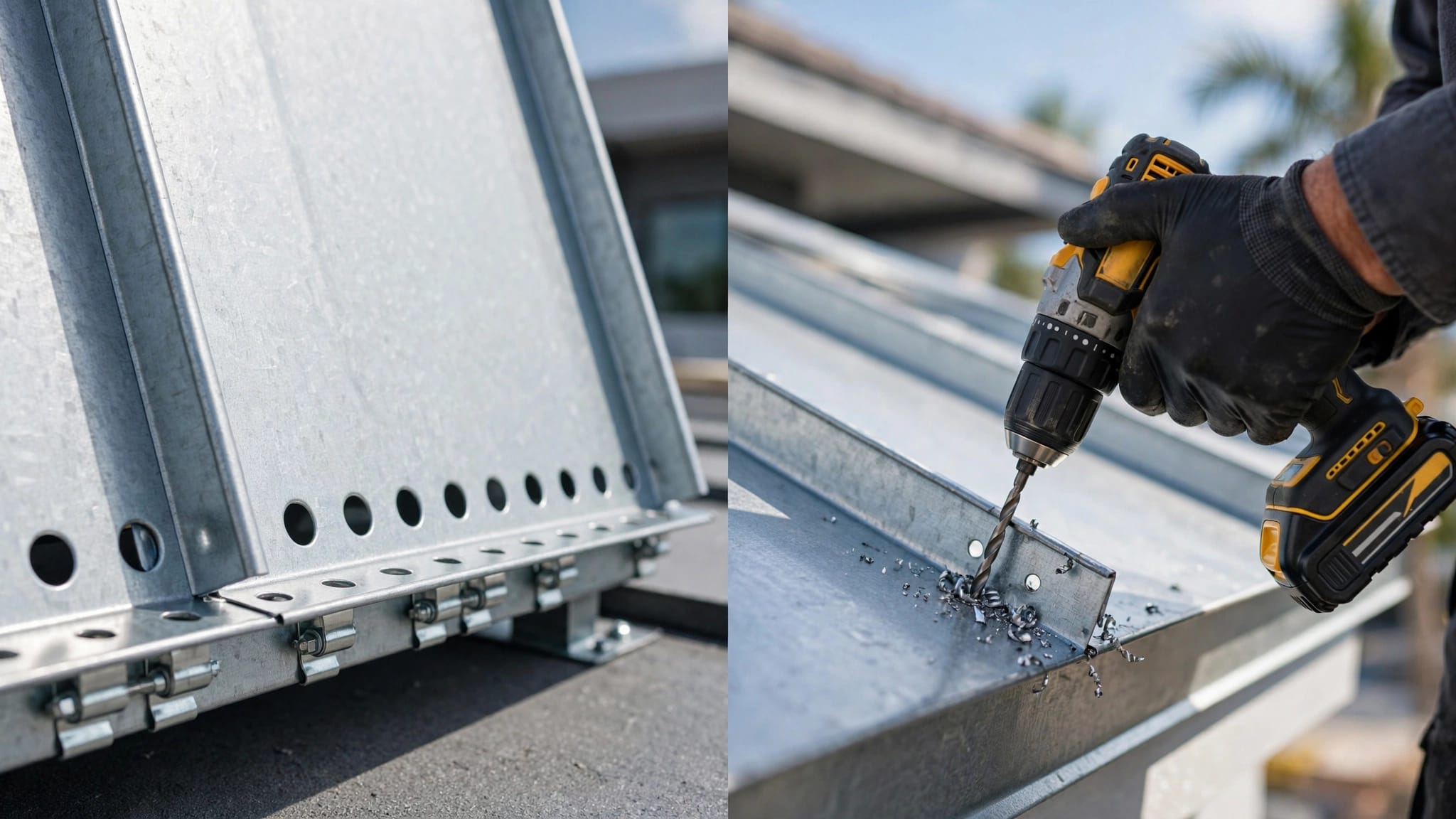
Factory-punched panels arrive with holes or slots formed at planned intervals and locations. Most often, these openings appear in a concealed fastening flange or nail strip. The next panel covers that area when the seam engages.
Because the manufacturer creates the pattern, factory punching can support faster, more consistent installation on standard roof runs. It also reduces the chance that a crew will place a fastener too close to an edge or miss the intended attachment line.
Benefits of factory-punched panels
Pre-punched holes help crews maintain a repeatable attachment pattern. This is especially useful on large residential roofs, agricultural buildings, and commercial slopes with long, straight eaves.
Factory punching can offer several practical advantages:
- Hole spacing is consistent across the panel run, which helps installers follow the approved attachment schedule.
- Crews spend less time measuring and marking fastener locations at the roof.
- Predrilled or slotted fastening flanges can help control panel movement when the system calls for them.
- A uniform pattern makes quality checks easier before the next panel covers the fasteners.
Factory-punched standing seam panels can reduce jobsite decisions, but they do not remove the need for careful layout. The first panel must still run square to the eave and ridge. If it starts out of line, every panel after it carries the error.
Limits of a pre-punched pattern
A factory pattern fits the design conditions it was made for. It cannot correct a crooked deck, uneven framing, an out-of-square roof, or an unexpected obstruction. Crews may need different detailing at valleys, dormers, transitions, and wall conditions.
In addition, a pre-punched nail-strip panel does not automatically meet every wind-load requirement. The fastener type, deck thickness, spacing, and perimeter conditions still must match the applicable approval.
Field-Drilled Panels Allow Adjustments, With More Risk
Field drilling means the installer creates attachment holes at the jobsite. This may occur in a fastening flange, trim piece, flashing, accessory, or, in some cases, a panel detail approved by the manufacturer.
The method offers flexibility where roof geometry varies. However, it shifts more responsibility to the installer. A crew must measure carefully, drill clean holes, use the specified fasteners, and protect the finish from metal shavings.
Where field drilling makes sense
Field drilling can be appropriate when fabrication dimensions must respond to actual site conditions. Custom flashing often needs field adjustments at irregular walls, masonry transitions, equipment curbs, or older roofs that do not follow perfect lines.
It may also be part of a manufacturer-approved attachment procedure for a particular panel profile. In that case, the drawings should state the hole diameter, location, fastener type, and required spacing.
Field drilling should not become a shortcut for a missing detail. If a panel does not fit, the installer should first check the layout, trim dimensions, panel length, and manufacturer instructions.
Drilling through a panel face needs written approval
Drilling through the visible face of a standing seam panel creates an exposed penetration. That detail may be appropriate for a properly designed accessory or repair, but it requires a compatible sealing method and approval from the system manufacturer.
A screw with an exposed washer does not belong in the panel pan simply because it pulls the metal tight. Water can pond, coatings can be damaged, and thermal movement can work against the fastener over time.
For clip-fastened systems, it is also important to understand nail-strip versus clip-fastened standing seam options. Clips often handle both attachment and thermal movement, so drilling through the wrong area can interfere with the panel's intended function.
Water Control Depends on More Than a Tight Screw
A roof can look secure on installation day and still develop leaks if fastener holes, overlaps, sealants, and trim do not work together. Water control begins with the roof deck and underlayment, then continues through every panel and flashing connection.
Factory-punched fastening flanges are usually concealed under the next panel. That location helps protect fasteners from direct weather exposure. Yet installers still need to seat panels fully and engage the seam correctly.
Keep swarf away from the finish
Drilling creates metal shavings, often called swarf. Those fragments can rust on top of coated steel panels and leave stains that resemble coating failure. They can also scratch the finish when workers walk across the roof.
Crews should remove shavings as work progresses instead of leaving cleanup until the end of the day. Use tools and handling methods that do not grind loose metal into the paint surface.
Trim holes need the same discipline
Eave trim, rake trim, ridge caps, valleys, and wall flashings often require field-fastened details. These pieces direct water away from the roof assembly, so fastener placement and sealant location matter as much as panel attachment.
Use the specified screws, closure strips, butyl tape, and sealants. Substituting a different fastener or applying sealant where the detail does not call for it can interfere with drainage or trap water.
The standing seam panel installation guide offers useful context on deck preparation, panel alignment, and seam engagement. The exact manufacturer instructions for the selected panel remain the controlling document.
Cost and Schedule Differences Start Before Installation
Factory-punched panels may cost more to prepare when an order requires custom punching or special production steps. However, that upfront effort can save labor on the roof by reducing measuring, marking, and drilling.
Field drilling may appear less expensive at first because it allows crews to adjust materials on site. The labor cost can rise quickly when workers must lay out each location, correct misplaced holes, clean swarf, or remake damaged pieces.
| Consideration | Factory-punched panels | Field-drilled panels |
|---|---|---|
| Attachment layout | Set during fabrication | Set by installer at the jobsite |
| Installation pace | Often faster on regular roof runs | Can slow work when many holes require layout |
| Flexibility | Limited to the prepared pattern | Useful for approved custom conditions |
| Consistency | High when panels match the plans | Depends heavily on crew measurement |
| Error exposure | Lower for routine fastening | Higher if holes are misplaced or unsealed |
Factory punching favors repeatability, while field drilling favors controlled adaptation. Neither option is automatically less expensive until the project team considers roof complexity, labor rates, lead times, and the required approval details.
Florida Wind Loads Change the Conversation
Florida roofing projects face wind, wind-driven rain, intense sun, and humidity. Those conditions put extra pressure on attachment details, especially along roof edges and corners where uplift forces can be higher.
The panel field may use one clip or fastener schedule, while perimeter and corner zones require closer spacing. A generic rule for screw spacing cannot replace engineered design pressures and the tested panel assembly.
Verify the clip and fastener schedule
Clip style matters as much as clip spacing. Fixed clips and sliding clips do different jobs. Fasteners also need the right length and substrate engagement for plywood, OSB, purlins, or steel deck.
Review the standing seam clip spacing guidance for Florida wind loads alongside the project's approved documents. The final schedule must match the exact panel profile, deck, design pressure, and jurisdictional requirements.
Coordinate the roof before fabrication
Panel width, panel length, seam type, roof slope, and trim layout all affect the attachment plan. A long, uninterrupted roof plane may need a different movement strategy than several short roof sections around dormers and valleys.
Contractors should confirm roof measurements after framing and decking are complete. They should also account for ridge caps, valleys, pipe boots, sidewall flashing, and transitions before releasing panel lengths.
How to Choose the Right Method for the Project
Use factory-punched panels when the manufacturer offers a prepared pattern that matches the roof design and approved fastening schedule. This approach works well for straight roof runs, repeatable details, and crews that need reliable installation pacing.
Choose field drilling only where the panel manufacturer permits it or where custom trim and approved details require it. It is often practical for flashing work, irregular conditions, and carefully planned modifications, not for improvising main-panel attachment.
Ask these questions before placing an order
A short planning review can prevent costly adjustments after panels arrive:
- Does the selected panel use a nail strip, concealed fastening flange, or separate clips?
- Does the approval require particular fastener types, clip models, and spacing by roof zone?
- Will the panel length and attachment method allow for thermal movement?
- Are custom trim pieces or unusual penetrations likely to require approved field drilling?
- Does the contractor have the current installation manual and project-specific details?
A complete material package should include more than panels. Build the order around compatible trim, underlayment, closures, sealants, clips, fasteners, and penetration components.
Qualified Installation Protects the Roof System
A qualified installer reads the current panel manual before work begins and compares it with the approved plans. They check deck condition, roof geometry, underlayment attachment, and material compatibility before installing the first panel.
They also keep panels square, protect the finish, use the specified fastening sequence, and inspect seam engagement as the work progresses. Those habits matter whether the holes came from the factory or a drill on the roof.
Property owners should ask contractors how they will handle deviations in the field. A clear answer should reference the manufacturer, project documents, and approved details instead of a vague promise to "make it work."
Final Thoughts on Factory-Punched and Field-Drilled Panels
Factory-punched and field-drilled standing seam panels can both perform well when their attachment details match the manufacturer's system. Factory punching brings repeatability and speed, while field drilling provides flexibility for approved custom conditions.
The safest choice comes from the roof design, wind requirements, panel profile, and installation instructions. Every hole should have a defined purpose before it is made.
Share Our Metal Roofing News Articles
Related Posts