Metal Panel Color Verification Before Production
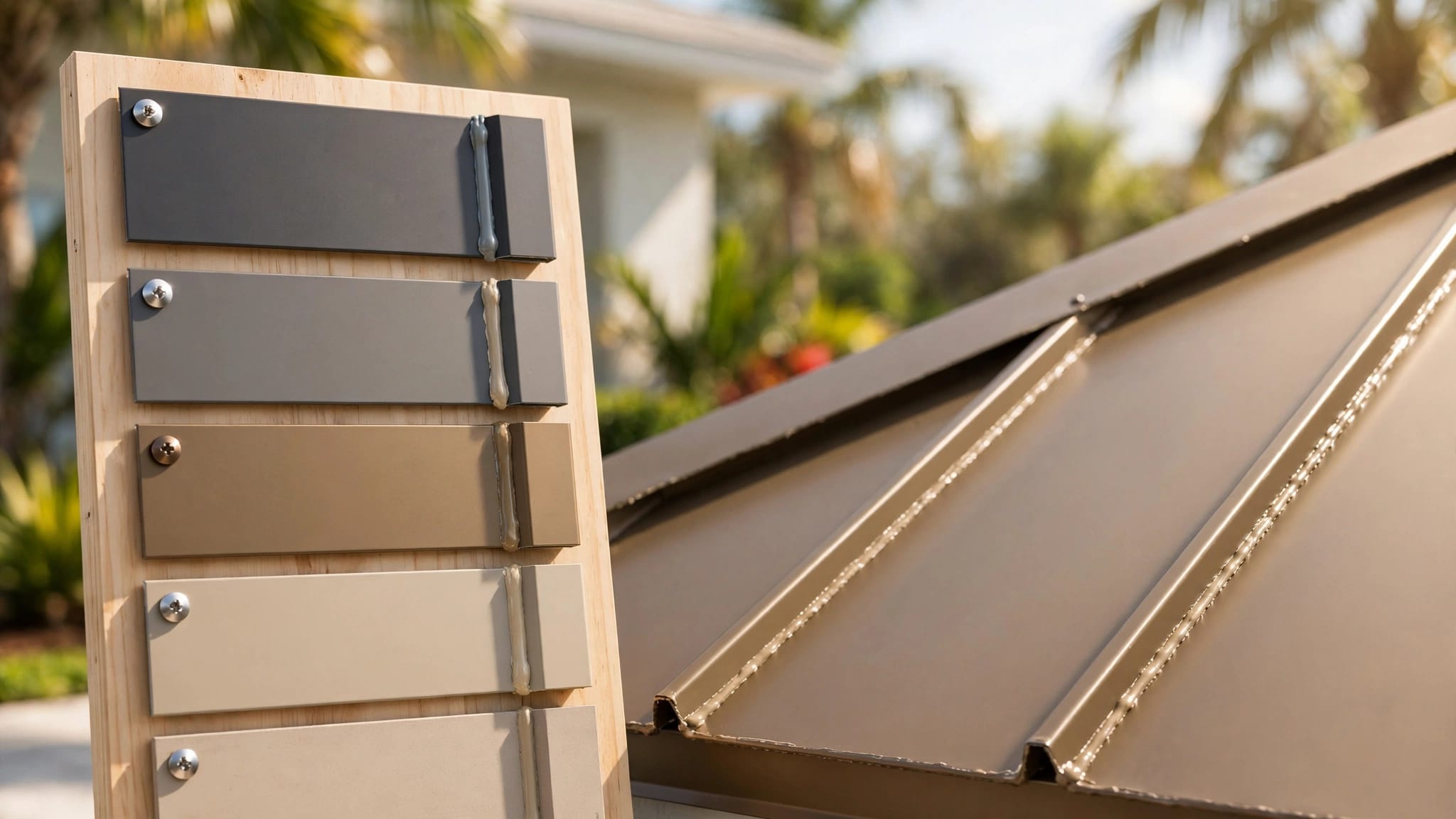
A color chosen from a screen can look different on a full metal panel, especially under Florida sunlight. Metal panel color verification gives the homeowner, contractor, and supplier a shared reference before material is cut, formed, and delivered.
The approval should cover more than the panel color. Finish type, panel profile, trim, fasteners, sealants, and the documented roof assembly must also match the project. Use the checkpoints below to turn a visual preference into a clear production release.
Why Color Verification Matters on Florida Projects
Metal roofing reflects light differently as the sun moves across the roof. A color that looks neutral in a showroom may appear brighter outdoors, while a dark finish can show more contrast against bright walls, soffits, or gutters.
Florida conditions add more variables. Strong sun, high humidity, frequent rain, and salt air near the coast can affect how the finished roof looks over time. These conditions don't change the need for accurate color approval before production.
Color and code compliance are separate checks
A selected finish can meet the appearance requirements while the roof assembly still needs additional review. For a conditioned building, the roof finish, insulation, air-sealing details, deck, fasteners, and permitted assembly all work together.
Florida Product Approval documents may identify approved panel types, substrates, attachment patterns, and installation conditions. A color choice doesn't prove that the entire roof system complies with the required design.
A field test or fastener test also doesn't replace product approval. If an assembly, panel, screw, or spacing pattern isn't approved for the project, a strong test result cannot make it acceptable.
Color changes can affect more than the roof field
The main panel is only one part of the visible exterior. Eave trim, rake trim, ridge caps, valleys, headwall flashing, pipe boots, closures, gutters, and exposed fasteners can all affect the finished appearance.
A mismatch may be noticeable when trim is installed beside the panels. Review the full exterior color plan before releasing any custom trim or accessory package.
Metal Panel Color Verification Starts With the Order Details
The supplier can't verify a color accurately if the order uses vague descriptions such as "gray," "white," or "a dark bronze." Those terms may describe multiple finishes with different reflectance, texture, and coating characteristics.
Write the selection as an exact order reference. Include the panel profile, gauge, finish, color name or code, trim color, and accessory requirements.
Confirm the exact panel identity
Begin with the quote, estimate, or shop drawing. Check that the color reference appears beside the correct panel type, not only in a general project note.
For each panel, confirm:
- The panel profile and intended roof or wall location
- The material and gauge listed in the order
- The coating or finish designation
- The supplier's exact color name or identifying code
- The required panel lengths and quantities
- Whether the material is for a new roof, addition, repair, or replacement
A color may be available for one panel profile but unavailable for another. The same color name may also look different across finishes or coating systems. Ask the supplier to confirm availability for the exact material being ordered.
Check every elevation and building area
A residential roof may use one color across the main field, but agricultural and commercial buildings often include multiple roofs, wall panels, lean-tos, porches, or additions.
Mark the color and profile on the roof plan or elevation drawings. Identify areas that will use a different material. This prevents a color approved for the main roof from being applied to a wall, dormer, or accessory structure by mistake.
For replacement work, identify whether the goal is an exact match, a close visual match, or a deliberate new color. Existing panels fade and weather unevenly, so a new panel selected from a current sample may not match an older roof perfectly.
Review a Physical Sample Under Real Conditions
A digital image and printed color chart can help narrow the selection, but neither should be the sole production approval. Screen settings, paper stock, room lighting, and photography can all change the apparent color.
Request a physical sample that represents the actual finish and coating planned for the project. If the sample doesn't identify the product and finish, ask the supplier to provide that information before approval.
Compare the sample outdoors
Review the sample near the building whenever possible. Look at it in direct sun, open shade, and the lighting conditions visible from the street or driveway.
Hold the sample near the proposed siding, stucco, brick, stone, fascia, soffit, and gutters. Check it from the viewing distance most people will use. A small chip viewed from a few inches away can look different from a broad roof surface seen from the ground.
Don't approve a color from a photograph of another roof. Camera exposure and weather conditions can alter the result, and the other roof may use a different coating, profile, or age.
Inspect the finish, not only the color
Two materials can share a similar color while producing different visual results because of gloss, texture, metallic content, or surface striation. Review the sample at an angle as well as straight on.
Look for:
- Gloss or sheen differences
- Smooth, textured, or matte surfaces
- Metallic flake or reflective variation
- Visible striations or rib shadows
- Edge color on formed trim
- Scratches, rub marks, or coating damage
The sample should be large enough to show the finish clearly. A tiny swatch may hide texture and make a dark color seem more uniform than it will appear on a full panel.
A color approval is incomplete when it identifies only a name. The record should identify the exact finish, panel profile, and project location.
Match Trim, Fasteners, Sealants, and Accessories
Color verification should continue beyond the coil or panel. Trim is often custom-formed for the project, so an error in the trim color can affect material that is difficult to return or replace after fabrication.
Review the color of every exposed component that will sit next to the panel. This includes ridge caps, rake and eave trim, transition flashing, valleys, sidewall flashing, closures, snow or debris guards where applicable, and exposed fasteners.
Confirm trim and accessory colors in writing
Ask the supplier to list each visible component on the order confirmation. Use the same color name or code throughout the quote, shop drawings, purchase order, and approval email.
If the trim uses a different finish from the panel, request a sample or a written explanation. A close color name doesn't prove that two finishes will match. The supplier should confirm whether the trim and panel come from compatible coating systems.
Also check items supplied by other trades. Gutters, downspouts, vents, skylight frames, pipe flashings, and painted equipment may sit directly beside the roof. Record whether these items should match the roof, match the walls, or use a contrasting color.
Test sealants on the actual finish
Sealants can stain, soften, lift, or fail to adhere to a coated metal surface. A product that worked on another roof isn't automatically approved for a different color, finish, or coating batch.
Read the technical data for both the sealant and panel finish. Confirm that the panel or coating manufacturer accepts the sealant, and confirm that the sealant manufacturer accepts the coating.
Before production or installation, test a small amount on scrap material with the same finish. Let it cure according to the product instructions, then check for staining, loss of adhesion, soft areas, edge dirt, or coating lift. If either manufacturer has not confirmed compatibility, treat the sealant as unverified.
Assign Approval Responsibilities Before Fabrication
Color disputes often happen because several people believe someone else gave the final approval. Set responsibilities before the order reaches production.
The property owner or design decision-maker should approve the visible color and finish. The contractor should verify that the selected panel, trim, and accessories fit the plans and installation conditions. The supplier should confirm that the order matches the approved reference and can be produced as specified.
An architect, engineer, or building official may have separate responsibility for drawings, specifications, or code requirements. Their approval of the roof assembly doesn't automatically settle the owner's color preference.
Create one final approval record
Use one document or email thread as the controlling color record. Attach the approved sample photograph, quote, elevation, and any shop drawings. The record should include:
- Project name and delivery address
- Owner, contractor, and supplier contacts
- Panel profile, material, and gauge
- Exact color name or code
- Finish or coating designation
- Trim and accessory colors
- Approved sample date
- Names of the people who approved the selection
- Any exclusions, substitutions, or pending items
Record the date of the final release. If the color changes later, issue a revised approval rather than relying on a phone conversation.
Review shop drawings before coils are cut
Shop drawings translate the plans into fabrication instructions. Review the color callouts alongside panel lengths, trim profiles, flashing locations, and material quantities.
Check that every elevation uses the intended color. Confirm that trim callouts agree with the purchase order. Look for blank areas, conflicting notes, and generic descriptions that could create confusion on the production floor.
Don't release fabrication while a sample, coating question, trim selection, or substitution remains unresolved. A short delay before production is easier to manage than a rejected panel bundle after delivery.
Key Takeaways for a Reliable Color Approval
- Use the exact color name or code supplied for the selected panel and finish.
- Approve a physical sample in outdoor light near the building.
- Review sheen, texture, metallic content, and formed trim, not color alone.
- Match the panel reference to the correct profile, gauge, and project location.
- Document colors for trim, fasteners, sealants, vents, and other exposed accessories.
- Keep aesthetic approval separate from Florida Product Approval and roof assembly review.
- Test sealants on the actual coated material before installation.
- Assign approval duties to the owner, contractor, supplier, and design professionals.
- Release production only after the order, shop drawings, and approval record agree.
Frequently Asked Questions About Metal Panel Color Verification
Can a phone photo approve a metal panel color?
A phone photo can help compare options, but it shouldn't serve as the final approval. Camera exposure, screen settings, shadows, and surrounding colors can change the appearance. Use a physical sample of the actual finish and review it outdoors near the building.
Does the panel color affect Florida code compliance?
Color alone doesn't establish compliance. The roof finish may be one part of a larger permitted assembly that includes the substrate, insulation, air sealing, fasteners, and installation method. Confirm the complete assembly through the applicable project documents and authority having jurisdiction.
Should trim match the roof panels exactly?
Trim should match when the design calls for a uniform appearance, but matching a color name isn't always enough. Confirm the coating, sheen, texture, and manufacturer compatibility. Review a formed trim sample when the trim is highly visible or custom-fabricated.
What should happen if the approved color is unavailable?
Pause the production release and request a written substitution. Compare a new physical sample, confirm the replacement finish and availability, and obtain approval from the property owner or designated decision-maker. Update the quote, drawings, and order record before fabrication continues.
Conclusion
Reliable metal panel color verification connects the physical sample, written order, shop drawings, trim package, and final approval. Reviewing those items together reduces the chance of receiving the right profile in the wrong color or a matching panel with mismatched flashing.
The strongest approval record identifies the exact finish and assigns clear responsibility to each party. Once the owner, contractor, supplier, and design team agree in writing, production can proceed with fewer surprises and a clearer path to installation.
Share Our Metal Roofing News Articles
Related Posts