Metal Roof Fasteners for Pressure-Treated Framing
Pressure-treated framing protects roof structures from moisture and insects, but it can shorten the life of the wrong screw. Metal roof fasteners must resist both the treated wood chemistry and Florida's heat, rain, and wind.
A roof can look finished on installation day and still develop corrosion at its attachment points years too soon. Start by matching the lumber, panel system, fastener, washer, and fastening schedule before panels go on the roof.
Begin With the Lumber Label and Roof Approval
Pressure-treated lumber is not one uniform product. ACQ, CA, ACZA, and other preservative formulations vary by manufacturer, intended use, and retention level. Read the treatment tag or label on the framing before ordering screws.
The treatment label identifies the preservative and may state hardware recommendations. Fastener selection should be verified against that label, the roofing and fastener manufacturer requirements, and applicable local code.
Confirm the full assembly, not only the screw
A screw touches more than lumber. Its coating or stainless alloy must also suit the panel metal, flashing, washer, and site exposure. Dissimilar metals can corrode when water connects them, so a compatible roof assembly matters more than a screw's color or price.
Use this order when confirming the attachment package:
- Record the wood preservative, retention level, and whether the framing is interior, exterior, or ground-contact rated.
- Check the panel installation instructions for approved screw material, diameter, point style, washer, and spacing.
- Confirm that the selected hardware meets the local building department's requirements and the roof's wind design.
A screw and bonded washer form one corrosion system. A durable screw cannot make up for a washer that cracks, splits, or reacts with the treated lumber.
How to Match Metal Roof Fasteners to Treated Wood
Florida building code provisions for preservative-treated wood identify hot-dipped zinc-coated galvanized steel, stainless steel, silicon bronze, and copper for fasteners, nuts, and washers that contact treated lumber. However, panel material can rule out an otherwise acceptable wood fastener.
Approved metal roof fasteners always take priority over broad rules. Florida roofing provisions require the panel manufacturer's approved fasteners. When instructions do not identify a material, published Florida code language accepts stainless steel for metal roofs and calls for galvanized fasteners on steel roofs.
When stainless steel may be appropriate
Stainless steel may fit roofs with demanding moisture exposure, coastal salt air, or treatment chemistry that requires stronger corrosion resistance. Simpson Strong-Tie recommends hot-dip galvanized or stainless hardware for treated wood and identifies Type 304, 305, and 316 stainless options for higher-exposure locations.
Near the Gulf or Atlantic, wind-driven salt can reach far beyond beachfront homes. Type 316 stainless often offers greater chloride resistance than common stainless grades, yet it still needs approval for the panel and fastening system.
When hot-dip galvanized hardware may be appropriate
Hot-dip galvanized screws and accessories are common for many treated-lumber applications and steel roofing systems. Check for the required coating specification, such as ASTM A153 where the fastener manufacturer or roof approval calls for it.
Do not treat every silver-colored screw as equivalent. Electrogalvanized coatings and lightly coated hardware may not suit treated lumber or severe Florida exposure. Use only corrosion-resistant fasteners and washers approved for the wood treatment and roof system.
Select the Right Screw Construction and Length
Material compatibility is only half the job. A stainless screw designed for thin steel purlins can fail in a wood purlin, while a coarse-thread wood screw can damage thin steel framing.
AG/Multi-Rib, PBR/R, 5V, and standing seam panels also use different attachment details. Exposed-fastener panels often attach through the face of the panel, while standing seam systems may use concealed clips and clip-specific fasteners.
Use a point and thread made for wood
For wood purlins or framing, choose a panel screw approved for wood. These screws commonly use a sharp wood-grip point, sometimes called a Type 17 point, plus coarse threads that bite into lumber.
A steel-purlin self-driller is not a substitute for a wood-framing screw. Review wood-framing roofing screw guidance before ordering, especially when a project uses mixed wood and steel supports.
Length also depends on the full stack. Panel profile, underlayment, insulation, sheathing, and purlin thickness all change the required screw length. The selected screw must reach the required solid wood embedment without punching through an exposed ceiling or missing the framing.
Match the head and washer to the attachment detail
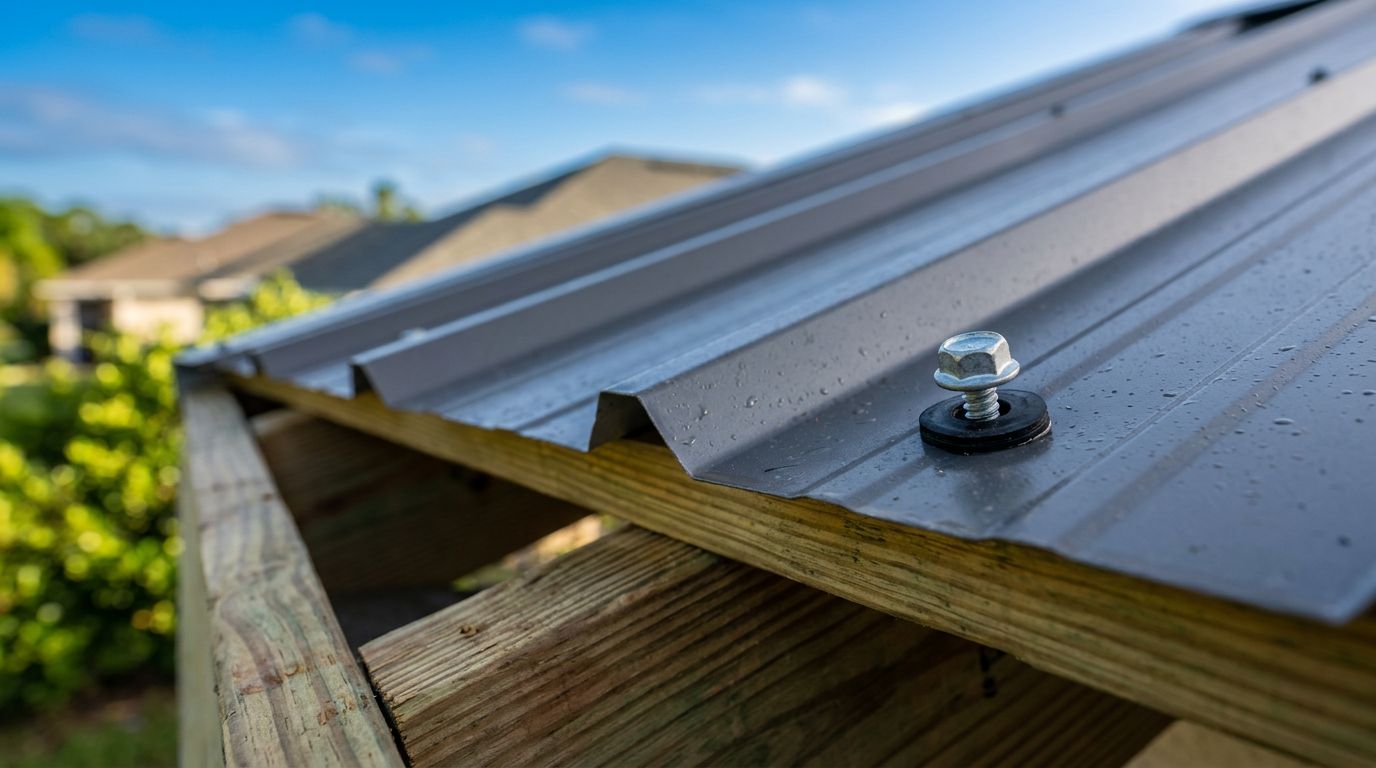
Exposed panel screws often use hex heads with bonded EPDM washers. The washer should compress evenly against the panel, forming a weather seal without bulging, splitting, or squeezing out beyond the head.
Drive screws straight and stop once the washer sits snugly. Overdriving distorts the panel and damages the washer. Underdriving leaves a gap where water can enter. Pancake-head screws often suit sidelaps or certain trim details, but they do not replace a washered panel screw where the installation drawing calls for one.
Account for Florida Wind Zones and Coastal Exposure
A correct screw can still fail if the layout ignores uplift. Field, edge, and corner zones may require different fastener spacing, particularly on exposed sites and taller buildings.
Follow the panel approval, engineering, and local wind requirements instead of copying a spacing pattern from another roof. For exposed panels, Florida screw spacing guidance can help contractors organize the layout, but the approved project schedule controls.
Inspect framing before fastening panels
Check that every purlin or framing member is sound, dry enough for installation, and positioned where the panel layout expects support. A screw cannot create holding strength in split, decayed, or badly weathered lumber.
Also replace corroded connectors near the roof line before covering them. Keep galvanized components with compatible galvanized hardware, and don't mix metals unless the manufacturer approves the combination.
A Fastener Match That Holds Up
Pressure-treated lumber needs more than a standard roofing screw. The right choice accounts for the preservative, panel metal, washer, screw point, embedment, wind schedule, and salt exposure.
Verify every part of the attachment package before installation begins. Compatible metal roof fasteners protect the roof where the panels depend on it most, at every connection to the framing.
Share Our Metal Roofing News Articles
Related Posts