Metal Roof Screws: Wood vs. Steel Purlins Compared
You install metal roofing over wood purlins one day and steel the next. Suddenly, your screws strip out or leak. In Florida, where storms test every joint, picking the wrong metal roof screws turns a solid job into a headache fast.
Homeowners and contractors face this choice often. Wood grips differently than steel. Match the screw wrong, and wind uplift or rain finds the weak spot. This guide breaks down the differences so you choose right every time.
Let's start with what sets screws apart for each substrate.
Screw Point and Thread Designs Explained
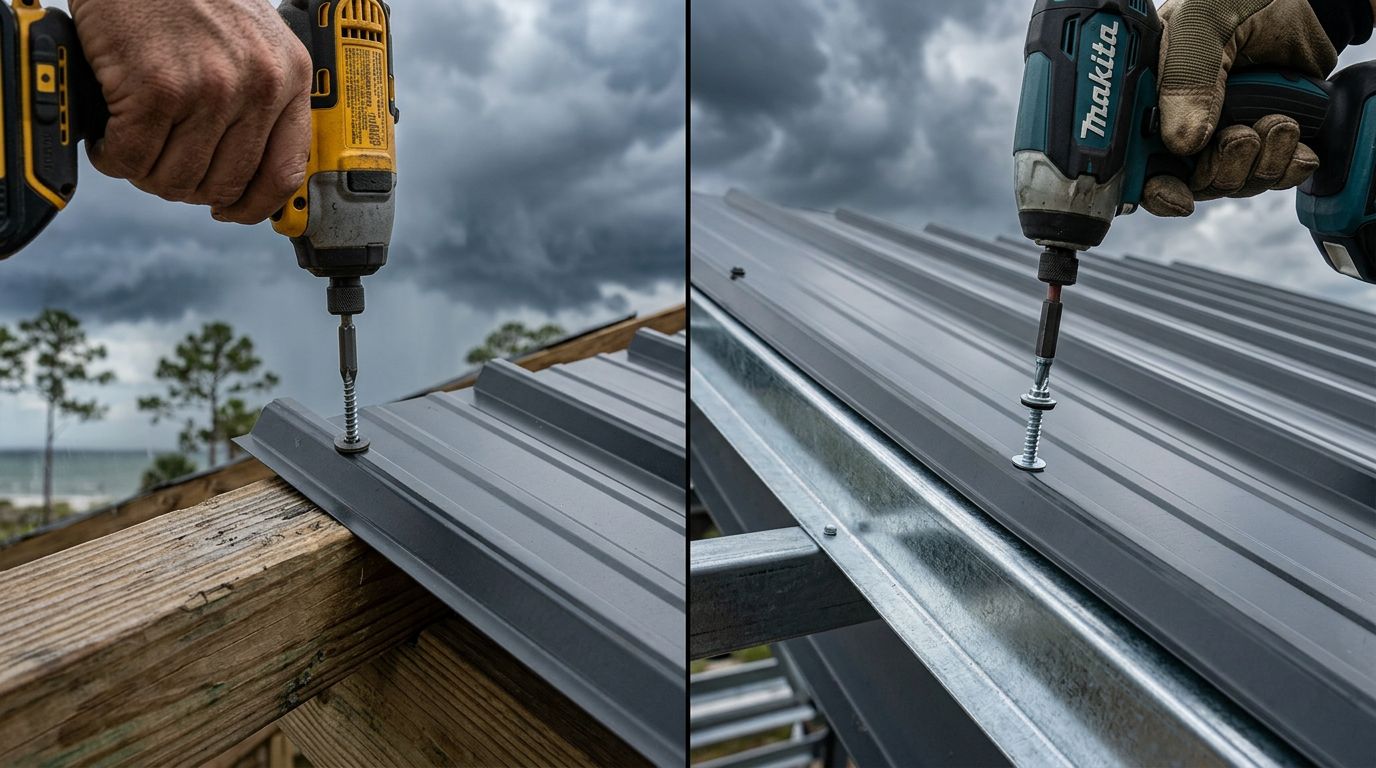
Screws for wood purlins need a sharp, self-tapping point. It cuts clean into soft or treated lumber without pre-drilling. These points, often called Type 17 or wood-grip, have a bugle shape. They pull the washer tight against the panel.
Steel purlins demand a drill point instead. #3 or #4 points bite through light-gauge metal fast. They match steel thicknesses from 20 to 12 gauge. Use a wood screw here, and it spins uselessly. Or worse, it cracks the purlin.
Threads tell the story too. Wood screws use coarse, deep threads for bite. They hold in compression and pull-out forces. Steel versions have finer, machine-style threads. These lock into metal without stripping. In contrast, wood threads on steel just chew holes.
For example, a #12 x 1-1/2 wood screw embeds deep in pine purlins. Switch to steel, and you need a #10 x 1 self-driller with hex head. Always check the panel maker's specs first.
Gauge, Length, and Purlin Thickness Matching
Gauge starts at #10 or #12 for most jobs. Thicker purlins or high-wind areas call for #14. Too thin, and it snaps under torque. Too thick, and the head strips.
Length depends on stack-up. Add panel gauge, underlayment, and half the purlin thickness. Aim for 3/4 to 1 inch penetration. A 1-inch screw works over thin wood. Steel purlins over 1/4 inch need 1-1/2 inches or more.
Purlin thickness changes everything. Wood from 2x4s varies in density. Southern yellow pine grips best. Steel stays consistent at 16 or 18 gauge usually.
Here's a quick comparison:
| Feature | Wood Purlins | Steel Purlins |
|---|---|---|
| Common Gauge | #12 | #10 |
| Point Type | Type 17 (sharp cutter) | #3 or #4 drill |
| Thread Style | Coarse, aggressive | Fine, machine-like |
| Min Penetration | 1 inch into wood | 3/4 inch into steel |
This table shows why mixing fails. For full details on choosing the right fasteners for metal roofs, see our guide. Pick based on your setup, and the roof lasts decades.
Washer Quality and Coatings for Florida Durability
Washers seal the deal. Neoprene or EPDM compress under the head. They block water without cracking in heat. Cheap rubber hardens fast here.
Steel purlins pair with bonded washers. They stay put during thermal moves. Wood needs thicker ones for uneven surfaces.
Coatings fight rust. Galvalume panels match painted or ceramic-coated screws. Florida salt air eats zinc fast, so go Class 4 or stainless. Wood jobs tolerate less because moisture hides in grain.
Compatibility matters. Dissimilar metals spark galvanic corrosion. Galvalume screw on aluminum panel? Trouble. Match coating to panel finish always.
In coastal spots, stainless wins. It costs more but saves callbacks. Test pull-out strength too. Good washers hold 500 pounds easy.
Application Tips for Panel Profiles and Substrates
PBR or AG panels over wood use hex-head wood screws at 12-inch spacing in fields. Steel gets pancake heads for low profiles.
Spacing tightens at edges. Florida code demands it for uplift. Over steel purlins, self-drillers save time. No pilot holes.
For PBR panel fastener placement guidelines, follow tested patterns. Wood decks need longer embeds. Open purlins expose more, so seal laps tight.
Use a torque gun set low. Hand-tight plus a quarter turn works. Electric drills spin too fast often.
When building a metal roof material list with fasteners, count by zone. Fields take 80 screws per square. Perimeters double up.
Avoid These Costly Screw Mistakes
Crews grab wood screws for steel purlins all the time. The point skips, and hold fails. Result? Panels lift in gusts.
Wrong drill point hits thick steel. A #2 point works to 18 gauge. Thicker needs #3. Check charts first.
Over-driving crushes washers. Gaps form, leaks follow. Under-driving leaves play for wind.
Mismatched washers rust separate from panels. EPDM on painted hex heads lasts longest.
Estimate wrong, and you run short mid-job. Use estimating metal roof screw quantities tools. Add 10% waste always.
Florida heat warps cheap coatings quick. Skip them. Test a sample pull first. If it strips below 400 pounds, toss the box.
Right choice starts with substrate. Wood grips threads. Steel needs drills. Match point, thread, and coating, and your metal roof shrugs off storms.
Pick metal roof screws that fit your purlins. Avoid the swaps and shortcuts. Your Florida roof stays dry for 40 years or more. Questions on your next project? Start with the specs and build from there.
Share Our Metal Roofing News Articles
Related Posts