How to Repair a Missed Screw Hole in Metal Roofing
A missed screw hole in your metal roof starts small. Water sneaks in during the next Florida storm. Soon, stains appear inside, and rust follows. You can fix it yourself if you pick the right method.
Homeowners and contractors face this often on panels like PBR or 5V. The key is matching the repair to the hole size and roof finish. Done right, it stops leaks and prevents corrosion for years.
This guide walks you through safe, durable steps. You'll learn when to use oversized screws or butyl tape. Follow along to keep your roof tight.
Spot the Problem and Stay Safe First
Check the hole after a storm or during routine maintenance. Look for water stains in the attic. Then climb up carefully to confirm.
Metal roofs get slick with dew or rain. Wear soft-soled shoes and use fall protection. If the pitch exceeds 6:12 or height tops two stories, call a pro. In high-wind zones, pros ensure code compliance.
Assess the damage close up. A tiny puncture from a drill slip needs less work than a stripped thread. Note the panel type and coating, like Galvalume or Kynar paint. Mismatched materials cause galvanic corrosion fast in humid Florida air.
Clean around the spot first. Wipe off dirt, old sealant, or rust with a wire brush. Dry it completely. Moisture traps water under repairs.
Safety saves lives here. Secure your ladder on flat ground. Work in daylight with a spotter. Therefore, inspect from the ground with binoculars if possible.
For a full checklist on spotting issues like loose fasteners, see this metal roof maintenance checklist for Central Florida.
Gather Tools and Materials That Match Your Roof
Pick supplies based on hole size and exposure. Small holes under 1/8 inch suit oversized screws. Larger ones need rivets or patches.
You'll need these basics:
- Corrosion-resistant screws or rivets in the right length.
- Neoprene or EPDM washers.
- Metal-compatible sealant, not silicone caulk.
- Butyl tape for compression seals.
- Drill, nut driver, and snips.
- Gloves, safety glasses, and painter's tape.
Match metals to avoid rust. Use painted steel screws on painted panels. For coastal jobs, go stainless. Oversized screws work if the panel isn't too thin.
Avoid cheap fixes. Wrong caulk shrinks and cracks. Overtightening strips more metal. Stock up on butyl tape vs tube sealant options for seams nearby.
Test fit everything on scrap metal. This prevents surprises on the roof.
Clean and Prep the Hole for a Lasting Seal
Prep turns a quick patch into a permanent fix. Dirt or old sealant dooms repairs.
Drill out debris gently. Use a bit slightly larger than the hole. Vacuum shavings to stop rust stains.
Sand edges smooth. Wipe with isopropyl alcohol. Let it dry 30 minutes. Florida humidity speeds re-wetting.
Tape off nearby areas. Protect the finish from scratches or drips.
For stripped threads, countersink lightly. This seats new fasteners flat. However, don't enlarge beyond 1/4 inch without patching.
Good prep blocks capillary action. Water wicks through tiny gaps otherwise. As a result, leaks return fast.
Fix Small Holes with Oversized Screws or Stitch Screws
Most missed holes are small. Start here for quick results.
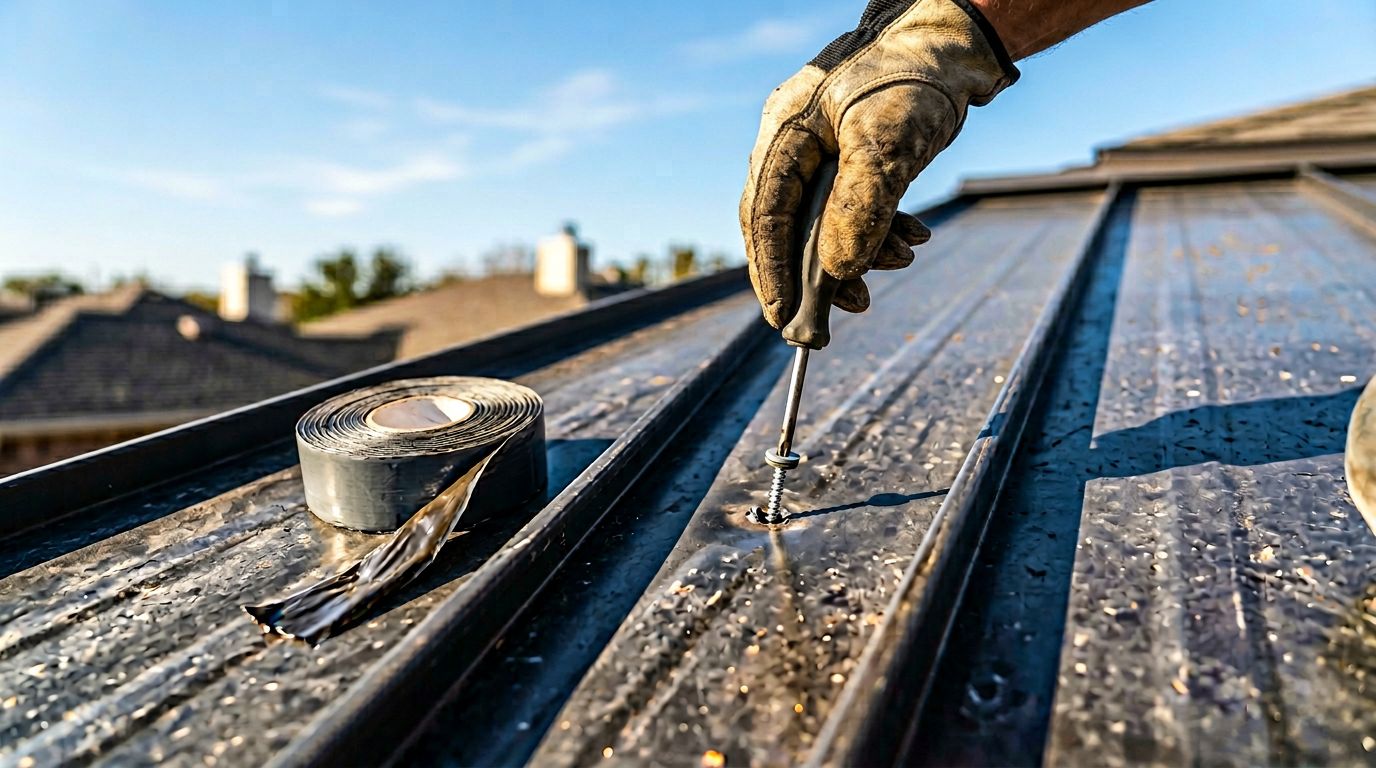
Choose #12 or #14 screws, longer than originals. Pair with bonded washers. Drill a pilot if needed.
- Place butyl tape under the washer.
- Drive straight into solid substrate. Tighten until snug, not crushed.
- Add a sealant bead around the base.
Stitch screws seal laps nearby. Space them 12 inches apart. They grab without enlarging the miss.
This method compresses the tape. Therefore, it flexes with panel movement from Florida heat. Test by spraying water; no runs mean success.
Expect 10-15 years from good installs. Inspect yearly.
Handle Larger Holes with Rivets or Metal Patches
Holes over 1/4 inch risk wind pull-out. Rivets or patches provide strength.
For rivets, pick aluminum or stainless pop rivets. Back them with large washers.
- Insert rivet through hole.
- Add washer and sealant on top.
- Crimp with a gun. Seal the stem.
Patches work for 1/2-inch plus. Cut a same-metal disc, 1 inch larger. Overlap with butyl tape.
- Clean both surfaces.
- Secure with four rivets.
- Tool sealant over edges.
Patching mimics factory seams. It sheds water best on exposed-fastener roofs like AG panels.
Warns against temporary caulk fills. They fail in UV and wind. Rivets hold through hurricanes.
Prevent Leaks and Corrosion Long-Term
Seal stops water now. Prevention fights future trouble.
Apply sealant rated for metal. Butyl stays flexible; others harden.
Check nearby fasteners. Tighten loose ones. Replace stripped neighbors.
Coat exposed edges with primer. This blocks oxygen and salt air.
Thermal movement stresses repairs. Panels expand daily. Loose fits accommodate it.
For penetrating details, review pipe boot methods. They tie into screw repairs.
In short, combine mechanical hold with flexible seals. Your roof lasts decades.
Wrap Up with Regular Checks
Repair a missed screw hole right, and leaks stay out. Oversized fasteners or rivets, plus proper sealant, restore strength.
Florida weather tests every fix. Match materials, prep thoroughly, and avoid quick patches.
Inspect twice yearly. Catch issues early. Your metal roof thanks you with dry interiors.
Solid repairs save thousands. Now grab tools and get to work.
Share Our Metal Roofing News Articles
Related Posts