Butyl Tape Vs Tube Sealant For Metal Roof Seams In Florida
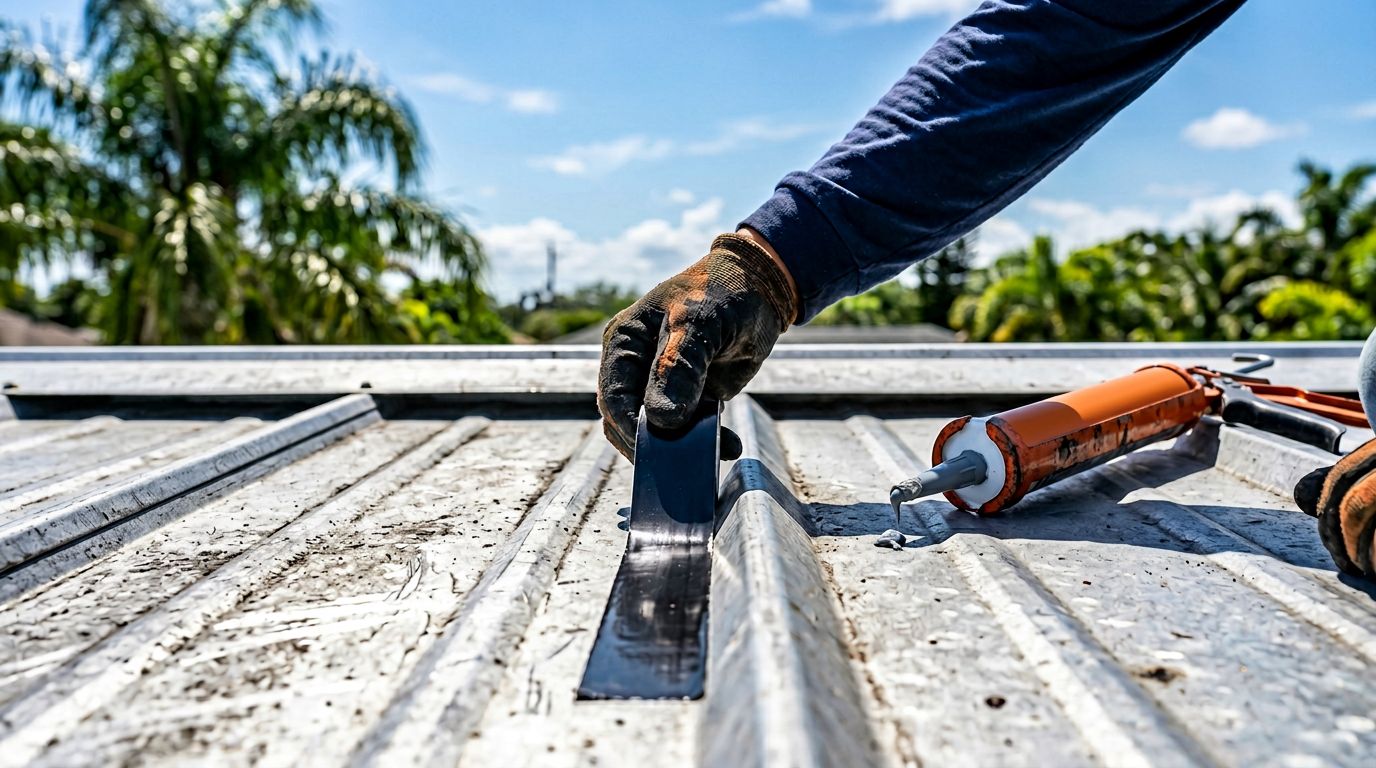
Florida metal roofs don't usually fail because the panels are "bad." Most leaks start at details, laps, and terminations, where wind-driven rain finds a path. That's why butyl tape vs sealant isn't a small choice, it's a seam strategy.
Here's the simple bottom line. Butyl tape usually wins for metal-to-metal seams because it seals by compression and stays flexible. Tube sealant (caulk) earns its keep where you need a tooled bead, gap-filling, or a UV-exposed finish, but it's easier to apply wrong.
If you're gathering the parts for a full system, it helps to think in terms of assemblies, not single products. Fasteners, closures, trim, and sealants all work together (see Fasteners & Accessories).
What Florida does to seam sealants (humidity, heat, UV, and salt)
Sealing a metal roof seam in Florida is like trying to keep a cooler lid shut on a bouncing boat. The roof moves, the sun cooks the surface, and storms hit sideways.
Humidity and morning dew are the first trap. Metal can look dry and still have a thin moisture film. Tape and caulk both struggle on damp, dusty, or chalky paint. Plan for prep time, not just install time. Wipe off grime, remove oxidation, and let the seam fully dry, especially after an afternoon shower.
Heat and thermal movement are the second trap. Panels expand and contract daily, and the longer the run, the more movement the seam has to tolerate. Any seal that turns brittle will crack, then leaks show up during wind-driven rain. If you want a clear picture of why seams get stressed at ridges, eaves, and penetrations, read metal roof thermal movement in Florida.
UV exposure is the third trap. Many seams are protected under laps or trim, but some beads sit in direct sun. UV can dry out certain sealants faster than most people expect.
Coastal salt is the long game. Salt air, salty mist, and trapped moisture speed up corrosion and can creep into laps. A good seam seal helps block oxygen and water at the joint, but you still need compatible metals, coatings, and corrosion-resistant fasteners.
If a seam relies on "a nice looking bead" as the main water stop, it's usually a future callback in Florida.
When butyl tape is the better choice for metal roof seams
Butyl tape is a non-curing, pressure-sensitive seal. In plain terms, it doesn't need to "dry." Instead, it seals when you compress it between two clean surfaces. That makes it a natural fit for laps, overlaps, and hidden seams .
On most Florida metal roofs, butyl tape works best in these seam locations:
- Exposed-fastener panel side laps and end laps where the lap is tight and fasteners can compress the joint evenly.
- Under flashing and trim where you want a continuous gasket under the metal.
- Standing seam end laps and transition details (only where the panel system allows it), because the tape can flex as the roof moves.
- Ridge, hip, and valley trim interfaces when used under closures and correctly fastened trim.
The big advantage is consistency. A properly placed tape line gives you the same thickness and contact along the seam. In contrast, a caulk bead depends more on installer technique and can skip voids when it bridges over rib profiles.
Still, butyl tape has limits. It needs compression . If the lap is loose, warped, or oil-canned, the tape can't magically fill a big air gap. It also hates dirty surfaces. Florida roofs collect pollen, airborne sand, and coastal salt film, so cleaning matters.
For crews installing 5V and other exposed-fastener profiles, sealant placement errors are a common root cause of leaks. This rundown of common 5V crimp installation mistakes is a good reminder of how small seam shortcuts turn into big water paths.
When tube sealant makes sense (and where it tends to fail)
Tube sealant (gun-applied caulk) can be the right tool, but it's rarely the best choice for long, hidden metal-to-metal laps. It shines when you need gap-filling or an exposed, tooled joint .
Tube sealant is often the better pick for:
Repairs and touch-ups: A short bead over a small crack, a rivet head, or a fastener that can't be re-seated is a common use. That said, a bead alone is not a structural fix.
Penetrations and boots: Around pipe boots and certain curbs, a compatible sealant can help lock out wind-driven rain and protect cut edges. If you're working around vents and stacks, this metal roof pipe boot guide for Florida explains what fails first in our climate.
Terminations where water can back up: At some end dams, closure interfaces, and trim corners, a small, well-placed bead can block capillary water travel.
Where tube sealant gets people in trouble is predictability. Skin time and cure time vary by chemistry and weather. Florida heat can skin a bead fast, then trap uncured sealant underneath. Afternoon storms can hit before it's ready. Also, many sealants don't like constant UV exposure, and some don't bond well to oily residue or chalked paint.
A clean bead can look perfect on day one, then pull away later if the joint moves a lot. That's why many seam details work better when the lap is sealed by compression (tape) and the caulk is used as a secondary shield at edges.
Butyl tape vs sealant: side-by-side comparison (Florida-focused)
Use this table as a quick reference when deciding what belongs in the seam.
| Factor | Butyl tape (roll) | Tube sealant (caulk) |
|---|---|---|
| Best use | Hidden seams, laps, under flashings | Exposed joints, gap-filling, repairs, terminations |
| How it seals | Compression gasket, non-curing | Adhesive bead, skins and cures (varies) |
| Typical durability in Florida | Long-term when protected and compressed | Varies widely, shorter when UV-exposed or over-moved |
| Ease of install | Fast and consistent once aligned | Easy to apply, harder to apply consistently |
| Cost range (material) | $ to $$ | $$ to $$$ (depends on chemistry) |
| Skin/cure time | None (seals immediately under pressure) | Skin can be minutes to hours, full cure can be 24 hours to days |
| UV resistance | Good when buried in the joint | Depends on chemistry, many degrade faster in sun |
| Removability | Easier to disassemble, can be messy | Often harder to remove cleanly, can tear coatings |
| Movement capability | Excellent in compressed joints | Good in small joints, can crack if bead is too thin or joint moves a lot |
| Compatibility | Great on clean metal, check with coatings | Chemistry matters, check for metal and paint compatibility |
Takeaway: for long seams, tape usually gives a more reliable seal. Save tube sealant for exposed, detailed spots where a bead is the right shape.
Practical recommendations by scenario (Florida jobs)
- New install (most laps and trim): choose butyl tape first, then use tube sealant only at exposed corners and special terminations.
- Repair work: if you can re-tighten, re-lap, or replace trim, do that, then reseal. Caulk-only repairs tend to be temporary.
- Standing seam vs exposed-fastener: standing seam systems often depend on manufacturer-approved details, so follow the panel manual. Exposed-fastener roofs typically benefit from tape at laps plus correct stitch fasteners.
- Interior seams vs ridge/hip/valley: interior laps usually favor butyl tape. Ridges, hips, and valleys often need tape under closures plus careful trim fit (see custom metal flashing profiles).
- High-wind zones and coastal installs: don't "upgrade" with extra sealant and hope for the best. Match the assembly to Florida Product Approval , use corrosion-resistant fasteners, and follow the tested fastening pattern.
In hurricane country, sealants support good metalwork. They don't replace it.
Safety notes and when to call a licensed roofer
Metal roofs get slippery fast, especially with morning dew. Use fall protection, soft-soled shoes, gloves, and eye protection when cleaning or scraping old sealant. Also ventilate well if you use solvents.
Call a licensed Florida roofing contractor when the leak point isn't obvious, the roof is steep or high, you're in a High-Velocity Hurricane Zone, or the repair touches structural decking, large flashing runs, or standing seam components tied to a specific approved system.
Conclusion
For most Florida seam work, butyl tape is the better first choice because it seals under compression and stays flexible as the roof moves. Tube sealant still matters, but mainly for exposed details, penetrations, and small repairs where a shaped bead is needed. When you match the product to the seam and follow Florida approvals and manufacturer instructions, the roof stays tight long after the next sideways storm.
Share Our Metal Roofing News Articles
Related Posts