Build a Florida Metal Roofing Procurement Schedule That Holds Up
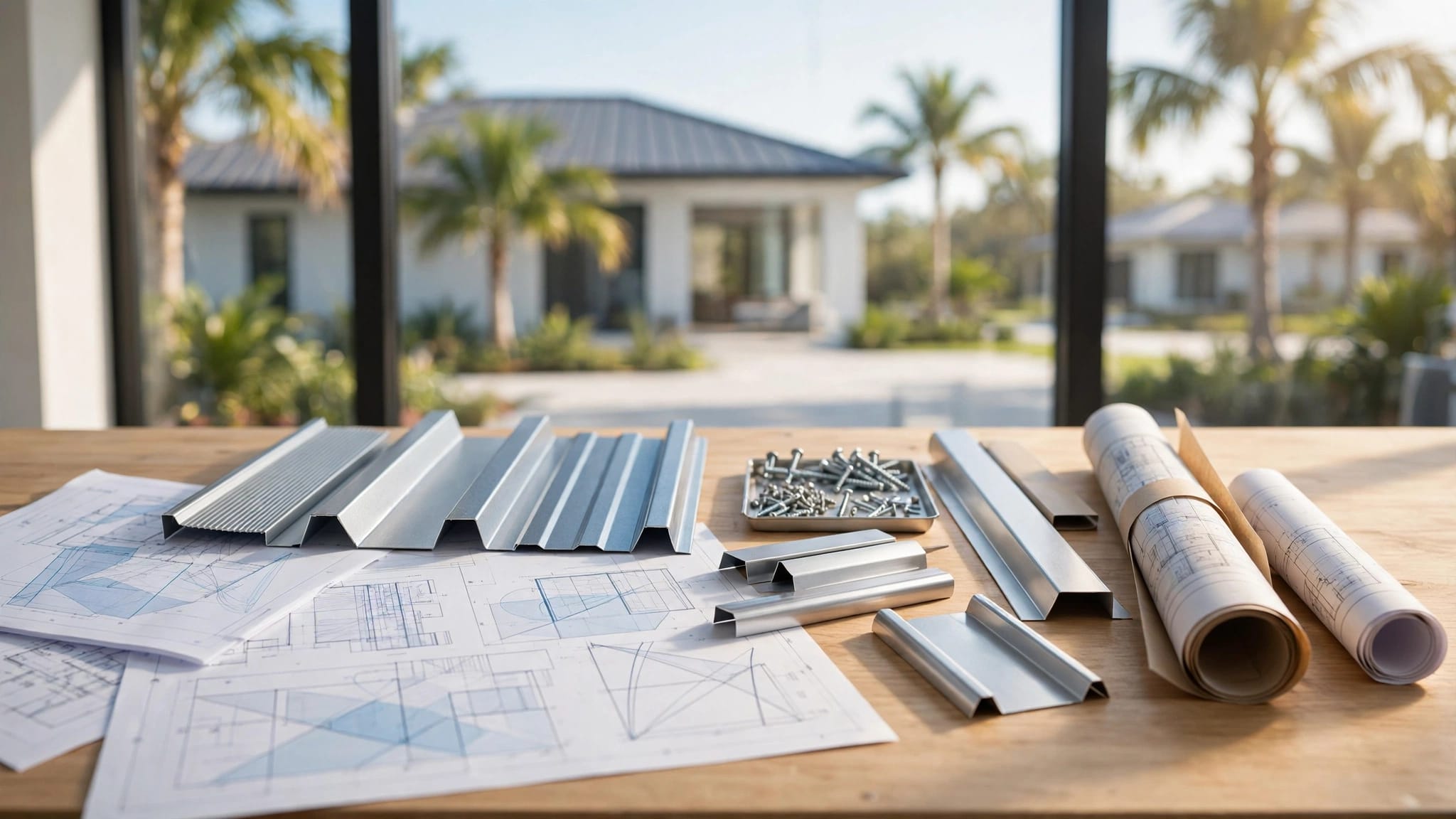
A late panel order can stop a roofing crew as quickly as a thunderstorm. Strong metal roofing procurement starts before fabrication, with complete drawings, confirmed details, and a delivery plan that matches the jobsite.
For Florida homeowners and contractors, the schedule must account for product approvals, roof geometry, flashing, accessories, permits, and site access. A clear sequence prevents field changes after panels and trim are already in production.
Use the workflow below to turn project documents into an order that is ready to fabricate, receive, and install.
Start With Complete Project Documents
Procurement should begin when the roof design is stable enough to price and review. Sending only a roof square count invites missed valleys, penetrations, transitions, and trim conditions.
Review drawings before panels are fabricated
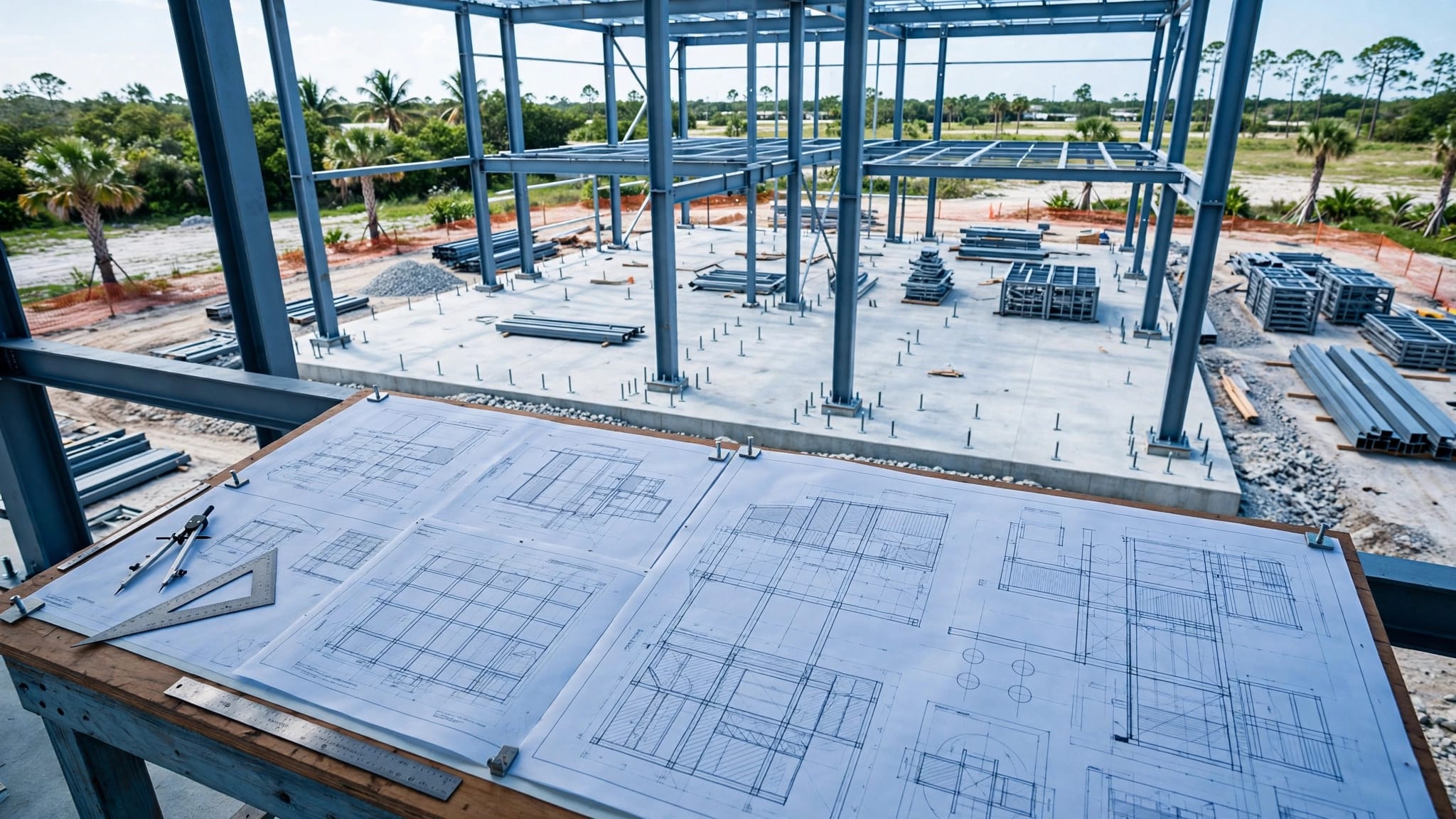
Shop drawings translate plans and specifications into panel lengths, trim shapes, fastening details, and layout instructions. Review roof slopes, eave and rake conditions, valleys, hips, ridges, curbs, pipe penetrations, and wall transitions before coils are cut.
The design team should also confirm roof finish, insulation, air-sealing details, and the permitted roof assembly. These details affect more than appearance. They can change the underlayment, attachment method, flashing package, and inspection requirements.
A panel length that looks correct on a roof plan can still fail in the field if the eave, ridge, or transition detail changes the actual coverage dimension.
Send a quote package that answers questions early
Include the latest roof plan, elevations, relevant specifications, panel profile, gauge, finish or color, and a preliminary material takeoff. Mark unusual details clearly, including curved roofs, dormers, skylights, parapets, gutters, and existing roof tie-ins.
Mid Florida Metal Roofing Supply accepts drawings and images with a quote request. Contractors can request a metal roofing quote in Florida using the online form or order form, then provide supporting documents by email or fax.
Keep one person responsible for design changes. If a revised drawing reaches the supplier after pricing, compare it line by line against the quoted scope before approving the order.
Build a Complete Metal Roof Material List
Panels are only one part of a working roof system. Metal roofing procurement needs a bill of materials that tracks every item needed to weatherproof edges, openings, overlaps, and transitions.
Calculate panels and trim separately
Start with actual roof area, then calculate panel coverage based on the selected profile. Panel width, side laps, slope length, and layout direction all affect quantity. Do not use a simple square-foot total as the final panel count.
For reference, a 2,200-square-foot roof using 30-inch-wide panels at 3-foot lengths may require about 89 panels. That example is only a starting point. Actual quantities change with roof dimensions, cut panels, lap requirements, and waste.
Measure trim by linear foot for eaves, rakes, ridges, hips, valleys, headwalls, sidewalls, and transitions. A material-list guideline allows about 10% extra trim for waste, but complex roofs may require a different allowance.
For a thorough cross-check, use a complete metal roof material list before releasing the order.
Include the small components that stop installations
List fasteners, rivets, closures, sealant, underlayment, pipe boots, vents, tape, repair paint, and any required EPDM products. Count each penetration and ventilation opening rather than estimating them from roof area.
Fastener quantities depend on the approved attachment pattern, panel type, substrate, and design pressures. A planning range of 80 to 100 fasteners per roofing square can help early estimating, but the approved project details control the final count.
Some estimating guidance places miscellaneous extras at 5% to 10% of panel cost. Treat that as a budgeting allowance, not a substitute for counting components. Missing a closure strip or custom transition flashing can delay work more than an extra bundle of screws.
Confirm Florida Product and Permit Requirements
Florida projects need a disciplined review of the roof assembly before the purchase order goes out. Product approval status, wind requirements, and permit documents must match the exact system being installed.
Match the panel to the approved application
A panel profile may have different capabilities based on gauge, substrate, fastening method, and location. For example, the listed approvals for PBR and R metal roofing panels include 26-gauge NON-HVHZ roof and wall applications and 24-gauge HVHZ roof and wall applications.
That information does not approve every PBR installation. The contractor should confirm the applicable approval, attachment details, deck or framing conditions, and design pressures with the manufacturer, design professional, and authority having jurisdiction.
HVHZ projects require particular care because the permitted details often control fastener spacing, panel use, and edge conditions. Never substitute a panel gauge or fastening pattern without written confirmation.
Check the full roof assembly
The roof finish is one decision, but the assembly also includes underlayment, insulation, air sealing, deck conditions, and flashing. A conditioned building may have requirements that differ from an agricultural or open-frame structure.
Coordinate the permit set with the roofing installer before ordering. Ask the AHJ which documents must accompany the permit and whether product approvals, engineering, or installation instructions need to be available at inspection.
Record who approved each item. A simple approval log can list the drawing revision, product approval reference, selected color, fastener pattern, and date of signoff.
Build the Metal Roofing Procurement Schedule
A useful metal roofing procurement schedule relies on milestones and dependencies, not assumed production times. Put each task on the project calendar relative to permit release and the planned installation date, then confirm actual dates with the supplier.
| Milestone | Primary owner | Must be complete first | Contingency to plan |
|---|---|---|---|
| Final roof takeoff | Contractor | Current drawings and field dimensions | Recheck dimensions after framing changes |
| System and approval review | Design team, contractor, AHJ | Panel profile, gauge, assembly details | Hold order if permit documents conflict |
| Quote review | Contractor and supplier | Full material list and drawings | Compare quote against takeoff |
| Order release | Authorized buyer | Approved scope, color, trim, accessories | Document every revision in writing |
| Delivery appointment | Contractor and supplier | Confirmed readiness date and site access | Choose pickup or revise delivery date |
| Receiving inspection | Site lead | Delivery or pickup confirmation | Photograph damage and shortages promptly |
Set release dates around decision points
Start with the installation date, then work backward through roof dry-in, framing completion, permit approval, shop drawing review, quote approval, and order release. Do not set a fabrication or delivery date before the supplier confirms it for the exact profile, gauge, color, quantities, and trim package.
Custom-length panels, custom trim, specialty colors, and unusual details may have different availability than standard items. Ask the supplier for current order timing after the full scope is submitted.
Keep a short procurement meeting whenever the roof design changes. The contractor, installer, supplier contact, and project manager should compare the revision against the order before any change takes effect.
Protect the schedule from field changes
Field verification belongs before final release. Confirm ridge-to-eave measurements, overhangs, framed openings, roof transitions, and the direction of panel runs. Framing adjustments can affect panel lengths and trim dimensions.
Use one written order summary that states the panel profile, gauge, color, lengths, quantities, trim, fasteners, closures, sealants, delivery method, and jobsite contact. This document gives the crew a practical receiving checklist later.
Coordinate Pickup or Florida Jobsite Delivery
Delivery belongs in the procurement plan, not at the end of it. A loaded truck needs a clear route, unloading space, a responsible contact, and a protected staging area.
Mid Florida Metal Roofing Supply lists delivery throughout Florida. Contractors can schedule Florida jobsite delivery after confirming the destination, identification requirements, and order details.
Prepare the site before materials arrive
Confirm gate access, turning radius, overhead obstructions, ground conditions, unloading equipment, and who can sign for the order. Notify the superintendent, homeowner, and any gated-community contact of the planned arrival.
Panels should be staged on stable, dry support. Keep bundles off the ground and cover them in a way that allows airflow. Trapped moisture between stacked panels can damage finishes or create staining.
Keep delivery details in writing
Provide the full jobsite address, site contact name, working phone number, requested date, delivery restrictions, and any required identification. If conditions change because of weather, access limits, or worksite delays, contact the supplier before the truck is dispatched.
For some projects, pickup may offer more control over timing. Compare handling capacity, trailer length, securement, and travel distance before choosing that option. Panel bundles and long trim require careful transport to avoid bends and finish damage.
Receive Materials Before the Crew Needs Them
Receiving is a quality-control step. A signed delivery ticket should never replace a count and visual inspection.
Compare the packing list with the approved order while the materials are accessible. Check panel profile, color, gauge if marked, length labels, quantities, trim profiles, fastener boxes, closures, sealants, and penetration accessories.
If something looks wrong, photograph labels and visible damage, separate affected materials, and notify the supplier promptly. Do not cut or install questionable panels until the discrepancy is resolved.
Key Takeaways
- Release the order only after field dimensions, shop drawings, permit details, and product requirements agree.
- Build the purchase order around panels, trim, fasteners, underlayment, closures, sealant, vents, and penetrations.
- Confirm Florida Product Approval information for the exact panel, gauge, application, and installation method.
- Schedule delivery only after jobsite access, unloading, and secure storage are ready.
- Inspect the shipment against the approved order before installation begins.
Frequently Asked Questions
When should metal roofing materials be ordered?
Order materials after the roof dimensions, panel layout, permit requirements, and material list are confirmed. The supplier can then provide project-specific timing for the selected panel profile, gauge, color, trim, and accessories.
Avoid releasing an order based only on early plans. A framing revision or changed roof transition can make custom panels and trim unusable.
Do Florida metal roof projects always need the same approvals?
No. Requirements vary by project location, building type, roof assembly, wind exposure, panel profile, gauge, substrate, and attachment method. HVHZ and NON-HVHZ applications may have different approved configurations.
Confirm the required documents with the design team, manufacturer, and AHJ before ordering. The permit set should match what the crew will install.
What details belong on a metal roofing purchase order?
A complete purchase order identifies the project address, panel profile, gauge, color, lengths, quantities, trim profiles, fasteners, closures, sealants, underlayment, vents, delivery method, and site contact.
It should also reference the current drawing revision and any approved shop drawings. Written clarity reduces the risk of a field crew working from an outdated assumption.
Finish With a Verified Order, Not an Assumption
The best procurement schedules give every decision a place before fabrication and delivery. Metal roofing procurement stays on track when the approved roof assembly, field dimensions, complete materials list, and jobsite plan match the final order.
A careful review before release costs far less than replacing panels or waiting on missing trim after the crew arrives.
Share Our Metal Roofing News Articles
Related Posts