Chalking vs Corrosion on Metal Roofs: A Field Guide
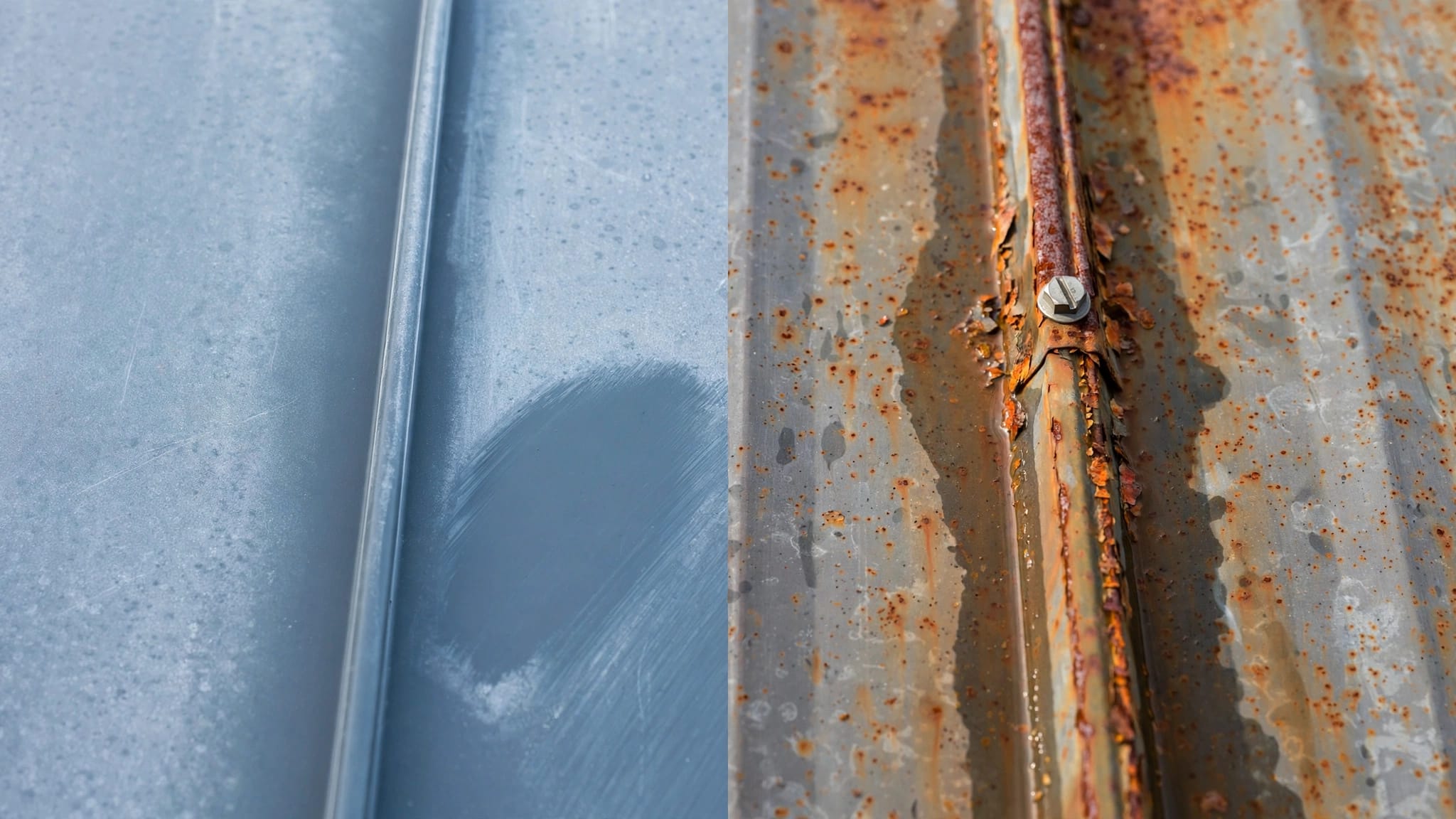
A light powder on a metal roof can look alarming, while a small orange line may seem harmless. Knowing the difference between chalking vs corrosion helps you choose the right response before cleaning, coating, or patching makes the problem worse.
Chalking is usually a coating-weathering issue. Corrosion involves deterioration of the metal or its protective layers. The two conditions can appear together, but they need different inspections and repairs. Start with the surface pattern, then check cut edges, fasteners, seams, and areas where moisture can remain.
Chalking vs Corrosion: The Fast Field Diagnosis
Powdery residue usually points to chalking
Chalking occurs when the finish breaks down at the surface and leaves a loose, powdery residue. Rub a clean, dry hand or cloth across an inconspicuous area. A faint white film can indicate chalking, especially on an older painted panel.
The color may also look flatter or lighter than it did originally. However, chalking alone doesn't prove that the steel beneath the coating is damaged. It mainly shows that the finish has weathered.
Clean a small test area before judging the color. Dirt, mildew, oxidation, and airborne residue can make a panel appear more faded than it is. Avoid abrasive pads, strong solvents, bleach mixtures, or pressure washing unless the coating manufacturer approves them.
Orange staining and pits require closer inspection
Corrosion deserves more attention when you see orange staining, bubbling paint, flaking coating, exposed metal, or small pits. Rust around a screw, seam, flashing edge, or cut end often points to moisture exposure or a damaged protective layer.
A thin orange line limited to a fresh cut edge may be early surface oxidation. Rust spreading onto the painted face is more concerning. Pitting, soft metal, holes, and coating that lifts around the affected area suggest damage beyond a cosmetic issue.
| Field observation | More likely explanation | Next step |
|---|---|---|
| White powder transfers to a cloth | Surface chalking | Document, clean carefully, and review the finish |
| Color looks flat but metal remains sound | Weathering or fade | Compare with protected areas and coating records |
| Orange line stays at a cut edge | Early edge oxidation | Check edge treatment and moisture exposure |
| Rust spreads across the painted face | Coating damage or trapped moisture | Arrange a closer inspection |
| Bubbling, flaking, or pitting | Deeper corrosion or coating failure | Consult a qualified roofing professional |
Visual inspection can identify warning signs, but it can't confirm the full depth of corrosion. A specialist may need to remove loose coating, test the metal, or inspect the panel underside.
For a closer look at coating behavior, review this comparison of metal roof finishes that resist chalking.
Why Florida Weather Speeds Finish Failure
UV, humidity, and rain work together
Florida roofs receive strong ultraviolet exposure, high humidity, frequent rain, and long periods of heat. UV energy can break down the exposed surface of a coating. Humidity and rain then keep the finish wet for longer periods.
Chalking and fading often develop gradually. Corrosion can move faster when moisture reaches bare steel through a scratch, cut edge, damaged fastener hole, or failed seam. Wind-driven rain can push water beneath laps and trim, where it may remain hidden.
A roof can look acceptable from the ground while moisture damages the underside, insulation, or deck. That is why a ceiling stain doesn't always identify the entry point.
Salt air and debris increase the risk
Salt exposure adds another burden, even when a building sits several miles inland. Coastal properties need closer attention around fasteners, panel ends, flashing, and damaged paint. Heavy salt exposure may justify rinsing roof surfaces and gutters every three to six months. Other properties near the coast should receive fresh-water rinsing at least twice a year, with another rinse after a storm when conditions are safe.
Leaves, dirt, and storm debris can hold moisture against a panel. Copper runoff, incompatible fasteners, or direct contact between dissimilar metals can also accelerate galvanic corrosion.
The most useful metal roof corrosion resistance guidance for coastal Florida is to treat exposure, drainage, and material compatibility as connected issues.
Where Corrosion Starts on Metal Panels
Cut edges and metal filings need attention
A saw, snip, or grinder can remove the factory finish and protective metallic layer at a cut. Galvalume and galvanized steel resist corrosion, but exposed edges still need proper care. Aluminum forms a protective oxide layer, yet its cut edges and fastener points also need inspection.
Grinding creates two additional problems. Heat can damage the surrounding coating, while hot metal particles can embed in the finish and leave rust stains. After cutting or fastening panels, remove all filings from the roof and trim.
The same concern applies to installation debris. A small steel shaving may rust quickly in Florida moisture and create a stain that looks like panel corrosion.
Fasteners, seams, and flashing create hidden trouble
Rust near a fastener can result from a damaged washer, an overdriven screw, a loose connection, or moisture trapped beneath the washer. A crooked screw can enlarge its hole and stop sealing correctly.
Inspect seams, laps, ridge caps, valleys, sidewall trim, and penetrations after severe weather. Loose or displaced parts can let water reach areas that remain invisible from the ground. Standing seam systems also require care around clips and folded seams because movement and attachment details differ by system.
If rust appears near copper, lead, pressure-treated lumber, or an unapproved accessory, don't assume a paint touch-up will solve it. The contact material may need to be removed or isolated.
PVDF, SMP, Galvalume, and Aluminum
Coating and substrate describe different parts
PVDF and SMP describe paint systems. Galvalume, galvanized steel, and aluminum describe the metal substrate or protective metal layer. A painted steel panel therefore has more than one layer requiring protection.
Galvalume uses an aluminum and zinc metallic coating, commonly described with a 55% aluminum to 45% zinc ratio. That layer improves corrosion resistance, but it doesn't make the panel immune to scratches, cut-edge exposure, salt, or incompatible contact.
PVDF finishes, including products sold under names such as Kynar 500 or Hylar 5000, generally provide stronger color stability and slower chalking than many SMP finishes. The described Kynar system contains 70% PVDF resin and is designed to resist chemical breakdown from UV, water, humidity, heat, oxygen, and atmospheric pollutants.
Finish choice affects appearance and maintenance
PVDF often maintains good color stability for 20 to 30 years or longer, depending on exposure and product conditions. SMP finishes may show visible fade and chalking earlier, commonly within a 10 to 20-year range. These figures concern appearance and coating weathering, not a guaranteed total roof life.
Pigment quality, color, manufacturer, site exposure, and warranty language all matter. Dark colors and coastal locations usually place more demand on the finish.
When comparing options, ask for the exact coating name, substrate, warranty limits, approved cleaners, and repair products. A coating that works on one panel system may not be compatible with another.
Inspect Before You Clean or Repair
Start from the ground and the interior
Roof safety comes before diagnosis. Wet metal, dew, algae, steep slopes, heat, and sharp panel edges create serious hazards. Begin with binoculars from the ground. Look for powdery residue, rust streaks, lifted seams, damaged trim, missing fasteners, and exposed cuts.
Inside the building, inspect ceilings, attic areas, insulation, and roof decking where accessible. Water tracks may lead uphill from the visible stain. Damp insulation, soft decking, or repeated staining indicates a larger moisture problem.
Don't walk on a roof if you lack fall protection, training, and equipment for that roof system. A qualified contractor should handle steep, wet, structurally damaged, or actively leaking roofs.
Clean a test area and document the pattern
Photograph the condition before cleaning. Record the panel profile, color, coating name if available, location, nearby fasteners, and whether the problem follows an edge, seam, or broad panel area.
Use a soft brush and clean water only when the manufacturer permits it. Test a small area first. If the powder wipes away while the metal remains intact, chalking is more likely. If rust returns after cleaning, spreads beyond the original spot, or exposes pits, escalate the inspection.
A gentle hose test can help locate a suspected leak after an approved repair has cured. Start below the repair and move uphill in small sections. Don't pressure wash or spray directly beneath seams and flashing edges.
Repair Decisions and Material Compatibility
Use approved products for small surface damage
A minor scratch or isolated cut edge may qualify for manufacturer-approved touch-up paint. Match the color, coating chemistry, and substrate. PVDF, SMP, and other factory finishes don't automatically accept the same field product.
Before applying a sealant or coating, check the technical data sheet for both materials. If neither manufacturer confirms compatibility, test the product on matching scrap or an inconspicuous area. Watch for staining, softening, poor adhesion, edge lift, or a tacky surface after curing.
Avoid roofing tar, asphalt cement, and unknown household caulk. These products may trap moisture, stain the finish, lose adhesion, or react with the coating. Also avoid mixing dissimilar metals, such as copper and galvanized steel, in wet areas.
For more detail on compatible repairs, see this guide to metal roof touch-up paint for Florida scratches.
Replace damaged panels when the metal has failed
Paint can't restore a panel that has lost its shape, attachment, or thickness. Panel replacement is often more dependable when corrosion has caused pitting or rust-through, a seam is broken, a storm has displaced the panel, or the damage reaches a clip or flashing.
A matching repair piece must follow the existing profile and finish. The fasteners, butyl tape, sealant, and installation method also need approval for that system. Don't use an angle grinder on a coated panel, and don't cover active rust with a heavy coat.
Call a coating or corrosion specialist when rust keeps returning, several panels are affected, the substrate feels weak, or corrosion appears beneath the paint. A repeating patch failure usually points to moisture, material incompatibility, or hidden substrate damage.
What Metal Roof Warranties Usually Cover
A finish warranty generally addresses coating performance, including premature chalking, fading, peeling, cracking, or loss of adhesion. It usually doesn't promise that the roof will keep its original color forever.
A substrate warranty concerns the metal itself. On steel systems, it may address corrosion that causes perforation, meaning rust creates a hole through the panel. Cosmetic red staining at a cut edge or rusty fastener head may receive different treatment.
A weathertight warranty focuses on leaks and installation details. Approved fasteners, sealants, closures, flashing, cleaning methods, and maintenance records may affect coverage.
Review the actual warranty before making a repair. Keep product data sheets, installation photos, coating information, maintenance dates, and records of roof access. This explanation of Florida metal roofing finish warranties can help separate appearance coverage from rust-through and leak coverage.
Key Takeaways
- Chalking leaves a loose, powdery residue and usually indicates surface weathering.
- Corrosion shows more serious signs, including spreading rust, pits, bubbling, flaking, and exposed metal.
- Rust limited to a cut edge may be early oxidation, but spreading rust needs investigation.
- Florida sun, humidity, salt air, debris, and trapped moisture accelerate finish failure.
- Use only manufacturer-approved touch-up coatings, sealants, and repair materials.
- Replace panels when corrosion has weakened the metal or damaged a seam, clip, or flashing.
- Visual inspection can identify warning signs, but it can't confirm hidden or structural damage.
FAQ: Chalking and Corrosion on Metal Roofs
Can chalking cause a metal panel to rust?
Chalking doesn't directly mean the metal is rusting. However, an aging coating may offer less protection as it weathers. Scratches, cut edges, fastener damage, and trapped moisture can then expose the metal and start corrosion. Inspect the panel rather than treating all chalking as a rust problem.
Is orange rust at a cut edge always serious?
A narrow orange line limited to a fresh cut edge may be early surface oxidation. Check whether it spreads onto the painted face, returns after cleaning, or appears on several panels. Pitting, flaking, and rust around the cut area require a contractor or corrosion specialist to assess the remaining metal.
Can I paint over chalking or rust?
Don't paint directly over loose chalk, active rust, or a damp surface. Clean and prepare the area according to the coating manufacturer, then use an approved product matched to the panel finish. A coating can't repair metal that has lost strength or developed holes.
Should I choose PVDF to reduce chalking in Florida?
PVDF generally offers slower chalking and longer color stability than many SMP systems, but product quality and exposure still matter. Ask for the exact coating, color, warranty terms, and maintenance requirements before selecting a finish.
Conclusion
The most useful distinction in chalking vs corrosion is the condition of the metal beneath the finish. Powdery residue usually calls for documentation and careful cleaning, while spreading rust, pitting, bubbling, and exposed steel call for closer inspection.
Florida roofs last longer when contractors control cut edges, remove metal filings, use compatible materials, rinse salt deposits, and repair small coating damage before moisture reaches the substrate. When the panel is weakened or the cause remains unclear, bring in a qualified roofing or corrosion professional.
Share Our Metal Roofing News Articles
Related Posts