Metal Roof Warranties in Florida Explained, finish warranty vs substrate warranty vs weathertight warranty, and what voids them
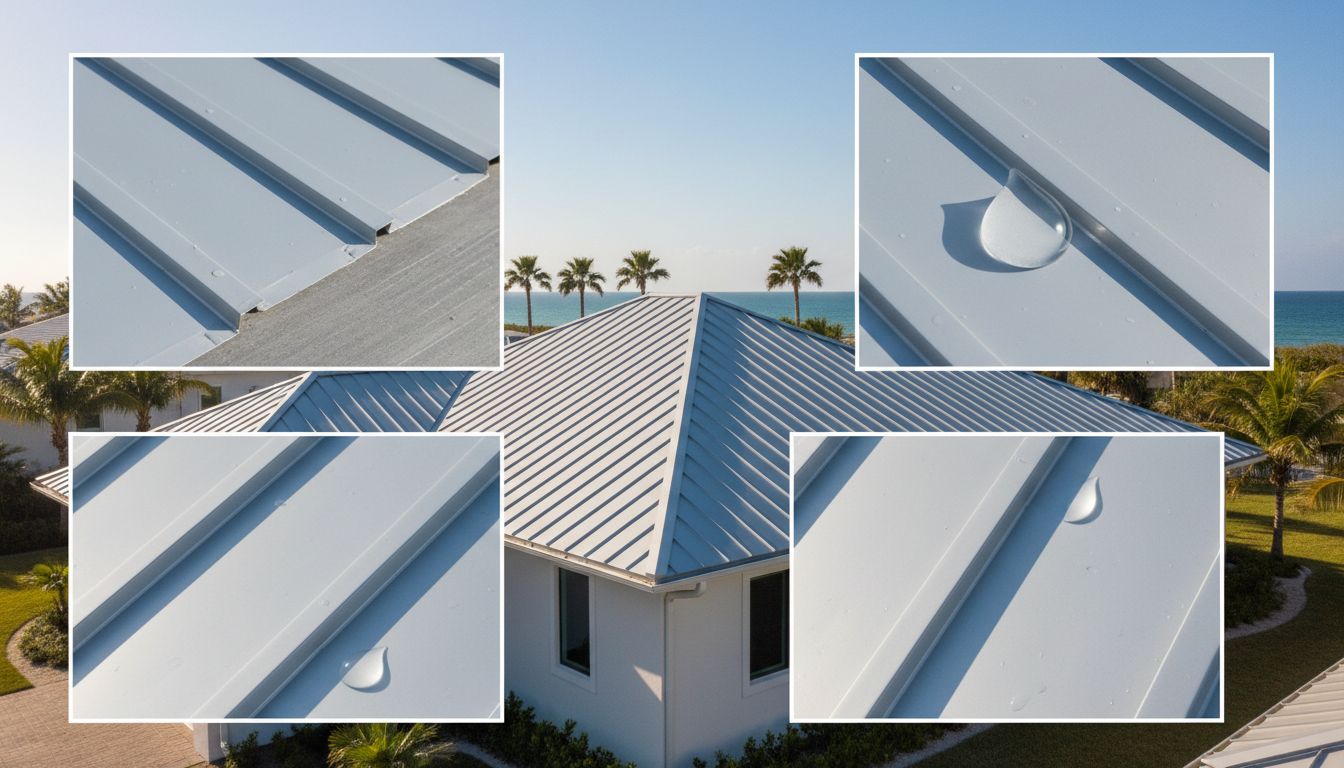
Florida metal roofs take a beating. Sun cooks the paint, salt rides inland on the wind, and summer storms test every seam and screw. So when someone says, "It has a 40-year warranty," the next question should be, "A warranty on what?"
A metal roof warranty is rarely one simple promise. Most systems come with separate warranties that cover different parts of the roof, and they can come from different companies. Understanding the difference can save homeowners, HOAs, and property managers a lot of frustration later.
The three warranties most Florida metal roofs come with (names vary)
Manufacturers and contractors don't all use the same labels, but the coverage usually falls into three buckets: finish (paint), substrate (metal), and weathertight (leak). Before you sign a contract, ask for the actual warranty documents and confirm which ones apply to your exact panel profile, coating, and installation method.
Here's a quick side-by-side comparison to make the terms easier to spot.
| Warranty type | What it usually covers | What it usually does not cover | Who issues it | Florida-specific "gotcha" |
|---|---|---|---|---|
| Finish (paint) warranty | Chalking, fading, peeling of the coating | Leaks, rust-through, damage from debris or foot traffic | Panel manufacturer | Coastal exposure can reduce coverage or add extra requirements |
| Substrate warranty | Corrosion leading to perforation (rust-through) | Surface staining, cut-edge rust, fastener failure | Metal or panel manufacturer | Salt and dissimilar-metal contact can trigger exclusions |
| Weathertight warranty | Water intrusion caused by system installation errors | Hurricanes, wind-blown debris, owner-added penetrations | Contractor, sometimes manufacturer for "system" installs | Small penetrations (solar, satellite, HVAC) are the fastest way to lose coverage |
A long warranty term doesn't mean broad coverage. It often means narrow coverage for a long time.
If you want a practical gut-check, compare your documents to common warranty Q and A formats like this page of common roofing questions. Then go back to your manufacturer's language and look for exclusions.
Finish warranty (chalking and fading): what it is, and what Florida does to it
A finish warranty is about appearance and coating performance. In plain terms, it's meant to protect you from "the paint failed early," not "my roof leaks." Most cover fading and chalking (that light, powdery residue you can sometimes wipe off). Some also address cracking, peeling, or loss of adhesion, depending on the coating system.
Florida's UV exposure makes finish coverage important, especially on darker colors. Still, many finish warranties come with limits that surprise owners:
Coastal conditions matter. Many warranties define a coastal zone or salt exposure area, sometimes by distance from the shoreline. Salt, chloride, and salt-spray can speed coating breakdown, especially on roof edges and windward slopes.
Cleaning rules also matter. Harsh chemicals, abrasive pads, and pressure washing can damage the coating. Even if the paint still looks "okay," micro-scratches can start a chain reaction: faster dirt pickup, more chalking, and uneven fading.
Foot traffic is another quiet issue. Metal panels can handle normal service access when it's done right, but uncontrolled walking can scuff finishes, dent ribs, and stress seams. Commercial properties should set roof-access rules and designate walk paths, especially near HVAC units and roof hatches.
If your HOA wants consistent curb appeal, ask for the finish warranty language that explains how the manufacturer measures a "failure." Many define acceptable color change over time and often use prorated remedies. That's normal, but it needs to be understood upfront.
Substrate warranty (corrosion and rust-through): what "perforation" really means
The substrate warranty is about the metal itself, not the paint. On steel systems, this coverage often targets corrosion that leads to perforation , meaning a hole rusts through the panel. That's very different from cosmetic red staining at a cut edge or a rusty fastener head.
Florida creates three common corrosion risk multipliers:
Salt exposure, including inland salt carried by wind. Even properties a few miles from the water can see elevated corrosion risk on the ocean side of the roof.
Dissimilar-metal contact. For example, copper runoff onto steel, mixing incompatible fasteners, or letting HVAC supports sit against the panel can trigger galvanic corrosion. Manufacturers often require approved material pairings and isolators.
Field-cut edges and metal filings. Cutting or grinding panels on the roof can leave hot metal shavings embedded in the finish. Those filings rust quickly and stain the roof. Many warranties require cutting methods that reduce heat, plus cleanup and edge treatment when needed.
Substrate warranties also tend to assume you installed the roof as a complete system, including underlayment, closures, trim, and the right fasteners. If you skimp on those parts, moisture can sit where it shouldn't, and corrosion can follow.
For a practical reminder of how much the small parts matter, see metal roof fasteners and closures. Warranty language often ties coverage directly to using approved screws, sealants, and closure strips in the correct locations.
Weathertight warranty (leak coverage): the most misunderstood promise
"Weathertight" sounds like it covers every leak forever. In reality, a weathertight warranty usually covers leaks caused by installation or system failures, under defined conditions, for a defined period. It may come from the installer as a workmanship warranty, or from a manufacturer when a contractor installs an approved full system.
For Florida owners, three points are key:
First, storm damage usually isn't a warranty claim. Hurricanes, hail, wind-borne debris, and fallen branches typically route through insurance. A weathertight warranty is more about details like flashing transitions, panel engagement, trim laps, and fastener placement.
Next, penetrations are a line in the sand. When someone adds a pipe, a new curb, a satellite mount, or a solar attachment, you've changed the system. Unless the warranty allows it and the manufacturer's approved details are followed, coverage can end right there.
Finally, repairs must follow the rules. Even a well-meaning maintenance tech can void coverage by smearing the wrong sealant on a seam or swapping fasteners without matching washer type, coating, and length.
Because workmanship is such a big part of leak performance, many warranties require licensed, qualified installers. If you're weighing options, this overview of DIY vs pro metal roof installation lines up with what warranty documents usually expect.
What commonly voids a metal roof warranty in Florida (quick checklist)
Most warranty denials come down to "installation didn't match the requirements" or "the owner changed the roof." Use this checklist as a pre-install and post-install reality check:
- Unapproved installer or unlicensed work : Especially when the warranty requires certified or authorized crews.
- Failure to register the warranty : Many manufacturers require registration within a set window.
- Unapproved fasteners, sealants, or accessories : Substitutions can lead to corrosion, pull-out, or leaks.
- Aftermarket additions without written approval : Solar, satellite dishes, lightning protection, signage, HVAC supports, and roof walkway pads.
- Cutting or grinding panels without proper edge care : Metal filings left on the roof, untreated cut edges, or torched cuts.
- Improper cleaning : Strong solvents, bleach mixes not allowed by the manufacturer, abrasive brushes, or pressure washing too close to seams.
- Missing trim, closures, or end dams : "Small" omissions can drive wind-blown rain into the assembly.
- Inadequate ventilation or vapor control : Condensation from poor attic airflow, wrong insulation strategy, or missing vapor retarder can mimic roof leaks.
- Dissimilar-metal contact : Copper runoff, incompatible fasteners, or untreated contact points that accelerate galvanic corrosion.
- No maintenance records : Many commercial and HOA warranties expect periodic inspections and documentation.
How to protect coverage: paperwork, photos, inspections, and a contract punch list
Owners who keep warranties intact tend to do the boring stuff early. That means submittals, documentation, and clear rules for anyone who touches the roof later.
Start by completing warranty registration right away. If you need a place to begin, use this page to register your metal roof warranty and keep a digital copy of the confirmation.
Then build a simple "warranty folder" that includes:
- Product data sheets for panels, underlayment, fasteners, sealants, and closures
- Color and coating name, plus batch or order numbers if available
- Install photos (underlayment, flashing steps, penetrations, ridge, eave, valleys)
- Final inspection reports, permits, and owner maintenance guidance
- A maintenance log with dates, who accessed the roof, and what changed
Here's a sample warranty review punch list to add to contracts and HOA scopes:
- Confirm finish warranty term and coastal exposure limits in writing
- Confirm substrate warranty definition of "corrosion" and "perforation"
- Define who owns the weathertight warranty, and for how long
- Require approved fasteners and sealants by brand and model
- Require documented flashing details for every penetration type
- Require a plan for future rooftop additions (solar, HVAC, communications)
- Require a final walkthrough and photo set before final payment
Treat your roof like a system, not just panels. Warranties are written that way.
Conclusion
A Florida metal roof warranty can be solid protection, but only when you match the promise to the right problem. Finish warranties focus on chalking and fading, substrate warranties focus on rust-through, and weathertight warranties focus on leak performance tied to installation and system details. Keep your paperwork, control roof penetrations, and document maintenance, then your coverage has a real chance to hold up when you need it.
This article is educational only. Always review your specific warranty documents and talk with a qualified Florida-licensed roofing contractor or manufacturer representative before making decisions.
Share Our Metal Roofing News Articles
Related Posts