How to Choose Metal Roof Fasteners for Coastal Florida
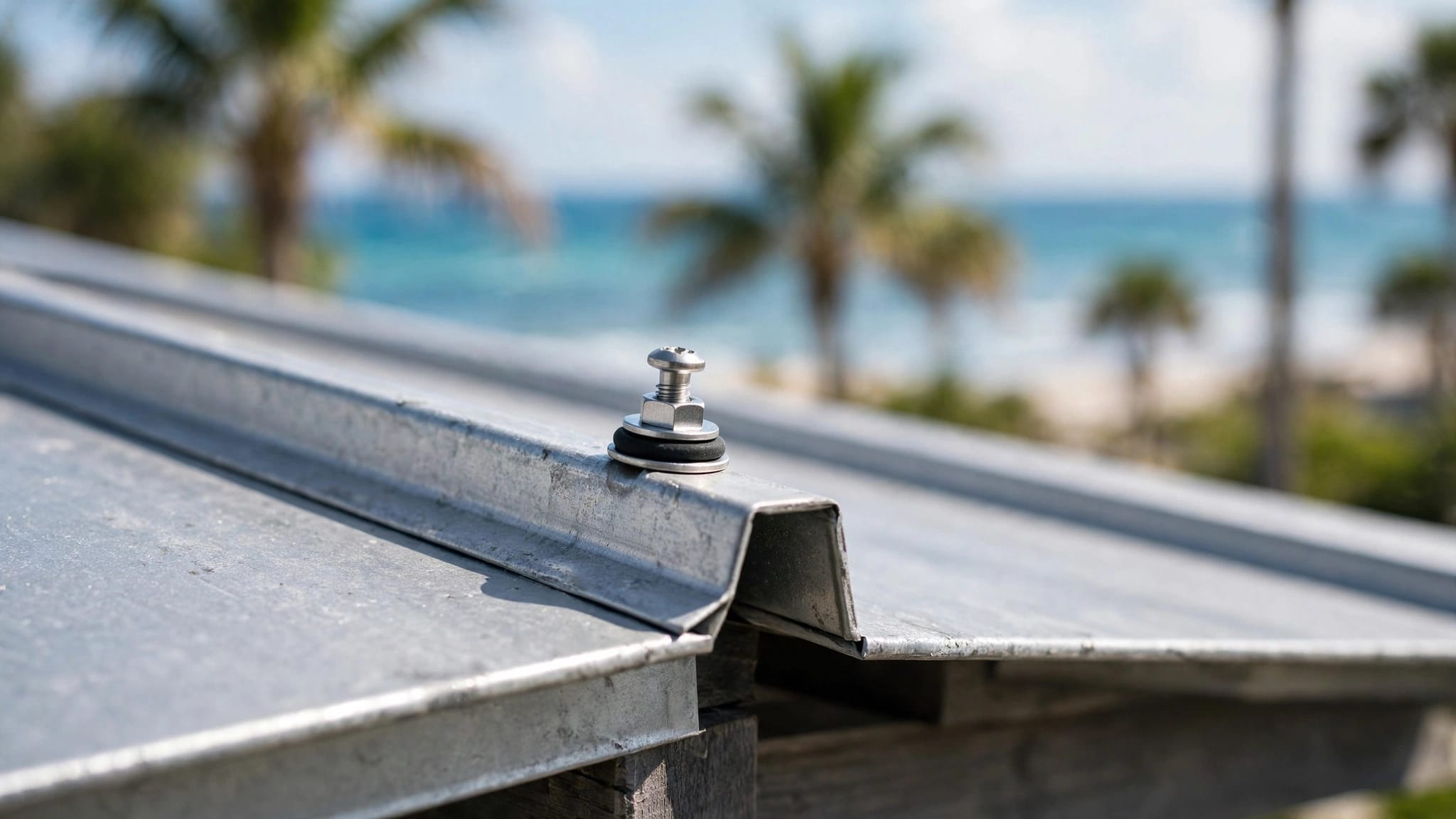
A screw that looks right on delivery day can become a rust spot or a leak after years of salt air and wind-driven rain. In coastal Florida, choosing metal roof fasteners means checking more than length and head color. The fastener must suit the panel, the material beneath it, the site's wind demands, and the approved installation details.
Start with the roof assembly, then narrow the choice to fasteners that can handle its exposure.
Start with the approved roof assembly
There is no single screw specification for every Florida metal roof. A 5V roof over wood decking and a standing seam roof attached to steel purlins use different connections, even at the same address.
Check the complete assembly, not the panel alone
Before ordering, identify the panel profile and thickness, supporting material, roof slope, and required design pressures. Then read the current Florida Product Approval or applicable acceptance document for that exact system.
Look for the permitted fastener type, diameter, length, corrosion protection, placement, and spacing. Check the installation instructions for trim and edges, too. A substitution that seems minor, such as a different screw diameter or clip, can move the roof outside its documented assembly.
The Florida Building Code, 8th edition (2023), directs installers to use the approved manufacturer's fasteners for metal roof panels. Its fallback provisions depend on the roof metal, so they aren't a substitute for checking the product's approval. For a closer look at the documents, see Florida metal roofing product approvals and Miami-Dade NOA.
Confirm where the approval applies
Miami-Dade and Broward counties are in Florida's High-Velocity Hurricane Zone (HVHZ). An assembly accepted for another Florida location shouldn't be assumed suitable there.
Check the approval's location and use limitations, plus its deck, attachment, and pressure tables. A Miami-Dade Notice of Acceptance (NOA) or statewide approval must cover the proposed installation details. When the documents and the actual roof differ, resolve that gap with the designer, manufacturer, or building department before purchasing fasteners.
Read wind uplift as an assembly requirement
Coastal wind can pull hardest at roof corners and perimeters. The required attachment pattern may change across the same roof, so a field-area screw count isn't enough to estimate the whole job.
Separate roof ratings from screw strength
An uplift rating belongs to a tested assembly: panel, clips where used, fasteners, substrate, and attachment pattern. A screw's withdrawal resistance is only one part of that performance. For example, the 2023 Florida Building Code includes a 90 psf minimum tested uplift pressure for continuous roofing systems. That figure is not a universal screw pullout requirement or proof that an assembly meets every project's design pressure.
Compare the assembly's allowable pressures with the pressures specified for your building and each roof zone. Metal roof wind uplift ratings for Central Florida explains why a panel name alone cannot establish wind performance.
Don't borrow a spacing pattern from another job
Edges, corners, roof height, exposure, and geometry affect the design. Follow the spacing shown for the selected assembly, including panel ends and trim. If a quote lists only a total screw quantity, ask how it accounts for the tighter patterns that may apply near edges.
Avoid confusing underlayment fastening rules with panel fastening. They cover different materials and serve different purposes.
Choose the screw for the actual substrate
A corrosion-resistant screw still has to grip what lies under the panel. Verify whether the roof attaches to wood decking, steel purlins, another approved support, or a combination.
Wood decking needs sound material and the specified penetration
For a wood-supported roof, check the approval's deck requirements and screw length. An existing deck may have repairs, soft areas, or changing thickness beneath old roofing. A longer screw doesn't restore holding power to damaged wood.
Pressure-treated framing adds a compatibility concern because treatment chemicals can attack unsuitable fasteners. Confirm that the specified screw is permitted for both the treated material and the roof assembly. Don't assume a fastener approved for ordinary lumber has the same compatibility with every treated product.
Steel supports need the right drilling and engagement
With steel purlins, verify the support thickness and the approved screw's drilling capacity. A screw that works in thin sheet steel may not install correctly in a heavier member. Likewise, a screw chosen for steel shouldn't be switched into wood because it happens to be available.
On reroofs or repairs, existing support conditions may be uncertain. A project-specific pullout test can help assess withdrawal resistance using the proposed fastener in representative locations. It doesn't replace product approval, and the result matters only if the tested conditions reflect the roof being designed.
Select metal roof fasteners for salt exposure
Salt deposits can remain on a roof after sea spray dries. Humidity and frequent rain then keep fastener heads and joints wet. Exposure also varies across a property; the ocean-facing slope may age differently from a sheltered one.
Compare materials and coatings within the approved system
Stainless steel and suitable corrosion-protected fasteners are options for coastal work, but neither description alone guarantees compatibility. Ask for the fastener manufacturer's coating specification and any limits for coastal exposure. Match those details to the panel manufacturer's requirements and the roof approval.
The 2023 Florida Building Code lists stainless steel as an acceptable fallback material for metal roofs when the manufacturer gives no fastener recommendation. That provision doesn't mean every stainless screw fits every panel, clip, substrate, or approved installation. Approval and material compatibility must agree.
Check the head as well as the shank. An exposed screw with an unsuitable head coating can stain the panel even when the connection initially holds.
Watch the metals touching each other
Moisture can accelerate galvanic corrosion where incompatible metals meet. Review the screw, washer backing, panel, clips, flashing, and supports as a group. Copper runoff onto steel roofing, for example, deserves attention even if the screws themselves look sound.
If you propose a different fastener metal to improve salt resistance, check its compatibility before changing the order. Preventing galvanic corrosion on metal roofs covers common metal pairings and trouble spots.
Match fastener style to the panel system
Head shape follows the connection's job. A screw exposed to rain needs a different sealing detail from one protected beneath a standing seam panel.
Exposed-fastener panels need a durable seal
AG/Multi-Rib, PBR/R, and 5V panels can use exposed attachment details, but their specified screw locations and patterns aren't interchangeable. An approved assembly may call for fastening through a particular part of the profile into a defined support. Follow that detail rather than choosing a location because it looks easier to reach.
Exposed roofing screws commonly use a sealing washer beneath the head. Confirm the screw head, washer, and required bearing surface together. For examples of where head styles belong, see the metal roof screw types and washer guide.
Standing seam relies on its clip connection
Standing seam roofs generally conceal the main panel attachments beneath the seams. Here, clip type, clip spacing, and the screws attaching each clip to the substrate are central to uplift performance.
Clips may also accommodate panel movement from temperature changes. Substituting a different clip or fastening through a panel where the design doesn't permit it can interfere with that movement. Confirm the complete clip package, not merely the screw size, before ordering.
Keep the seal intact at every penetration
Wind-driven rain finds gaps around poorly installed screws. Washer quality matters, yet a good washer can't rescue a stripped hole or an incompatible fastener.
Choose the washer specified for the connection
EPDM is a common choice for exposed roofing screws because it can remain flexible through heat and weather exposure. Neoprene may also appear in specified products. Neither material should be swapped into an approved assembly based on preference alone.
Check that the washer fits the screw head and panel detail. Its job is to seal around the penetration, not protect an otherwise unsuitable metal from corrosion. The comparison of EPDM versus neoprene washers for metal roof screws offers more context for Florida conditions.
Drive screws straight and stop at the proper compression
Keep the driver perpendicular to the panel. A tilted screw can leave uneven washer contact. Under-driving leaves a gap; over-driving can distort the washer, dimple the panel, or strip the supporting material.
Set the tool for the fastener and support, then check the first installed screws closely. Adjust as conditions change across the roof. If a screw spins without gripping, address the damaged hole using an approved repair detail rather than adding sealant over it.
Build the order around the installation documents
A coastal fastener order should identify the roof system and location, not just a box count. Give the supplier the panel profile, substrate, applicable approval, and project plans so the proposed accessories can be checked against the specified assembly.
Before materials reach the roof, confirm these details:
- The fastener type, diameter, length, head, coating, and washer match the approved details.
- The attachment schedule covers field, perimeter, corner, panel-end, and trim conditions where applicable.
- Clips and their attachment screws match the standing seam system, if one is being used.
- The fastener is compatible with the panel metal, supports, and any pressure-treated framing.
Keep approval pages and installation instructions available to the crew. Sort fasteners by application if the job uses different screws for panels, clips, and trim. Similar-looking boxes are easy to mix up when work moves between roof areas.
If an approved product becomes unavailable, get an accepted substitution before installation. Matching the visible head color doesn't establish the same corrosion protection or withdrawal performance.
Inspect exposed connections over time
After severe weather, look for loose or missing screws, lifted trim, damaged washers, and stains spreading from fastener heads. Check the roof from a safe vantage point; steep, wet, or damaged roofing calls for a qualified contractor.
Repeated rust around multiple screws points to more than a cosmetic issue. The cause could involve coating damage, metal compatibility, trapped moisture, or an unsuitable fastener. A loose screw may also indicate a worn hole or weakened support. Identify that cause before replacing hardware or applying sealant.
Conclusion
Coastal Florida puts each roof connection under pressure from salt, water, and wind . The reliable choice begins with the approved panel assembly and the actual substrate, then checks corrosion resistance and installation details.
A screw that matches all four is more useful than a premium-sounding fastener chosen by material name alone.
Share Our Metal Roofing News Articles
Related Posts