EPDM vs Neoprene Screw Washers for Florida Metal Roofs
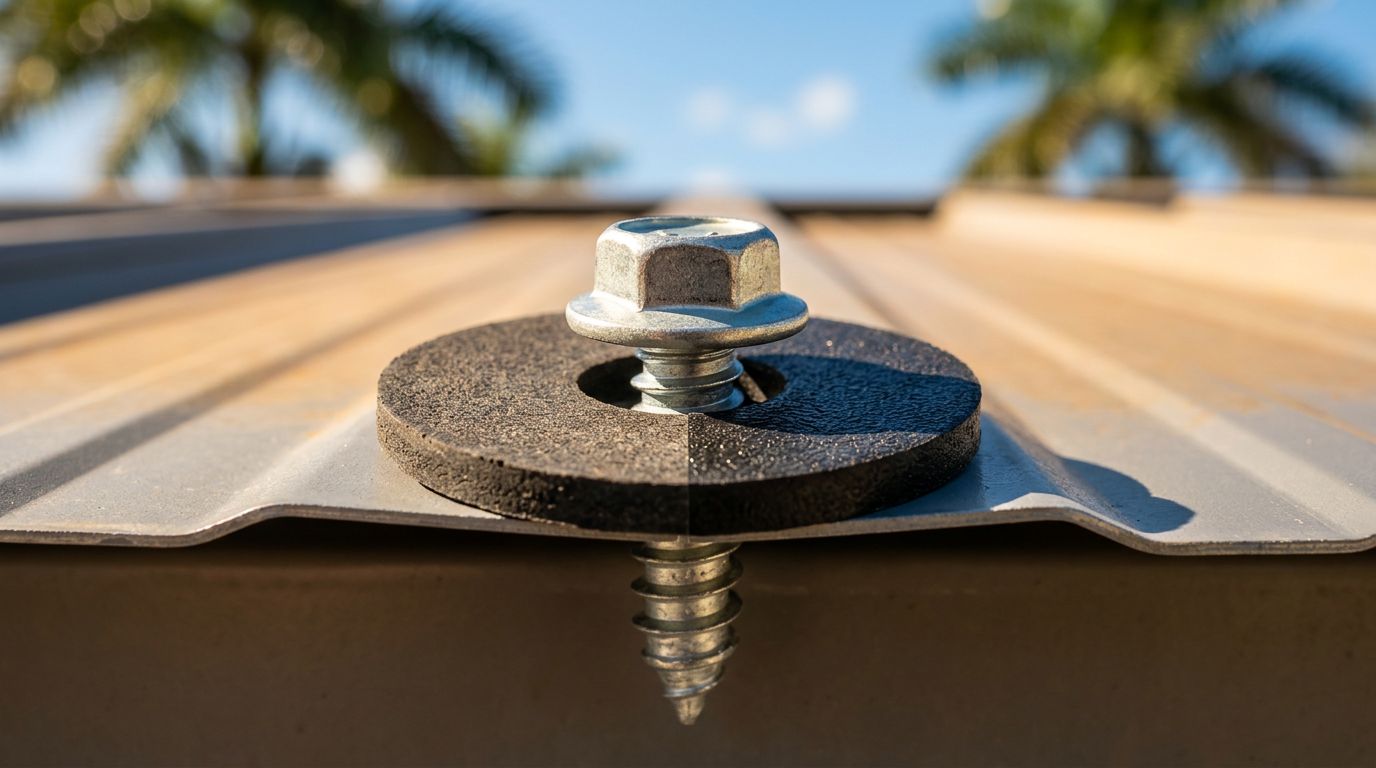
A metal roof in Florida can fail at the smallest opening. A screw washer looks tiny, yet it helps keep wind-driven rain, heat, and salt air out of the fastener hole.
When people compare EPDM vs neoprene washers , price is usually the first question. In Florida, the better question is how long the washer keeps its shape and seal under sun, heat, and moisture.
If you're sorting out the bigger fastener picture too, this guide to metal roof fastener selection is a helpful starting point. The washer matters, but it works best when the whole fastener assembly matches the panel and the exposure.
What a screw washer has to do on a Florida roof
A washer under a roofing screw does two jobs at once. It spreads pressure under the screw head, and it seals the hole where the screw passes through the panel.
That sounds simple, but Florida roofs put the washer through a cycle that many other climates never see. Midday heat softens materials, evening cooling tightens them again, and ultraviolet light keeps working on the exposed surface.
On an exposed-fastener roof, that washer sits in the open. It sees direct sun, blowing rain, hot attic air, and movement from thermal expansion. If the washer hardens, shrinks, or cracks, the seal starts to slip.
The washer is small, but the job is demanding. It has to stay flexible, hold pressure, and survive long exposure.
The result is simple. Washer choice affects not only leaks, but also maintenance. A roof with early washer failure often needs more service calls, more spot repairs, and more fastener replacement over time.
Quality matters here as much as material. Washer thickness, rubber blend, and the bonding between the metal cap and the sealing ring all affect real-world life. A bargain washer that looks fine in the box can flatten fast, while a better one stays steady for years.
EPDM and neoprene side by side
EPDM and neoprene are both common sealing materials, but they do not age the same way. EPDM is widely used on roofing jobs because it holds up well in sun and weather. Neoprene also seals well, and it can perform properly on many roofs, especially when the exposure is lower.
A quick comparison helps.
| Factor | EPDM washer | Neoprene washer | Florida takeaway |
|---|---|---|---|
| UV exposure | Usually better long-term resistance | Good, but often less forgiving in direct sun | EPDM is the safer pick on exposed roofs |
| Heat | Stays flexible well under high heat | Can age faster in intense heat | Hot roofs favor EPDM more often |
| Salt air | Handles coastal exposure well when paired with the right fastener | Can work, but depends more on product quality | Salt air raises the bar for the whole assembly |
| Sealing behavior | Strong, steady compression when installed right | Also seals well when properly compressed | Installation matters for both |
| Common use | Exposed fasteners and high-exposure details | General-purpose fastening and lower-exposure jobs | Match the washer to the roof conditions |
The table points to the main pattern. EPDM usually has the edge when the roof stays exposed to direct sun. Neoprene can still be a workable choice, but it needs a better match to the job.
Washer selection also depends on the screw head and panel detail. This metal roofing fastener guide for Central Florida explains how the screw style and washer type need to fit together.
Florida weather is hard on sealing materials
Florida does not test roof washers one problem at a time. It stacks the problems.
UV and direct sun
Sunlight is the biggest reason many roofers lean toward EPDM. A washer that spends years in direct UV exposure has to keep its flexibility. If it dries out or loses elasticity, the screw hole becomes more vulnerable.
Neoprene can still work in the sun, but it usually deserves more caution on highly exposed roofs. A shady porch roof and a wide open commercial field of panels do not age the same way.
Heat and thermal movement
Roof panels expand and contract every day. That movement pushes and pulls on the fastener seal. If the washer is too hard, it may not keep contact as the metal moves. If it gets too soft, the seal can flatten and lose grip.
EPDM often handles that back-and-forth better over time. That said, good neoprene hardware can still perform well when the screw is installed at the right depth and torque.
Rain, coastal air, and roof shape
Wind-driven rain can work its way into tiny gaps. Coastal air adds another layer of stress, because salt speeds up corrosion on fasteners and trim. The washer does not stop rust by itself, but it helps keep moisture from sitting around the screw hole.
Roof geometry matters too. A low-slope roof can hold moisture longer after storms. A steeper roof drains faster, but it usually gets more direct sun. That mix can push the choice toward EPDM on exposed areas and a more cautious install on sheltered zones.
In coastal Florida, washer choice should never be made alone. The screw coating, panel coating, and installation method matter just as much. A strong washer cannot rescue a poor fastener choice.
Which washer fits which job
The right pick depends on exposure, budget, and the type of roof.
- EPDM usually fits exposed residential and commercial roofs where sunlight is heavy and the fasteners are visible.
- Neoprene can fit lower-exposure areas where direct sun is less intense or the roof detail is more protected.
- Coastal projects usually favor the better-performing option , especially when the roof is near salt spray, open water, or strong afternoon sun.
If the project is a replacement roof, the condition of the existing fasteners matters too. A washer upgrade does little if the screws are already corroded, stripped, or poorly seated. In that case, the whole fastening plan may need review.
For contractors, the practical question is not "Which material is better in every case?" It is "Which washer gives this roof the best chance of staying sealed for the longest service life?" On many Florida roofs, EPDM is the safer default. Neoprene remains useful when the exposure is milder or the product spec calls for it.
On older roofs, age can hide in plain sight. A washer may still look round, yet the rubber can lose rebound and stop sealing under daily heat cycles. That matters on re-roof jobs, where a fastener system that looks acceptable at a glance may already be near the end of its useful life.
Installation and maintenance matter as much as material
Even the better washer can fail early if the screw goes in badly. A washer that is under-tightened leaves a gap. A washer that is over-tightened flattens out and loses its sealing shape.
A few habits protect the roof:
- Keep screws straight so the washer seats evenly.
- Stop driving when the washer compresses snugly, not crushed flat.
- Replace washers that look cracked, shiny from over-compression, or brittle around the edges.
- Check fasteners after storms, especially on older exposed-fastener roofs.
Maintenance also helps spot trouble before water enters the panel system. Small leaks often start with one bad washer, then spread when nearby fasteners age at the same pace. A roof inspection after a major wind season can catch those weak points early.
Product quality matters too. Two washers that look similar in a box can age very differently on a roof. Thickness, rubber blend, bonding, and the quality of the metal cap all affect real-world performance. That is why price alone rarely tells the full story.
A well-installed washer can outlast a cheaper one that is overtightened on day one.
The best results come from matching the washer to the panel type, the screw style, and the roof's exposure. That is the part that keeps a small component from becoming a big repair.
Conclusion
Florida roofs give washers a rough job. They have to seal fast, stay flexible, and keep working under heat, sun, rain, and salt air.
For many exposed metal roofs, EPDM is the stronger long-term choice. Neoprene still has a place, especially when the exposure is lighter or the product spec calls for it. The real answer comes from the full fastening system, not the washer alone.
Share Our Metal Roofing News Articles
Related Posts