Dead Valley Flashing for Florida Metal Roofs
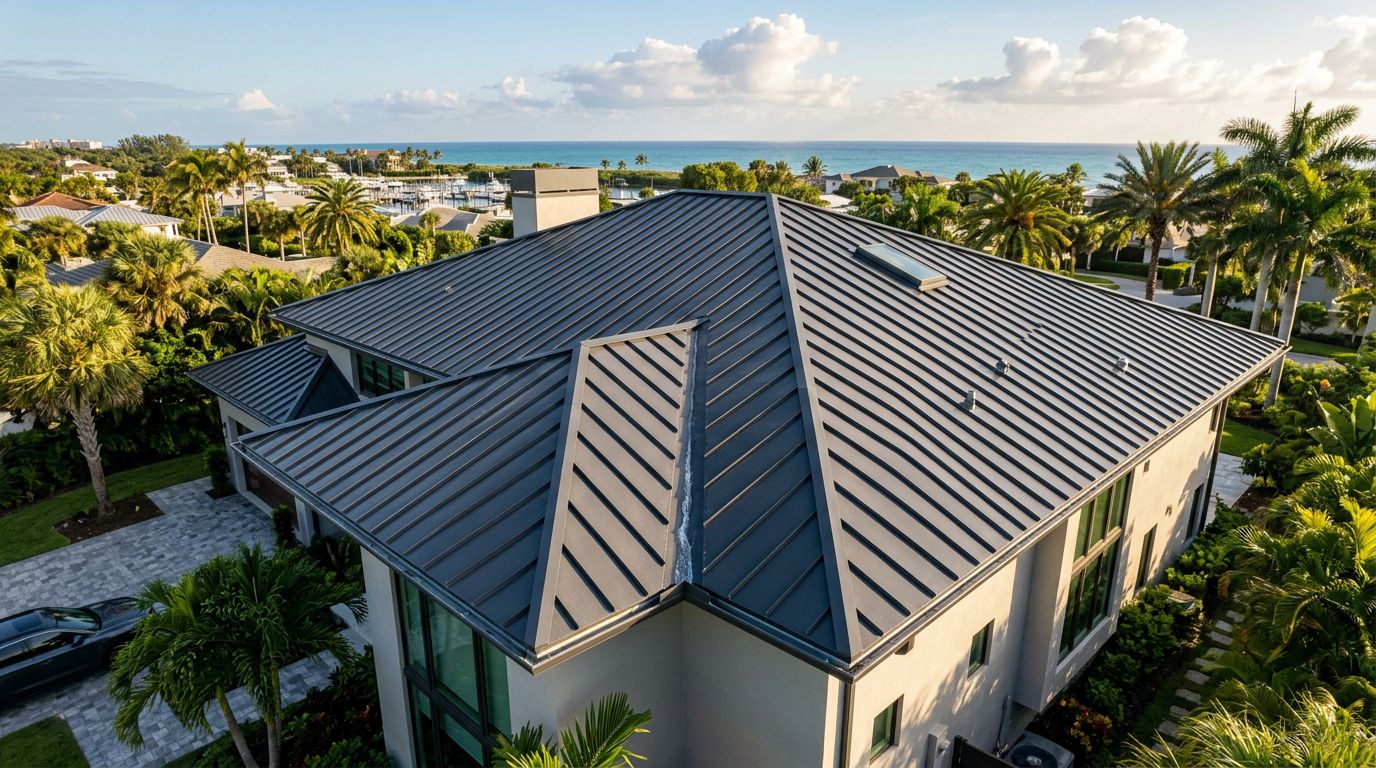
Florida roofs take a beating from rain, wind, and salt air. When a roof has a dead valley, the weak spot shows up fast.
Dead valley flashing has one job, move water out before it can pool, push under trim, or work into a seam. On a metal roof, small mistakes at the valley can turn into stains, rust, and deck damage after one hard storm.
The right setup also has to handle humidity, heat, and wind-driven rain. That is where shape, fastening, and drainage detail matter.
What Dead Valley Flashing Does on a Metal Roof
A dead valley is a low roof junction that does not drain like an open ridge or simple slope. Water gathers there, then looks for the easiest escape path. On a metal roof, that path should be a clean, lined channel that sends runoff away from seams and walls.
Dead valley flashing creates that channel. It sits where water movement is most aggressive, then guides runoff toward a safe exit. The goal is simple, keep water moving and keep it off vulnerable joints.
That matters even more on Florida homes and buildings. Heavy rain can overload a weak valley in minutes. When the rain comes in sideways, the flashing has to do more than shed water. It has to control it.
If water can sit, it will test every seam, lap, and screw hole in the valley.
When the valley is shaped well, the roof feels calm under pressure. When it is not, the same storm that barely touches the rest of the roof will find the trouble spot first.
Why Florida Weather Punishes Weak Valleys
Florida weather combines problems that do not travel alone. Heavy rain hits fast. Wind pushes water uphill. Heat expands the metal. Humidity stays around long after the storm clears.
That mix puts extra stress on dead valley flashing. Water can back up at the low point, then creep under laps or into fastener lines. If the valley feeds into a lower roof or wall, runoff can splash, rebound, and land where it should never go.
Coastal areas add another layer of wear. Salt air can attack exposed cut edges, fasteners, and damaged coatings. Even inland roofs still face corrosion risks when small scratches stay wet after repeated storms.
Debris makes the problem worse. Leaves, seed pods, and dirt slow the flow in a valley. Once that happens, water does not move like a sheet. It starts pooling, then searches for an opening.
Metal also moves as the temperature changes. A bright afternoon and a cooler night can cause repeated expansion and contraction. If the flashing is too tight, poorly fastened, or sealed in the wrong place, those small movements break the seal over time.
The Pieces That Have to Work Together
Dead valley flashing is only one part of the system. The underlayment, closures, fasteners, sealant, and surrounding trim all need to do their jobs.
Choosing the right roof flashing shapes and specifications helps the valley fit the roof profile and drain path. A shape that works on one panel style may fail on another.
| Component | Job in the dead valley | What goes wrong if it fails |
|---|---|---|
| Valley flashing or pan | Carries runoff through the low area | Water backs up into seams |
| Underlayment | Adds a second water barrier | Small leaks reach the deck |
| Closure strips | Block gaps at panel edges | Wind-driven rain gets inside |
| Fasteners and sealant | Hold trim tight and seal laps | Edges loosen and open up |
| Diverters or end dams | Guide water toward the exit | Water spills into the wrong spot |
When these parts work together, the valley handles Florida rain instead of fighting it. If one piece is wrong, the failure often starts at the edge, not the center.
Warning Signs That the Valley Is Failing
Some valley problems show up in plain sight. Others stay hidden until the next storm. A quick check after heavy rain can save a lot of damage.
- Water stains on ceilings or upper walls near the valley often mean the leak has already traveled.
- Rust streaks, bubbled paint, or dark marks along trim point to trapped moisture.
- Leaves and debris that stay packed in the low spot can slow runoff and hide damage.
- Lifted panel edges or open laps often point to movement or loose fasteners.
- Damp insulation, soft decking, or peeling interior paint means the leak has moved past the surface.
A dry-looking roof can still be leaking under the metal. That is why valley inspection matters after storms, not just when a ceiling stain appears. If you spot more than one of these signs, the problem may be bigger than a touch-up.
Repair, Reseal, or Replace?
The right fix depends on what failed and how long the damage has been there. Fresh sealant can help when the metal is still sound and the problem is small. Loose fasteners or a minor gap can often be corrected without a full rebuild.
The right metal roofing accessory supplies matter here, because the repair has to match the roof system. Wrong screws, weak sealant, or the wrong flashing boot can turn a small fix into another leak.
Use this simple filter:
- Repair works when the flashing is intact and the leak comes from one loose point.
- Resealing works when laps are still lined up, but the sealant has dried or cracked.
- Replacement makes sense when rust, warped metal, or repeated leaks keep returning.
- A full rebuild is the better call when the valley shape no longer sheds water cleanly.
If the underlayment is damaged, surface repair alone is not enough. Water often follows the same path again. After that happens a few times, replacement is usually cheaper than repeated patch work.
Installation Details That Matter on Florida Roofs
Good dead valley work starts before the first panel goes down. The installer needs to set the valley line, check slope, and make sure water has a direct path out. If the valley turns or narrows in the wrong place, runoff will pile up.
Fasteners need careful placement. Too many holes near a wet zone create extra leak points. Too little fastening lets the flashing shift under wind and heat. The best result comes from a clean layout, tight laps, and the right spacing for the panel type.
Custom trim also matters on roofs with odd angles or mixed slopes. In those cases, standard pieces may leave a gap that water can exploit. A well-fitted trim piece keeps the valley sealed without forcing the metal.
Good fasteners, closures, and trim are part of keeping your metal roof secure, especially where wind-driven rain hits hardest. That is true for new construction and for repairs.
Contractors should also watch for dissimilar metals, trapped debris, and sealant squeezed into the wrong place. Those details look small on day one. After a few Florida storms, they are the details that decide whether the roof stays dry.
Conclusion
Dead valley flashing in Florida has one job, move water fast and keep it away from weak spots. When the flashing fits the roof, the fasteners hold tight, and the trim is shaped for the drain path, the valley can handle hard rain with far less risk.
The warning signs are easy to miss at first, but they get harder to ignore after each storm. Rust, stains, loose edges, and standing debris all point to a valley that needs attention.
A well-built dead valley flashing setup is simple in concept and unforgiving in practice. On a Florida metal roof, clean water flow is everything.
Share Our Metal Roofing News Articles
Related Posts