Metal Roof Lifespan Florida: What 40 to 70 Years Means
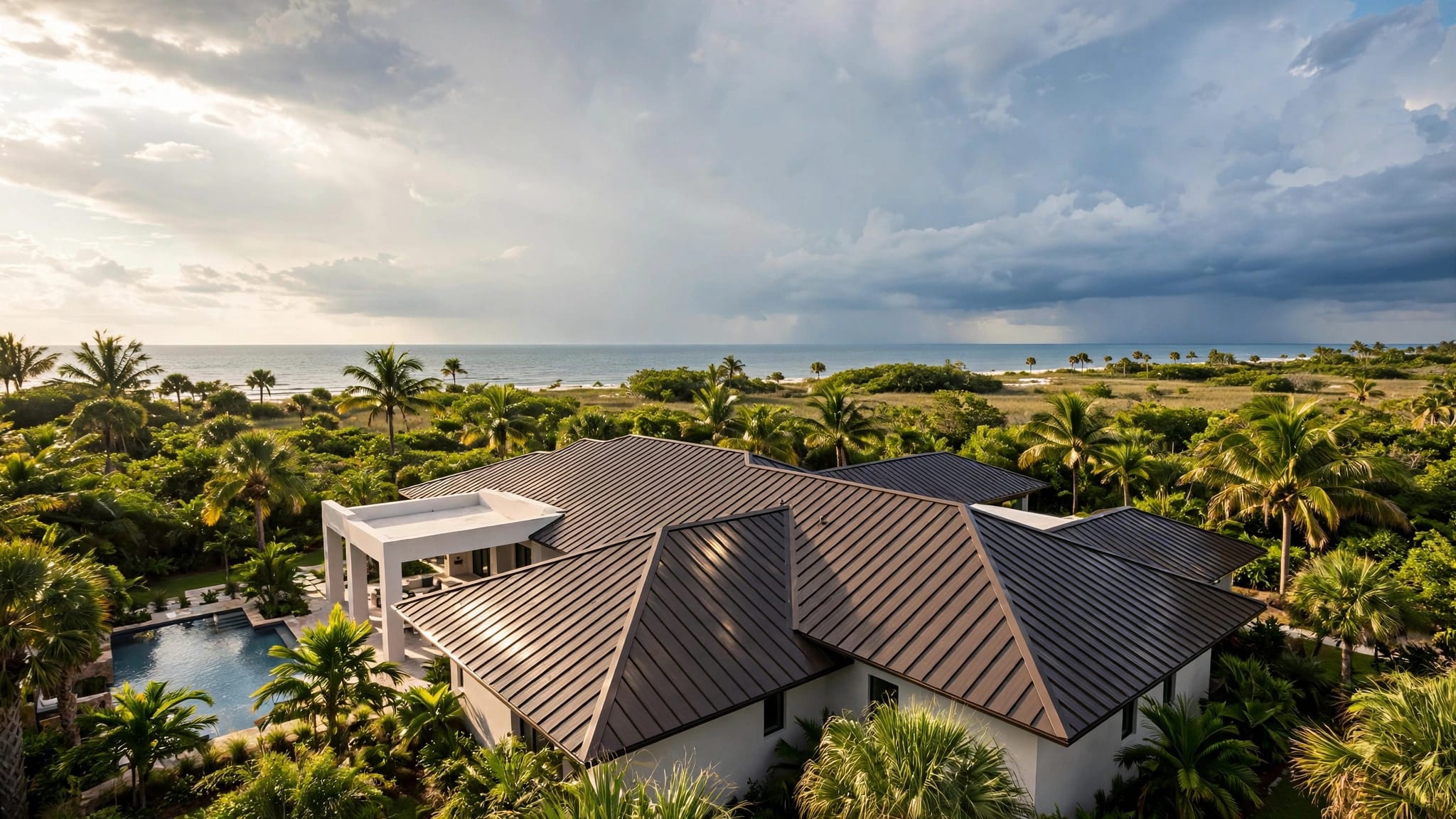
A metal roof can outlast several rounds of shingles, but Florida gives every roofing system a hard test. Sun, salt air, humidity, and hurricane-force winds all affect how long panels, fasteners, coatings, and flashing hold up.
For most homes, the metal roof lifespan Florida homeowners can reasonably expect is about 40 to 70 years when the roof is properly selected, installed, and maintained. The lower end is more common with harsh coastal exposure or exposed-fastener panels. The upper end usually calls for premium materials, careful installation, and regular inspections.
Metal Roof Lifespan Florida: A Realistic Range
No roof comes with one universal expiration date. A well-built metal system can remain serviceable for decades, yet its weakest detail often sets the schedule for repairs.
Standing seam roofs often reach the upper range
A standing seam roof has concealed fasteners beneath raised seams. Because the primary screws aren't exposed to direct sun and rain, there are fewer places for water to enter as the roof ages.
Well-maintained standing seam steel or aluminum systems often last 50 to 70 years in Florida. The final result still depends on the panel finish, roof design, wind-rated attachment method, and local exposure.
Exposed-fastener panels need more attention
AG/Multi-Rib, PBR/R, and similar exposed-fastener panels are practical, durable choices for homes, agricultural buildings, and commercial projects. However, each screw passes through the panel surface and uses a sealing washer.
Those washers, along with screws and sealant points, need periodic checks. In Florida, an exposed-fastener roof may provide roughly 25 to 40 years of service, depending on maintenance and weather exposure. For a closer look at panel attachment choices, compare standing seam versus exposed-fastener panels.
A metal panel may still look sound while a worn washer, loose screw, or failed flashing lap creates the first leak.
Material Choice Matters Near Florida's Coast
The substrate under the paint has a major effect on a roof's long-term condition. Inland roofs face heat and rain, while coastal roofs also deal with salt-laden air that speeds up corrosion.
Aluminum performs well in salt-heavy locations
Aluminum doesn't develop red rust like steel, so it is often the strongest common option for oceanfront, bayside, and near-coastal properties. It still needs proper care. Pitting, coating damage, and galvanic corrosion can occur when aluminum contacts incompatible metals.
For a roof near the Gulf or Atlantic, aluminum panels paired with compatible fasteners and trim can justify their higher upfront cost through better corrosion resistance.
Galvalume and galvanized steel have different limits
Galvalume steel has an aluminum-zinc coating that offers strong corrosion resistance and works well on many inland Florida projects. A high-quality painted finish adds another protective layer.
Galvanized steel uses a zinc coating and generally needs more protection in severe salt exposure. Neither steel option should be treated as maintenance-free near the coast. Rinsing away salt deposits and repairing scratches early can protect the finish and exposed cut edges.
Premium PVDF coatings, often sold under names such as Kynar 500, generally offer strong color and chalk resistance in Florida sun. SMP finishes, including WeatherXL products, are another common option. A coating warranty can be useful, but it doesn't guarantee the full metal roof lifespan Florida properties will see.
Installation Details Decide Whether the Roof Ages Well
A premium panel can't make up for poor attachment, incorrect flashing, or a penetration that was sealed carelessly. Installation quality affects service life as much as panel material.
Wind-rated assemblies protect the entire system
Florida roofs need to meet the current Florida Building Code and the manufacturer's installation instructions. That means using the approved panel profile, screw type, clip pattern, underlayment, trim, and edge details for the building's wind zone.
Corners and perimeter areas often require tighter fastening because wind uplift is strongest there. Homeowners and contractors should also confirm Florida-approved metal roofing panels match the planned installation, including flashing and fastener requirements.
Flashing and roof edges cannot be an afterthought
Many long-term roof problems start at valleys, pipe boots, skylights, ridges, eaves, and rakes. Water moves through these transitions during heavy rain, while wind tries to lift them during storms.
Correct trim, closures, butyl tape, and sealants keep the roof assembly working as a system. On standing seam projects, properly installed edge components matter because they transfer wind forces into the deck. Review Florida standing seam eave details before treating an eave cleat as a minor accessory.
Florida Weather Can Shorten a Roof's Service Life
Heat alone rarely ends a metal roof. Instead, Florida weather gradually wears down the coating, sealants, fastener washers, and flashing that protect the panels.
Strong UV exposure can cause chalking or fading over time. Humidity and trapped moisture can promote corrosion beneath damaged finishes. Meanwhile, storm debris may scratch panels, bend trim, or loosen a ridge cap without creating an immediate interior leak.
Inspect after hurricanes and tropical storms
After a major wind event, inspect the roof from the ground first. Look for displaced panels, lifted flashing, missing fasteners, separated ridge caps, and debris caught in valleys or gutters.
Then have a qualified roofing professional inspect any suspected damage. Hidden water intrusion can corrode fasteners or damage decking long before a ceiling stain appears.
Routine maintenance extends useful life
Most metal roofs need modest, consistent care rather than frequent replacement. Plan to inspect the roof at least once a year and after severe weather.
- Remove leaves and branches that hold moisture against panels and in valleys.
- Check exposed screws for backing out, rust, cracked washers, or missing fasteners.
- Keep gutters, downspouts, and roof drainage paths clear.
- Repair coating scratches and damaged flashing before corrosion spreads.
- Avoid attaching solar equipment, satellite dishes, or other additions without approved flashing details.
Warranties Are Useful, but They Are Not a Lifespan Promise
A 35-year or 40-year finish warranty often covers paint performance under stated conditions. It may not cover installation defects, wind-blown debris, storm damage, or leaks around later-added penetrations.
Read the warranty alongside the contractor's workmanship terms. Also check any coastal exclusions, cleaning requirements, and rules about contact between dissimilar metals. The best warranty can't correct a system that was installed outside its approved assembly.
A Long-Lasting Florida Metal Roof Starts With the Whole System
A properly installed and maintained metal roof in Florida often lasts 40 to 70 years . Material selection, protective coating, coastal salt exposure, storm damage, installation quality, and maintenance determine where a roof lands within that range.
For homeowners near salt water, aluminum and corrosion-aware details deserve close attention. Inland projects can often get long service from painted Galvalume systems when the panels, trim, fasteners, and installation method work together.
The strongest metal roof lifespan Florida homeowners can achieve comes from treating the roof as a complete weather-resisting system, not a collection of panels alone.
Share Our Metal Roofing News Articles
Related Posts