Metal Panel Bundle Weight: A Florida Jobsite Guide
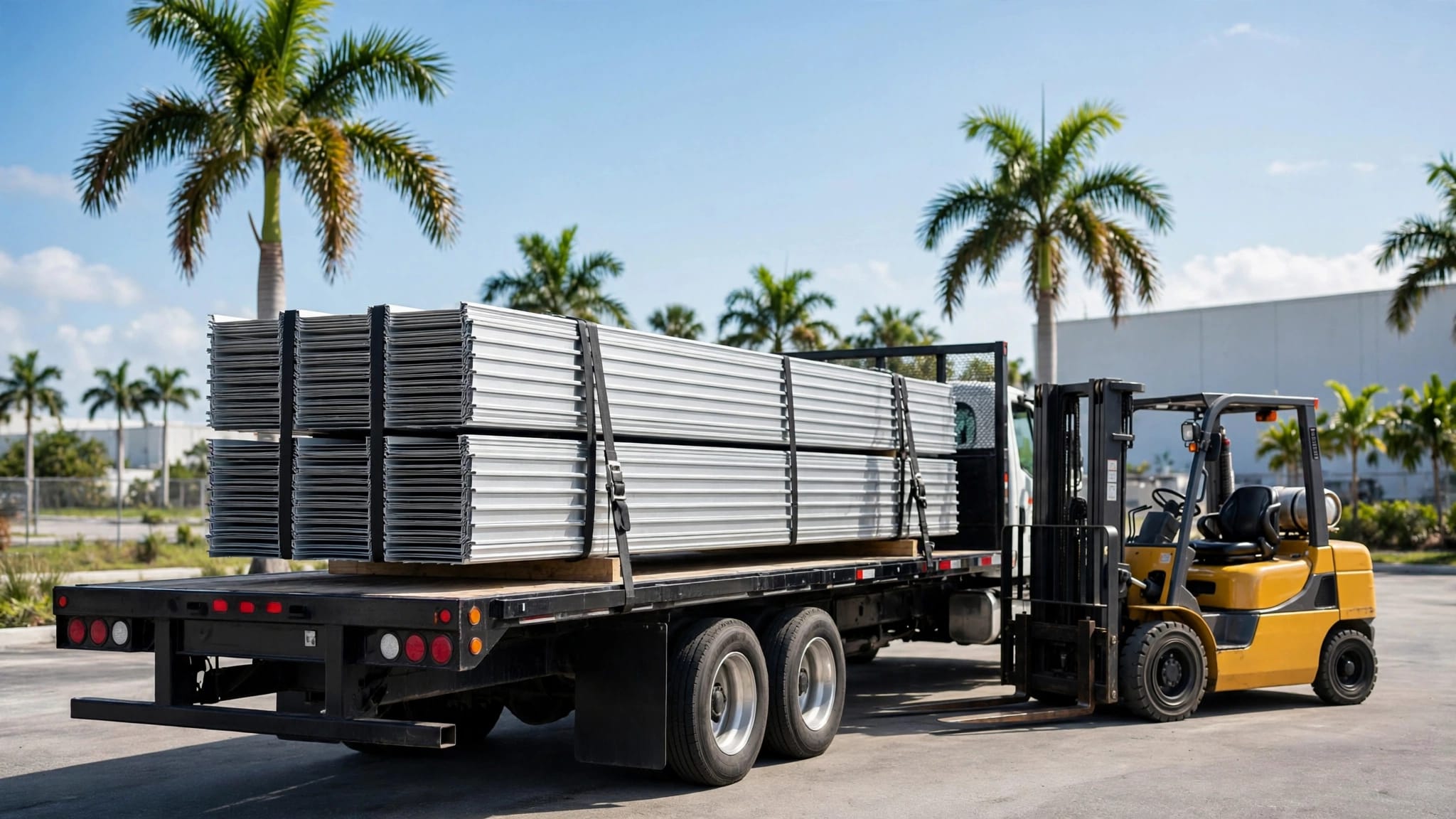
The delivery truck is on its way, but can your crew safely lift the panels off it? The number you need is the verified metal panel bundle weight for each package, not a general weight chart.
Bundles vary with the panel material, gauge, profile, length, and quantity. An early estimate helps you plan, but the supplier's shipping documents and your equipment's rated capacity must agree before anyone handles a load. Start with the details that determine what will arrive.
Why metal panel bundle weight varies
Two roofing orders can cover similar roof areas and arrive in very different bundles. Even bundles on the same truck may have different weights.
Material and gauge change the load
Steel and aluminum don't weigh the same for an equivalent amount of material. Thickness matters too. Within a comparable steel product line, a 24-gauge panel is generally thicker than a 26-gauge panel, but gauge alone won't tell you what a completed bundle weighs.
Mid Florida Metal Roofing Supply lists both 24-gauge and 26-gauge options among its PBR and R panel specifications. Those choices matter when ordering a roof system. They don't provide a safe substitute for the weight of the packed load.
Profile, length, and count matter separately
An AG/Multi-Rib panel, a PBR/R panel, a 5V panel, and a standing seam panel have different shapes. Their coverage widths don't necessarily reveal how much sheet metal each contains. Ribs and seams use material beyond the flat area you see on a roof plan.
Longer panels generally use more material than shorter panels of the same specification. Then the bundle count changes the total again. Skids, protective packaging, and other materials may add weight to the package you'll lift.
A roof-area estimate tells you how much coverage to order. It doesn't tell you the weight of an individual shipping bundle.
Get an estimate that matches the order
If you're reserving a forklift or arranging delivery before production is complete, ask the supplier for a preliminary weight estimate . Label it as an estimate in your jobsite plan. Don't use it as the final figure for a lift.
Send the full panel schedule
Give the supplier the material, exact profile, gauge, finish, panel widths and lengths, and quantity at each length. Separate roof panels from wall panels if the order contains both. Identifying a product as "ribbed metal" leaves too much room for confusion.
For a useful ordering checklist, see how to specify panel profiles and gauges for a quote. Confirm the approved product and assembly against the project documents, but keep that review separate from the unloading plan.
Ask how the order will be bundled
Request the expected number of bundles, their contents, their longest panel lengths, and an estimated gross weight for each bundle , if available. Gross weight should account for the package as shipped. Ask whether trim, flashing, and other materials will travel in separate packages.
A single order total can hide a heavier bundle among several lighter ones. If the supplier changes the bundle breakdown before dispatch, request an updated estimate and check whether the planned equipment still suits the delivery.
Verify the shipping paperwork before unloading
A planning estimate can change when the order is packed. Before handling bundles on a Florida jobsite, verify the actual package weights on the supplier's shipping documents and match them to the loads on the truck.
Match each figure to a physical bundle
Look for a packing list, shipping document, or bundle label that identifies the package and its weight. Confirm the unit of measure and ask whether the stated figure is gross package weight or panels alone. The lifting equipment must handle everything suspended or carried, including applicable rigging and attachments.
Compare the package identification with the panel schedule. A mixed-length delivery can contain bundles that look similar from the ground but call for different handling space or equipment. Don't assign a weight from one label to a neighboring stack.
Stop when the records don't match
If a label is missing, the bundle count differs, or a package appears to contain different panels than listed, contact the supplier before lifting it. The same applies if the documents show an order total but no weight for the individual bundle you need to unload.
Inspect for damaged bands, shifted panels, or broken support material before moving a load. Shipping bands hold a package together; they aren't lifting points unless the supplier expressly identifies an approved lifting method.
Match the equipment to the whole lift
A machine's advertised capacity isn't its capacity in every position. Confirm the rated capacity at the planned working configuration before the truck arrives, then check it again against the verified bundle weight.
Read the chart for your setup
For a forklift, consider the load center, fork spacing, attachment, and panel length. A long package may need support beyond standard forks to prevent bending or tipping. A telehandler's capacity changes with boom position. Crane capacity depends on factors that include working radius and configuration.
The operator should use the machine's load chart and the ratings for forks, slings, spreader bars, and other lifting gear. Account for rigging weight where it contributes to the lifted load. If the package exceeds the rated capacity for the actual setup, change the lift plan. Dividing or repacking it requires the supplier's direction and a new weight check.
Support panels without damaging them
Weight is only part of the handling problem. A long bundle can flex, rotate, or catch an edge even when the equipment has enough lifting capacity. Follow the supplier's support and lifting instructions. Protect panel edges and finishes wherever suitable rigging contacts them.
Keep people clear of suspended loads and the truck's unloading area. Use a trained operator and an agreed signal plan when visibility is limited. Don't set a bundle on a roof unless a qualified person has confirmed that the structure and planned placement can carry it.
Plan for Florida roads and delivery access
Panel length affects the trip as well as the lift. A truck can carry a bundle within its weight limits yet still face access or transport problems because the panels are long.
Check the route for long panels
Confirm the longest pieces, the delivery vehicle, the approach road, and the space needed to turn and unload. Florida vehicle length rules appear in Florida Statutes Chapter 316.515; oversize travel may require FDOT permitting. The supplier or carrier should address the applicable transport requirements for the actual load.
A 25-foot panel, for example, needs more clear handling space than its weight suggests. Length isn't a weight limit. The guide to transporting and handling long metal panels in Florida covers that separate planning issue.
Give the delivery crew usable site details
Send the address, site contact, working phone number, access restrictions, and intended unloading location before dispatch. Check gates, trees, overhead lines, soft shoulders, and parked vehicles. A residential driveway or farm entrance may not offer room to position both a delivery truck and lifting equipment.
Mid Florida Metal Roofing Supply offers pickup and delivery throughout Florida. If you're choosing between them, consider who will transport, secure, and unload the order. For help with timing and site preparation, review planning metal roofing deliveries in Florida.
Prepare a stable place to stage bundles
The first lift ends at the staging area. Choose that location before the truck arrives so the operator doesn't have to hold a load while the crew clears space.
Check ground and placement
Use ground that can support the delivery vehicle, lifting equipment, and staged materials. Recent rain can change conditions on unpaved Florida sites. Confirm bearing conditions and any needed support for outriggers with the equipment provider or site supervisor.
Leave enough room to lower a long bundle without striking fences, equipment, or other materials. Keep it away from overhead power lines. If the only proposed staging area is a roof or elevated deck, have its capacity checked before delivery rather than relying on the bundle's appearance.
Protect the material after unloading
Set bundles on suitable supports according to the supplier's instructions. Keep them out of standing water and protect the finish from rough surfaces. Plan for drainage and ventilation if the panels will wait outdoors, and follow the supplier's storage guidance for wet or wrapped material.
Check delivered quantities and visible damage while the driver and site contact can still identify each package. Recording an issue at receipt is easier than sorting out which bundle it came from after the crew has opened several stacks.
Put bundle handling into the order plan
Small changes during ordering can alter the unloading job. A revised length, an added roof plane, or a different bundle break deserves another look at the delivery plan.
Review labels and bundle breaks
Ask how panels will be grouped for each roof area, especially when a project has several lengths or profiles. Clear package labels help crews stage the right materials without repeatedly moving bundles. They also make it easier to match each package to its shipping weight.
Check panel numbering, lengths, and unloading order during the metal roofing shop drawing review. Confirm any requested bundle breaks with the supplier before fabrication or dispatch.
Agree on unloading responsibilities
Find out who supplies the lifting equipment, who operates it, and who directs truck positioning. Don't assume delivery includes unloading by the driver's equipment or crew. Give the supplier a site contact who can answer access questions and receive the paperwork.
Mid Florida Metal Roofing Supply also supplies trim and installation accessories. Plan space for those packages alongside the panels so the unloading route and staging area stay clear.
Key Takeaways
- Treat advance bundle weights as estimates. Material, gauge, profile, length, quantity, and packaging all affect the delivered load.
- Verify each bundle's actual weight against the supplier's shipping documents before handling it. Resolve missing labels or conflicting records first.
- Check the lifting equipment's rated capacity for the real setup, then confirm the route, unloading space, and staging area can accommodate the longest package.
FAQ
How much does a bundle of metal roofing panels weigh?
There isn't one reliable figure for every bundle. Steel and aluminum orders differ, and so do gauges, profiles, lengths, panel counts, and packing methods. Ask your supplier for an estimate tied to your order, then verify the individual bundle weights on the shipping documents before unloading.
Can I use the roof's square footage to choose a forklift?
No. Roof area helps determine how many panels to order, but it doesn't identify the weight of the package the forklift will carry. It also says nothing about a long bundle's load center or support needs. Use the verified package weight and the forklift's rating for the planned configuration.
Does a lighter bundle always make unloading easier?
Not necessarily. A long, relatively light bundle can still need specialized support and more open space than a shorter, heavier one. Check both weight and dimensions , along with the supplier's handling instructions. Never use a low weight estimate to dismiss concerns about flexing or clearance.
Should a homeowner arrange equipment before delivery?
First, ask the supplier how the order will arrive and who is responsible for unloading. Share the driveway, gate, and staging details. If your contractor will receive the panels, have the contractor coordinate the equipment and crew with the supplier. The final lift plan must use verified shipping weights.
Conclusion
A delivery can reach your driveway on schedule and still be unsafe to unload if nobody has checked the individual packages. Verify the bundle weight on the supplier's shipping documents , then compare it with the lifting equipment's rated capacity in its actual working position.
With the load, panel length, and staging space accounted for, your crew can receive the roof materials without guessing at the lift.
Share Our Metal Roofing News Articles
Related Posts